

3 Things You Should Never Put In Your Engine

We may receive a commission on purchases made from links.
Engines have changed over the past century, with upgrades and different ways of operating. We've gone from strong, low-compression cast-iron blocks with wide tolerances to today's high-efficiency, computer-controlled powerplants. These are defined by aerospace-grade materials and microscopic clearances. This progress has given us increased power, fuel economy, and longevity, but it's also fundamentally changed how you need to maintain these machines.
Many of the well-established remedies and additives that kept vintage engines humming along in the mid-20th century are actively destructive today. Just like how any parts you use with these engines have to be compatible, the types of fuels and additives you put into them has to work well with it, too. That means getting rid of older ideas and making sure your home remedy isn't actually a poison for your vehicle.
The best thing to do is look at very common older techniques and understand why they wouldn't work out today. Keep in mind that all of this is for newer engines, not those older ones you'll find in vehicles that were made decades ago. If you just bought a car and are worried you are using outdated information, you will soon be confident about what not to do.
Dish soap
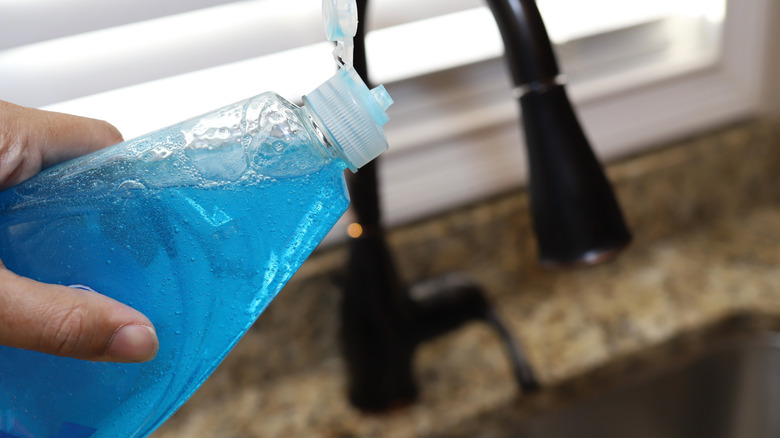
There's a common myth that adding dish soap to your engine oil works like a degreaser, stripping away internal sludge and making it spotless. Some folks incorrectly think a household grease-fighter can deep clean inside the internals and clear out any buildup. What really happens is that soap reacts with your oil and the mechanical movement, creating a lot of foam that your oil pump sometimes can't move.
We call this oil foaming, or aeration. It's when air bubbles get trapped and mix right into the oil, forming a frothy layer. Engine oil pumps are designed to move a consistent liquid, not air pockets. When the pump takes in soapy foam, it reduces the fluid's volume and its flow rate. This causes a loss of oil pressure and keeps metal parts from getting the lubrication they need to work properly.
The aerated oil also acts like an insulator instead of a coolant. It loses its ability to pull heat away from points of friction, which makes the engine overheat faster. This mix of friction and high temperatures stresses your engine's internal parts, which could make it seize or throw a connecting rod. You're better off trying to wash your car with dish soap instead of putting it under the hood, though this can be problematic as well if you're using one that has an abrasive formulation. Still, gentle hand soap can be used as an alternative to car wash soap.
Excessive starting fluid (ether)
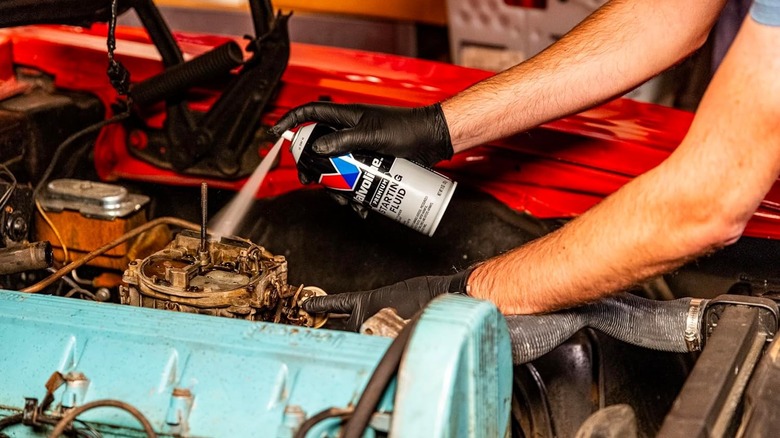
Starting fluid was once common for bringing old carburetors or large diesel engines to life in the cold. These mechanical setups didn't have modern cold-start tech, so a blast of flammable diethyl ether was a reliable way to get them moving. Modern versions of these engines use high compression ratios and electronic ignitions, which is why they produce more torque. Those that use diesel specifically rely on cylinder compression to create heat for ignition.
However, using starter fluid in one of these modern engines can be detrimental. Ether has a very low flash point, so it ignites early before the engine's piston reaches the top of its cycle. When the ether detonates early during the compression stroke, the explosion tries to push the piston down while the engine's momentum is still pushing it up. This collision causes severe engine knock and mechanical stress. It can result in shattered ring lands, bent connecting rods, smashed wrist pins, and maybe even needing to replace the entire engine.
Ether is also a harsh solvent that washes away the protective oil film on your cylinder walls. This leads to metal-on-metal wear, scoring, and engine seizure. Modern diesel engines also have intake air grid heaters or glow plugs to help with cold starts. Some manufacturers ban the use of starting fluid because of the dangers. You should also never use brake fluid as a substitute, as it likewise has a high ether content and can cause the same pre-ignition issues.
Kerosene
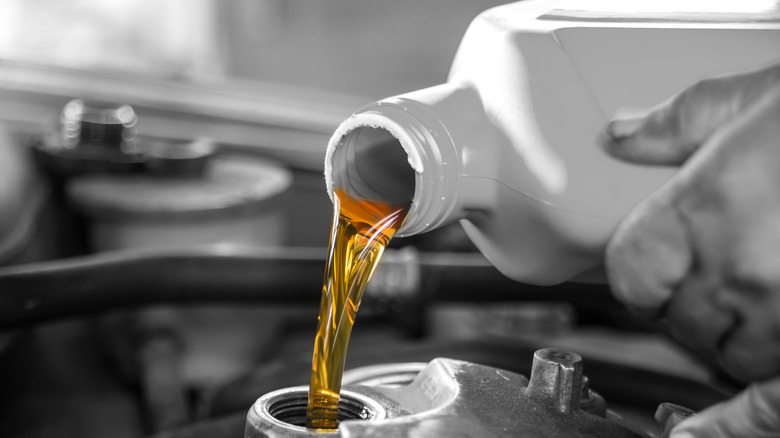
In the past, mechanics would flush engines by draining the oil and running it briefly with kerosene. This was a remedy for cleaning out heavy sludge. Older, low-compression version with wide clearances might have survived it, but doing this today is not recommended. Modern counterparts have tight bearing tolerances and use synthetic oils with specific additives that this fluid could strip away.
It's already a bad idea to use kerosene as a fuel where it shouldn't go, but internal combustion engines are designed so every moving part has a specific clearance from its bearing. High-quality oil creates a microscopic film that acts like a roller to make sure rotating parts never actually touch. Kerosene is a harsh, thin liquid that doesn't lubricate well. Using it could lead to metal-on-metal contact that can ruin your crankshaft and cam bearings.
Pistons, cylinder walls, connecting rods, and main bearings need a constant supply of oil to reduce wear and move heat away. Without that barrier, friction creates enough heat to melt, fuse, or seize moving parts. Kerosene can't maintain film strength under heavy loads and gets squeezed out of tight clearances. You probably shouldn't be flushing your engine at all anymore because some companies like Honda advise against it. Just rely only on specified synthetic oils, and also avoid the myth of using kerosene if you use diesel engines.