

12 Cool Touchscreen Gadgets That Aren't Tablets Or Phones
Once the preserve of smartphones and other smaller gadgets, touchscreens now grace every surface and tech niche imaginable, with mixed results. When touchscreens first appeared on computers and phones, they were trying to make complex devices easier to operate. After the iPhone and other innovations, touchscreen technology proved intuitive and brilliant.
However, since then, engineers asked what else they could touchscreen-ify, and the world was off to the races. Today, we have touchscreens in every room. For the kitchen, there are double-door fridges that display recipes and your calendar. In the bathroom, touchscreen mirrors look at your skin and point out all the imperfections. Elsewhere, there are tables with screens for collaborative workspaces. Some devices can even turn non-touchscreen surfaces (like your limbs, for one) into touchscreens. There's one company that's making a whole touchscreen-enabled wall, because the sky's the limit.
Some of these touchscreen gadgets are quite innovative and solve some (admittedly niche) problems. Others exist purely because the R&D department could, not necessarily should. The items discussed below demonstrate both the versatility of touchscreens and the industry's obsession with implementing them.
Asus Zenbook 17 Fold
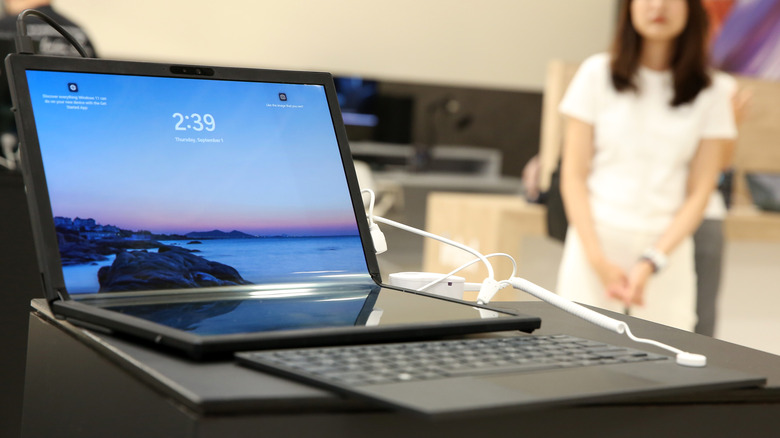
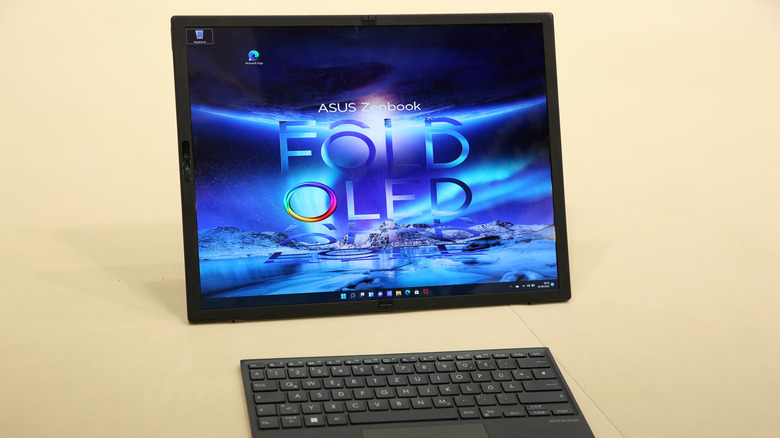
First up, we have a relatively tame entry: the Asus Zenbook 17 Fold. We can't really call it a laptop, nor is it a tablet, but rather, a cross between the two. For starters, the keyboard is completely detachable from the chassis of the computer that houses the screen, and charges independently of the device, too. The screen is a FOLED panel, which measures 17.3 inches and has a resolution of 2560 x 1920, making it a 2.5K panel. The Zenbook has an Intel Core i7-1250U processor, 16 GB RAM, 1TB storage, and an integrated GPU.
While that spec sheet is quite impressive for any productivity laptop, the Asus Zenbook 17 Fold's real party piece is its folding screen. Just like the Samsung Galaxy Z Fold 7 and other flip phones, the entire laptop screen can fold or be propped up in an "L" shape. This allows for various dual-screen configurations — most of which we saw no real need for. There is already a range of Asus laptops with dual screens for those who need that on the go, but the Zenbook 17 Fold is very cool, nonetheless.
Lenovo ThinkPad Rollable XD Concept
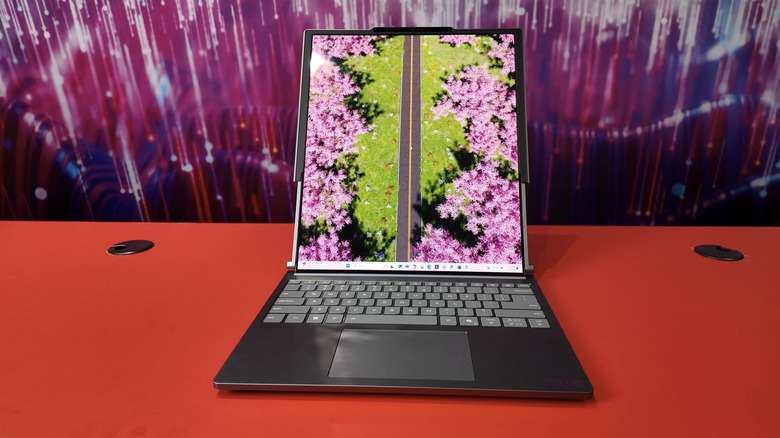
At CES 2026, Lenovo debuted laptop displays that could be rolled and unrolled. The way the ThinkPad Rollable XD is supposed to work is by extending a regular ThinkPad laptop screen to about double the vertical height. When the extended display is not needed, it wraps around the back of the screen.
The aspect ratio is a bit funny-looking, but we're sure that some niche operators can find use in it. The screen's glass is supposed to be quite tough, developed in collaboration with Corning, makers of Gorilla Glass. The ThinkPad version of the rollable screen is also supposed to support some advanced touch and voice-command functions, but we'll have to wait for a production laptop to truly gauge the device's capabilities.
Lenovo is fitting its rollable screen to its Legion gaming laptop range, and in a much better form factor, in our opinion. At CES, the concept Legion Rollable laptop was a 13.3-inch unit that could extend its screen to almost 16 inches, which is incredibly cool, since you're basically getting 16 inches of screen in a 13-inch laptop body. Furthermore, the Legion screen expands horizontally, rather than vertically like on the ThinkPad, meaning it's (arguably) more user-friendly.
Microsoft PixelSense Surface Table
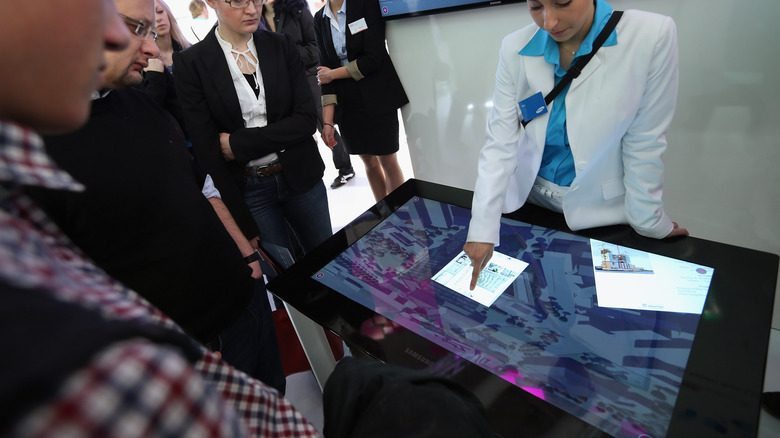
This device is a computer and a table rolled into one. Microsoft was using the Surface nameplate for this table thing about five years before the "regular" Microsoft Surface tablet computer launched in 2012.
Though the launch name was Surface, it would be christened "PixelSense" when the tablet debuted, though we'll call it PixelSense for clarity. At the time, the PixelSense table was quite innovative, with the ability to distinguish between not only multi-touch gestures (which we've become quite used to), but also multi-touch gestures from multiple hands at the same time on the table. Remember, this is technology from the 2000s.
Later, Microsoft licensed the PixelSense OS to Samsung, which produced the hardware and sold it as the Samsung SUR40 table. The tech is discontinued and obsolete, though it would be quite interesting to see what a modern version would look like.
Reactable
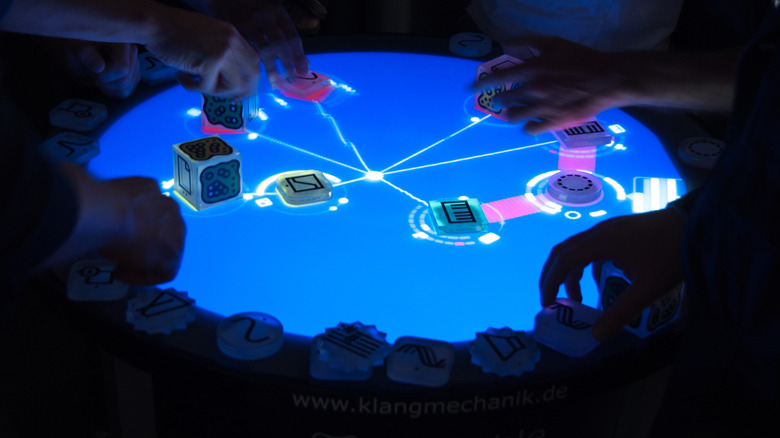
The Reactable is another touchscreen table intended for collaborative use, but this gadget distinguishes itself from the PixelSense with its circular design and musical purpose. In fact, the Reactable is a musical instrument, and it's been a while since someone's tried to make a new one of those.
The brainchild of university graduates, the Reactable operates by having users place different blocks in different orientations at various spots on the table. The table screen detects when these cube-shaped blocks are touching it and plays back the sound resulting from user input. The table was not a commercial success, but it must have felt like something out of a science fiction novel when it launched in the 2010s.
Microsoft Surface Hub
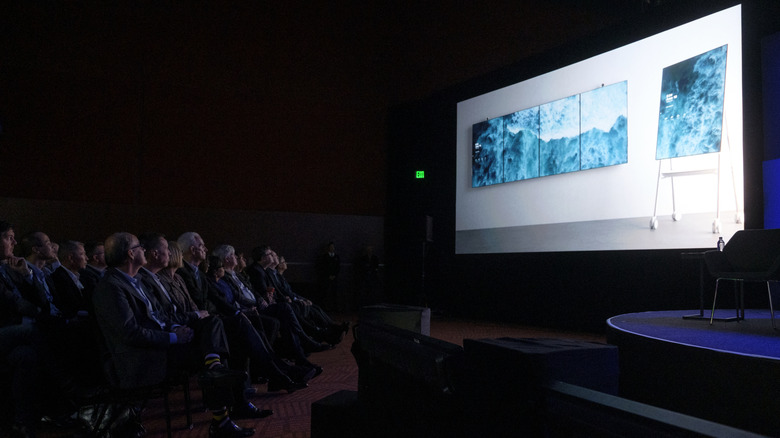
The Surface Hub is a digital whiteboard that is fixed to a wheeled stand or attached to a wall. It is a capable device with numerous features, including Microsoft Teams integration, a camera, and support for two special pens simultaneously. Additionally, the marketing emphasizes collaboration across borders and time zones in the marketing of the product, which is valuable for international businesses.
Windows 11 is available, but only the Enterprise and Pro versions — not the budget Windows 11 Home. But then again, with a purchase price of $8,999; it's unlikely that the target market will care much about that.
Samsung Family Hub Fridge
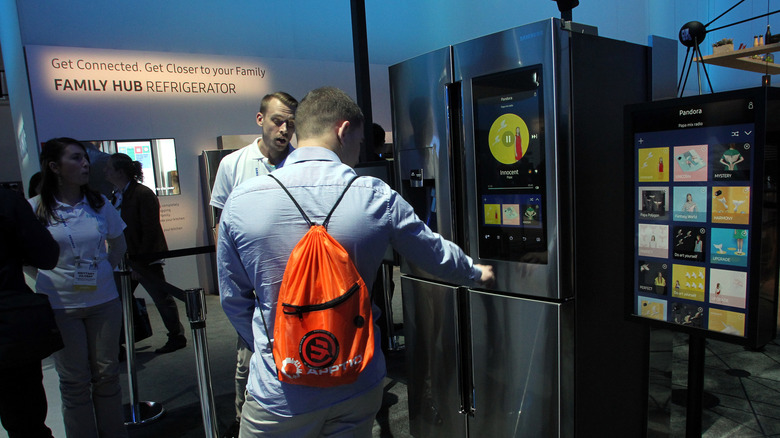
The Samsung Family Hub is a refrigerator with a massive, TV-sized screen slotted into one of the doors. Modern versions of the fridge are offered in two depths in the U.S., with these being counter-depth (roughly 29 inches) and full-depth, or roughly 36 inches.
The unit can also be customized through Samsung's bespoke fridge program, which lets buyers mix and match the colors and materials. The Samsung Family Hub is arranged in a four-door configuration, with the freezer unit at the bottom. The screen is mounted to the upper-right door and is 21.5 inches in size with a built-in camera.
Reviews say that the OS could do a better job integrating with other smart home devices, and that the app selection is a bit limiting. That last bit is important because you can neither add nor remove apps from the fridge — you get what you're given, end of. Making matters more complicated is the vertical display, which resembles an extremely oversized phone.
Thermomix TM7
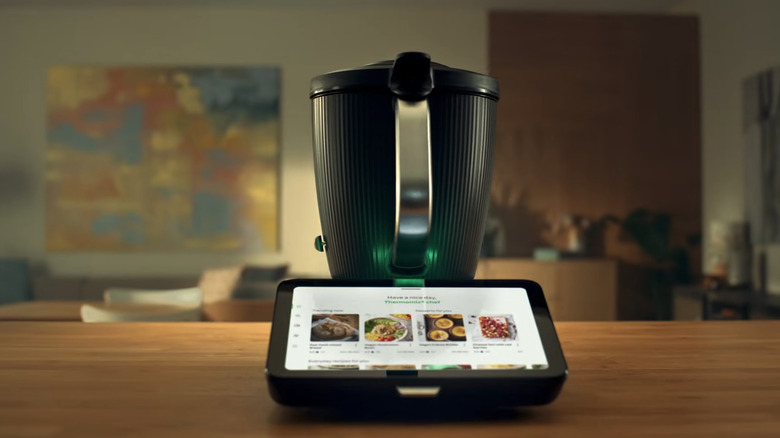
Let's now take a look at the only other kitchen gadget on our list — the Thermomix TM7. This device is essentially a many-things-in-one cooker, mixer, whisk, and steamer. There is a base device, kind of resembling a hot plate, to which various attachments are added. These special attachments include a steaming basket and an exclusive-to-Thermomix tool called the "Varoma." The latter operates at a temperature described as "Varoma Temperature" — whatever that means — and is supposed to aid in healthy cooking.
Other attachments include a spatula, a butterfly whisk, and a standard mixing knife to turn the thing into a blender. The touchscreen on the TM7 is located on the front of the base plate and has over 100,000 recipes on it. It'll even guide the user through preparation.
The company claims that the Thermomix TM7 is equivalent to 20 different kitchen devices, and it certainly looks that way, but since we haven't had hands-on experience with the product, we can't confirm this. The TM7 also supports some advanced cooking modes, such as sous vide and caramelization.
OmniTouch
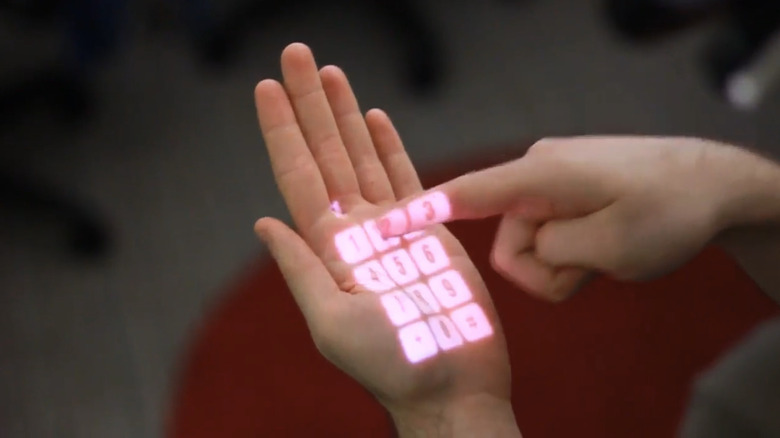
The OmniTouch, produced by a special division at Microsoft, in conjunction with Carnegie Mellon, is truly insane to think about. While it isn't strictly a touchscreen, it is a wearable piece of tech that turns anything you touch into a touchscreen. The device works by using motion sensors coupled with a small camera that detects the movement of your hand and fingers and translates it into input.
As you move your hand, a small projector beams the display onto the surface you point the OmniTouch at. If you're using a calculator, for example, the calculator will be projected onto a surface, be that a wall, chair, table, or even your own body. You can "click" on various parts of that projection to interact with it.
Aside from being cool, the tech has pretty decent application potential in fields where normal touchscreens won't do – where gloves and other touchscreen-unfriendly items are required, for example. For now, though, the product remains a research project with limited commercial backing.
Sony XPeria Touch Projector
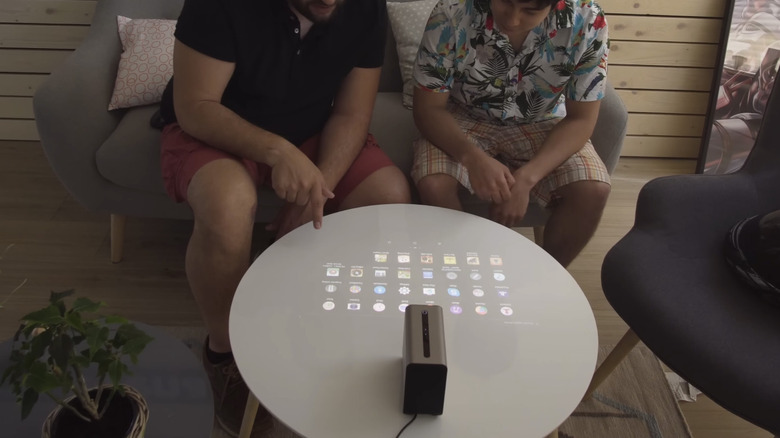
While the OmniTouch can turn any surface into a small touchscreen, the Sony Xperia Touch Projector takes that concept and turns it up to 11. This 2-pound device claims to turn any wall into a touchscreen-capable display.
Amongst a whole suite of other sensors, the Xperia Touch has a GPS, barometer, and a humidity sensor, and gets its power over USB. It has 32 GB of inbuilt storage, expandable with a MicroSD card. However, being released in the 2010s meant that it came with DDR3 RAM, which is showing its age compared to higher-speed DDR5 sticks.
The Xperia Touch also comes equipped with an inbuilt camera and stereo speakers, along with WiFi, Bluetooth, and Miracast. The system runs Android and can project up to 80 inches, or about six-and-three-quarter feet. What's the point of this thing, you ask? Well, we don't know either, but it's sure as hell one of the coolest and most innovative things to come out of Sony in a long time.
MBUX Hyperscreen
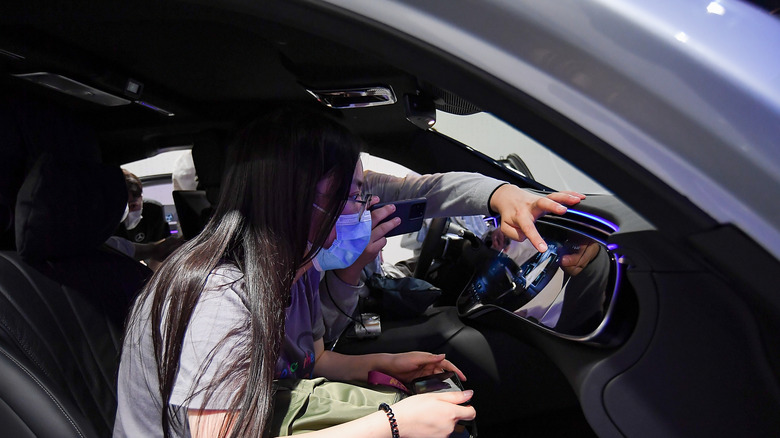
One of the few products on our list that you can still get your hands on (brand-new) in 2026 is the MBUX Hyperscreen. It is a 141 cm curved display that incorporates a car's infotainment display with behind-the-wheel gauge cluster information, along with a passenger infotainment screen. This "Hyperscreen" is exclusive to Mercedes-Benz, and only a select few models get it.
The touchscreens include the main infotainment display and the rear passengers' screens. The digital gauge cluster is just a standard display. The MBUX Hyperscreen is sophisticated, but they cost tens of thousands of dollars. We also have mixed emotions on the screen-ification of cars, but Mercedes seems to have pulled it off without overdoing it, for the moment.
HiMirror Slide
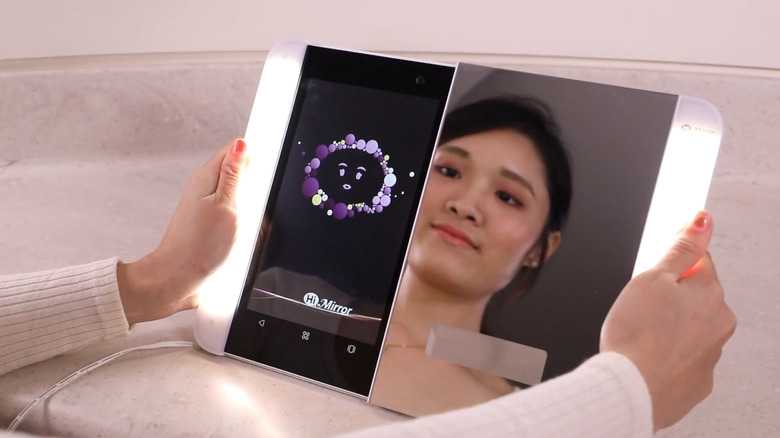
HiMirror is a smart mirror with a range of high-tech features. It is a square form factor with one half of the device being the actual mirror, and the other half being a touchscreen display that is basically a small tablet that is embedded into the mirror. This tablet can slide in and out of the housing to reduce the footprint of the device, though we imagine most users just leave it in the open configuration.
There are also LEDs located at various spots on the bezel that illuminate your face, and the bottom (or side – depending on how you angle the device) has an area for controlling these LEDs. You can download YouTube, Spotify, and other apps on the HiMirror Slide, and there is also a slide-out camera built in. The tablet side of the HiMirror runs on Android instead of a custom OS, and reviews say it is occasionally laggy. HiMirror ceased operations at the end of 2024.
LG stretchable screen
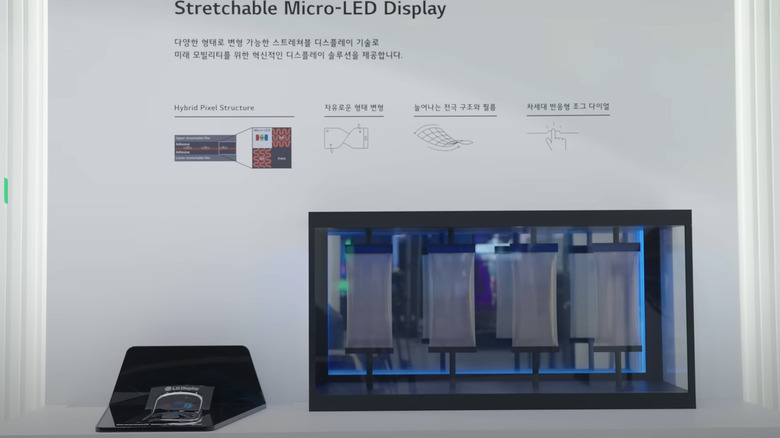
Here is another gadget that's a concept rather than a product. The LG Stretchable screen debuted in 2022. It was 12 inches in size and had a display resolution of 100 pixels per inch, which isn't exactly earth-shattering. However, the screen was elastic and could be pulled both horizontally and vertically. It could even be twisted.
This bendy, stretchy tech could be used in everything from fashion to healthcare and even the military. The original version of the screen shown in 2022 wasn't a touchscreen, but the follow-up model a year later was reportedly touch-sensitive. At the time of launch, the LG stretchable screen was the most stretchable screen in the world, able to elongate its original footprint by about 50%. Impressively, even in its stretched configuration, the screen is said to maintain its resolution, even if the resolution isn't that impressive to begin with.