

12 Of The Most Comfortable Harley-Davidson Bikes Riders Say Are Best For Cruising
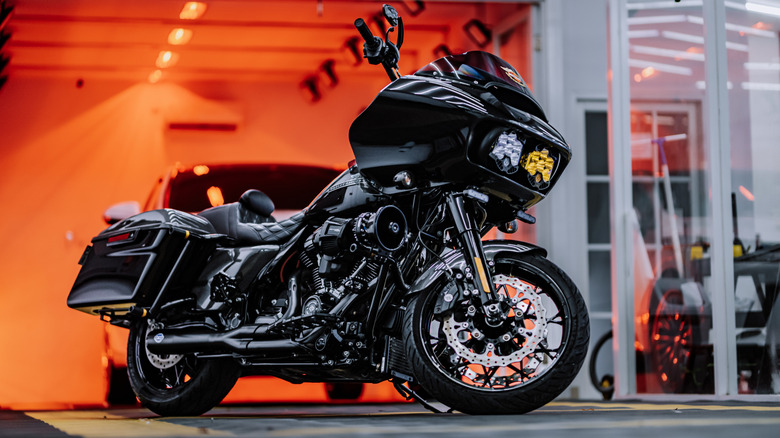
It stands to reason that comfort is the defining characteristic that separates real cruiser motorcycles from ones that just happen to have saddle bags at the back. When riders talk about comfort, they rarely refer to style or performance but about spending several hours on the road gobbling up highway miles. If they can arrive at their destination without needing immediate chiropractic intervention? That's absolutely a plus.
Brands like Harley-Davidson are known for making some of the most comfortable (and expensive) cruisers currently on the market, though some of these bikes are better than others. So, what does "comfort" mean in this context? For one, bikes with an upright riding position usually are quite comfortable, probably because they support better posture and ergonomics, especially on longer rides. The suspension setup on these bikes also matters, as does the rider seating layout, be it Harleys for two riders or for one.
The seat material itself is also important, as is the windshield, which is often an underappreciated part of cruising comfort — it protects riders from being buffeted at highway speeds. Harley has been perfecting this formula for decades, and what separates a great Harley cruiser from an okay one is all the minor details: Frame-mounted fairings that reduce weight on the handlebars, proper windshields that create pockets of calm, and suspension tuning that absorbs bumps rather than shooting them up your spine. Here are 12 of the best Harley-Davidson cruisers that embody this comfort.
2026 Road Glide
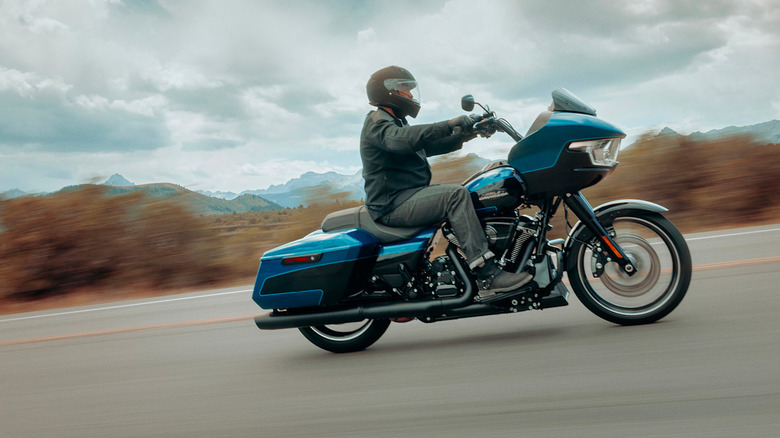
Starting our list off strong, we have the Harley-Davidson Road Glide range, widely acclaimed to be a very comfortable set of long-distance cruisers. The Road Glide's sister model is the Street Glide, which we'll cover in the next section, though it too is largely similar to the Road Glide. Power for the Road Glide comes from the creamy smooth Milwaukee-Eight 117 engine that displaces 1,923 cc while making 107 hp and 129 lb-ft of torque. While those numbers seem monstrous, so too is the Road Glide's weight, which is an elephantine 838 pounds in running order.
However, the entire bike is optimized for comfort, which begins at the front with the classic sharknose fairing mounted to the frame of the bike. This is an important distinction, because having such a big, heavy fairing mounted to the bike frame eases the load (and weight) on the handlebars, making the bike easier to maneuver for the rider at higher speeds. Furthermore, the iconic plush two-person seat on the bike is heated at both the front and the back and includes adjustable armrests for the rear passenger. Speaking of that rear passenger, they also get massive floorboards so they can have somewhere to rest their feet on long rides. In addition to the main rider's seat of speakers, the rear passenger also gets a set of two, giving this bike a a four-speaker audio system. For 2026, the Road Glide has a base MSRP of $25,999, with a destination fee of $895.
2017 Harley-Davidson Road King Special
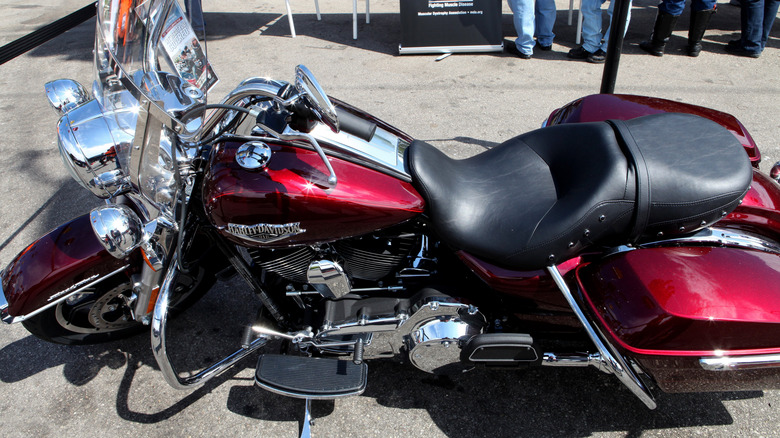
Readers will be pleased to learn that many of the features we've listed above can be had without paying that exorbitant MSRP for a brand-spanking-new 2026 Road Glide. An older model, such as the 2017 Road King that we're recommending here, will get you about 90% of the way there at less than half the price; Road King models from around 2017 are selling for between $7,000 and $10,000 on the used market. There are some minor differences between the Road Glide and Road King, but both are large, comfortable touring models from Harley that are built to go the distance. In terms of comfort the seat is large and plush like all Harley tourers, while the bike's then-new 107 engine managed to cancel out as much as three-fourths of its vibration while idle.
Windshields were an option on the 2017 Road King, but reviewers said that the lack of one didn't make a notable difference while riding. Also, the bike doesn't force riders to adopt a particular seating position, as there is a floorboard running its entire the length; the pillion-side ones are adjustable as well. Furthermore, the position of the exhaust and cat system were tweaked for better comfort, as they no longer kick out heat directly next to the pillion rider. Lastly, one of the most notable changes (compared to the current generation) would be the engine — 2017 models come with a Milwaukee-Eight 107 that makes 93 hp and 114 lb-ft of torque while displacing 1,746 cc across its twin cylinders.
2005 Harley-Davidson Road King Classic
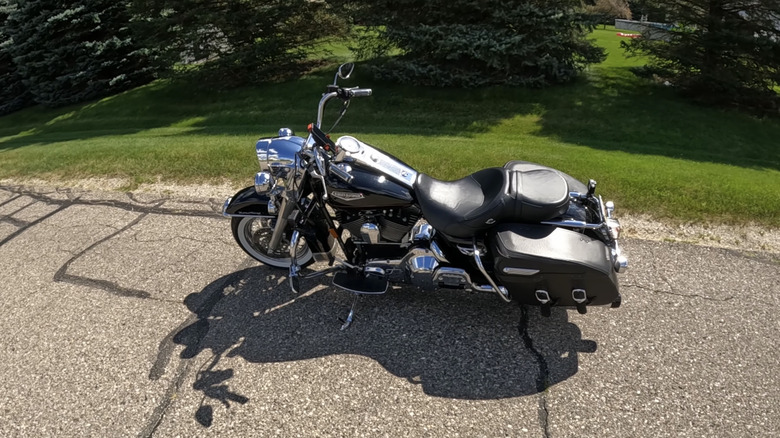
Since we're talking about older bikes, let's bring up the 2005 Harley-Davidson Road King Classic. As far as comfort went in the early aughts, there wasn't much more that one could ask for in a big, lumbering cruiser. It was easier to maneuver than its size suggested, the seat was wide and comfy, and the handlebar positions were not biased too high or too low. While the bike was comfortable overall, we would be remiss if we didn't mention that it shipped with what is widely considered to be the Twin Cam 88, largely considered to be the worst Harley engine of all time due to its tendency for mechanical failure.
This bike made 67 hp and 86 lb-ft of torque, displacing 1,450 cc across two cylinders. And yes, it can also be a bit iffy from a reliability standpoint to look at a bike from before 2007, which is when Harley shifted to fuel injection as standard, but the Road King Classic had soul. Readers should be advised that the 2005 models came with a carburetor as stock, though Electronic Sequential Port Fuel Injection (ESPFI) was available as an optional upgrade. If you are considering one of these, look for one that had that particular box checked to avoid some mechanical headaches.
2009 Harley-Davidson Road Glide
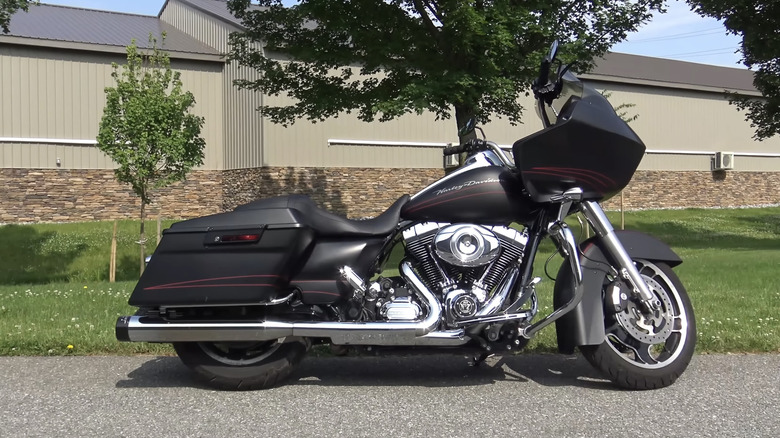
While we're on the topic of early 2000s large Harley touring bikes, let's take a look at the 2009 Road Glide. As mentioned above, Harley's non-carbureted ESPFI engines became standard on its touring bike range in 2007. Then came a range of new engine upgrades, resulting with the 2009 Road Glide coming equipped with a 1,584 cc Twin Cam 96 engine that made 65 hp along with 92 lb-ft of torque. Also new for 2009 was a completely redesigned chassis that really set the Road Glide apart from previous years.
The main benefit of the new frame was that it transferred load a lot better between the back wheel, steering area, and overall structure, greatly improving handling. An option to turn off the combustion in the back cylinder of the V-Twin to reduce the heat that was kicked out towards riders was appreciated, and the wind protection from the bike's fairing was almost too good in some circumstances. All this is why we've mentioned a Road Glide immediately after a Road King — despite being just four years apart, they were very different beasts. Road Glide models from 2009 to 2014 are currently selling for between $6,500 and $8,000 on the used market as of early 2026.
Any Project Rushmore Street Glide
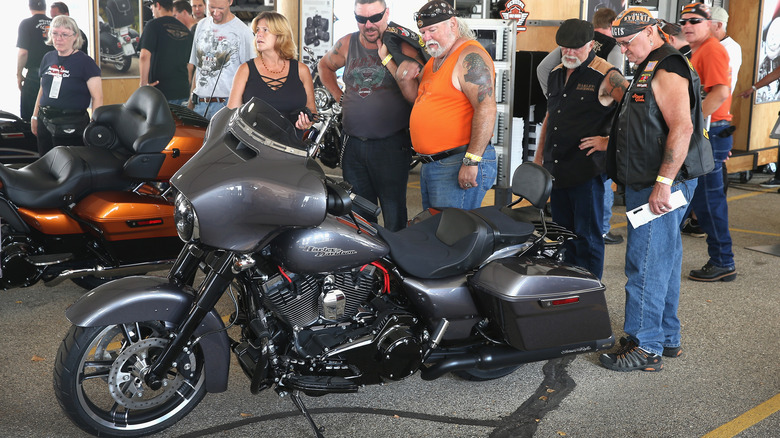
Many points stated above will also apply to the Harley-Davidson Street Glide, which is, according to consensus, almost the same as the Road Glides that we've already recommended. However, there are a couple specific special editions of the Street Glide that are true standouts, with the first being the Project Rushmore variants. These aren't strictly "special editions" per se, as Project Rushmore was a customer feedback program from Harley that sought to address rider complaints. The Street Glide got updated as part of this program in 2014, getting a bigger engine, redesigned aesthetics, and some tech upgrades.
Specifically, the new powerplant was the Milwaukee 103, which displaced 1,687 cc across twin cylinders and made 76 hp and 96 lb-ft of torque, all of which would be needed to get this gargantuan 818-pound bike up to speed. The comfort updates to the Street Glide as part of Project Rushmore started with a redesign to the iconic batwing fairing at the front of the bike that made airflow smoother at speed. Other changes made included changing the profile of the air filter so that it is out of the way of the rider's legs, bolstering the already good seat cushioning, giving the passenger more leg room, and improving the cooling system on the engine so it kicks out less heat directly onto a rider.
2026 CVO Street Glide
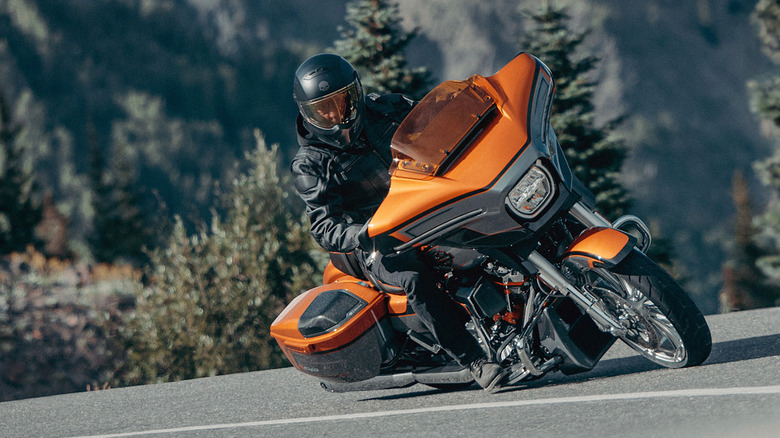
The other special version of the Street Glide that we want to talk about is the CVO variant. For those who don't know, "CVO" on Harleys stands for "Custom Vehicle Operations," and these models really are a cut above. For 2026, the CVO Street Glide is broadly similar to the Road Glide, keeping the status quo, but offers a slightly different riding experience. To begin with, the Street Glide ditches the shark nose fairing for the legendary bat wing one, something that does have an impact on riding dynamics.
As with the base Street Glide models, the rear pillion rider gets the benefit of a plush backrest that also has adjustable arm rests. There is also storage behind that backrest, something Harley calls the "Grand Tour Pak." Reviewers report that the CVO offers noteworthy back support for the main rider, and has loads of tiny details ironed out, like the position of the floor boards and the overall ergonomics of the bike. Additionally, it's worth noting that the fan in the heat exchanger of the engine cooling system directs heat away from the rider instead of shooting it out the side, which is a thoughtful detail on Harley's part. The seats and the hand grips also have built-in heating elements for those cold-weather days, and the windscreen is four inches larger than on regular Street Glides, providing better protection to riders.
2016 CVO Street Glide
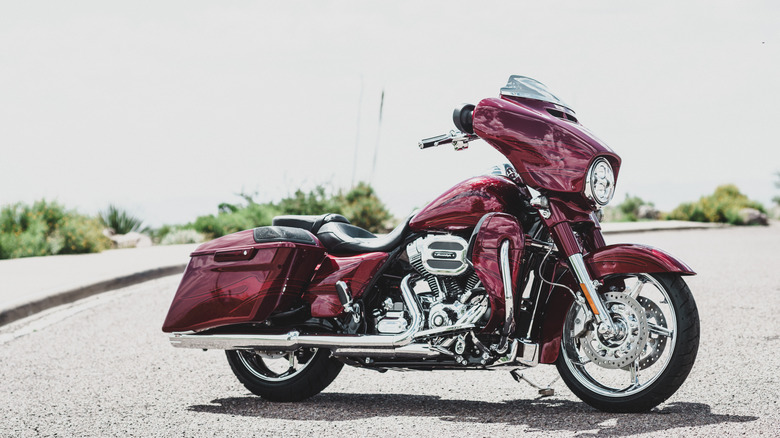
For those buyers who don't fancy dropping the equivalent of a house down payment on a bike, looking at an older model can save a lot of dough. A 2016 CVO Street Glide will get buyers quite a lot of bike-per-dollar, not least of all through the 1,801 cc Screamin Eagle 110 engine that makes 95 hp and 115 lb-ft of torque. Truth be told, we'd be hard pressed to find a CVO model that wasn't comfortable, but the Street Glide has always occupied the top of the lineup. And lastly, for those who care a great deal about the sound experience, the 2016 Street Glide models significantly upgraded the sound system, now with two 300-watt amps and a tri-speaker setup.
The hand controls are ergonomic and feature heated grips, the seat is huge with floorboards running the length of the bike, and on top of all that, the model also received several comfort improvements courtesy Project Rushmore. Furthermore, the bike automatically shuts off one cylinder when it detects that it is idling, quickly halving the heat output between the rider's legs. This bike also has a vented fairing, helping to direct airflow from the front through to the lower body of the riders; in typical Harley attention to detail, this model year saw these vents color-matched to the rest of the bike. As of early 2026, 2016 CVO Street Glides are selling for about $15,500 second-hand.
2023 Harley-Davidson Electra Glide
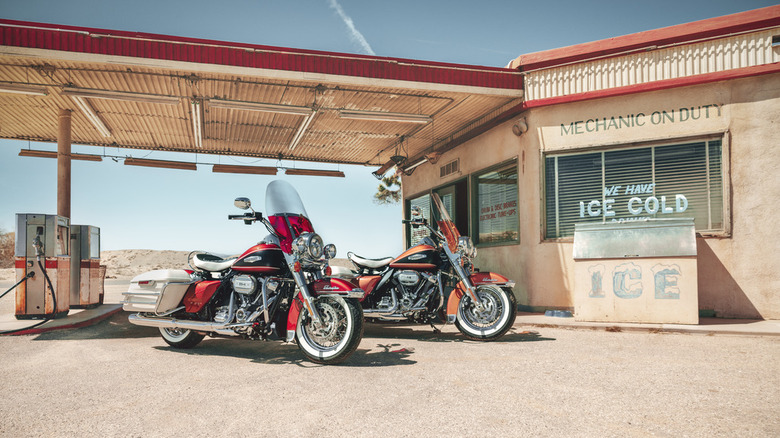
The Electra Glide is one of the most loved models in the Harley-Davidson lineup; it's a shame that Harley no longer uses the name, though it lives on in soul through the Street Glide range. As with all the great Harley tourers, the ergonomic seat provides back support for the rider, and the pillion rider gets an amazing backrest along with adjustable arm rests. The bike does a good job of removing buffeting, and the floorboards actively help dampen vibrations.
Once again, Harley rerouted the exhaust system compared to prior years to avoid discomfort. Also, newer Street Glides (successors to the Electra) have vents at the front of the bike that can be toggled open or shut to control the amount of wind that hits the riders' lower bodies. For 2023, the Electra Glide came with its Milwaukee 114 engine, displacing 1,868 cc across two cylinders with a bore of 102 mm and a stroke of 114 mm. This gave the bike 93 hp and 117 lb-ft of torque, and it was mated to a six-speed transmission. 2023 models are currently selling for about $13,000 on the used market.
2020 Harley-Davidson Low Rider S
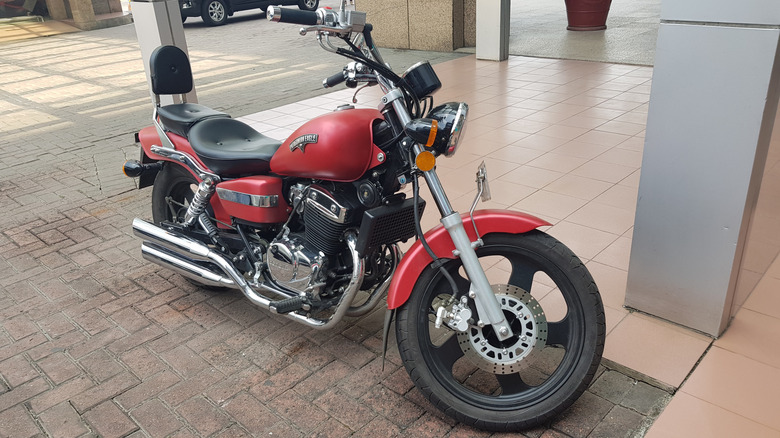
The first bike on our list that isn't from Harley's touring line is this one, the Low Rider S. We specifically mentioned the 2020 model year because the Low Rider S changed its platform in 2018, transitioning to a Softail model. We didn't do extensive research into any possible issues the redesign might have brought with it, but it's always good practice to give a new vehicle design a couple years to iron out any kinks.
There's really not much to be said about the Low Rider's comfort — the seat is well-designed for holding weight and keeping the rider in place during acceleration, and the air filter was also redesigned to not interfere with a rider's leg placement. With comfort covered, we come to the engine: The Low Rider S's Milwaukee 117 displaces 1,868 cc, making 90 hp and 119 lb-ft of torque. As of early 2026, used Low Rider models from 2020 or thereabouts are selling for between $8,000 and $10,000 on the secondary market.
2017-2025 Harley-Davidson Tri Glide Ultra
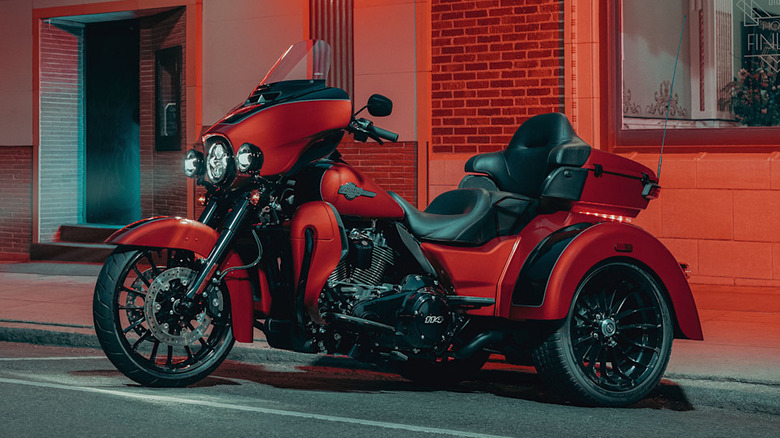
Next up, we have the Harley-Davidson Tri-Glide Ultra, which was the most kitted-out Harley trike that money could buy. It seemed to be the perfect cross between a motorbike and a car, given that riders didn't have to worry about things like balancing the bike. The Ultra trim level was especially loaded with features, including 6.8 cubic feet of cargo space, seven different safety systems, and even a reverse gear that would work uphill. Like other touring models, it has a 2-up seat system with lower back support for the main rider and what amounts to basically an armchair with a backrest for the pillion rider.
This backrest is integrated into Harley's Tour-Pak luggage carrier, and supports adjustable armrests available for purchase separately. The fairing is mounted to the frame (as opposed to the fork), meaning that this 1,237-pound bike will be that much easier to maneuver, given that there's less weight on the handlebars as a result. It's the epitome of touring bikes, and one can't really go wrong with it in terms of comfort. Power comes from the Milwaukee 114, displacing 1,868 cc and making 83 hp with 116 lb-ft of torque. 2025 models had a base MSRP of $37,999 (with dealer-specific destination fees); older models are available for significantly less. Harley still offers three-wheeler bikes in 2026, but under a different naming system, affixing "3" to the end of a model (such as the Street Glide 3).
2021 Harley-Davidson Heritage Classic 114
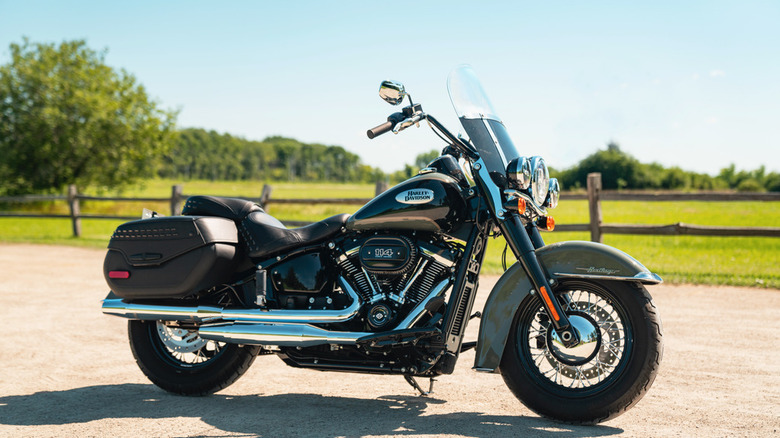
Another non-tourer bike that makes our list of the most comfortable Harleys is the Heritage Classic 114. Arguably the brand's bread-and-butter model, it's not one that people would say is good for cruising, but we beg to differ. According to our research, the Heritage 114 is a perfectly capable cruiser provided that you're not out there banging out 400-mile days on the regular. For those riders who want a simple, no-nonsense Harley that can still hold its own on the occasional cruise road trip, the Heritage Classic 114 makes perfect sense.
It makes plenty of power at 93 hp and 114 lb-ft of torque, has a manageable weight of 728 pounds, and looks objectively great Best of all, it won't break the bank; as of early 2026, Heritage Classic 114s from 2021 and thereabouts will run buyers between $7,000 and $11,000 for models that are in good condition. In terms of comfort, riders report the seat to be quite reassuring, and basically everyone is full of praise for the floorboards and handlebar placement. The upright riding position is reportedly a good fit for all sizes of rider, which is not something that can be said of every Harley. As a result of all of that, we can confidently say that the Heritage Classic 114 will be a much easier bike to live with for the rider who cruises only occasionally as opposed to having a big, hulking tourer in the garage taking up space.
Methodology
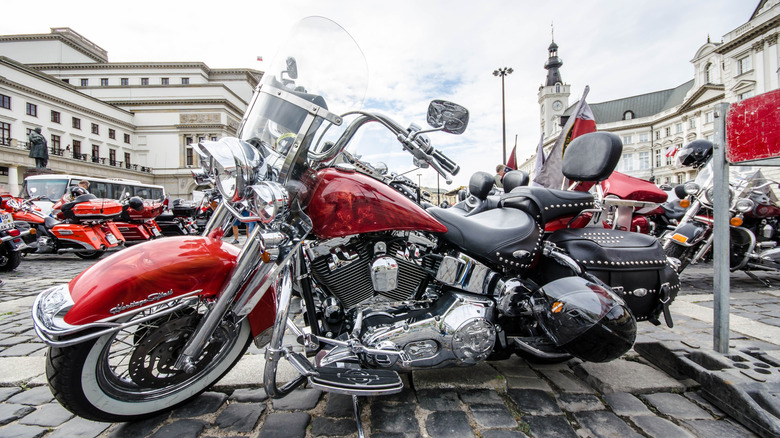
After shortlisting some of the most legendary (read: best-selling) Harley-Davidson models from the past few years, we then began to look at detailed user reviews online. Where possible, we tried to default to editorial pieces from hands-on reviewers, such as Motorcycle.com, CycleWorld.com, MotorcyclistOnline.com, RideApart.com, and MotorcycleNews.com, among others. Where available, the specifications for the bikes — such as the engine displacement, bore, stroke, weight, seat height, and more — were sourced directly from the manufacturer's page for that particular bike and model year.
Pricing data was pulled from trusted third-party review sites, such as the ones listed above, or from authorized dealers who listed the bike's MSRP on their websites. We also looked at several owners forums for many of the motorcycles on this list; this last resource was invaluable in getting real-world, hands-on, long-term feedback for each bike's comfort. Additionally, we focused on Harley models that had engines featuring ESPFI as opposed to carburetors to help future-proof any potential purchases.