

The 2026 Polestar 4 Is Weird, And That's Just Great
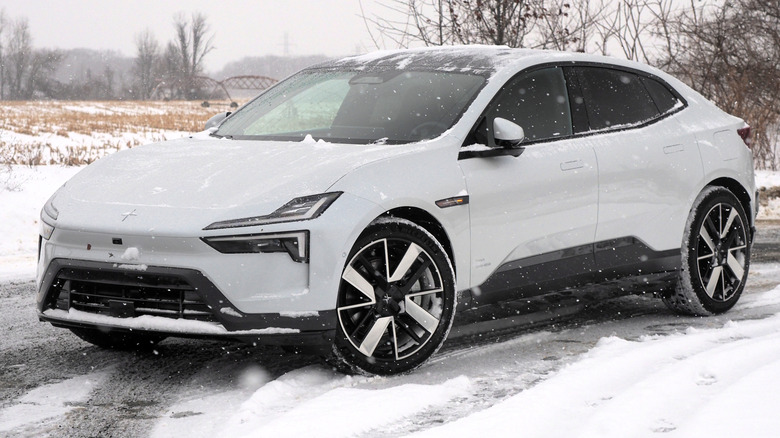
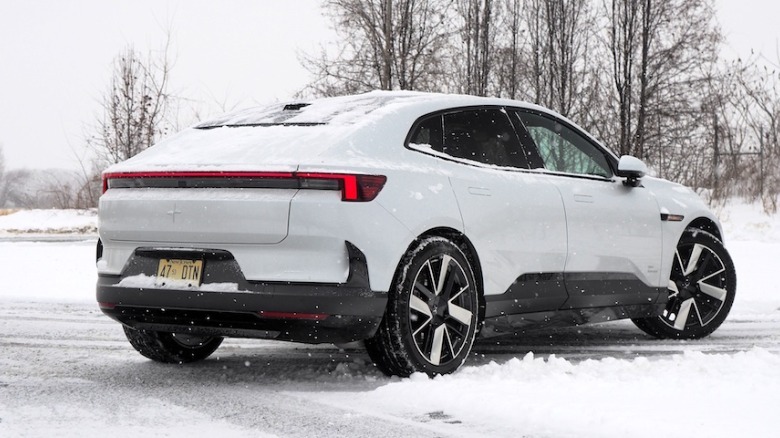
The 2026 Polestar 4 may be a new addition to the automaker's line-up, but it's what's missing which has arguably overshadowed the SUV coupé's arrival. After all, the shapely Porsche Macan Electric rival is priced to sell with its $57,800 starting price — including destination but before some seriously hefty incentives Polestar is offering to make up for the absent EV tax credit — has plenty of power and no shortage of luxury tech. All anyone's talking about, though, is the fact that it doesn't have a rear window.
Polestar insists that replacing the rear glass with a camera's view brings a genuine benefit, allowing the C-pillar and some of the roof's structural support to be pushed back and so, in turn, the rear seats. That means more legroom and headroom back there, plus bigger headrests since they won't block the view out the back. Oh, and filling the trunk to the brim won't impact visibility, either.
 Chris Davies/SlashGear
It's a compelling argument, but does it — and the rest of the Polestar 4 experience — hold up in practice?
Does Polestar's no glass gamble pay off? It's complicated
Certainly, it feels spacious in the back seats. There's 37.8 inches of headroom and 36.6 inches of legroom, and the reclining rear seat option helps the second row avoid feeling second-best. The glass roof assists in keeping things airy, too, though I was surprised how much difference in light the solid rear hatch makes.
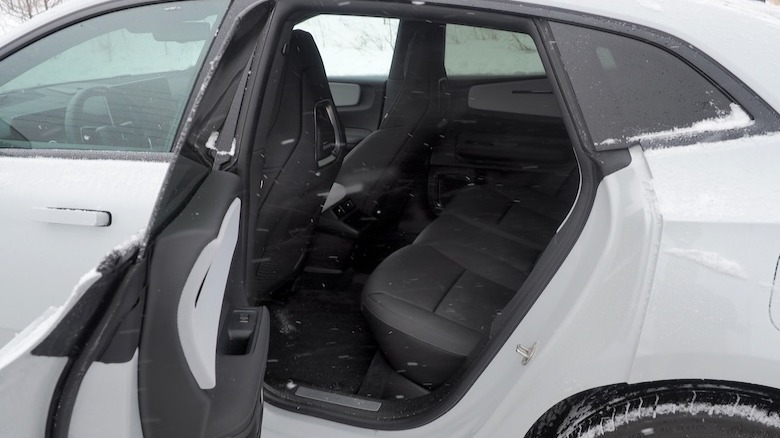
My big question was whether it paid off against the EVs that Polestar cites as the main competition, like Porsche's Macan EV and Mercedes-Benz's GLC Coupe. Sadly, the Germans have dropped the ball when it comes to their measuring tape: neither Porsche nor Mercedes could actually confirm rear headroom for either car. Still, the Polestar 4's swooping roof competes admirably with the regular GLC SUV, which manages less than two inches extra rear headroom despite looking like, well, an SUV.
Polestar's is a smaller EV than I expected, or at least looks it. The Polestar 4 is — at 190.5 inches long, 60.4 inches tall, and 81.4 inches wide with the side-mirrors folded — actually about 9 inches longer than the Polestar 2, a couple of inches taller, and about 8 inches wider. It's actually almost as long as a Polestar 3, though that SUV is a few inches taller again. There's about 6.5 inches of ground clearance.
Lots of sensors, not much color
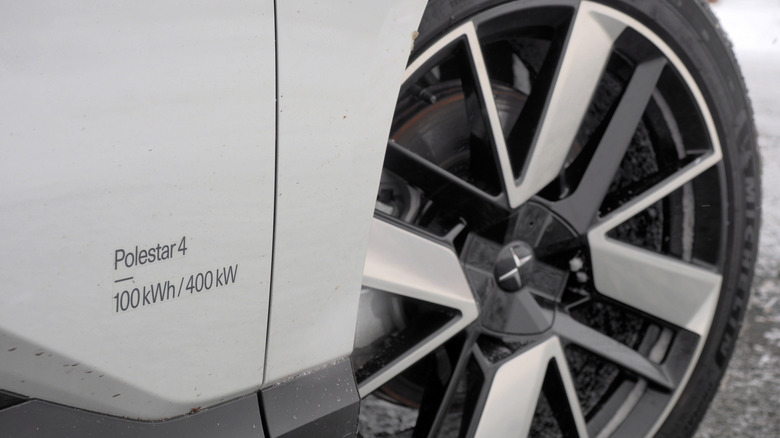
Pre-incentive pricing kicks off at $57,800 (inclusive of destination fee) for the long-range, single-motor Polestar 4. You spend $6,500 more for the dual-motor version.
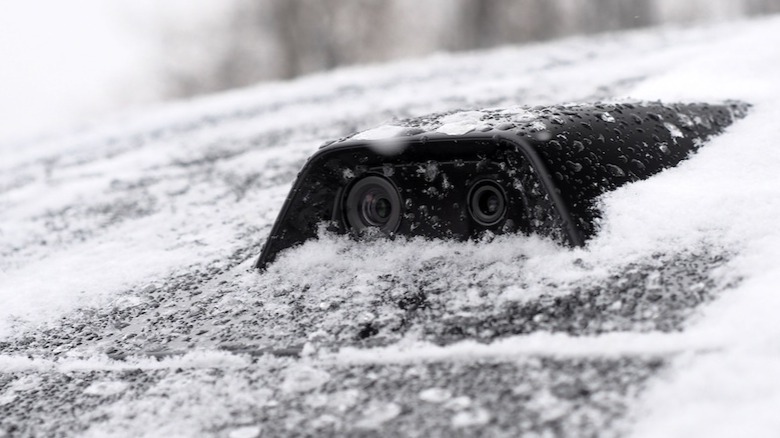
As well as the big battery and no rear glass that gets you, the Polestar 4 is bristling with sensors: 11 cameras on the outside, with 360-degree coverage around the car, plus 12 ultrasonic sensors, and a mid-range forward-facing radar. Camera number 12 is inside, mounted in the A-pillar to peer at the driver and make sure they're paying attention.
 Chris Davies/SlashGear
For a brand once associated with a bright cyan blue, the array of paint choices for the Polestar 4 is positively dreary. Silver is the only free option; you'll pay $1,300 for white, black, a dark silver, or a blue-ish silver; $3,000 for matte gray or matte gold. 20-inch wheels are standard; 21-inch versions are $1,800. The $4,500 Performance pack includes 22-inch wheels along with gold accents on the Brembo brakes.
No rear window isn't a deal-breaker
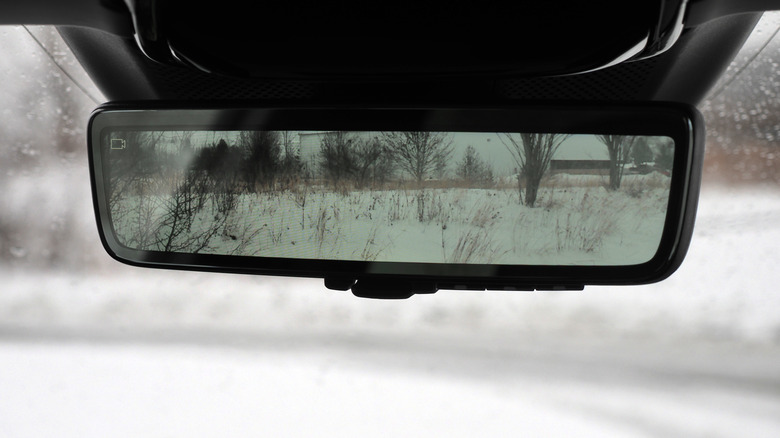
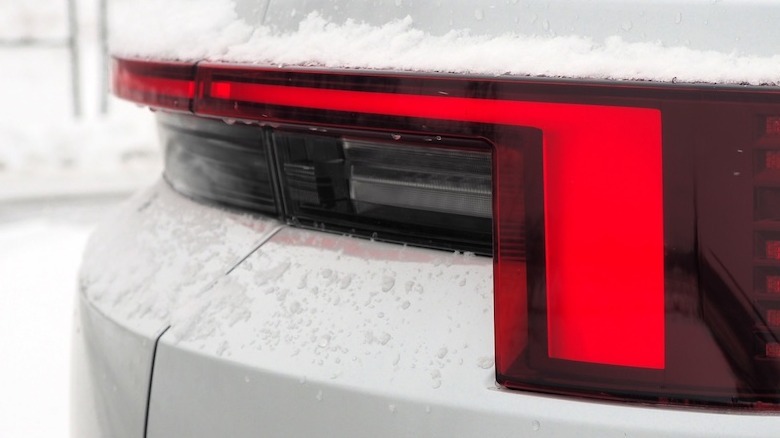
Undoubtedly the most controversial aspect of the Polestar 4 is what it omits, namely a rear window. It's not the first car to offer a camera's view beamed through to the rearview "mirror" inside, but here it's the only option, not a choice. There's still a mirror, but it's useful only to check on the behavior of those in the back seats.
In practice, I can't say I really missed the glass. Depending on how you typically sit and have the mirror adjusted, you might find the Polestar's digital display encompasses a little less of the rearward view than you're used to; still, there was no area left invisible once I factored in the side mirrors. And not having to wait for the rear window to warm in order to clear snow and ice was a definite improvement.
 Chris Davies/SlashGear
Under the solid tailgate there's an 18.8 cu-ft trunk — complete with a multi-position trunk floor that hides a separate cubby underneath — which expands to 54.2 cu-ft with the rear seats folded. That's more than the 16.8 / 47.6 cu-ft a Porsche Macan Electric provides, though the German EV's 3 cu-ft frunk is six times what the Polestar 4 offers. It's enough, anyway, for the portable charging cable.
A pared-back, tech-forward cabin
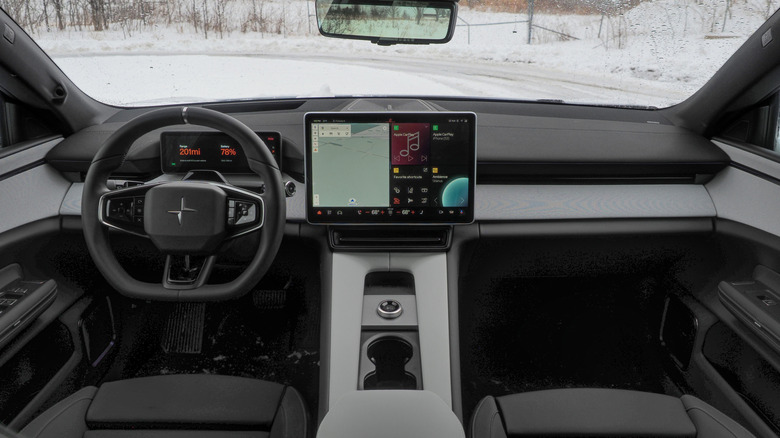
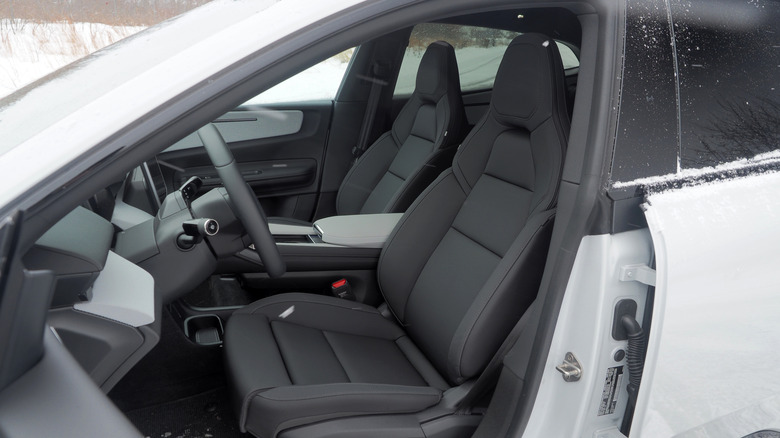
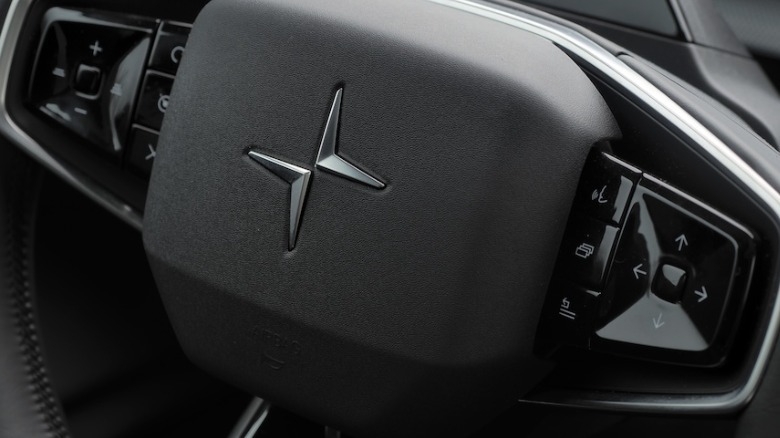
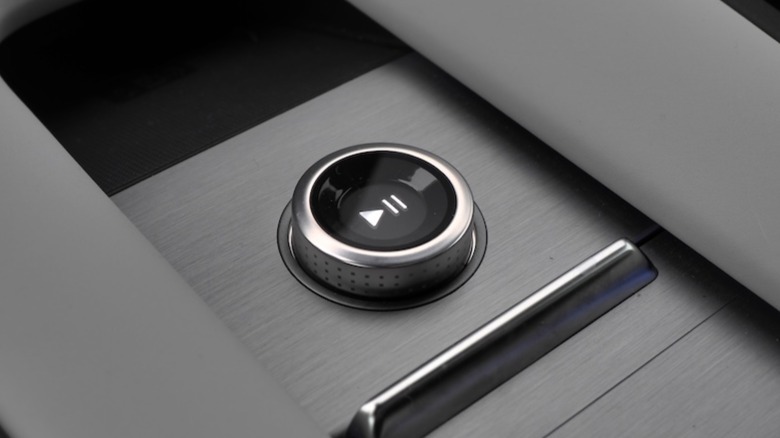
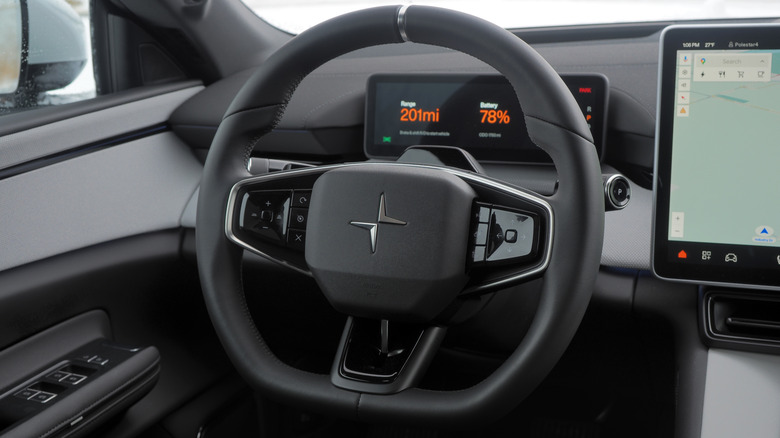
Absent glazing aside, the Polestar 4's cabin doesn't stray far from the typical EV aesthetic. That is to say, minimal physical switchgear, a big touchscreen, a decent number of cubbies, and lots of ambient lighting. Polestar does at least give you a big volume knob (which doubles as a play/pause button) and, unlike the infuriatingly unmarked steering wheel in the Polestar 3, the buttons on the Polestar 4's wheel have clear legends. Oh, and the driver gets dedicated switches for the front and rear windows, too (which in a sensible world shouldn't be notable, but is).
 Chris Davies/SlashGear
Heated front seats with fabric trim are standard, with the $5,500 Plus Pack adding a heated steering wheel, heated rear seats, a third climate control zone for the rear (with a 5.7-inch touchscreen back there to control it, and power reclining seats), a head-up display, Harman Kardon premium audio system, and foot-triggering for the standard power tailgate. On top of that, leather is a $3,700 option that also bundles ventilation, massage, and headrest speakers for the front.
 Chris Davies/SlashGear
A 360-degree camera, adaptive cruise control, and parking assistance are standard. For the moment, Polestar is also including the Pilot pack, which adds Pilot Assist, hands-on highway assistance that can help keep the EV in lane, and Lane Change Assist, which automatically moves lanes when the driver hits the turn signal. They work well, but for the moment — and despite the attention camera — there's no hands-off assistance like with Super Cruise or BlueCruise.
Gadget improvements but some things are still missing
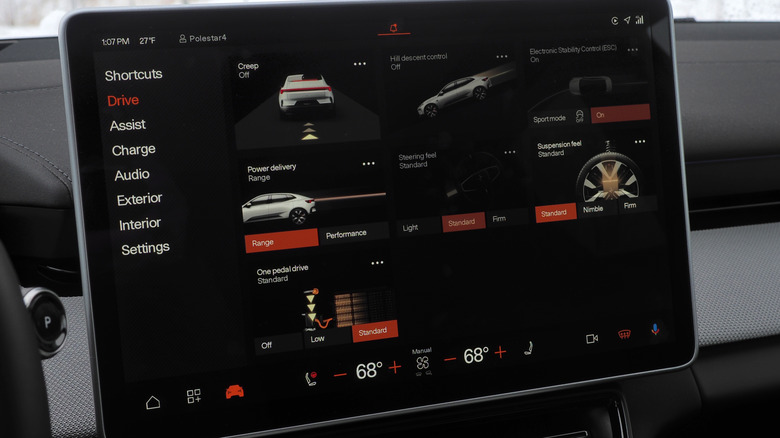
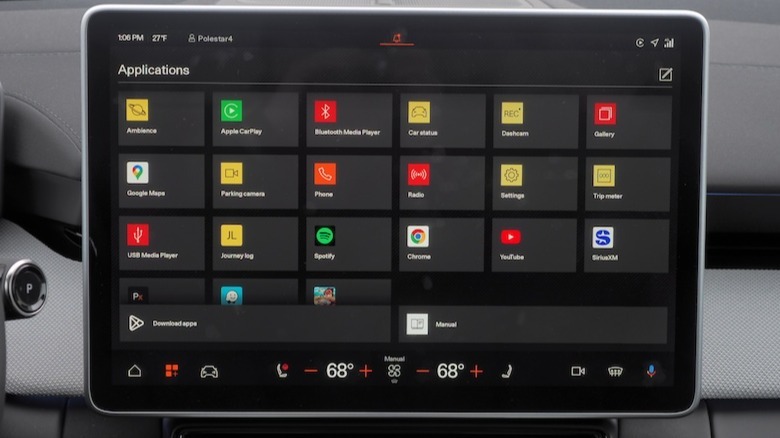
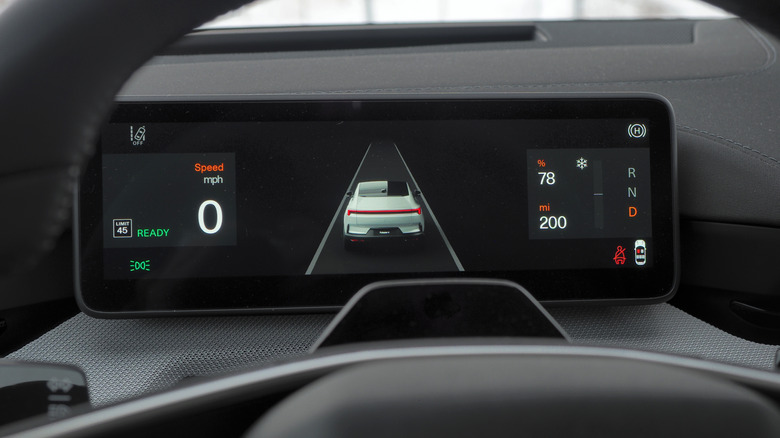
Polestar was an early adopter of Android Automotive OS, now known as Google built-in, and the Polestar 4 builds on that with more screen (and more complexity). The 15.4-inch center touchscreen and 10.2-inch driver display are crisp and bright, while the Plus pack adds a head-up display. There's an embedded 4G modem — with a 12-month subscription bundled — that's used for apps like Google Maps, Waze, YouTube, and the Vivaldi browser. Or, you can use wireless Apple CarPlay (but not Android Auto).
Compared to the smaller display and simpler UI on the Polestar 2, this latest iteration feels a tad more overwhelming. It is, at least, all responsive and swift. Polestar includes a heat pump as standard, using surplus heat to warm the cabin, which is good; it also replaces physical vent controls with touchscreen adjustment, which is bad.
 Chris Davies/SlashGear
A 15W wireless charging pad is standard, as are four USB-C ports (one of which supports a tablet/laptop-friendly 60W), and there's a 12V outlet in the trunk. Unfortunately, Polestar still hasn't seen fit to include a 120V AC outlet.
Every bit as fast as you'd expect it to be
Instead, you're expected to use this Long Range model's 100 kWh battery primarily for driving, and I can't complain too much about that. While the single-motor version manages a 6.9 second 0-60 mph time from its 272 horsepower and 253 lb-ft of torque, the dual motor trims that to just 3.7 seconds courtesy of 544 hp and 506 lb-ft. It also bumps the towing capacity up, from 2,000 pounds to 3,500 pounds.
No surprise, then, that the dual-motor Polestar 4 feels fast, and with its continuously adjusted active dampers, it's pretty smooth, too. There are three settings for the suspension's firmness, though — unsurprising, given the 5,192-pound curb weight in AWD form — even the softest is sharply sprung. That poise, along with the weight-adjustable steering, fit the sportier ethos here better than in the firm (but family-focused) Polestar 3.
 Chris Davies/SlashGear
Bury your right foot, and acceleration is as rapid as we've come to expect from premium EVs. Most distinct, though, is how well Polestar dials in the regenerative braking; it's charmingly easy to modulate speed precisely without needing the brake pedal. Overall, there's a solidity to the driving dynamics, which has been consistent across all the automaker's cars to date. Composed and luxurious, rather than buzzy and golf-cart-esque.
Charging speeds lag the competition
There's a Performance Pack on offer, a further $4,500 (assuming you already coughed up for the dual motor and Plus options), that adds the even bigger wheels, sportier suspension tuning, bigger Brembo brakes, and gold accents. It was absent on my test car, but I can't imagine I was missing too much. In non-Performance form, and on the 21-inch rims, the Polestar 4 is already edging on "any firmer would be too firm" territory.
Personally, I'd stick with the 20-inch wheels and spend some of the money I'd saved on a more potent home charger. The Polestar 4 supports up to 11 kW Level 2 charging, but even then 0-100% takes 11 hours thanks to the beefy battery. Up to 200 kW DC fast charging support means 10-80% in about 30 minutes at a public station; not dire, but around 10 minutes slower than a Porsche Macan Electric.
 Chris Davies/SlashGear
Polestar says the single-motor version will do up to 310 miles on the EPA's testing and the dual-motor up to 280 miles. That's okay, but — like the charging speed — not great. I can probably credit my heavy right foot and the sub-freezing temperatures for reality getting closer to 220 miles.
Gremlins come along for the ride
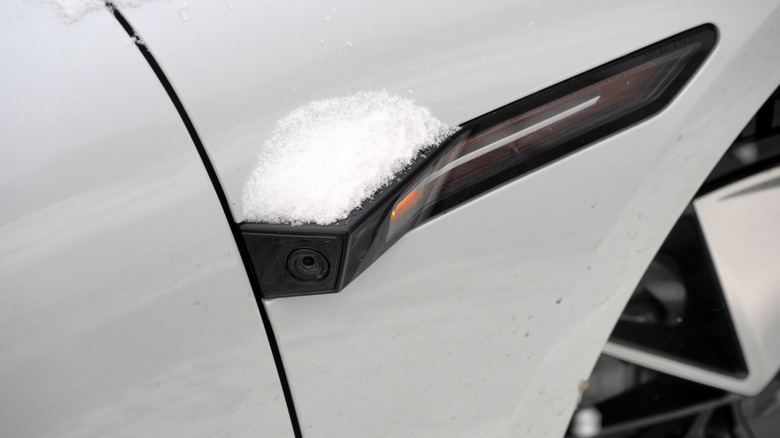
As with my Polestar 3 experience, electrical gremlins punctuated my time with the Polestar 4 in small — but frustrating — ways. Proximity-based unlocking with the key fob was temperamental; sometimes it seemed like the EV would only recognize me if I sidled up from the front or rear rather than approaching from the side. Other times, it would just refuse to unlock itself until I tapped the door handle and take just too long to respond so that I'd tap a second time and instantly lock it again.
You can use your iPhone as a digital key (that functionality wasn't set up for me), and that's apparently the only way to unlock the doors from afar. I felt like HAL from 2001: A Space Odyssey, telling passengers, "Sorry, I can't do that" as they shivered in the snow and demanded I let them in from across the driveway. The Polestar 2 had a regular key fob, and I wish its more recent successors followed suit.
Then there's the seemingly haunted trunk, which on multiple occasions simply opened of its own accord when nobody was nearby, and the charging glitch where — though the cable was connected and seemingly recognized — the Polestar didn't actually charge. I experienced no drivetrain hiccups, at least, which leaves the Polestar 4 instantly ahead of the Polestar 3.
2026 Polestar 4 verdict
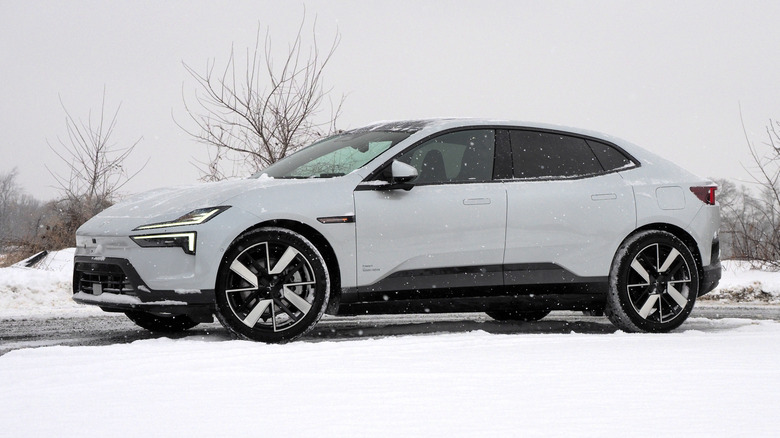
Gadget grumbles notwithstanding, I far prefer the Polestar 4 to the more expensive Polestar 3. The bigger SUV feels too close to its Volvo EX90 sibling, only without the third row of seats. The Polestar 4, in contrast, is quicker, has a more polished cabin, and hews closer to the brand's sporty heritage.
Personally, I'd keep things simple: the dual motor long-range Polestar 4 with the Plus pack on standard wheels. Usually that'd be $69,800 (including $1,400 destination), but the automaker's current incentives drop it to under $60k. Compare that to a Porsche Macan 4S Electric (down on power and pace, comparatively, with 509 hp and a 3.9 second 0-60 time), which is over $92k with destination; the swifter Macan GTS Electric (with 563 hp and a 0-60 in 3.6 seconds) is nearly $108k before extras.
You trade badge prestige for brand anonymity in the process, but I'm not sure that's a downside. I clocked more than a few curious glances at the Polestar's unfamiliar form (and then there's entertaining yourself with the rearview camera, seeing how long it takes those behind you at the lights to figure out what's so strange about the rear of the car they're following). Though I'd love a little more range, instead of what's missing, in the end what stands out is how complete the overall Polestar 4 package feels.