

7 Tech Stores That Have A Restocking Fee You Should Know About

For a brief moment there, it seemed like free shipping and returns had become the norm, to the point where a lot of the smaller online shops were doing it to stay competitive. That may be over. Even the giants like Amazon are slowly walking back their free shipping and free returns policies. No surprise there; these overly generous policies weren't free, and no business mogul is going to eat the cost when consumers can instead. Some stores, like Micro Center and Costco's electronics, still hold out with free returns, but restocking fees have become commonplace at other tech stores.
Restocking fees can be costly, especially when they're a percentage of the item's total price. So before you go shopping, know how much you'll be charged if you decide to return an item. The following tech stores have restocking fees you should be aware of. We've limited this list to restocking fees only, so any other fees (such as customer-paid return shipping costs) are not included.
Best Buy

In 2010, customers rejoiced when Best Buy eliminated restocking fees on phones and other gear. It seems that was not meant to be. Best Buy resurrected its restocking policy in late 2025 just in time for the holiday season. Per Best Buy's official return policies, you have 14 to 15 days to return most products, and up to 60 days if you're a member of Best Buy Plus or Best Buy Total. However, activatable devices that aren't prepaid phones now get a $45 return fee, regardless of why you return them. There's also a 15% restocking fee on a laundry list of items, including drones, cameras, electric micromobility devices, projectors, and others.
Best Buy notes that the restocking fee doesn't apply to unopened boxes in certain states that prohibit restocking fees, including purchases made in Hawaii, Ohio, South Carolina, and others. There's also a long list of non-returnable items ranging from software codes to batteries and Legos.
We should make abundantly clear here that this restocking fee doesn't mean you can scuff up the item and lose the packaging. It basically needs to be brand new. On the plus side, Best Buy does allow you to ship returns for free if you don't want to come into the store. Read Best Buy's entire return and exchange policy here.
Newegg
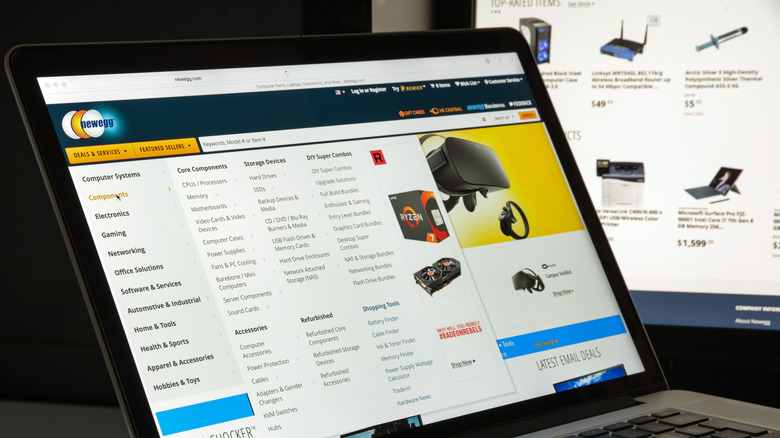
Newegg is heaven for tech nerds, and practically the go-to for PC building — minus that one time Newegg was shipping fake processors. I have fond memories of the component marketplace from way back in high school, budgeting out a gaming PC with what I could scrape together from a minimum wage job. Alas, Newegg's electronics refurbishing system is intriguing, but the company does have restocking fees. You have up to 90 days to return an item, depending on which category it falls under. However, some items do have a 15% restocking fee.
Newegg has a much smaller list than Best Buy. Returning opened hard drives, motherboards, graphics cards, projectors, and TVs incurs a 15% restocking fee. Some of those seem sensible; you shouldn't buy a used hard drive. Unopened items (or damaged/defective items) are exempt, the same as with Best Buy.
Newegg makes clear that this is not a universal policy. Since they have a marketplace with third-party sellers (like Amazon), their terms and conditions may differ. You definitely want to check who you're buying from so you don't end up paying to return a product that isn't right for you. You can read through Newegg's return, refund, exchange, and replacement policies here.
B&H Photo Video

Never heard of B&H Photo Video? That may be because you've never been to NYC. This is a gargantuan "SuperStore" in Manhattan that's been in business since 1973. It is one of the largest independent tech stores in the United States. Though their primary focus has always been camera equipment, they sell basically everything electronic. They have an impressive online store that ships to the US and the rest of the world via DHL, so you don't have to be in NYC to enjoy their prices and customer service. We'd recommend buying there to support the little guy and prevent Amazon from continuing to crush all the competition. However, do be aware that their return and exchange policy is not as liberal.
You have 30 days to return your item in person or with your own paid packing label. If the item isn't new and includes all of the box's contents, there will be a 15% restocking fee at a minimum. If there's noticeable wear or missing contents, the fee could be higher. Some items can't be returned, including opened computers, 37-inch or larger displays, used underwater equipment, books, and more.
Keep in mind that international returns could be a bit tricky. You're basically on the hook for things that the big companies normally would be, like duties and import/export fees. B&H Photo Video has a comprehensive Help Center explaining all this, which you can visit here.
Amazon
Saying "Amazon" and "restocking fees" in the same sentence might make you double-take so hard you get whiplash. This is the company, after all, that famously may just tell you to keep something while at the same time refunding you, in the event you want to return it. Anyone who has bought something from Amazon knows they offer arguably the best return policy in the business, with no-questions-asked returns that are free and easy to return. It certainly raises questions about what happens to returned products at Amazon, but that's a topic for another time. What matters here is that sometimes they do actually charge you for returns.
Depending on what you bought, Amazon's return window goes for up to 365 days. Only certain items, typically single-use ones, are not returnable. There is a very small list of items that (aside from late fees and damage fees) will cost you. Amazon says used software and video games get a whopping 100% restocking fee. So basically, there's no point in returning those.
The same goes for some opened board-game-like items, such as tabletop games, collectible cards, and figurines. Perhaps the D&D crowd has been abusing the system. You can read through Amazon's entire return policy here.
All three major mobile carriers
The major U.S. mobile carriers — Verizon, AT&T, and T-Mobile — all charge restocking fees. So think extra hard before you buy a device from them. Perhaps you'd be better off using the affordable phone carriers that piggyback on the networks if there's a better return policy.
Let's start with Verizon. There's a standard 30-day return policy, but regardless of the device you're returning, you'll pay a $50 restocking fee plus applicable taxes. Only Hawaii does not allow that. Note that you're also only allowed one exchange. Check Verizon's return and exchange policy here.
Next up, AT&T. The return window is 14 days, with a maximum $55 restocking fee for devices; unopened Apple devices are excluded. Accessories get a 10% restocking fee if they cost more than $100. Check AT&T's policy here.
Finally, T-Mobile. They also have a 14-day window with a surprisingly high $70 restocking fee for devices priced over $600, a $40 fee for devices priced between $599 and $300, and a $20 fee for devices priced below $300. View T-Mobile's policy here.
Note that in every case, you need a device that is essentially untouched, with all the box's contents. Even minor cosmetic damage could disqualify you. Shipping costs are typically not covered.