

Five Common Problems With Subaru Boxer Engines, According To Owners
According to the 2025 J.D. Power Vehicle Dependability Study (VDS), Subaru is ranked as the 17th most reliable brand out there. This represents a somewhat worse result compared to 2024's VDS in which Subaru occupied 15th place. However, when it comes to Consumer Reports (CR) 2024 reliability studies, Subaru is ranked as second most reliable after being dethroned from first place by Toyota.
Regardless, for many enthusiasts, the iconic boxer engine is what defines the brand and plays a major role in how well a specific model performs in the reliability segment. The legacy of Subaru boxer engines traces back to the 1960s and the Subaru 1000 — the brand's first front-engine, front-wheel drive vehicle intended for broader markets.
Throughout the past 60 years, the boxer engine evolved, but not without its faults. Some of these are minor and can be ironed out with regular and preventive maintenance, but other issues became the Achilles' heel of the Subaru boxer engine — problems the internet isn't keen on forgetting anytime soon. Here are five common owner-identified problems with Subaru boxer engines and what to do about them.
Head gasket failures
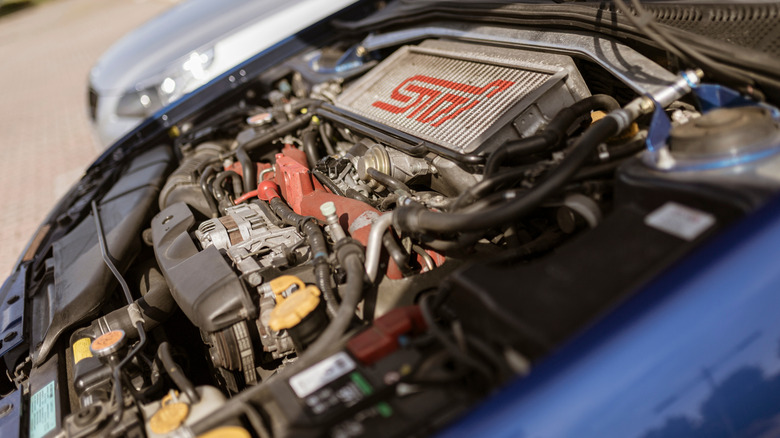
Subaru boxer engine head gasket failures are perhaps the most infamous problem of them all. It even got so bad that the issue became a running joke starting in the early 2000s. The most common Subaru models affected by this issue are 90s performance-oriented Impreza, Outback, and Legacy models. However, gasket failures have also been reported with other 90s and post-2000 models. As such, Subaru specialists at Impact Auto Repair list head gasket problems as the number one repair they encounter on Subaru vehicles.
If you hop on over to the r/cars subreddit, you can see a ton of Subaru owners "joking" about head gaskets blowing, while also noting that most of the problems were limited to the brand's early 2000s naturally aspirated 2.5L engines. However, one owner of a supposedly well-maintained 2021 Impreza reported head gasket failures over on the r/subaru subreddit. Meanwhile, on the Subaru Forester forums, one owner also complained after his 2014 Forester suffered from a failed gasket and he was quoted $3,500 for repair.
In a YouTube video on his own channel, Subaru repair specialist MrSubaru1387 says that the main cause of head gasket failures has to do with "the graphite coating breaking down with heat cycles and age and corrosive coolant when your cooling system is not serviced regularly...it eats that coating away and that's when your head gasket starts to go." Even worse, owners have complained about having to get gaskets replaced or serviced multiple times, signaling that this problem isn't a one-and-done occurrence.
Oil leaks
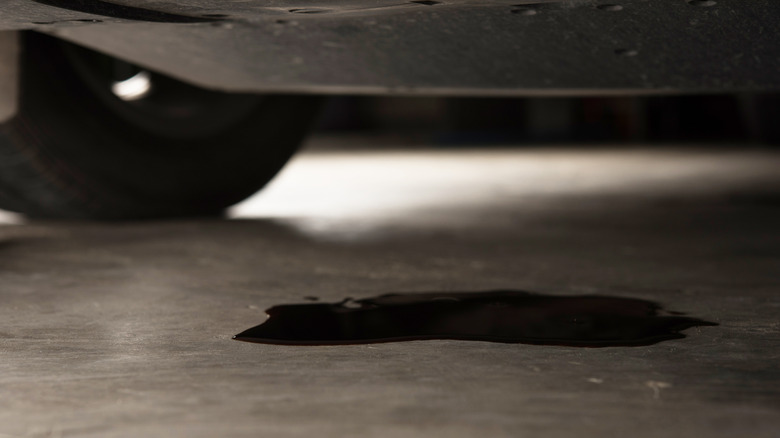
Although modern Subaru boxer engines are less prone to head gasket failures, FA and FB engines are still known to suffer from oil leaks, particularly through the cam carriers and timing chain covers. The main reason why these develop leaks is because the RTV silicone sealant these engines use can degrade over time. This can lead to small gaps around the base of the cam carrier or the bottom edges of the timing chain cover, which can create passageways for oil.
In a YouTube video, a technician from MRT Performance explained, stating that breakdowns occur because "it's not the best sealant over a period of time." Since the camshaft is no longer a part of the cylinder head (like older EJ engines), this makes for another sealing surface that, sadly, can leak. According to multiple owners on Reddit, these leaks are a big problem as repairs can be labor-intensive. As one user who previously worked at Subaru noted, "The engine needs removed, the timing chains have to be removed, then remove and reseal the cam carriers," all of which runs to about $,3000 at a dealership.
Subaru issued Service Bulletin 02-131-12R, which confirmed cam carrier and timing chain cover oil leaks as known issues, and provided detailed procedures for inspection, resealing, and replacement of o-rings and the RTV sealant. Although this isn't a common reason why your car's engine leaks oil, it is a specific problem associated with Subaru's boxer engines.
Timing issues
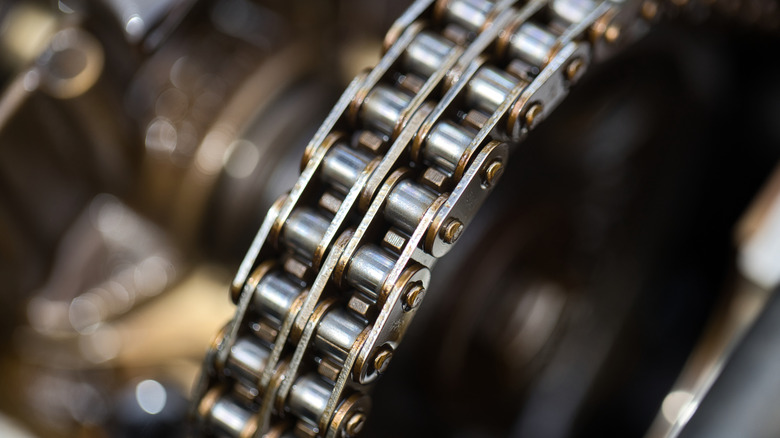
In theory, a timing chain should last the life of your car, but that is not always the case. With Subaru's newer FA and FB engines that rely on chains instead of belts, these chains can stretch and the tensioners can lose pressure. If left unattended, these issues can lead to rattling or slapping noises, particularly on cold start ups. According to posts on the Subaru Forester forums, many owners report a brief metallic rattle from the timing chains at cold start or at lower speeds.
However, older Subaru Boxer engines (EJ-series) used timing belts, and these are even more prone to timing issues. According to MrSubaru1387, "more times than not the issue is the tensioner or the idler pulleys." He suggests that, although belts do crack, they are not the ones causing most headaches. To avoid these problems from happening, Subaru Clinic recommends replacing the belt every 105,000 miles. This is especially important because Subaru's EJ engines are "interference" engines, meaning that, if the belt breaks, it can cause contact between the valves and the pistons. In plain terms, if this occurs, you're likely going to need a whole new engine.
One owner on Reddit even noted that, when the belt breaks, there is a "near 100% chance of piston to valve contact." To lower the chances of ever having to deal with these problems, make sure to not skip maintenance, avoid overheating the engine, replace your belts, focus on whistling and ticking sounds, and inspect the tensioner, idler pulleys, and water pump whenever possible.
Oil consumption issues
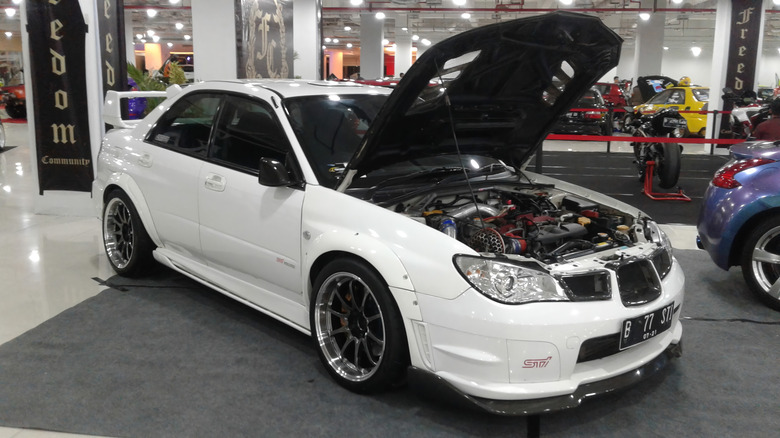
When we covered the most common problems with the Subaru Outback, we listed excessive oil consumption right after the head gasket failures. It's not just the Outback,though; according to a 2016 class action lawsuit against the automaker, as many as 665,730 Subaru owners and lessees across a variety of vehicles have been affected by the issue. Ultimately, the lawsuit was settled, and Subaru agreed to extend warranties, reimburse owners, provide free tests and repairs, and cover the cost of up to six quarts of engine oil per vehicle.
Subaru also published Technical Service Bulletin 02-157-14R, which recommended extending the powertrain warranty to 8 years/100,000 miles for certain vehicles exhibiting excessive engine oil consumption. It also provided detailed inspection and repair procedures, including engine short block replacement where necessary. All in all, the main causes of aforementioned oil consumption issues seem to be associated with the piston rings, low ring tension, valve guide issues, PVC leaks, or even turbocharger leaks.
Additionally, the issue mostly affected Subaru vehicles manufactured between 2011 and 2015, including Forester, Legacy, Outback, Impreza, and XV Crosstrek models equipped with 2.0L or 2.5L FB engines. As far as newer models are concerned, many Subaru owners on the Subaru Forester forums agree that excessive oil consumption is mostly a problem with early FB‑series engines.
Spark plug fouling
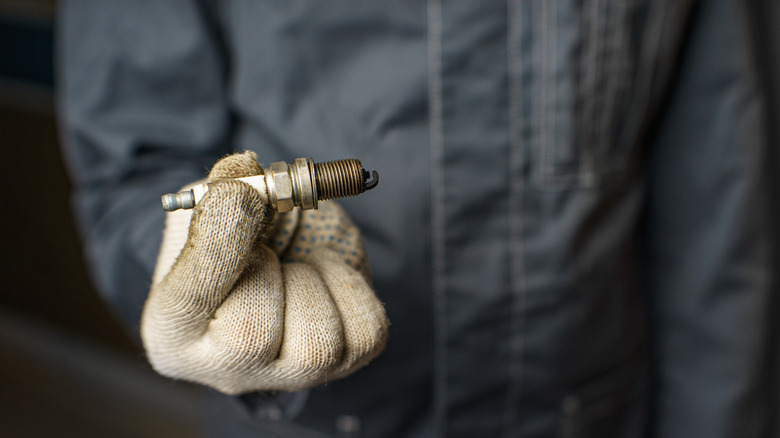
Certain Subaru Boxer engines are known to experience oil seepage in the spark plug tubes. This is generally caused by aging valve cover gaskets and expendable spark plug tube seals. Consequently, the oil can soak the ignition coil boots, eventually causing misfires and performance problems. RepairPal notes that 109 different Subaru owners reported the same issue.
In a YouTube video, All Wheel Drive Auto Independent Subaru Expert explained that spark plug tube seals "starts out as rubber, and what happens as they age is they'll actually firm up more like plastic and they can no longer expand with the valve cover as they warm up." If kept unchecked, this allows oil to reach the plugs and interferes with the car's ignition system. Owners on Reddit suggest that replacement of the valve cover gaskets and tube seals is the permanent fix.
An easy way to tell if you have a bad spark plug is to take it out and look at the tip. If it's black and sooty or if the engine is misfiring, idling roughly, or struggling to start, the plug is likely failing and needs replacing. This is not the easiest thing to do since Subaru's boxer engines are laid out at a 180-degree angle, and that makes reaching the spark plug notoriously tricky.
How we made our list
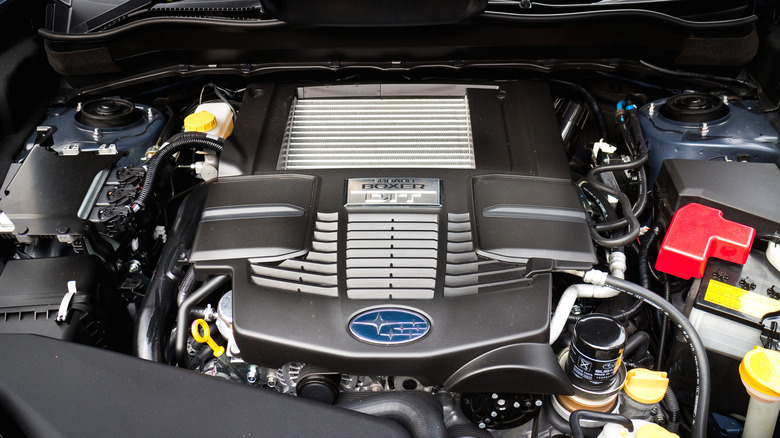
While researching this list, we did our best to consult a wide range of expert and community sources to ensure both accuracy and breadth. In general, sources included independent Subaru mechanics and performance specialists on YouTube, reports and experiences from Subaru owners across general forums such as Reddit, brand-specific Subaru owner forums, Subaru's own technical service bulletins, and community-driven resources. We also referenced professional repair services and databases such as Impact Auto Repair and RepairPal.
We focused on issues consistently reported by multiple owners rather than isolated complaints. We also cross-referenced problems with mechanic and specialist insights to understand root causes and commonly recommended fixes. Where possible, we supplemented owner and mechanic reports with professional assessments and repair experience, ensuring that both anecdotal and expert evidence made the cut. Although individual experiences can differ and there are many variables at play, these seem to be the most common (and most complained-about) problems with Subaru boxer engines.