

5 Things You Need To Stop Doing If You Drive A Motorcycle
Riding a motorcycle is one of the most freeing experiences you can have. Even if you have all the luxuries of being inside a car and even a chauffeur to drive you around in it, sitting astride a bike is just a different feeling. Modern motorcycles offer a ton of features that make for a more comfortable ride. However, doing so will always be a high-stakes game of focus, physics, and continuous learning. It doesn't matter if you have the one of the safest and most beginner-friendly motorcycles ever built — you still need to take care while on the road.
After years on two wheels, I have realized that the most dangerous habits aren't only the obviously reckless ones like performing stunts on highways or unnecessary speeding through traffic. For serious riders who really want to drive safely, you can't overlook even minor issues; a small lapse in judgment can result in la life-altering injury on a bike. It's not always about wearing a well-ranked bike helmet or sturdy, protective riding jacket; you can avoid major accidents by simply removing unnecessary risks from your ride.
Dangerous behavior can include things like wearing the wrong shoes, adopting bad driving habits, allowing yourself to get distracted, or blindly trusting what you see while on the road. It's time to unlearn some of these bad behaviors. Here are five things that you need to stop doing if you drive a motorcycle.
Stop wearing loose shoelaces
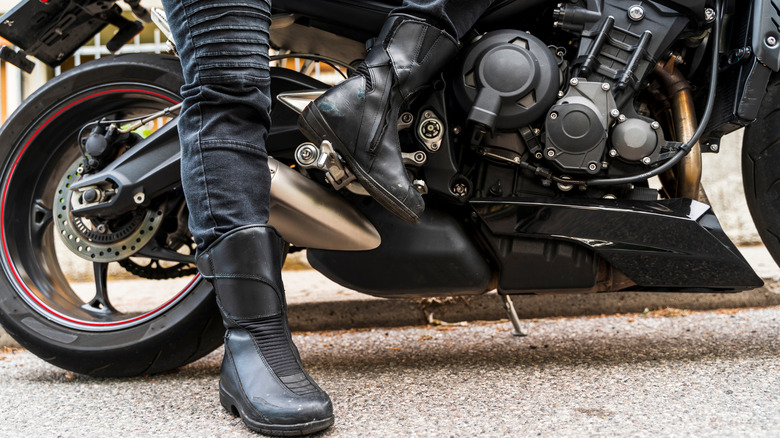
It may sound like something your mom would tell you, but it's a crucial point. You don't want a loose shoelace getting tangled in your bike. It even happened to me very recently. As I went to put my left foot down to stabilize the bike, I realized I couldn't move as my shoelaces had gotten themselves tangled around the gear lever. Thanks to my years of experience, I avoided a drop that would have otherwise led to some bruises and scratched fairings, but others might not be able to save themselves.
Loose laces can easily end up tangled at the same spot of your own bike, preventing you from shifting gears when you need to change speed. Things get especially dangerous when you have someone riding pillion, though; their loose laces can get into the most dangerous moving parts of a motorcycle like the rear wheel, drive, and sprockets. If their laces get stuck into any of these parts at speed, it doesn't just snap the lace — it can pull their foot right into the machinery, resulting in something dreadful.
For all these reasons, many state DMVs will highlight the issue. An example of this is how the Washington Department of Licensing explicitly advises keeping all your gear secure to avoid interference with controls, stating that "laces should be tucked in to prevent them from catching on parts of the bike." To avoid such mishaps, you should be rigorous about the type of footwear you wear. The California DMV Motorcycle Handbook likewise warns against the dangers, clearly suggesting wearing sturdy, over-the-ankle or closed-toe shoes.
Stop changing speed or gears mid-corner
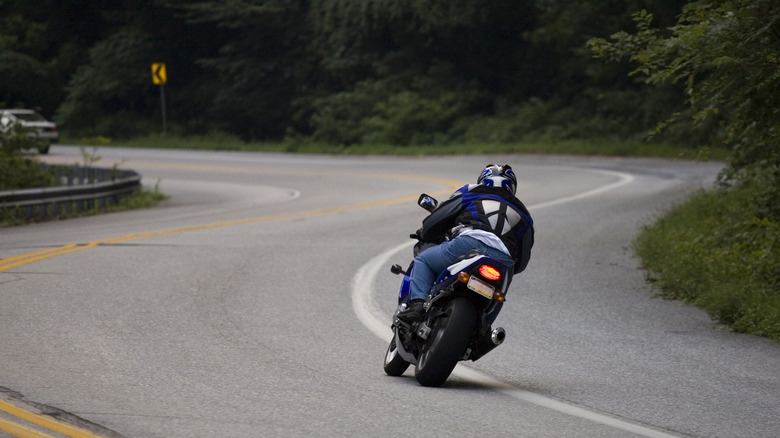
Riding a motorcycle on a mostly-straight highway or freeway is a totally different skill from riding over hills or through twisty mountain roads. I've been a rider for more than a decade, but when I took my bike to Ladakh in the mountainous region of northern India, I learned a lot of new things about riding. One of the most crucial new lessons was you need to stay calm when approaching a sweeping curve so as to avoid slamming on the brakes or grabbing the clutch and downshifting.
Downshifting or braking might feel like a smart move, but it is actually one of the quickest ways to crash. Motorcycles rely on a limited amount of traction. When you lean your bike into a curve (the most common way of turning for heavy bikes those loaded down with gear), your tires are already using almost all the traction available. Downshifting or braking spikes your power delivery, and the bike loses traction.
Experts also agree that gear shifting and braking should happen before you are ready to lean the bike. According to a driving manual published by the Kentucky State Police (via DrivingTests.org), it is recommended to change gears before entering a turn. The manual notes that if shifting is necessary, it should be smooth and there should be no sudden change in power delivery, as it can cause the vehicle to skid. TVS Motor, one of the biggest manufacturers of two-wheelers in India, also suggests that you should enter the curve in the smoothest way possible. In other words, its safer to finish gear shifts and braking before entering the corner.
Stop watching the speedometer or using a phone
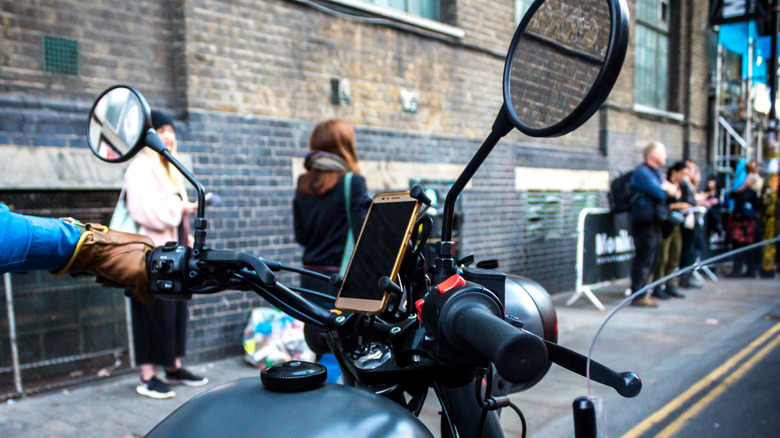
Modern-day motorcycles are equipped with TFT or LCD screens that are compatible with Apple CarPlay and Android Auto, allowing users to view all of their phone's content, sometimes use apps on the display, and view other metrics. Even bikes that don't support these features can often be fitted with a smartphone mount to use for navigation or other purposes. But because of all this, it becomes quite tempting for riders to spend too long looking down at these screens.
This distraction is often the cause of major accidents on the road. Looking down at the display or taking your eyes off the road, even for a fraction of a second, can result in a crash. While driving, your eyes are your primary tool. Not only should you stay vigilant about what's happening in front of you, but you should also check your bike's rear-view mirrors for possible dangers behind. You should be scanning the horizon for safely overtaking, avoiding potholes, or swiftly changing lanes, not flicking your eyes down to whatever's on your phone screen.
Distracted riding is quite lethal, and even the best riding gear might not be able to save you from accident or injury. The NHTSA (National Highway Traffic Safety Administration) reports thousands of lives lost annually due to distraction, with more than 3,000 deaths in 2023 alone. Even manufacturers of smartphone mount holders like Mob Armor stress that paying too much attention to your phone can lead to catastrophic consequences while riding.
Stop blindly trusting brake lights
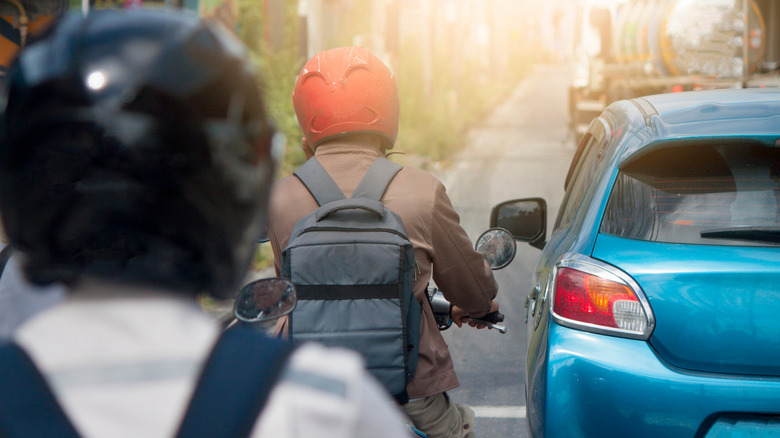
One of the biggest mistakes, often committed by beginners and experienced bikers alike, is believing that if the car in front isn't showing red brake lights, it isn't slowing down. If you rely solely on this signal, then you may end up kissing the trunk of someone's car with a bang. This most commonly comes up with with manual transmission cars, which is very common where I'm from. A car with a manual transmission often uses engine braking to slow down, which doesn't require a driver to step on the brake.
Brake lights only tell you that the driver is depressing the brake pedal. It doesn't tell you if the driver is just coasting to a stop or downshifting. If you're in the habit of following vehicles too closely, it's all too easy for this to result in an accident. As per the Motorcycle Safety Foundation, a rider should remain highly engaged when on the road, doing your best to anticipate what's coming down the road or to look for signs that the cars in front of you are slowing down.
This is why you should always leave adequate space between your motorcycle and the vehicle in front. By leaving a visible gap between you and them, you will have sufficient time to react and bring your bike to a stop safely. A good cue to look for is whether the tires of the vehicle in front of you are exhibiting signs of slowing. You should also evaluate whether the gap between the two of you is shrinking faster than normal. Is this a lot of work? Sure. It's also critical for your safety.
Stop riding behind the center of a car
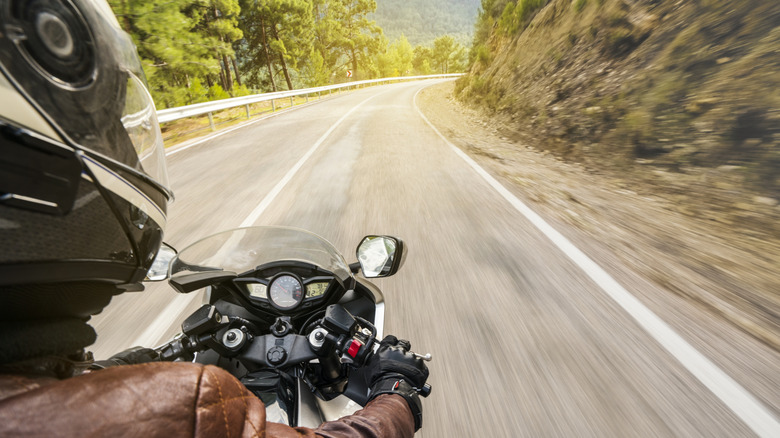
Riding a motorcycle can make you feel like royalty. It's only natural to feel like you've got the right to cruise right down the dead center of your lane. However, that's often considered the most dangerous spot for a two-wheeled vehicle. Since cars have four wheels, drivers usually center their vehicles over hazards to protect their own tires. This means the center of the lane becomes the collection point for all the stuff that cars have avoided, such as potholes, broken vehicle parts, and even spilled or leaking vehicle fluids.
Riding in the middle puts your front tire at great risk of hitting any of these obstacles. The last thing you want is ending up wrecked because you hit a pothole or slipped on an oil slick that accumulated in the center. More importantly, driving directly behind a vehicle in this way might make it hard for that driver in front of you to see you in their side mirrors, leaving you in their blind spot.
This is why your best bet is often to drive aligned with the left bumper of the car ahead of you. This places you squarely in view of the driver's side mirror, making you harder to ignore. And second, it gives you a clearer view as you can more easily see past that vehicle, letting you avoid trouble down the road and minimizing your risk of an accident.