

Driving Honda's New Prelude Revealed A Great Hybrid With The Wrong Price (And Badge)
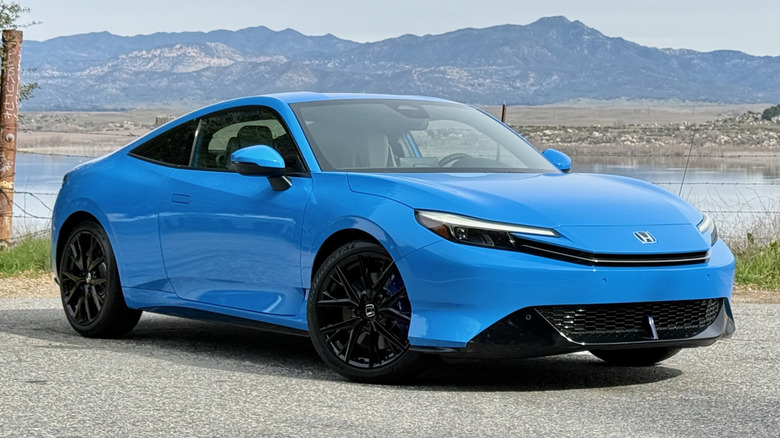
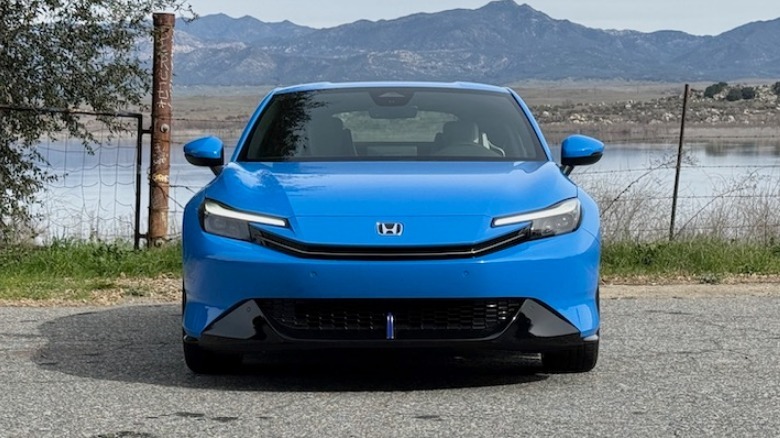
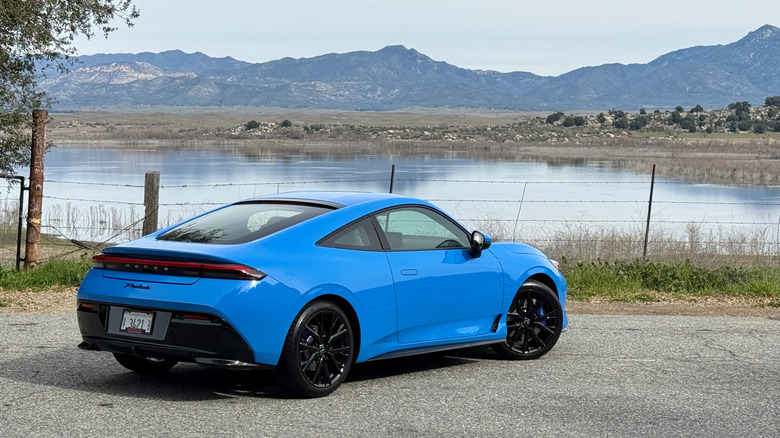
The all-new 2026 Honda Prelude resurrects a nameplate that's been dead for more than two decades, and it signals the return of two-door motoring to the Honda lineup for the first time in years. The new Prelude has a style all its own, but underneath, it's a hybrid coupe that's built on the same platform as the Honda Civic.
Equipped with a few more premium features than models like the Civic Si, but being much less performance-oriented than models like the Civic Type R, the Prelude fits in between the two and offers what Honda calls a Grand Touring Experience. The cost of that GT experience, however, is high.
 Travis Langness/SlashGear
With sleek looks, the promise of impressive hybrid fuel economy, and a fun-to-drive attitude, it's possible that the Prelude could bring a unique set of virtues to the admittedly small compact coupe segment. But to stand out, the Prelude will have to be more than just an efficient and entertaining collection of Civic parts with a new skin. The powertrain is plucked from the Civic hybrid. The brakes and adaptive dampers are pulled from the high-performance Civic Type R. And most of the interior pieces are shared with other Civic models. The Prelude needs to add a significant bit of comfort, quality, and unique identity to justify the price difference between it and its Civic brethren, as well as several impressive rivals.
A note about tires
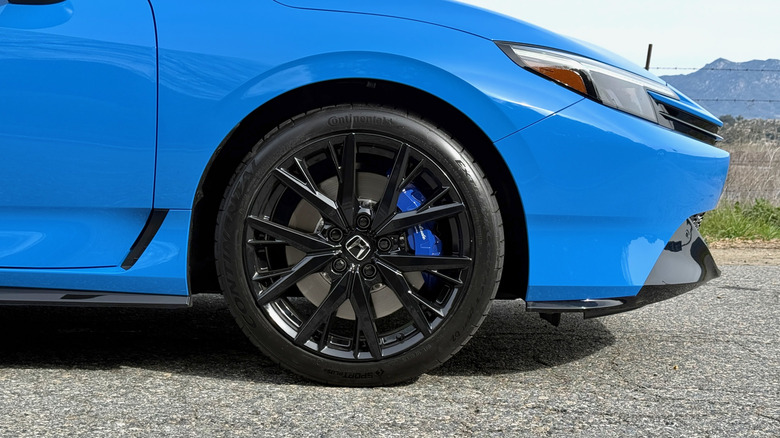
To find out if it's more than just the sum of its parts, Honda invited me to its first U.S. drive event for the Prelude in San Diego, California. But before I delve into the details of my Prelude drive, and whether the price is justified, I want to talk about tires. The new Prelude comes standard with all-season tires. All the test cars prepared for the event, however, were equipped with Continental ExtremeContact Sport Max Performance Summer tires. These tires were mentioned as an available option in the presentation Honda sent ahead of the event, but they weren't listed on the vehicle Monroneys (aka pricing sheets).
Honda representatives said that the Conti tires are available as a dealer-installed option. These summer tires aren't currently available via Honda's online configurator tool, nor are they available as a part of any official options package, but according to Honda's PR folks, "the summer tire option for the Prelude is going to be around $1,200. This price will vary based on the dealer." The tires will also be covered by a 2-year road hazard and roadside assistance warranty.
The effects these higher-performance tires have on steering, handling, on-road comfort, and road noise aren't massive, but they aren't insignificant, either. In my experience, going from a tire like the standard Goodyear Eagle Touring all-seasons, to a max performance summer tire like the Continental makes handling better, but at the cost of comfort and road noise.
Power and simulated shifts
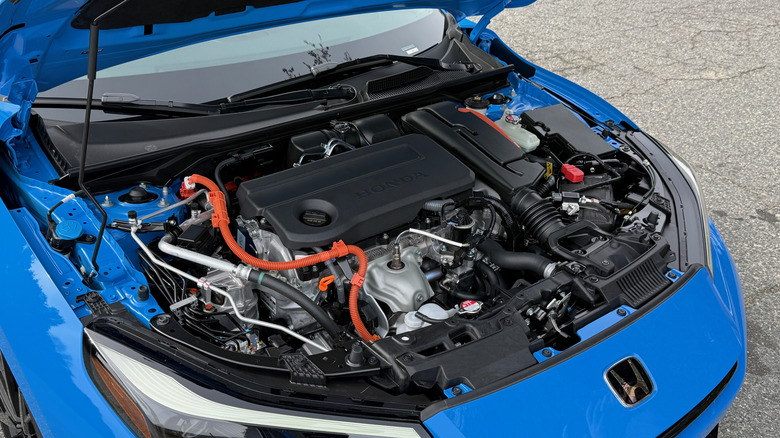
Moving away from the rubber wrapped around the wheels, let's talk about power. Like the Civic Hybrid, the Prelude uses a 2.0-liter four-cylinder engine paired with a two-motor hybrid system. Combined output is 200 horsepower and 232 lb-ft of torque, with a pretty astonishing fuel economy estimate of 44 mpg combined (46 highway/41 city).
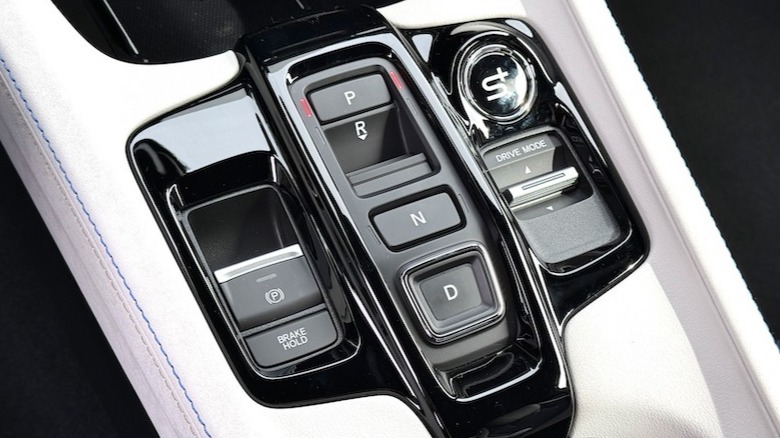
From a standstill, the Prelude's acceleration is adequate, but uninspiring. It will make passes on the highway, but not with any notable urgency. There's no traditional transmission to speak of with the Prelude; instead, there's Honda's direct drive and simulated shifts via Honda's new S+ Shift system. When engaged, the system simulated changes in RPMs like a traditional transmission, but it had some quirks that made it frustrating.
 Travis Langness/SlashGear
When I selected S+ Shift, in Sport mode, while using the paddles, the system "upshifted" for me, and often much earlier than I wanted a simulated change. In other modes, and with some suggestions from my co-driver, I still couldn't find a way to hold the simulated shifts. So, driving enthusiastically on local canyon roads, using the paddle shifters along the way, I was constantly pulling the paddles requesting the same downshifts. A six-speed manual would help solve the problem here, but that's not possible with the two-motor hybrid system.
If the Civic Si or Type R powertrains were optional on the Prelude, they would do wonders here, adding available enthusiasm to a good-looking Honda coupe where much doesn't currently exist. But there's no reason to believe either of those non-hybrid powertrains will make their way into the Prelude.
More than just a powertrain
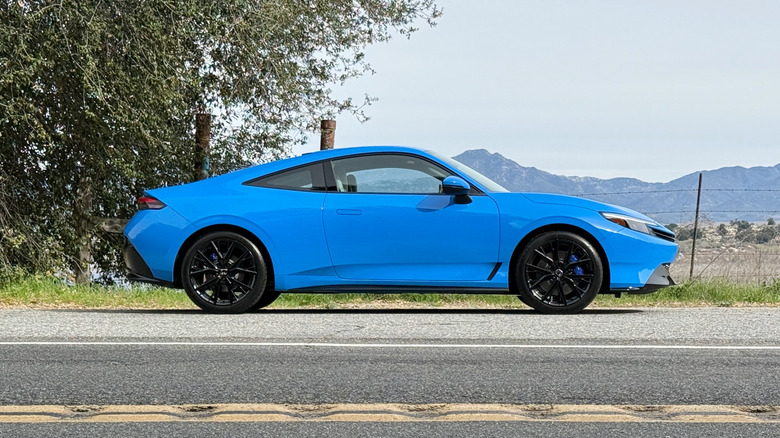
One of the Civic's most notable skills is providing a balance of comfort and handling capability. The Prelude has inherited this balance, for the most part. Around corners, the Prelude felt flat and stable. Steering, while not direct or inspirational, was well-weighted. With the optional Conti tires, there was plenty of grip for the winding back roads that stretch east out of San Diego.
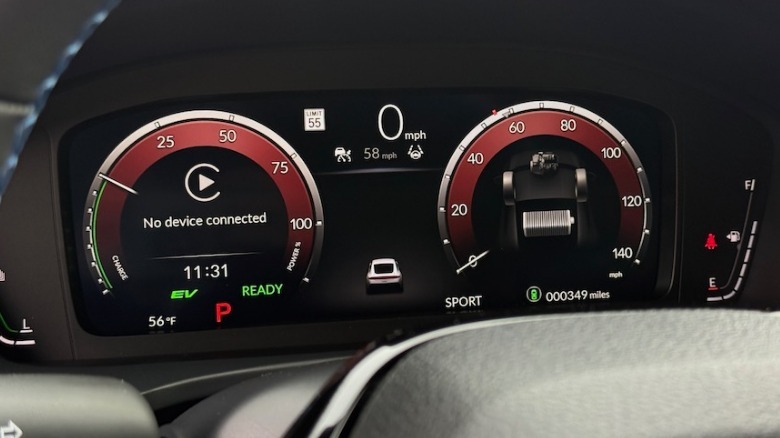
If you've got a long, winding commute to work, the Prelude would be a strong choice for the drive, especially in Sport mode. GT and Comfort mode provide softer suspension settings and reduce the amount of engine sound being piped into the cabin. And, of course, there's an Individual mode that allows for the customization of engine response, damper settings, engine sounds, and the color of your gauge cluster.
 Travis Langness/SlashGear
While the adaptive suspension is shared with the Civic Type R, Honda says that it's tuned specifically for the Prelude to provide more comfort. Having recently tested the latest Type R, I can say that the Prelude's ride is a bit softer, but still pretty firm. The Prelude was settled, smooth, and calm over most surfaces, but little impacts made their way into the cabin regularly, even when the Prelude was in Comfort mode. The upgraded tires did result in some significant road noise too, especially on the highway, but not so much noise that a bit of music wouldn't drown out the hum.
The cabin is a comfortable place to be
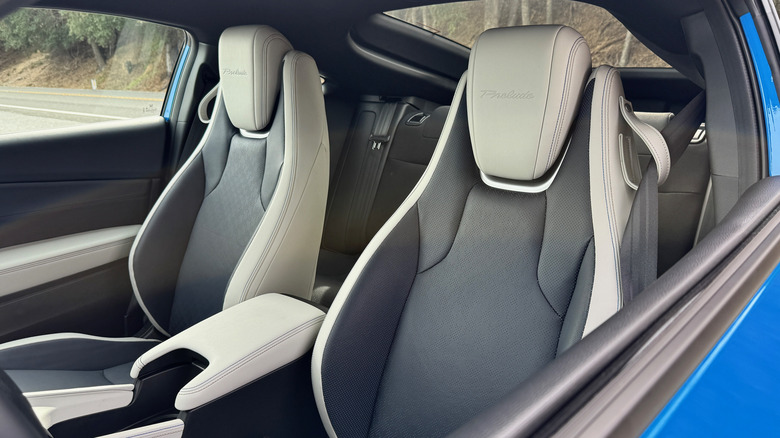
A particularly premium part of the Prelude's interior are the front seats. Unique to the Prelude, the seats are tall and slender, but wide enough to accommodate adults of most shapes and sizes. The seats are also asymmetrical, providing more bolstering and firmer padding for the driver to reduce fatigue. It was easy to slide in and out of the front seats, with wide door openings and relatively tall doors considering the coupe's low height.
The white leather seats may stain over time if you slide over the bolsters in blue jeans a lot, but they lend an upscale vibe to the cabin at first glance. The blue and red contrast stitching on the seats and on the Prelude's dashboard feel premium too. I couldn't find a single fumbled stitch.
 Travis Langness/SlashGear
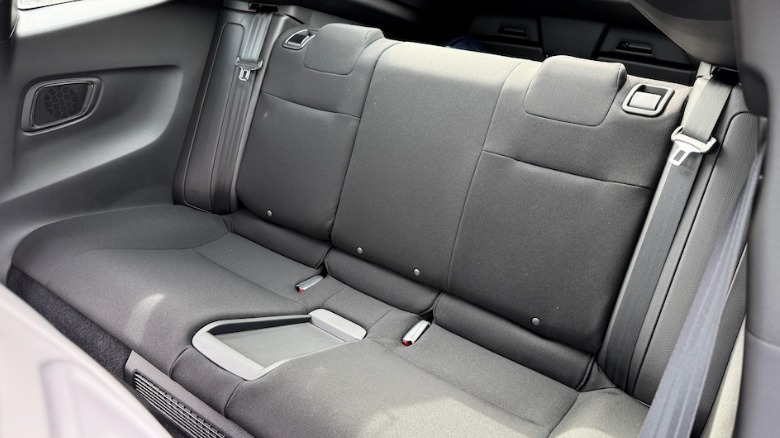
The rear seats weren't nearly as impressive as the front seats, however. The rear seats themselves are flat, barely more than two-dimensional, and upholstered with a fabric that looks especially cheap. Then, there's the issue of loading into the back seat. The front seats are manually adjustable, so there's no single button to move the seats forward or return them to their original location once a passenger is loaded in the back. Climbing into the rear seat requires quite a bit of squeezing for adults of any size, and headroom is laughably low. These back seats can technically fit adults, but really, they're meant for small children.
Layout, tech, and room for (some) cargo
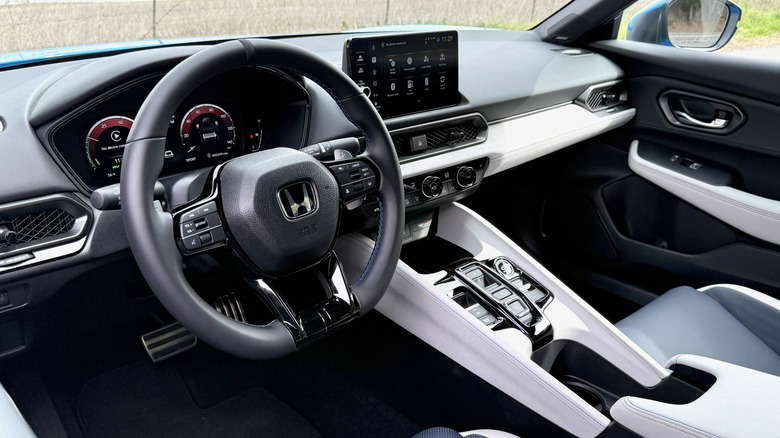
Civic and Integra owners will find the Prelude's dashboard extremely familiar. It uses the steering wheel, buttons, and climate control vents from those two cars, all of which are easy to understand and operate. The Prelude also makes use of top-trim Civic equipment like its 9-inch center touchscreen and 10.2-inch digital instrument cluster, both of which are easy to use but a bit low on screen resolution. The Prelude comes standard with an 8-speaker Bose stereo, wireless Apple CarPlay and Android Auto, and a wireless smartphone charging pad.
 Travis Langness/SlashGear
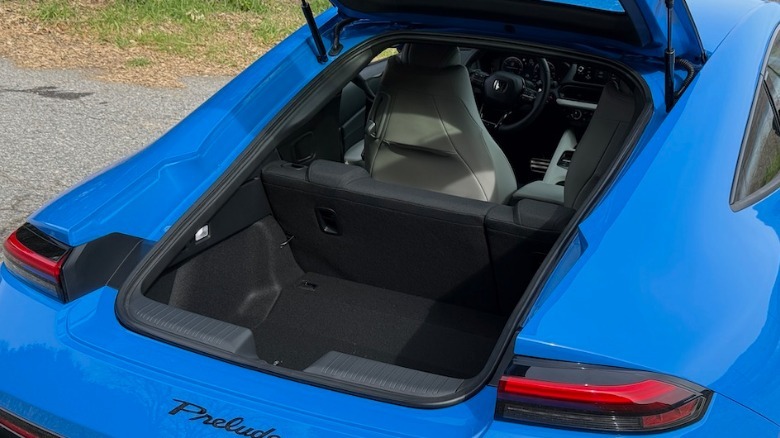
The ultra-wide opening for the rear hatch is a big plus in the convenience department, as is the foldable trunk panel, which can help organize large items or keep groceries from sliding around. With the rear seats in place, the Prelude offers 15.1 cubic feet of cargo space. That's more than double the space of a Subaru BRZ or Toyota GR86, but about 10 cubes less than the Honda Civic Hatchback (24.5 cubic feet). Folding down the Prelude's underwhelming back seats opens the rear hatch space up significantly, giving it class-leading levels of practicality amongst compact two-door vehicles.
The price problem
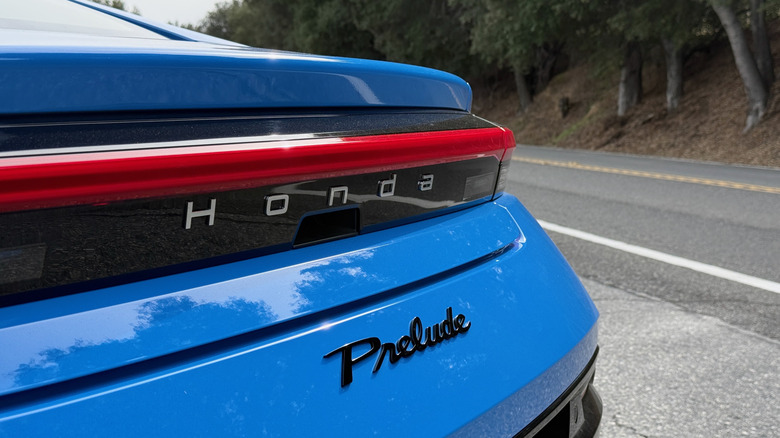
With its Civic-sourced powertrain, suspension, brakes, and dashboard, the easiest points of reference for the Prelude come from the various Civics. If they share so many components, they should be close in price, right? Wrong. The Prelude is only available in one trim level, and it's priced at $43,195 (including $1,195 destination fee). The test cars Honda provided had a few extras like the Boost Blue paint ($455), and the summer tires ($1,200 estimated), so the as-tested price was $44,850.
The Civic Sport Touring Hybrid undercuts that price by about $10,000, in either sedan or hatchback form. The enthusiastic (albeit less powerful) Civic Si is even less money, with an MSRP of just $32,690. Wearing the same optional Boost Blue paint, the Type R has an MSRP of $47,545 – only about $3,000 more than the Prelude I drove, and offering way more performance. None of them are coupes, but all the currently available Civics offer nearly identical levels of refinement and more practicality than the Prelude. And at nearly $45k, it starts to compete with luxury coupes like the BMW 2 Series.
If those Honda-badged pricing comparisons with four doors or the luxury bimmer are non-starters, look to the BRZ and GR86 twins. A top-trim GR86 with optional paint and the available Performance Package barely crests $38,000. Sure, there's a big drop in fuel economy, and even a drop in power, but the $6,000 price delta between the two can pay for a lot of gas. The premium BRZ tS is closer to $40,000, which is pricey, but still significantly less than the Prelude.
2026 Honda Prelude verdict
I'm an advocate for coupes. In my opinion, small, efficient cars are undervalued, and there are too many unnecessarily large SUVs filling America's driveways and highways lately. I'm also an advocate for hybrid power in lots of scenarios. Hybrids offer a burst of electric torque at low speeds, along with maximum fuel economy on the highway, without the range anxiety associated with pure EVs. These are all positive attributes that the Prelude possesses. It's also stylish, well-built, and has some user-friendly features.
Unfortunately, the new Prelude doesn't stir the soul, nor does it offer easily-accessible two-door motoring for the masses. When I had the opportunity to drive the historical lineup of Preludes a few months back, I was impressed by several generations of era-defining technology and upscale styling, nearly all of which stood the test of time. The sixth-generation Prelude doesn't match that vibe. It feels premium, but not particularly innovative or unique. And when it comes to pricing, there are just too many appealing rivals available for less money.