

5 Tablets More Powerful Than The iPad
The iPad arguably changed tablet computing, and it has gone a long way from being just a device for browsing the internet, watching a movie, or playing basic games to a productivity powerhouse that could serve as an alternative to the MacBook. Despite some limitations, these tablets are quite powerful in their own right — especially with the M5 chip used in the new iPad Pro.
But even though iPads come with great build quality, excellent performance, and seamless integration with the Apple ecosystem, some people still prefer tablets from other brands. There are multiple reasons for this, like more affordable pricing versus a comparable iPad model, the ability to sideload apps from other sources, improved cooling, or maybe because they prefer Windows 11 over iPadOS.
While there are a lot of iPad alternatives in the market that deliver the one thing you're looking for that Apple tablets don't offer, you also don't want to compromise on performance. After all, realizing that the tablet you just bought is much slower and can't keep up with your demands is one sure way to buyer's regret. So, to help avoid that, we're looking at a few more powerful tablets than the iPad.
1. RedMagic Nova
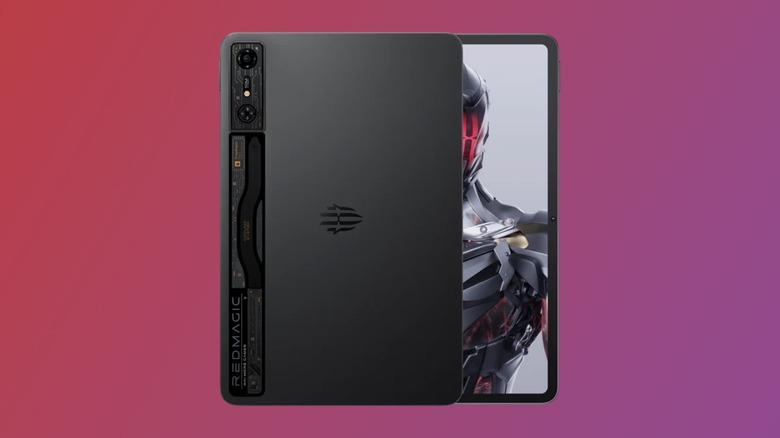
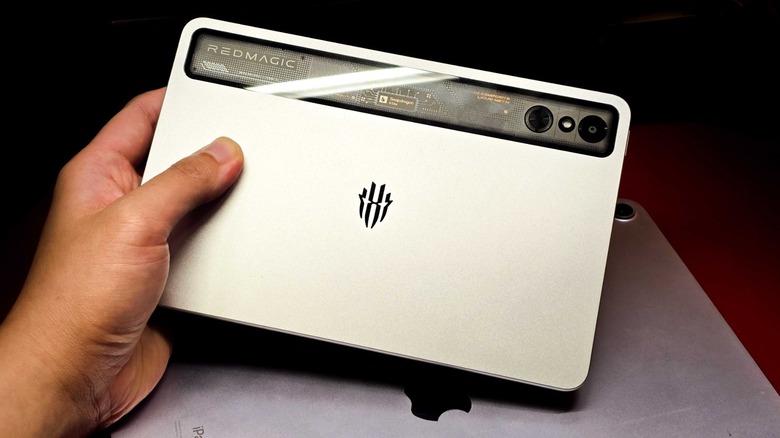
The RedMagic Nova is a gaming tablet that measures about the same size as the vanilla iPad, with its 10.9-inch screen (versus the iPad's 11-inch display). You can see its focus in the gaming aesthetics on the Nova's back and its software theme, and it also does not disappoint when it comes to performance. This tablet achieved a Geekbench 6 score of 2,214 in the single-core test and 6,989 in the multi-core test — although its single-core score is lower than the iPad's 2,576, its multi-core rating is almost 1,000 points higher than the 6,006 points that Apple's most affordable tablet achieved.
Aside from its processor, the Nova also offers a few more advantages over the iPad. This includes its screen, which, although smaller, offers a slightly higher resolution (2880 x 1800 vs. 2360 x 1640) and a much faster 144Hz refresh rate for a smoother experience. It's also slightly brighter at 550 nits, while the iPad tops out at 500 nits. More importantly, we reviewed the RedMagic Nova and found that its built-in cooling fan better manages heat, allowing it to deliver higher performance for much longer than other passively cooled devices.
The main downside to the Nova is that it's much more expensive than the base iPad. Apple's cheapest tablet costs $349, but it only comes with 128 GB of storage and 6 GB of memory. If you want the bigger 256 GB storage capacity, the price is bumped up to $449. On the other hand, the RedMagic Nova starts at $499, but it comes with 256 GB of storage and double the iPad's RAM at 12 GB. So, if we choose the same storage specifications, the two tablets are actually priced competitively with each other.
2. RedMagic Astra
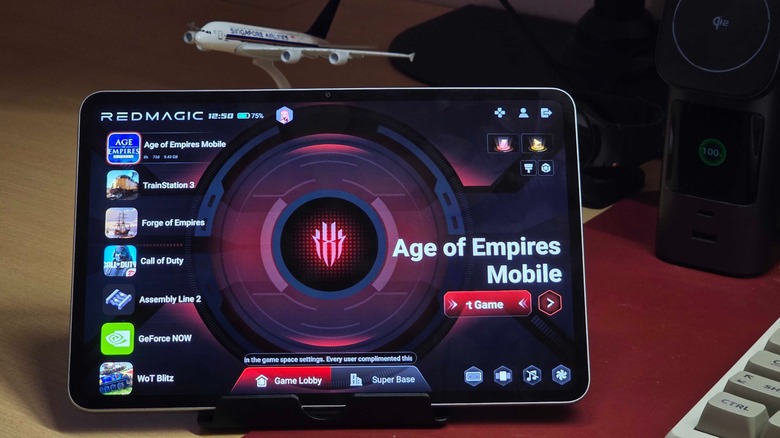
Phones have gotten larger over the years, and we now even have a tri-fold Samsung smartphone that offers a massive 10-inch screen when unfolded. However, there's still a market for a mini tablet that sits between the larger 11-inch iPad and the around 6-inch display of most flagship smartphones. Apple makes the iPad mini to address this demand, but if you want an even more powerful alternative, RedMagic also offers a tablet in this size range with the Astra.
I tested the RedMagic Astra tablet in my hands, and it scored 3,075 in Geekbench's single-core benchmark, while achieving an amazing 9,598 points in the multi-core test. On the other hand, the 8.3-inch iPad mini with the A17 Pro SoC only hit 2,979 and 7,408 points, respectively. I also found that the RedMagic Astra goes beyond raw horsepower when compared to Apple's smallest tablet, when I reviewed it. It has a slightly larger 9.06-inch OLED screen that can hit 165Hz and 1600 nits of peak brightness, giving you a way better experience than the iPad mini's 8.3-inch IPS display, which is limited to 60Hz and 500 nits. Of course, we cannot overlook the built-in fan that lets me do heavy workloads (like editing in Adobe Lightroom) for quite some time without thermal throttling.
The iPad mini looks more affordable on the surface, costing just $499 for the base 128 GB model with 8 GB of RAM. However, if you want to match the Astra's base specifications, 256 GB of storage (which is paired with 12 GB of memory), the price is bumped to $599 for the Wi-Fi model. On the other hand, the RedMagic tablet's base price is just $549, making it actually more affordable than what Apple offers.
3. Samsung Galaxy Tab S11
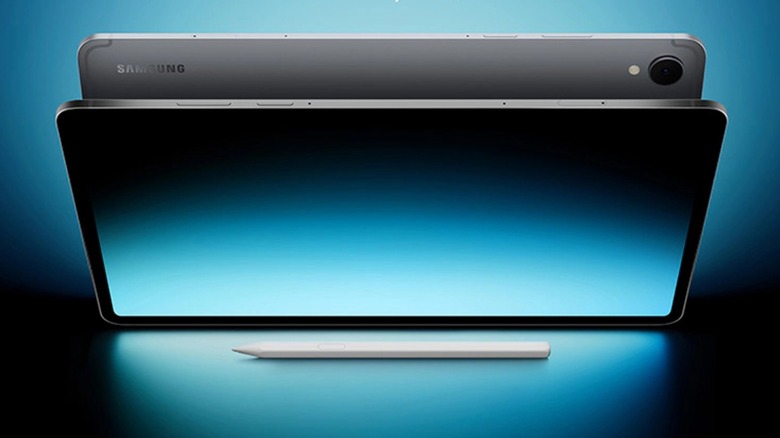
The Galaxy Tab S11 Ultra is Samsung's flagship tablet, but the comparable iPad Pro M5 (or even the iPad Air M3) crushed it in Geekbench results. Because of this, we decided to look at the smaller, non-Ultra version of the Galaxy Tab S11, which could outperform the base iPad. The more affordable S11 tablet hit 2,763 points in the single-core Geekbench 6 test, while it reached 8,762 points in multi-core, greatly outperforming the Apple tablet, especially in the multi-core department.
You also get more benefits if you pick the Galaxy Tab S11 over the Apple iPad. It offers a better display with its 120Hz HDR10+ AMOLED screen that can hit 1600 nits in peak brightness, also has double the RAM at 12 GB. Aside from that, it's IP68 dust- and water-resistant, and its screen offers greater scratch resistance, allowing it to withstand a bit more abuse from daily use. It also comes with an S Pen, so you don't need to purchase a separate accessory if you prefer using a stylus for handwriting or drawing on the tablet.
Unfortunately, you'll need to pay more to get all these features. The Samsung Galaxy Tab S11 starts at $699, which is more than double the iPad's $349 price. Even if you add the $99 1st-generation Apple Pencil into the mix, you're still paying over $250 more for the Samsung tablet.
4. OnePlus Pad 3
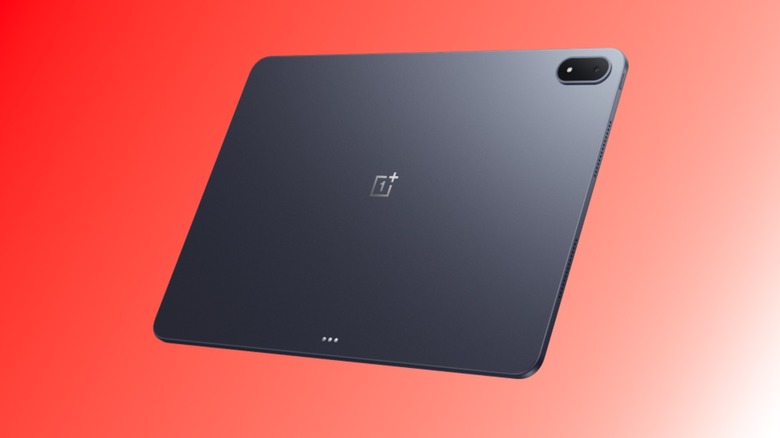
If you want a large-screen tablet but do not need the performance of the iPad Pro, the 13-inch iPad Air is a great option. But if you don't want to get sucked into the Apple ecosystem, the OnePlus Pad 3 offers a similar experience at a much lower price. More than that, it performs competitively against the iPad Air M3, with its 3,125 single-core and 9,553 multi-core Geekbench 6 scores. By comparison, the 13-inch Apple tablet only hit 2,993 points in the single-core test (although it achieved a higher score in the multi-core benchmark with 10,992 points).
The OnePlus Pad 3 offers a similar 13-inch screen size to the iPad Air and even uses the same IPS technology, but its display is still arguably superior with its higher 900 nits brightness and faster 144Hz refresh rate. The Pad 3 boasts better resolution, too, offering 2400 x 3392 pixels that deliver a ~315 ppi density — higher than the iPad Air's 2048 x 2732 pixels, offering a pixel density of around ~264 ppi. It also has a larger 12,140 mAh battery than the iPad Air's 9,705 mAh.
But the best thing about the OnePlus Pad 3 is its relatively affordable price. The 13-inch iPad Air, with 128 GB of storage and 8 GB of RAM, costs $799, but if you double its storage to 256 GB, the price jumps to $899. On the other hand, you can get the Pad 3 with 256 GB of storage and 12 GB of memory for just $699.99, saving $200 on a comparable tablet.
5. Asus ROG Flow Z13
It's difficult to find an Android tablet that's more powerful than the new iPad Pro M5, showing how much of a game-changer Apple silicon is. So, if we want an alternative to Apple's high-end tablets, we'll have to look beyond the usual smartphone and tablet manufacturers.
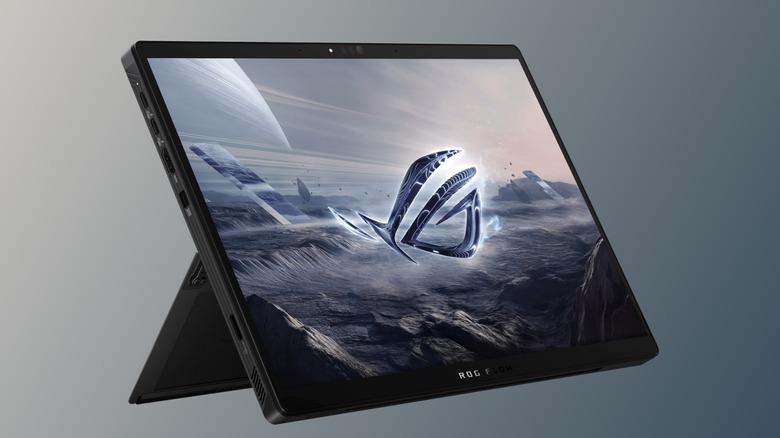
This is where the Asus ROG Flow Z13 comes in — this tablet uses an AMD Ryzen AI Max+395 processor with an integrated AMD Radeon 8060S graphics, giving it more oomph than the usual SoCs you find on tablets. This gaming tablet PC scored 2,894 points in single-core and a mind-boggling 20,708 points in multi-core benchmarks on Geekbench. The iPad Pro M5 still outshines in the single-core test with 4,136 points, but it still scored over 5,000 points higher than Apple's latest processor in the multi-core result.
While some people may consider Windows 11 a downgrade due to its numerous issues that often need fixing, it's still the quintessential operating system for PC gamers. The Asus ROG Flow also comes with a ton of ports, making it useful for productivity and some traditional games.
One would expect that a gaming laptop-tablet hybrid would be more expensive than the iPad Pro. But even if the Apple tablet just starts at $1,299 for the base 13-inch model with 256 GB of storage, the price jumps to $1,899 for the 1TB with 16 GB of RAM option. Since the ROG Flow Z13 comes with a keyboard, we also need to include the $349 Magic Keyboard for iPad Pro, bringing the total price to $2,248. On the other hand, the Asus tablet costs $2,299.99 for the 32 GB/1 TB version, making it competitively priced against the iPad Pro.