

5 Devices Around Your Home You Need To Replace More Often Than You Think
We may receive a commission on purchases made from links.
Most people have a pretty good idea of which things around the home need to be replaced, and when. Aside from less obvious stuff like replacing your HVAC filters, most of these items give pretty clear signs when it's time to can them — that moldering kitchen sink sponge, for example. Many of these items simply require setting a reminder on your phone and then going about your life. But there are a few that could be flying under the radar of your household maintenance checklist, items you think last way longer than they actually do.
This is a short list of those items. We're looking at devices (and parts of devices) that may need to be replaced every few months — sometimes every few years — but definitely sooner than you're imagining. If you have any of the following in your home, check them. It might be time for some maintenance or an upgrade.
Surge protectors
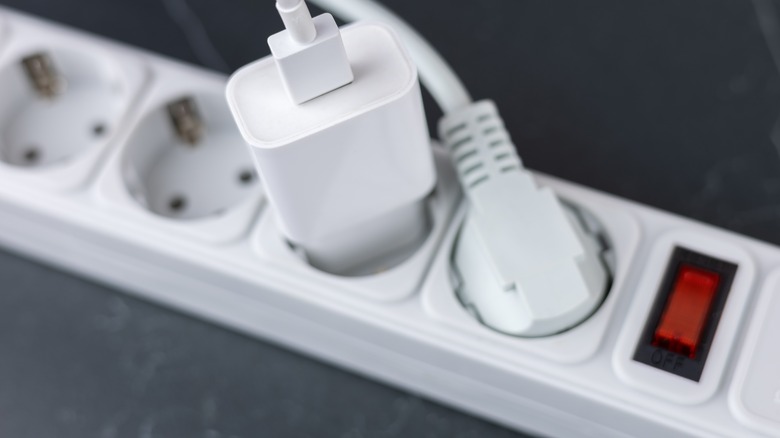
Surge protectors are an aegis against the chaotic world of electric shorts and surges. You should be plugging your TV and all other sensitive electronics into one. We've all got that trusty power strip that's been plugged in since time immemorial, and if the light's still on and it's feeding electricity, it's working, right? Not necessarily. Surge protectors have a surprisingly short lifespan, short enough that you should throw away your old surge protectors ASAP.
How old is old? About three to five years. Way sooner than you expected, right? This is because surge protectors use degradable MOVs (metal oxide varistors) as the barrier between your sensitive electronic gear and intermittent fluctuations in the electrical supply. Even if you live in an area without regular blackouts or brownouts, it's highly likely your home suffers a whole bunch of imperceptible little dips and bumps in voltage, which your surge protector takes on the chin. Eventually, its MOVs are worn down to a nub and it's basically a glorified extension cord — and a potential fire hazard.
Barring an indicator light that tells you the surge protection itself is nominal — and even that may not be reliable — there will be no external signs that replacement is nigh. We'd say that if you have a surge protector that you know is at least five years old — possibly older — you'd do well to chuck it, just to be safe. Replacing the devices it supplies will certainly be more expensive than just buying a new one. Decent power strips and surge protectors are pretty affordable. More expensive, higher joule-rated strips ensure a longer lifespan and superior protection. Just make sure your new power strip is actually a surge protector.
Routers
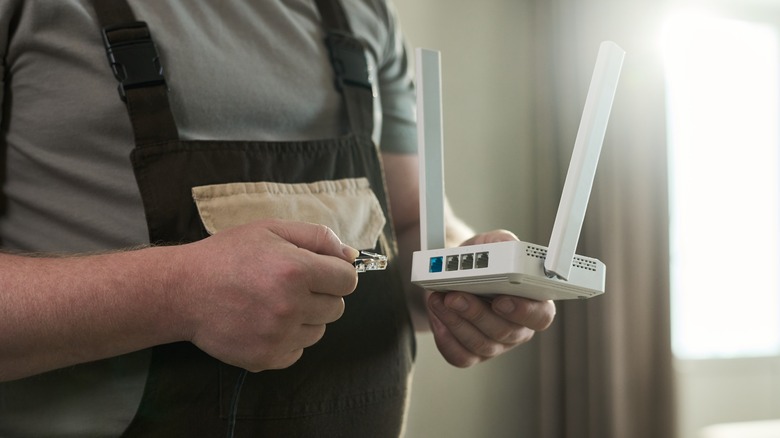
Routers are also kind of like surge protectors in terms of their perceived longevity. The one that your ISP installed a decade ago might need to be unplugged every now and again, but it seems to work fine. Most people don't even think twice about their router except when it's not working or they want to upgrade to the latest Wi-Fi 7. If your router isn't working, is having a lot of issues, or isn't giving the speeds it's designed for, that may be all the indication you need to replace it — assuming you've checked that all the settings are configured correctly. Even so, a router that's working just fine can still effectively "expire" much sooner than you'd think.
Like most electronic devices running some sort of firmware, Wi-Fi routers need regular updates to fix bugs and patch vulnerabilities, and those updates will taper off with time. Check your model for updates, and if it hasn't gotten them for a while — or the manufacturer lists it as unsupported — it's time to go shopping. An outdated router is a genuine digital security risk that hackers could exploit, so you're paying a small price to keep your home network safe and secure.
There are other uses for an old Wi-Fi router, but if you're really keen on making it last as long as you possibly can, then open-source software will save the day. The OpenWrt Project may support your old router with updates and effectively give it a new lease on life. Check the supported devices page. The installation should be pretty easy, even for non-tech users; you can update TP-Link routers, for example, by manually selecting the OpenWrt firmware from the manufacturer's online interface.
Electric toothbrush heads
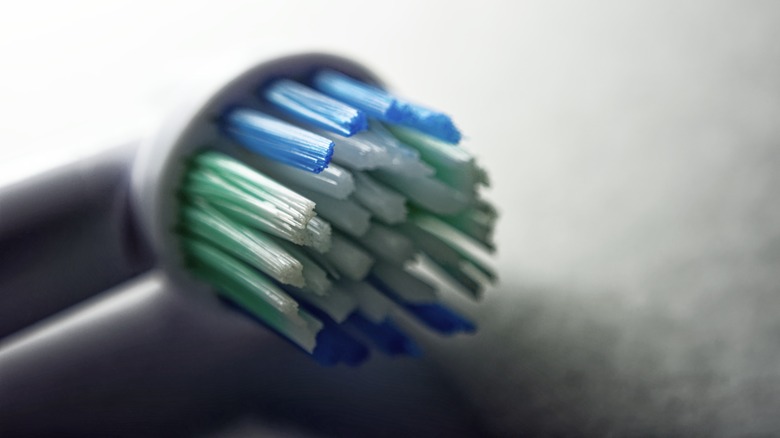
A good electric toothbrush can last you for years, which may give the impression that the replaceable heads also somehow last longer than a typical toothbrush. After all, they can be a bit expensive. A replacement pack of Oral-B toothbrush heads runs you $50 at MSRP. You can get far cheaper options from third parties, of course, but the point is that someone using an electric toothbrush may erroneously assume that they can leave the head on for as long as it looks clean and the bristles are firm and straight. This is not the case.
We admit that this is probably obvious for a lot of people, but if it wasn't, your electric toothbrush heads have a lifespan of about three months. According to VeryWell Health, they actually wear out faster than their non-electric peers, which can keep going for an extra month. So if you've been hanging on to that electric toothbrush head for six months — or heaven forbid, longer — it's time to let the poor thing taste the trash can's sweet embrace. Even that number is not a hard-and-fast rule; if your toothbrush head is a month old and looks like a bad hair day, junk it.
This isn't just because of some vague claim of "bacteria" that you might wave off as germaphobe fear-mongering. You increase your risk of various gum diseases that bed down in the comfy jungle of your bristles. Even if that weren't the case, old bristles do a bad job cleaning. Think about it. Would you rather spend a dozen extra dollars a year on toothbrush heads, or a couple hundred — and your dignity — at the dentist?
Smoke detectors and carbon monoxide alarms
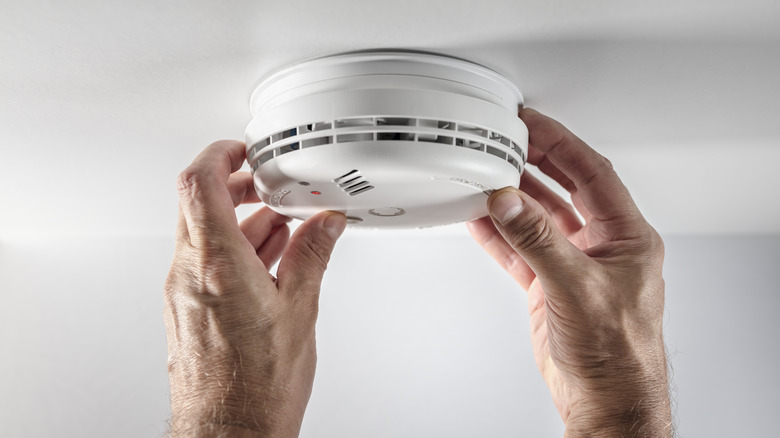
Do us a favor and look up at the smoke detector on your ceiling at home. Does it look like it was there for Y2K? If so, it's time to replace it. On average, a smoke detector will give you between seven and ten years of service, though that depends on the manufacturer. Smoke detectors should have their expiration date printed on the back. If you can't find it there, search for the model online. Independent of that expiration date, you should be testing your smoke detector regularly, and if it doesn't work — or it likes to give false positives — that may be a good indication that it's time for a replacement.
The same goes for carbon monoxide detectors, generally speaking. Again, check yours to be sure. Carbon monoxide is a silent killer that won't announce itself with smoke and roaring flames. So if you're not sure and it feels like it might be past its lifespan, just replace it. We urge you. You cannot smell carbon monoxide, and it can come from more sources than just a running car's tailpipe. Even when it isn't outright killing you, it can negatively impact your health in the long term.
To be fair, it's easy to forget about them since, well, they're up above our heads, often out of sight. But it's still crazy how little love and attention we give smoke detectors and carbon monoxide alarms when these things are quite literal lifesavers, especially in the case of the latter. Of all the items on this list, these two deserve your immediate attention, even if it's just a routine test.
Water filters

A large swath of America has drinkable tap water, but just because you can drink it doesn't mean you should. You'd be surprised how much contamination could be in "clean," ostensibly drinkable water, ranging from hard minerals to bacteria to chemicals. Even if you know that your local water supply goes to extra lengths to keep your drinking water safe, it's best not to leave things up to chance. Water filters are a relatively affordable way to clean your water, especially those that attach to your sink's tap or go in a water pitcher; a classic Brita UltraMax Large Water Dispenser can be had for under $50. A pack of four Brita Plus replacement filters costs about $26. However, you'll want to replace that water filter way more often than you think you should.
Let's look at those Brita filters as a baseline, since obviously the lifespan of other types of water filters (and filter systems) will vary. This item is the shortest on the list, since it lasts about two months, or approximately 40 gallons. Two months. We don't think it's conjecture to suggest that some people don't change their water filters for months or even years (and hundreds of gallons), at which point it ceases to be a water filter and becomes more of a repository for an ungodly amount of filth, through which you get your drinking water. Nice!
Permanent installations, like a full-home water filter, are a different story. They can go up to six months. Check your filter manufacturer's documentation if you're not sure. Also bear in mind that these are general rules; different areas have differing levels of contamination.