

8 Essential Things To Have On Hand At Home Before A Winter Storm Hits
We may receive a commission on purchases made from links.
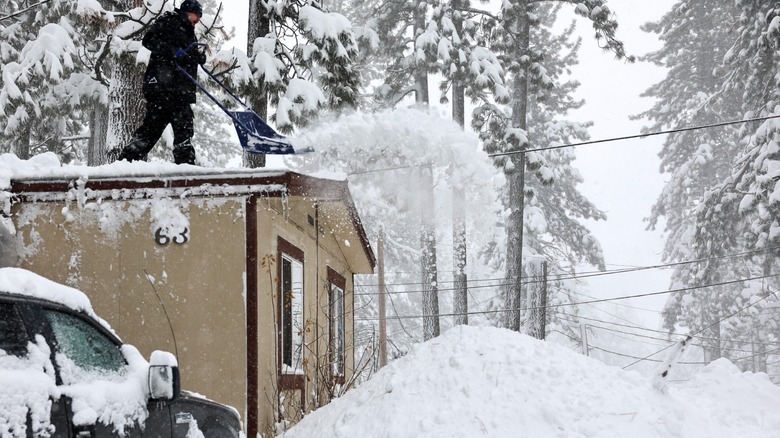
Modern meteorology has allowed us to be informed of bad storms well in advance. That's a huge benefit that can save lives, as it allows people to prepare for inclement weather much earlier. This doesn't just mean digging the rock salt and best electric snow shovels for storms out of the shed. Other preparations can also be made ahead of a storm that can pay dividends if you lose power or are temporarily cut off from the rest of the world.
When heavy snowfall blocks roads, it not only confines you to your home but also makes it much harder for emergency crews to fix downed lines and frozen pipes, meaning you could be without utilities days after a storm has come and gone. Even without snow, strong winter winds can wreak havoc and cause power outages. You'll want to make sure you have everything you need to ride out these situations before they occur. If roads are blocked or businesses are closed, it'll be too late to stock up. Even shopping shortly before a storm isn't the best idea, since there will likely be a run on nearby stores.
The best time to assemble your emergency preparedness kit is now — even if there's no storm in your path at the moment, eventually there will be. Plus, many supplies you keep on hand for bad weather can also be incredibly helpful during other emergencies, such as wildfires or (remember the toilet paper shortage) pandemics. Based on expert advice and strong user feedback, here are eight essential things to stock up on before a winter storm.
Power Station and Batteries
Despite newer gadgets using rechargeable lithium cells, many things in your home may still rely on traditional alkaline batteries, which is why you'll want to make sure you're stocked up before a storm. You can buy them in bulk without leaving a dent in your wallet – Amazon's AA batteries and AAA batteries are rated nearly as high as popular brands like Energizer, but are often significantly cheaper. If you don't have any already, you may also want to buy a few 9V batteries, which many smoke and carbon monoxide detectors still rely on.
What you might not need are larger C and D batteries, which used to be essential for many radios and flashlights. That's because rechargeable lithium batteries have become extremely common alternatives — just as you use USB cables to recharge your laptop and smartphone, many other gadgets like radios and lights also get their juice the same way. You may already have a portable power bank on hand, since it's never fun for your phone to die while out and about. However, typical banks can only fully recharge your phone one or two times.
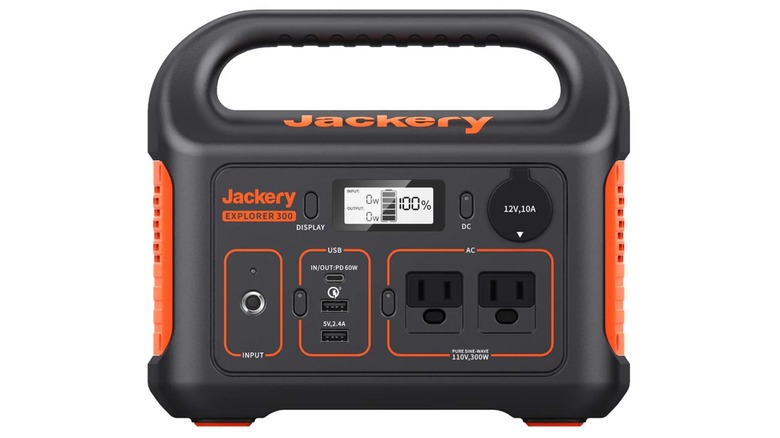
For a power outage, you should have a larger power station available. Power stations are essentially larger power banks and offer a lot more recharges, but they also typically offer higher wattage and may include 120V AC outlets in addition to USB ports, allowing them to be used to power mini-fridges, space heaters, and other appliances. These devices range in price depending on their capacity, capabilities, and quality. The best portable power stations, such as the Jackery Explorer 300 or Ecoflow Delta 2, can often be used with solar panels for indefinite power, which may be useful if an outage lasts much longer than the storm that caused it.
Weather Radio
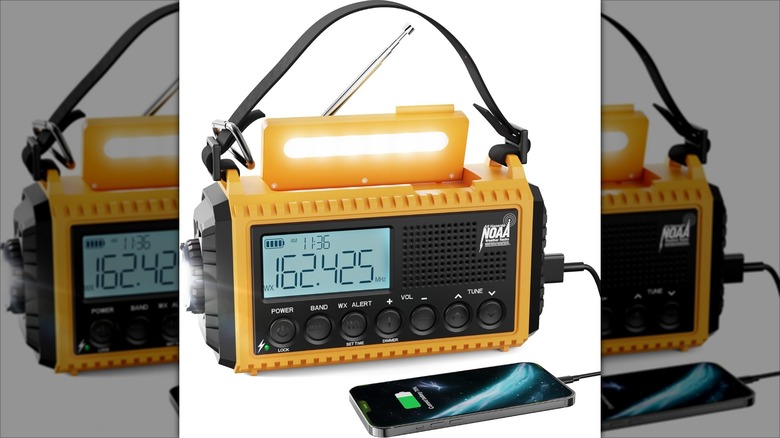
Many rely on their smartphones for the local weather, but if a power outage affects cell towers, you'll likely lose access to that information. That's why you should include a portable weather radio in your emergency preparedness kit. A battery-powered radio can also be used for entertainment, since no signal also means no Spotify, but you should make sure whichever model you buy is a certified weather radio. The difference between a standard radio and a weather radio is that the latter can receive NOAA frequencies. These seven specific VHF frequencies are used by the National Oceanic and Atmospheric Administration (NOAA) to provide forecasts and warnings, as well as marine conditions and other information during emergencies.
By keeping tabs on a winter storm, you'll know when it's safe to venture outside or when you should really hunker down. The best weather radios you should have at home can also receive specialized weather alerts, which will automatically trigger an alarm in extreme situations (tornadoes). They work similarly to the government alerts your phone may receive from time to time, and can be either broadcast on a specific frequency or transmitted directly to your county only using S.A.M.E. protocol. Weather radios may provide other features as well, such as integrated power banks and flashlights or additional means of recharging, like a solar panel or hand crank.
Several brands have reputations for reliable, high-quality weather radios, including RunningSnail, FosPower, and Eton. The Midland WR120B is very popular and is S.A.M.E. capable, but it's not rechargeable. The rechargeable Raynic Emergency Radio is a more affordable option with six different power source options — it can't receive S.A.M.E. alerts, but can receive AM, FM, NOAA, and even shortwave frequencies.
Indoor Heat
Many oil and gas furnaces still require electricity to do their jobs. Without power, a house can quickly lose its heat — especially if temperatures are sitting at the bottom of the thermometer. Thermal blankets, like Mart Cobra's Mylar blankets, are often included in emergency kits, though these are more useful for outdoors. You likely already have blankets and quilts at home and should be ready to use them, as well as layer up — there's no shame in wearing a scarf and gloves indoors during an emergency.
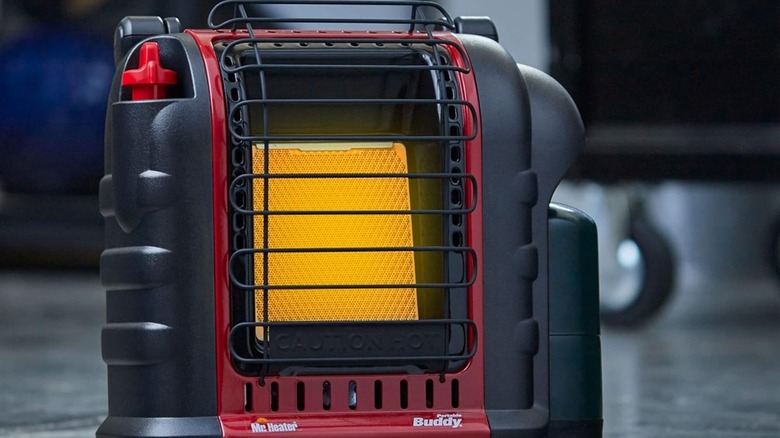
However, sometimes that's still not enough — especially if young, old, or other vulnerable people live in your home. Another useful item to keep at the ready for a winter storm is a space heater that doesn't require electricity. Battery-powered heaters are rare because generating heat takes up a lot of power, but you can find space heaters that run on propane, kerosene, and natural gas. Propane models are probably the easiest to run and maintain in the short term. The Mr. Heater MH9BX Portable Buddy is one such option. When picking out the right Mr. Heater, make sure the model you get is indoor-rated, like the MH9BX, which is equipped with essential safety features like an automatic Oxygen Depletion Sensor safety shutoff.
If you rely on an electric stove, you'll need a way to heat food as well. If no grill is available, you can use a portable camping stove. Ideally, it should be indoor-rated, but if it's not, you can use it outdoors to warm up your food before heading back inside. Some customers report using the top-rated, butane-powered Gas One GS-3400P Portable Camping Stove indoors, but obviously, safety precautions and proper ventilation must be used in tandem. Also, make sure your carbon monoxide and smoke detectors are functioning properly.
Food, Water, Medication
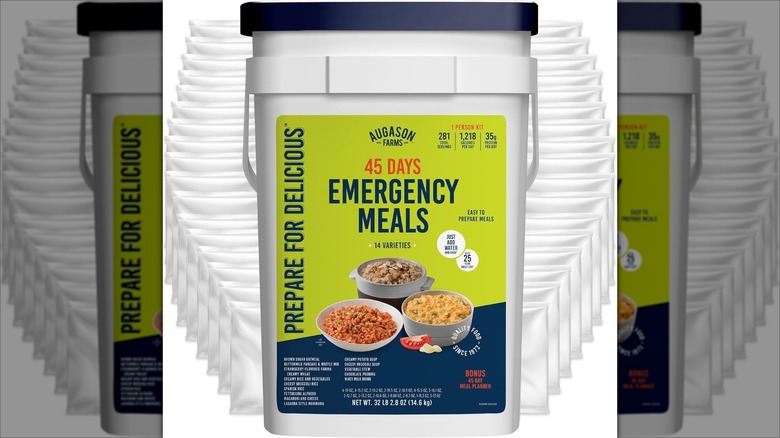
If you don't already, you should have at least a few days' worth of food and water in your home, if not more. Keep in mind that perishable food may not last long — the best food for emergencies are nuts, dried food, and other items that require neither cooking nor refrigeration. Canned and freeze-dried foods may also be useful if you have a means for cooking them.
Head to the store well before a storm and get what you need if you feel your current supply is inadequate. One quick, easy way to prepare your food stores is to buy a pre-packaged emergency kit. Augason Farms has a great reputation for its dried food — you can order a single bucket of its 45-Day Emergency Food Supply Kit, throw it in the back of your pantry, and not need to worry about running out of food anytime soon. The included meals have a 25-year shelf life, and all you need is to add water.
Speaking of water, you should also stock up on it before a storm, just in case pipes freeze or burst and you lose access to it. Melted snow can be used in emergencies for basic cleaning, but you'll want clean and safe water to drink. There are various ways to purify water, such as bleach tablets, as well as filtration devices you can add to your emergency kit. Many campers use LifeStraw products, which are compact, cheap ways to quickly sanitize water. In addition to food and water, check that you have enough of your medications and prescriptions. If you have young children, also keep enough baby formula and other essentials on hand and make sure you stock up on meds and food for your pets, as well!
Lights
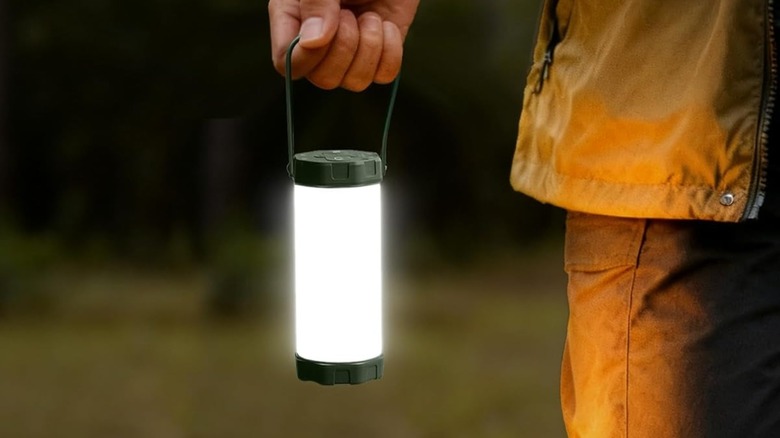
Typically, the lights going out is the first thing you notice when you lose power. Since winter storms also happen during the time of year when the sun is setting early, you could be sitting in the dark for hours on end. Not only is this inconvenient, but it can be outright dangerous as you try to make your way around the home or do things like prepare meals. Candles can be hazardous if you don't keep an eye on them, so you should rely on artificial light instead.
Flashlights come in all shapes and sizes, and you should make sure the ones you keep in your home are high-quality, such as the flashlight used by the FBI. Some rely on traditional alkaline batteries, while others can recharge via USB and use the same power station as your phone and other devices. The Streamlight ProTac HL 5-X 88081 is rechargeable but can also run on CR123A batteries. The Simpeak LED Survival Flashlight isn't as bright, but it can be used indefinitely since it can recharge with a hand crank or built-in solar panel.
Since you'll likely be confined to your home during and after a winter storm, a better option may be an LED lantern. It's essentially the same as a flashlight but designed to light up more space without being held. Just as with flashlights, you can find a variety of LED lanterns that use different power sources and offer different features. The Glocusent LED Camping Light is ultra compact but can light up an entire room with its 360-degree, 1,200-lumen lamp. It's rechargeable via USB-C and can last up to 80 hours. Plus, it has a built-in loop to hang it up high or carry it like a flashlight.
How the recommended items included in this list were selected
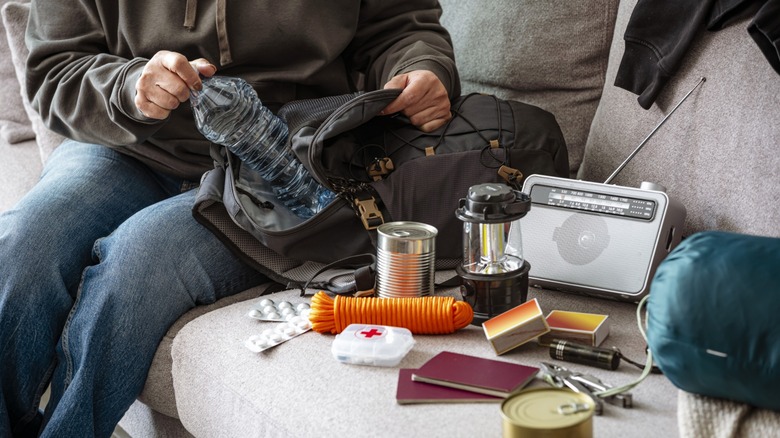
The items considered essential to have on hand for winter storms included in this list have been suggested by experts, including Direct Energy and the United States National Weather Service. The list includes some, but not all, of the things you should include in an emergency preparedness kit, especially one designed for winter weather.
The recommended products included in this list all have strong overall customer scores on Amazon, based on hundreds, if not tens of thousands, of reviews. With an abundance of positive ratings, these products are considered reliable and worth purchasing. Additionally, many of the recommended products have been expertly tested and given positive reviews by reputable publications, such as Bob Vila and GearLab, as well as by SlashGear staff.