

17 Of The Weirdest Tools That Serve A Practical Purpose
We may receive a commission on purchases made from links.
Humanity's love affair with tools goes back tens of thousands of years. Our ancient ancestors made their first tools from stone, wood, and bone. Later, they developed ways to manipulate metals like bronze and iron. New tools meant that we could acquire new materials and, with new materials, that we could develop new tools, and so on.
Most of us aren't using flint hand axes, but we do still use the cutting tools which evolved out of those earliest hand axes. There's an unbroken chain of tool development, tool usage, and tool education which stretches back to our cave-dwelling predecessors.
These days, most of us are familiar with basic tools, the kinds you'll find in your average starter tool kit. Most kids can pick a hammer, screwdriver, or tape measure out of a lineup, but that barely scratches the surface of the tools found in workshops around the world. Over the millennia, we've developed a wide range of tools, some of which are bizarre and niche but still useful. Here are 17 of the weirdest tools that still serve a purpose, even if you've never encountered them.
Froe
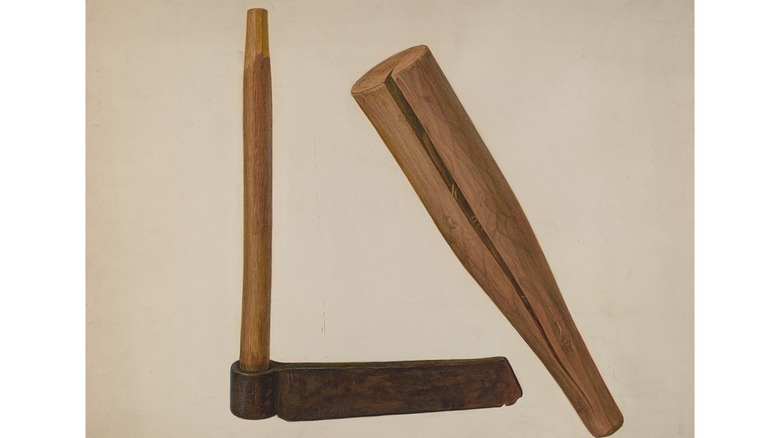
The froe looks like a primitive tool, like an axe that hasn't quite finished figuring out how to be an axe. That's sort of accurate; the froe has been a part of the woodworker's tool kit for centuries, used to cut thin pieces of wood along the grain.
It's similar to an axe or hatchet with a few differences. The blade is considerably longer than your average axe, and you don't swing it. Instead, you place the tip of the froe blade where you want it on the wood and use a mallet to drive it in. Once you've achieved enough leverage, you twist the handle to split a piece of wood.
The cutting edge goes to a point, while the top is wider and flat, so you can strike it with a mallet. Because of how it's used, there's a lower risk of injury. Moreover, a froe can be more precise than an axe or a hatchet, making it easier to create consistent planes of wood for roof shingles and other woodworking projects.
Inflatable air shim
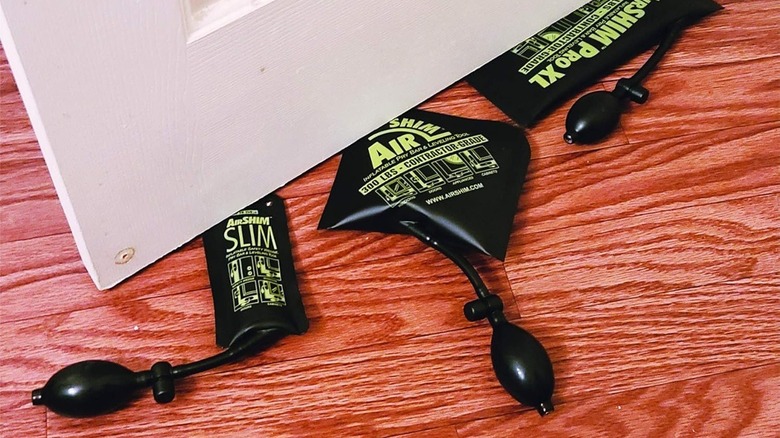
An air shim, also known as an air wedge, is a small bladder made of tough fabric which can be inflated. You might see an air shim if you have the misfortune of locking your keys in your car. They can slide behind the door and inflate, creating a space large enough to get another tool inside the vehicle to open the locks.
In addition to unlocking your car, they can be used to help you level heavy furniture or appliances by holding them off the ground for you. Always use tools to adjust the legs and level your furniture. Keep your hands clear, since the bladder can burst and cause the load to drop. You can use one to lift a door and adjust the hinges, to open stuck windows, and more. To use an air shim, just slide it into place and squeeze the hand pump to inflate it. When you're finished, open the gasket to release the air.
Spud wrench
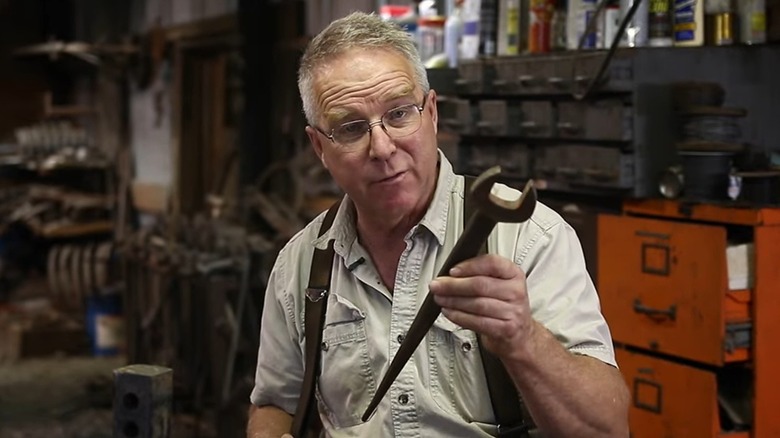
Despite its name, the spud wrench is not intended for tightening or loosening potatoes. Instead, it has varied uses in steelworking, automotive assembly and repair, and more. The spud wrench dates back to the early 20th century, when steelworkers were busily building skyscrapers and eating their lunches on suspended girders. The tool features an adjustable wrench on one end and a tapered spike on the other.
You've probably experienced assembling something and discovering that you can't quite get a bolt, screw, or peg hole lined up. That's where a spud wrench can come in handy. The wrench end is used for standard wrench operations, and the tapered end is used to line up holes before a bolt or other securing hardware is installed. Because of its tapered design, the spike can fit into openings of various sizes and keep them aligned while you fasten them together.
Dog leg reamer
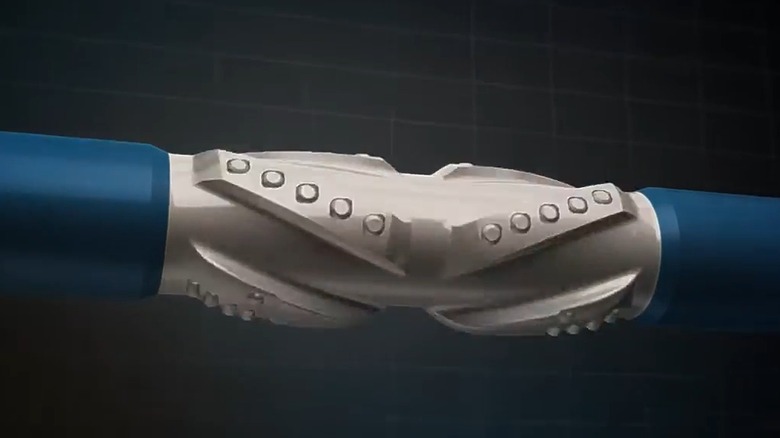
Dog leg reamers are truly weird tools designed for a specific purpose. Unless you're involved in drilling, you're unlikely to ever encounter a dog leg reamer. It's only used when drilling wells and is so-named because it smooths out turns, or doglegs, in a drill hole. Reamers are attached to the drilling line, and each one has a pair of reaming blades that carve out a slightly larger borehole and even out inconsistencies. It can not only reduce drilling time, but it also creates a better final result.
Dog leg reamers can be especially useful when drilling through unstable geological materials like shale formations or coal beds. They typically have a pair of spiraling blades oriented in opposite directions. One of the blades cuts while the drilling line is moving forward, and the other cuts when it's being pulled from the borehole and moving backward. This makes the job of drilling a hole and installing pipe easier than it otherwise would be.
Nail eater bit
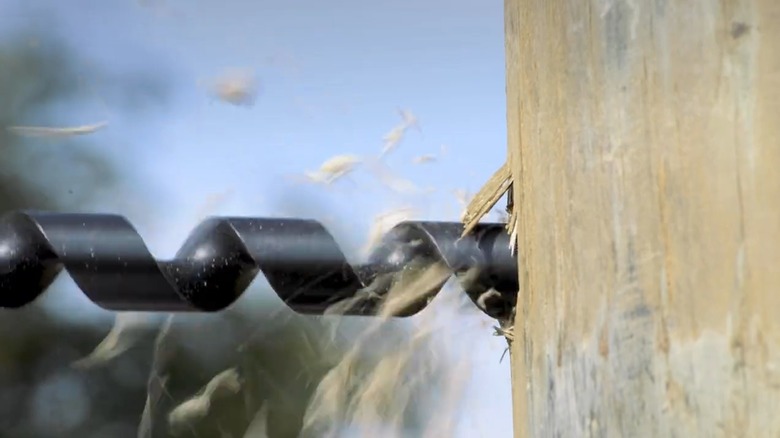
A nail eater bit is a type of auger, a corkscrew-shaped drill bit used to create consistent holes through wood or other materials. It's a smaller version of the same tool you use to dig fence post holes in your backyard. As the name suggests, a nail eater bit is hardened so it can chew through nails, screws, staples, and other pieces of metal hardware as it drills a hole in wood. It saves time by allowing you to drill holes without having to avoid or remove hardware.
Some nail eater bits are designed with an opening in the center so wood chips get ferried back out of the drill hole. Others accomplish the same thing through helical cutting edges. They're usually made of tough materials like hardened carbon alloy steel and then heat-treated so they can stand up to abuse and last a long time. There are even nail eater bits that come with a replaceable tip, so you can swap it out when contact with nails eventually dulls its edge.
Egg beater drill
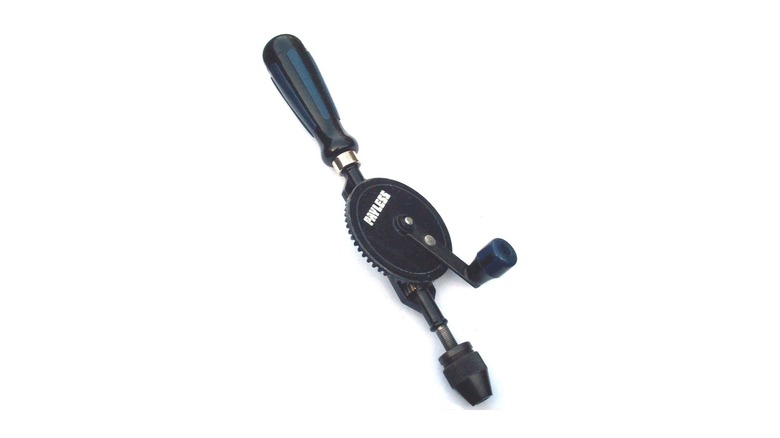
As the name suggests, an egg beater drill works similarly to a rotary egg beater. The internal mechanics are relatively simple. First, you turn a gear vertically using a hand crank on the side of the drill, which then turns a much smaller adjacent pinion, converting relatively slow vertical motion into comparatively fast horizontal motion.
Hand-powered drills aren't as fast as modern power drills, and they take a little more effort to operate, but they've got a few advantages. They don't require access to an electrical outlet, and you don't need to remember to charge any batteries. They're also much quieter than a power drill. If you need to drill a lot of holes quickly, reach for your power drill, but if you've got a quick job, like hanging a picture frame, an egg beater drill is more than up to the job — and fun to use.
Tailpipe cutter
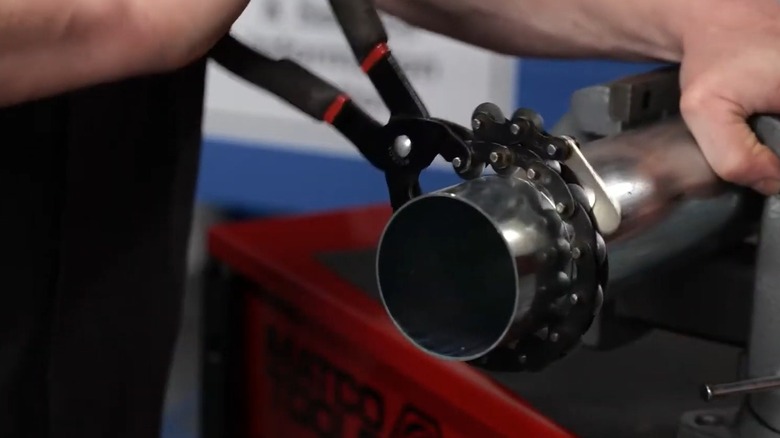
At first glance, a tailpipe cutter looks like a torture device or a weapon. It has a scissor-like handle holding a chain embedded with sharpened cutters. Also known as an exhaust pipe cutter, the tool has several cutting wheels along the length of the chain's interior.
To use it, you wrap the chain around the exhaust pipe as tightly as you can and lock the chain in place using a hook on one side of the handle. Any excess chain will hang off to the side. Then, by squeezing the handle, you tighten the chain around the exhaust pipe, putting the cutting wheels in contact with the pipe. Finally, you slowly rotate the cutter back and forth around the pipe until it cuts through. It allows you to make clean cuts and remove lengths of exhaust pipe, even in the cramped quarters that mechanics are used to working in.
Broken bulb extractor
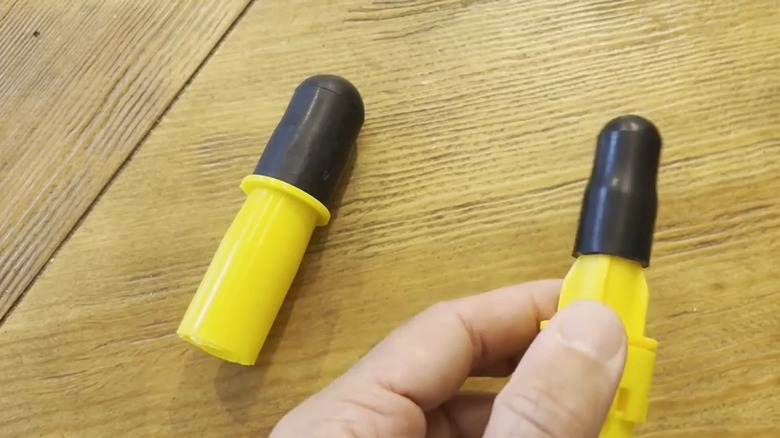
Despite its use as the foundation of bad jokes, changing a light bulb is usually a quick and easy task. That is, unless the bulb breaks. When that happens, you not only have to deal with broken glass, but removing the rest of the bulb from the light fixture becomes more difficult.
The glass part of a light bulb encloses the interior filament and connects to a metal base, which screws into a light fixture. Normally, you grab onto the bulb itself (after letting it cool to room temperature) and turn it to remove or replace the bulb. If the glass breaks, you have no easy way to get leverage on the base. A broken bulb extractor is designed for precisely that scenario. It features a rubber tip or an expanding tip that gets inserted into the light bulb's metal base and grabs it from the inside. It lowers your risk of injury and makes removing the base way easier.
Drywall lift
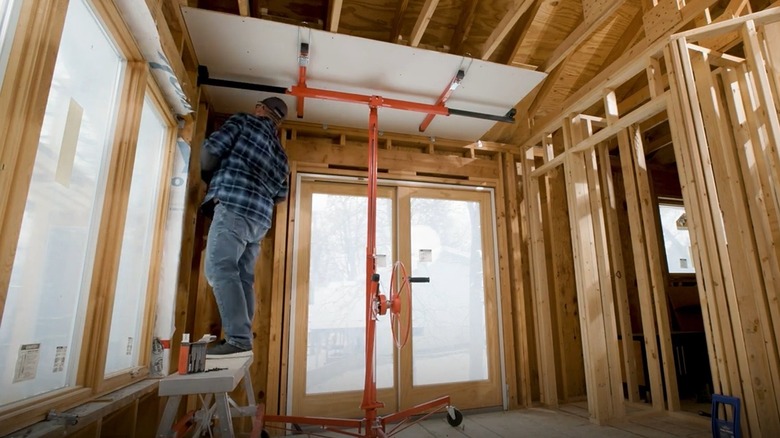
Drywall panels, also known as sheetrock, are made of gypsum plaster lined with paper. They are a popular finishing material for interior walls and ceilings. Drywall hides wood framing, plumbing, electrical wiring, and insulation to give a space a more finished look.
Placing it on walls is relatively easy, but lifting it up to the ceiling can be difficult, especially if you're installing large panels. Unless you've got half a dozen friends to help you hold it in place, you're probably going to need a drywall lift.
A drywall lift consists of supporting legs, typically on caster wheels, a main support bar, and an H-shaped panel cradle. This metal frame can hold large panels of drywall, is comparatively easy to move, and can be oriented in whatever direction and angle you need. A winch lifts the drywall and holds it steady until you can fasten it permanently into place.
Book binding stapler
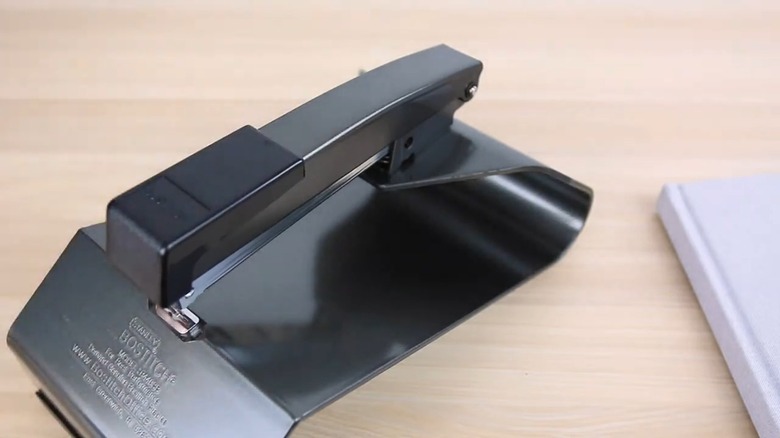
Staplers are impressive in their simplicity and utility. They make it easy to bind pages together with a single satisfying motion, but they do have some limitations. If you've ever tried to staple more than a few pages together, you've probably run into problems. The more pages in your stack, the more likely your stapler is to struggle.
In addition, there's the problem of reach. Most staplers are only a few inches long, so you can only place staples a few inches in from the edge. To make a booklet, you want to run staples down the center of your pages, so a few inches aren't going to cut it.
A booklet stapler is specifically designed for this purpose. It has an angled bottom built to cradle folded pages, and it has enough clearance to put those staples down the center along the fold. It can staple up to 20 sheets of paper at a time, creating booklets of up to 40 pages.
Pivot bit holder
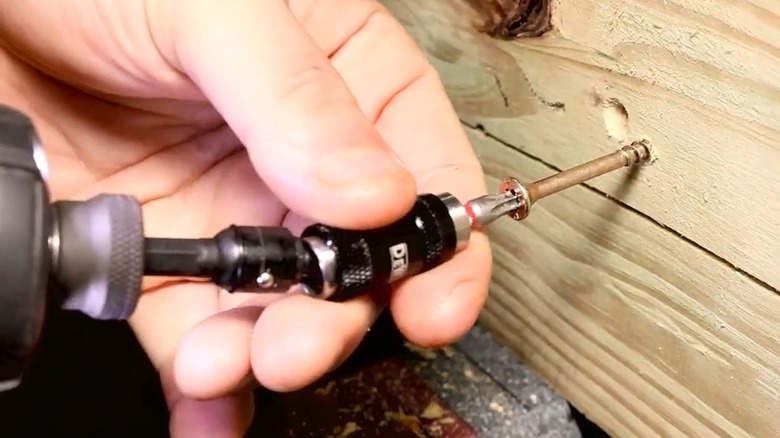
Under ideal circumstances, you'll always have enough room to swing a hammer or drive a screw, but we're not always working under ideal circumstances. Sometimes you need to turn a screw or bolt in cramped spaces or at an odd angle. Maybe you're trying to get around cramped engine parts, into a narrow part of your utility closet, or any of a hundred other small spaces. A pivoting bit holder expands your reach by letting you literally change your angle of attack. Instead of hitting a wall, your drill shifts out of the way.
Popular pivoting bit holders lock at 0 degrees, 15, 20, or 30 degrees. Some have several locking positions, while others can only be set to 0 and one other angle. Make sure you're choosing the right pivoting bit holder for your purposes. It's one of those tools that you might not use very often, but you'll be glad you have it when you need it.
Flexible flashlight
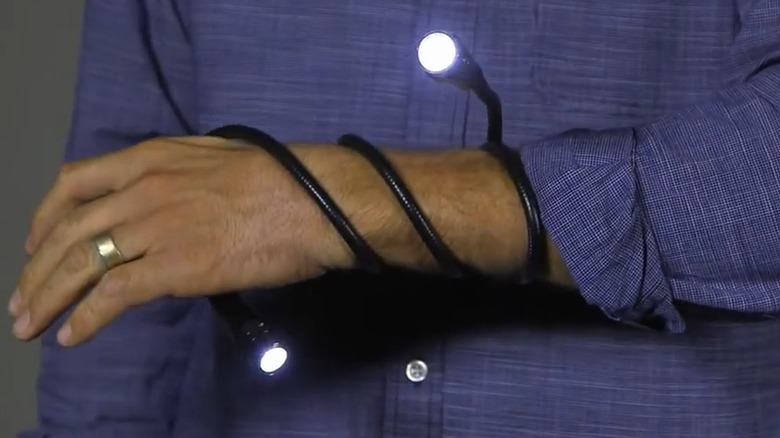
Home improvement and DIY projects often ask us to work in cramped spaces, and they don't always facilitate the easy use of tools. Whether it's a screwdriver or a flashlight, sometimes a rigid tool can't get where you need it to go. That's when it pays to be flexible.
Flexible flashlights come in several different forms. Some have semi-rigid wire, which you can bend into a custom shape without losing functionality. Some have telescoping handles or magnetic bases, so you can attach them to your toolbox or other metal surfaces. Some are even made of flexible LEDs, which light up the entire length of the flashlight like a tiny lightsaber.
Despite the differences in their forms, flexible flashlights are all designed to give you more control over the light in your workspace. You can use them to snake around obstacles and get around tight corners to point the light precisely where you need it.
Nail holding pliers
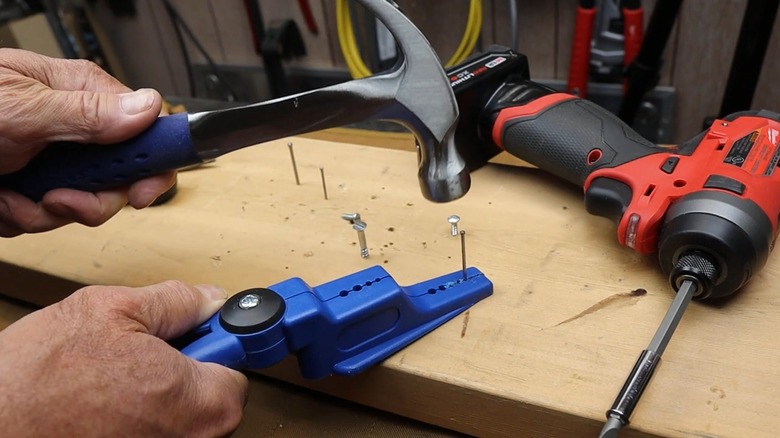
There's something really satisfying about hammering a nail home, but getting it started is another story. There's always that terrifying moment when you're holding the nail between your thumb and forefinger, and you need to drive it into the wood without smashing your fingers in the process. Every time you hang a picture frame, you're rolling the dice.
As the name suggests, nail holding pliers hold a nail for you and take your fingers out of the equation. They typically have several differently sized holes to accommodate nails with different diameters. They're good for teaching a kid to use a hammer, and they're just as good at protecting more experienced DIYers.
Nail holding pliers are typically made of hard plastic so they can stand up to a beating in the event that you miss the mark. And when they finally do break after one hammer smash too many, at least you won't need to visit the emergency room.
Screw starter
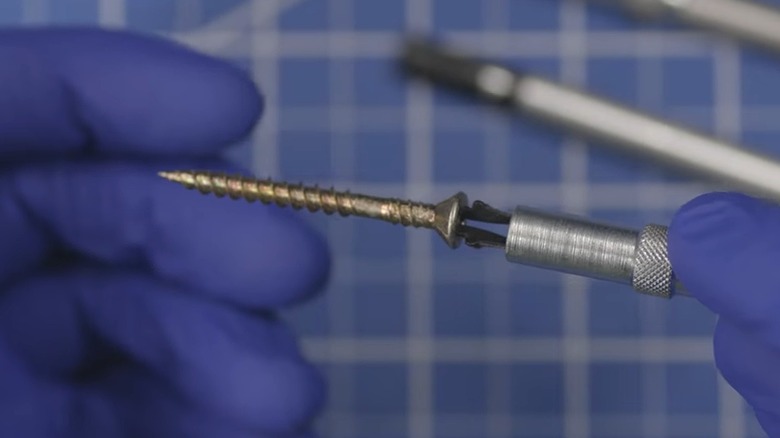
Once the point of a screw is set, driving it the rest of the way is a pretty straightforward affair. All you really have to do is keep turning until it sinks all the way in. Sometimes, getting a screw started is the hardest part of driving a screw, especially if you're working in a hard-to-reach place or at an awkward angle.
A screw starter helps by firmly grasping onto a screw from inside the recess in the head. They aren't intended for driving a screw all the way in, but they can be useful in getting a few turns, then passing the torch to another driver.
Screw starters are designed to fit inside the recesses of common screw types. If you're using a Phillips-head screw, you need a Phillips-head screw starter. It latches onto the screw's head and holds it firmly. It gives you that little bit of extra grip and reach you sometimes need to get a screw started.
Window holder suction cups
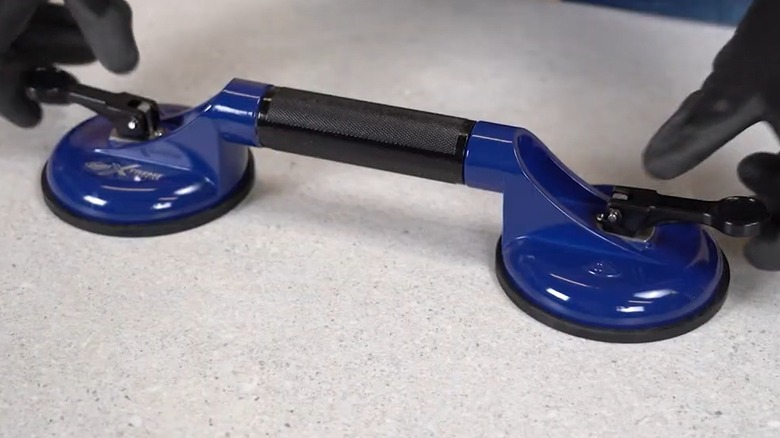
Windows and large panes of glass can be unwieldy and difficult to move. They're also famously fragile and prone to breaking. If you're going to move them, it's important to make sure you have a steady grip. A window holder works by applying big suction cups attached to a handle or a line. With the cups stuck to the glass, you can use the handles to hold or carry glass or tile without worrying about dropping it.
If you've ever thought about scaling a building with giant suction cups like you're Spider-Man (and who among us hasn't?), these little gadgets are the next best thing. Instead of holding you up while you climb a window, they hold up your window while you transport it from place to place. They can be used to hold up car windows while you're working on the door panel or to move windows and other large panes of glass around a house or construction site.
Adze
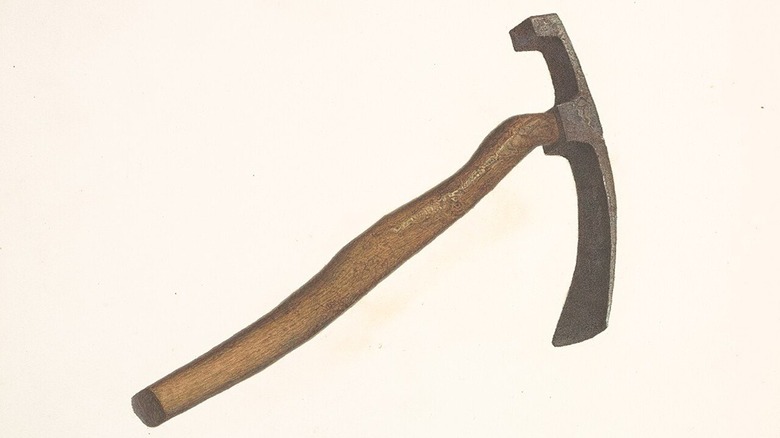
An adze or adz (pronounced "adds") is one of the longest-lived tools in history. It dates back to the Stone Age, when it was a simple hand tool made of chipped stone. Later, it acquired a wooden handle and a blade made of copper, bronze, or iron.
An adze was once an essential part of a woodworker's tool kit. It's like an axe, except that where an axe's blade is parallel to the handle, the blade of an adze is perpendicular to its handle. It can be used for cutting down trees, making furniture, and other woodworking projects. You could use one, for instance, to carve out the interior of a bowl or otherwise shape a piece of wood.
You could use one to split off wooden planks, and, in a pinch, you can even use one as a hoe for agricultural work. The adze has a long history, and while it's not as popular as it was tens of thousands of years ago, it remains a useful woodworking tool today.
Cable tie opener
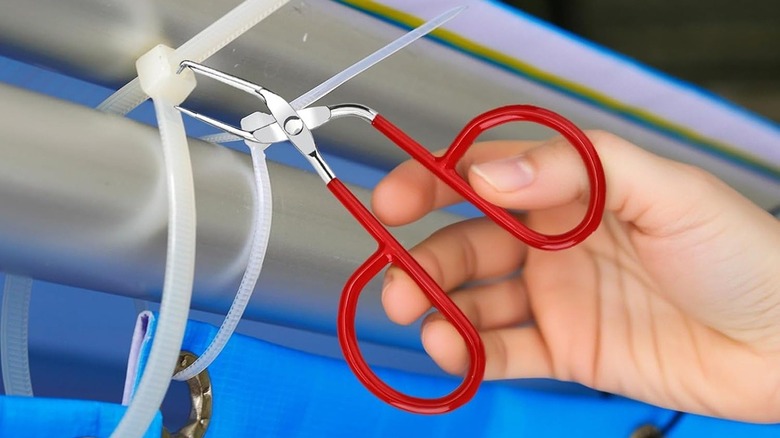
Zip ties, also known as cable ties, are useful for a wide range of jobs, including but not limited to cable management. They are easy to apply and tighten, but difficult to remove without cutting them. That's on purpose; zip ties are designed to tighten and lock into place so they remain secure. Sometimes, however, you might want to loosen or remove a zip tie without destroying it.
A cable tie opener works by getting into the locking mechanism and releasing it so you can adjust or open a zip tie and use it again. Zip ties have a square head attached to a long, thin tail. One side of the tail has a series of triangular serrations, and the head has a semi-flexible ratchet for locking into the tail's notches. When pulling the tail through in one direction, the ratchet lifts out of the way to allow it to pass through, but it locks into place and prevents the tail from reversing course.
A cable tie opener gets under the ratchet and lifts it out of the way. Then you just pull the excess strap back through the head, and you can use your zip ties again.