

6 Tool Battery Platforms Consumer Reports Ranks Worst To Best
We may receive a commission on purchases made from links.
These days, it's tough to build your power tool collection à la carte — at least affordably. Each major power tool brand utilizes its own proprietary battery platform, meaning you can't use them interchangeably with tools from other systems (at least without adapters). That means if you want to use a specific tool from a specific platform, you need to buy a battery and charger that will work with it, even if the rest of your gear is from another line. This is even the case for different battery platforms offered by the same company — for example, Greenworks 60V and 80V batteries are not interchangeable.
It would be nice if the industry got together and standardized power tool batteries, but don't expect that to happen anytime soon. However, there can be some benefits, as each company invests money and time into R&D to develop better batteries in order to compete with one another, building more powerful, more efficient, longer-lasting power sources. Battery platforms, even within the same brand, can vary greatly in quality across these areas. Other metrics, such as price and the number of products they're compatible with, can also factor into which platform someone may prefer.
Consumer Reports has compiled research from hands-on tests it's made over the past decade to calculate overall scores for many major tool brands. These scores are based on its findings for dozens of different power tools, though CR points out that it does not include heavy-duty equipment like snow blowers or pressure washers, where battery technology is still struggling to compete with gas engines. Using these scores, Consumer Reports has ranked several major power systems for cordless tools in a comprehensive list, with some scoring significantly better than others. Here are six of these tool battery platforms ranked worst to best.
Black+Decker 20V & 40V Max
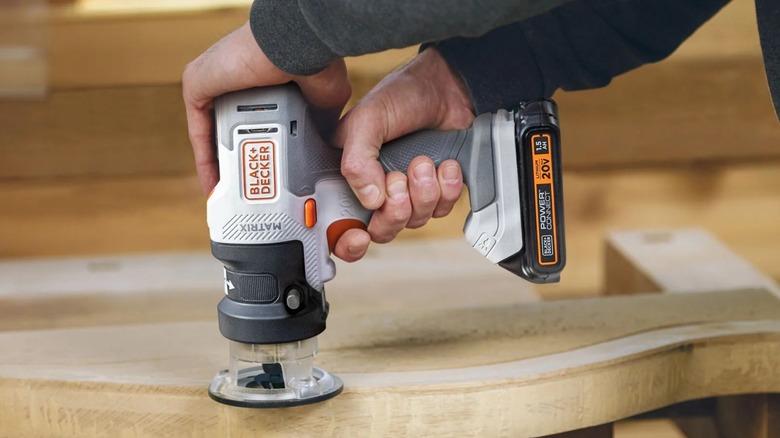
At the very bottom of Consumer Reports' ranked list of tool battery platforms is the Black+Decker 20V PowerConnect line. Ranking just slightly higher is the brand's 40V Max line, meaning that Black+Decker has the dubious honor of making the two lowest-scoring battery systems in the entire list. That may come as a surprise to some, since Black+Decker released the first cordless electric drill on the market and was synonymous with the technology for decades. For what it's worth, Black+Decker is owned by the same umbrella corporation that sells DeWalt, Craftsman, and other major tool brands that rank higher on Consumer Reports' list.
Black+Decker batteries and tools typically cost less than several competitors' higher-priced options, though seemingly at the expense of quality. One reason the Black+Decker 20V PowerConnect and 40V Max lines may score so poorly is that each offers a limited range of batteries when it comes to capacities. While you can expect similar power output from any 20V battery from its PowerConnect line, models that provide more amp-hours (Ah) deliver longer runtimes. Black+Decker sells 1.5 Ah, 2 Ah, and 4 Ah 20-volt batteries — far fewer options than those for other brands. Its 40V Max line tops off at just 2.5 Ah, so you won't get a ton of runtime from either system.
Somewhat ironically, the Black+Decker cordless leaf blower powered by its 20V batteries scored well in CR's expert tests, despite being more power hungry than smaller tools on the platform. These other cordless products include drills, saws, sanders, oscillating multi-tools, and more. Outdoor equipment in the brand's 40V Max line includes lawn mowers, chainsaws, and hedge trimmers, with its string trimmer being the only 40V tool to score above average.
Craftsman V20
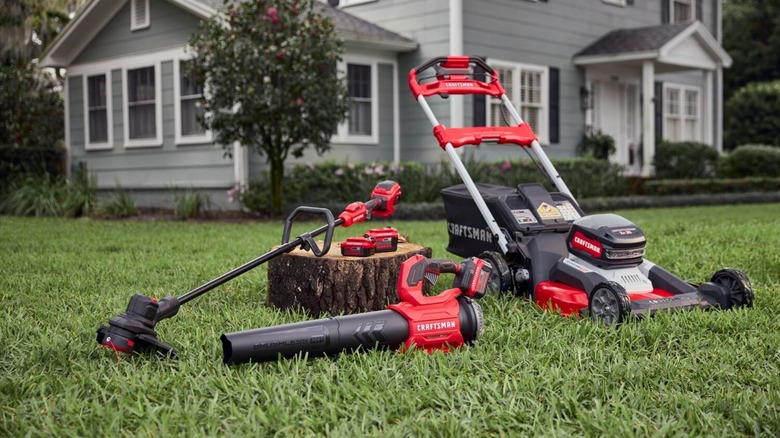
If not for Black+Decker's underperforming brands, the Craftsman V20 line would be the lowest-ranked battery platform on Consumer Reports' list. However, it still scores considerably higher than the former and isn't an outright lemon. In fact, it scores admirably in multiple categories, though its lawn mower and chainsaw weigh its overall average down. With these mixed results, you should do your research when selecting the best Craftsman yard tools to add to your collection.
Outdoor equipment is probably what Craftsman is most associated with, since it was the popular house brand for Sears for decades. The V20 line includes many other cordless tools, though, including drill/drivers, drywall screw guns, impact wrenches, saws, nailers, and more. (In case it's not readily apparent, the V20 is essentially 20V backwards, indicating the platform is on par with the 18V and 20V systems of other brands.)
Also available are brushless models of certain tools, such as its V20 belt sander and leaf blower. All told, there are currently over 100 different products within the line. The Craftsman V20 battery system offers five different options when it comes to capacity, ranging between 1.5 and 9 Ah. While the Craftsman V20 catalog isn't exactly professional-grade, the tools and equipment powered by this platform are still a popular and seemingly reliable choice for many DIYers and homeowners. Typically, its prices also reflect its mid-range spot in the power tool brand hierarchy.
DeWalt 20V Max
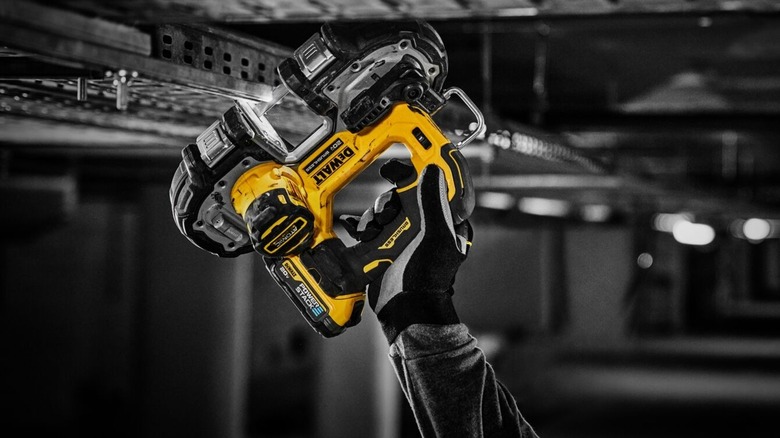
Sitting comfortably in the middle of Consumer Reports' ranked list of battery platforms is the DeWalt 20V Max system, scoring slightly higher than Skil's and Bauer's 20V systems and slightly lower than Ryobi's 18V One+ line. Many DeWalt 20V Max tools performed very well in CR's testing, though — as with some other brands — its cordless chainsaw has room for improvement. One big point in DeWalt's favor is that its 20V Max platform is one of the largest and most versatile on the market, with over 300 different products compatible with its black-and-yellow batteries. These include everything from cordless drills to lawn equipment and niche tools like pencil vibrators.
Because it's such a broad system, the DeWalt 20V Max platform also includes smaller subplatforms within the system. There are differences between the DeWalt Atomic and XR lines, for example, but tools from both lines are still compatible with the same batteries. This adds to the versatility of the platform overall, as each offers different advantages, such as the compact and portable design of DeWalt's Atomic tools.
There are even different types of batteries with varying designs within the system, like DeWalt XR PowerStack. PowerStack batteries are interchangeable with standard DeWalt 20V Max models and offer the same voltage, but because they're built with stacked pouch cells they can provide the same power with less space, among other benefits. PowerStack batteries currently only come in 3.5, 5, and 8 Ah capacities, though the DeWalt 20V Max platform ranges overall from 1.3 Ah to large-capacity 10 Ah units. Notably, the DeWalt FlexVolt system, which is compatible with both the brand's 20V and 60V tools, ranks several spots higher in Consumer Reports' rankings.
Greenworks 80V
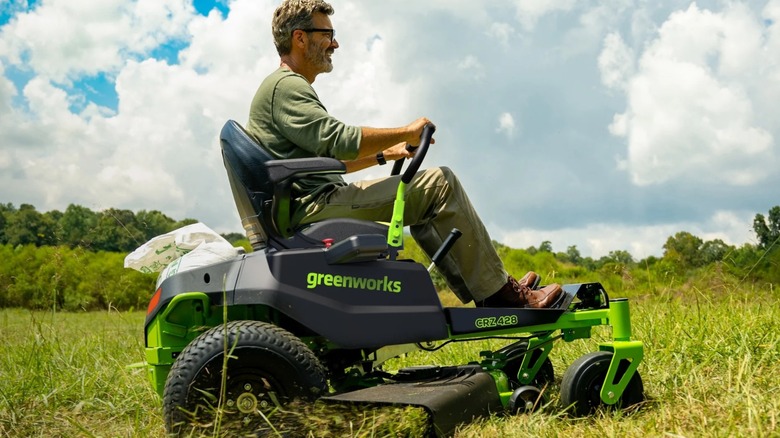
Just shy of the best of the best brands on Consumer Reports' list is the Greenworks 80V line, making it the best of the good platforms or the worst of the best platforms, depending on how you want to look at it. The company's 60V system actually performs even better and is tied with the 40V power systems from Hart and Ryobi near the top of the list. Interestingly, Greenworks seems to struggle with less-powerful tools, as its 24V platform is near the bottom of CR's selection.
Greenworks 80V is tied with Kobalt 80V when it comes to the highest 80-volt platform on CR's list. This can be useful information for those looking for cordless electric equipment that previously was only available as gas-powered or corded, because the amount of power delivered by 80V batteries dwarves that from smaller platforms. The Greenworks 80V line includes zero-turn mowers, pressure washers, snow blowers, and even vehicles like go-karts and mini-bikes. (The Greenworks 80V Snow Blower, however, scored poorly in CR's tests, despite other products like its string trimmer and leaf blower excelling.)
Greenworks also excels at runtime, as the lawn mower with the best battery life is the brand's Greenworks Pro 80V 21-inch Push Mower. There's at least one drawback to the platform that probably isn't much of a surprise — the massive 80V batteries are fairly heavy, making handheld tools more laborious to use. The larger the capacity, the heavier they are. The Greenworks 80V system includes five different sizes: 2 Ah, 2.5 Ah, 4 Ah, 5 Ah, and 8 Ah.
Ego Power+
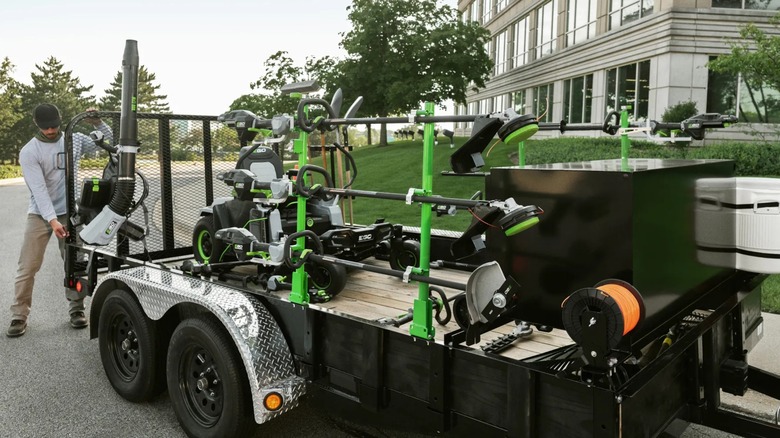
Makita has not one but two platforms near the very top of Consumer Reports' ranked list of battery systems, but Ego Power+ beats out both for the number one spot. The publication notes that, even though snow blowers and pressure washers weren't factored into overall scores because battery-powered ones typically underperform, Ego+ makes high-quality models of each that tested very well. It makes sense that the brand excels when it comes to equipment like this as well as battery technology, because it has a much narrower focus than many other major tool brands.
Ego has just one battery platform, unlike most of the competitors on CR's list, which may be why it doesn't even bother to include voltage in its name (Ego Power+ is a 56V battery system). This focus allows it to more easily offer more options within its 56V line — Power+ has one of the widest ranges of capacities and includes 2.5 Ah, 4 Ah, 5 Ah, 6 Ah, 7.5 Ah, 10 Ah, and 12 Ah units that all have impressive recharge times. It also doesn't offer tools like cordless drills or impact drivers and instead focuses mostly on outdoor equipment, such as mowers, blowers, trimmers, and the like. Ego says its products are designed for professionals and deliver the power of gas engines without sacrificing runtime.
Considering its placement in Consumer Reports' rankings, the brand appears like a smart choice when shopping for a tool platform. However, one of the things to consider when buying Ego toolsis that multiple owners have complained about the company's customer service when there are issues with its products. Also, Consumer Reports states that its 56V tools are heavier than many competing models, which may be important to some users.