

5 Key Signs That Your Car's Turbo Is About To Fail
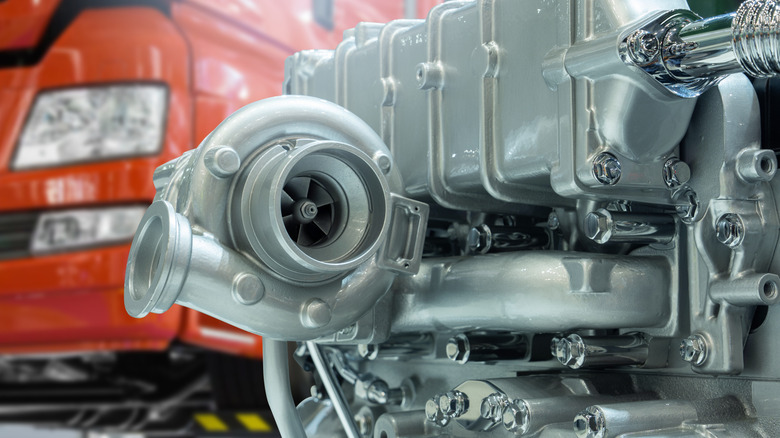
Automakers are increasingly adopting turbochargers to comply with strict global fuel efficiency and emissions regulations. This technology allows vehicles to extract more power from smaller engines, effectively downsizing fuel requirements without sacrificing power and performance. This approach strikes a critical balance between satisfying environmental standards and delivering the horsepower consumers expect.
Notable for their ability to forcefully induce more compressed air into the combustion chamber to increase performance, turbocharged engines are a popular choice for many vehicles. However, this performance boost comes at a cost. Turbochargers operate by expelling hot compressed air out of their exhaust; this air is then used to spin rotating vanes on its inlet. Because of the constant heat and motion turbos are subjected to, they're some of the first engine components to give up the ghost if regular maintenance is neglected.
Turbocharger failure isn't just an inconvenience, either; if your turbo fails, it could lead to metal shrapnel shredding either the intake or the exhaust, causing a buildup of carbon, or contaminating your engine oil. Any one of these instances could lead to the type of damage that requires a full engine replacement. This makes it critical to know the warning signs associated with the imminent failure of your car's turbocharger.
Loss of power

If you feel a sudden drop-off in power when putting pedal to the metal, this could be a sign that your car's turbocharger is having a problem. If you've been driving for years, you'll likely have an instinctual understanding of your vehicle's performance in terms of things like acceleration, braking, and turning, so it will be immediately noticeable if your car feels lethargic when you put the hammer down. If it feels like you're dragging an anchor behind you, then it's likely your car's turbo is at fault.
There are a number of issues that could be at play here. Power loss can occur if there is restricted airflow or poor fuel delivery to the turbocharger. A blocked air filter, jammed intake hose, or presence of a foreign object in the intake path can limit the amount of air that's being fed to the engine, which will then reduce the efficiency of your vehicle's turbocharger.
Additionally, low turbo pressure can also be caused by issues related to your engine oil. Anything that restricts the amount of oil fed to your turbocharger can limit performance in the same way that a failure in airflow can as well. Loss of power is a major issue, especially when it comes to road safety; without a well-functioning turbo, you might not have the power to pass a slow vehicle or avoid a similar obstacle. If you experience a power loss, get your car checked out by a qualified mechanic immediately.
Loud whining noise
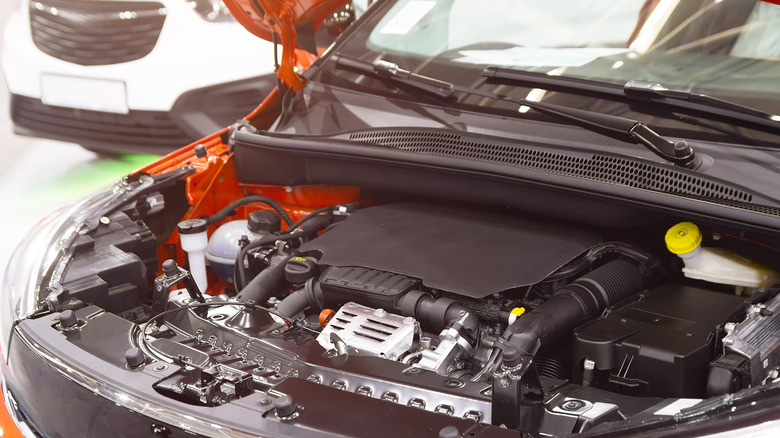
One of the main highlights of a turbo engine is its noise. Turbocharged engines have a distinct exhaust noise — the whole whistle-whoosh-flutter of a well-tuned turbo is part of its charm. Car enthusiasts pay a lot of money just to replace their stock exhaust with that high-performance symphony. However, if your turbocharger instead emits a loud, high-pitched whine that sounds closer to a dentist's drill than a car engine, that's a clear warning sign. Likewise if you hear rattling or screeching; these are not happy noises, and it's a strong indication that something's gone wrong with your turbocharger.
I ran into this very issue myself with the turbocharger in my own car, as it started producing a high-pitched, loud whining noise. It only got louder as I depressed the accelerator, and upon getting my car checked at the service center, it became clear that my turbocharger needed replacing. That whining noise, by the way, is usually a result of the compressor wheel blades scraping against the housing of the inside of the turbocharger.
Typically, internal bearings are to be blamed here. When these bearings don't get enough supply of oil or lubrication to rotate, they can get worn out quickly. This is the reason why a regular oil change is a must. While turbocharged engines aren't inherently less reliable, you should also never skip an oil change either — especially if you're worried about your turbocharger making a particularly awful screeching noise.
Colored exhaust smoke

For vehicles that are serviced regularly, its exhaust should be largely invisible. However, if you see clouds of blue or black smoke trailing behind you, then there is definitely something wrong. In terms of turbochargers, the color of the smoke can tell you a lot about your engine's health; if you're a car expert, you'll know the exact problem by seeing the color of the smoke. No matter what, however, it's a clear red flag if your exhaust pipe is belching blue or gray smoke.
These two colors are classic signs of burning engine oil. As mentioned previously, the turbocharger requires plenty of oil to keep it spinning. Engine oil is meant to be a closed system, contained inside chambers through the use of dynamic metal seals. If your turbo bearings wear out, or if one of these seals ends up cracked due to any reason, this can result in an oil leak.
If the oil leaks on the intake side it will get pulled into the engine and burned, producing blue smoke. If you're "lucky" enough to have an exhaust-side leak, the oil is likely to create thick grey smoke when it hits the hot exhaust pipe and burns off. If you do have an oil leak, you'll most commonly see it right after startup or during acceleration. Meanwhile, black smoke indicates that your fuel/air mixture is off. Since a turbocharger is designed to force higher levels of compressed air into the engine, black smoke suggests that the turbo might not be doing its job.
Check engine light illumination

Cars are no longer just about engines and moving parts — they're essentially computers on wheels. In the modern era, cars are filled with dozens of electronic sensors designed to make diagnostics easier. This sensor integration helps drivers know when there might be a potential problem. A typical modern vehicle can let you know when there's a problem with your fuel level, your brakes, your oil pressure or engine temperature, whether your traction control is working, or even if you left your lights on. To that effect, the Check Engine light is often your first indicator something's wrong with your vehicle; turbocharger failure can often trigger this light.
Modern turbochargers are equipped with sensors known as Manifold Absolute Pressure (MAP) sensors. The job of these sensors is to constantly report data to your car's electronic control unit (ECU), just like an employee reports back to their manager. When your MAP sensors detect something wrong with your turbo pressure, it tells the ECU; at that point, the Check Engine light on your dashboard becomes illuminated.
You won't know exactly what the ECU found unless you take it to the service station. A mechanic can use an on-board diagnostic (OBD) reader to get more information from your ECU, revealing whether your turbo is overboosting (providing too much pressure) or underboosting (not providing enough). If you have your own OBD reader, look out for codes like P0299 (underboost) or P0234 (overboost) during diagnosis. An underboost points towards oil leaks, worn turbos, or stuck valves, whereas an overboost could mean issues with things like your head gasket or connecting rod.
Oil leaks and consumption

Turbochargers need good oil circulation to operate smoothly and without any hiccups. They need a constant, high-pressure flow of clean oil to survive the immense heat generated inside the combustion chamber. This means that oil leaks are one of the most common source of issues in turbo engines. If you spot oil dripping right underneath the turbocharger area, then this is an external leak issue. You may also notice a burning oil smell while driving or when the car is idle.
Leaks usually happen when the pipe that takes the oil to and from the turbo develops cracks, or its gasket fails. Because the oil feeder works under high temperatures and pressures, even a small hairline crack can spray oil over different parts of your hot exhaust. This not only produces an unpleasant smell, but also results in safety hazards like the risk of fire.
Another good indicator of a turbocharger issue is when your car starts consuming more engine oil. If you are paying frequent visits to the service center to top up your oil, and there's no visible contamination in the oil chamber, then your turbocharger is likely the culprit. If your turbo's internal sealing is damaged, your oil could be going elsewhere instead of properly lubricating the it, causing your turbocharger to consume more oil as a result. This is why it's so critical to service your turbo regularly.