

5 Ways Lexus' 2026 TX 550h+ Earns Its Luxury Price (And Where It Struggles)
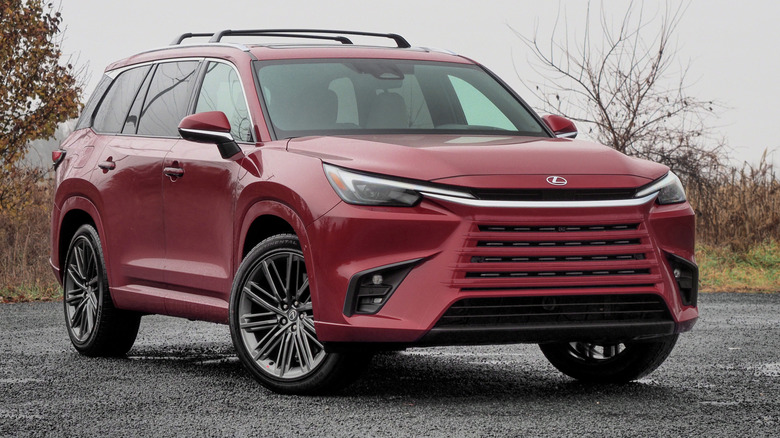
You can't accuse Lexus of not taking hefty, three-row SUVs seriously. Toyota's upscale arm has three of them: the TX, GX, and LX, spanning price points from just shy of $60k through to six-figures. This particular 2026 TX comes in a total of ten different versions.
Of that count, the TX 550h+ PHEV sits at the top of the tree. Starting at $80,960 (including $1,450 destination) it's the most expensive, the most powerful, and the quickest of the TX line-up. It's also, courtesy of its plug-in hybrid drivetrain, the most fuel-efficient of the bunch.
 Chris Davies/SlashGear
Where the GX offers to take the family into the wilderness, and the LX promises Lexus luxury superlatives on the road, the TX targets families wanting a capable all-rounder. It's not the only SUV to do that, of course, in a hotly contested segment. So, where does the TX plug-in hybrid stand out, and where does it fall short?
1. Simpler design does the TX favors
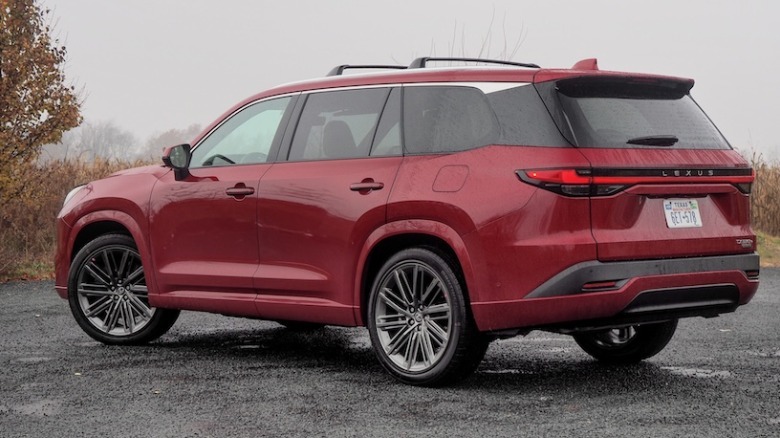
It's fair to say Lexus' grille aesthetic is a lot less controversial than it used to be. Gone is the vast, chrome-emblazened hourglass, replaced with something far more subtle. I don't know if I'd call it handsome — and the rest of the design clearly prioritizes cabin and cargo space, rather than exterior detailing — but it's not ugly.
 Chris Davies/SlashGear
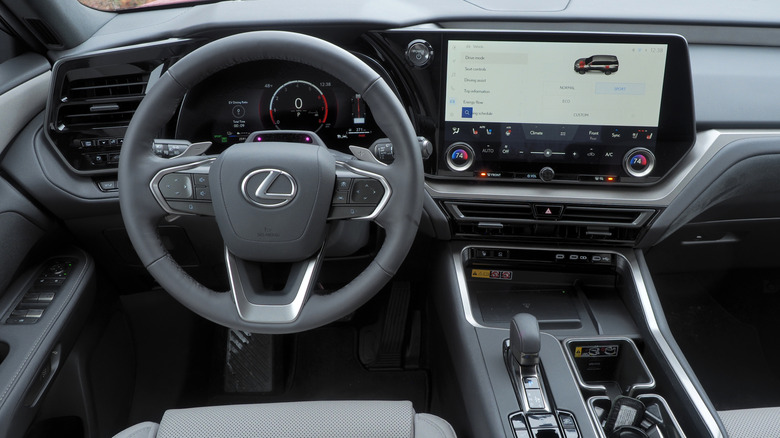
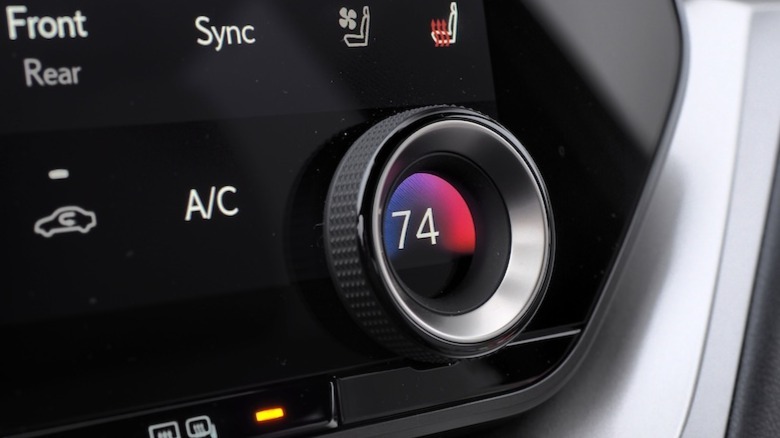
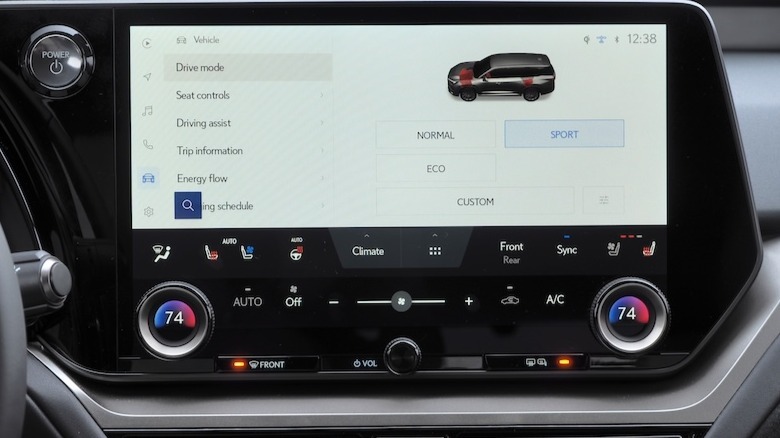
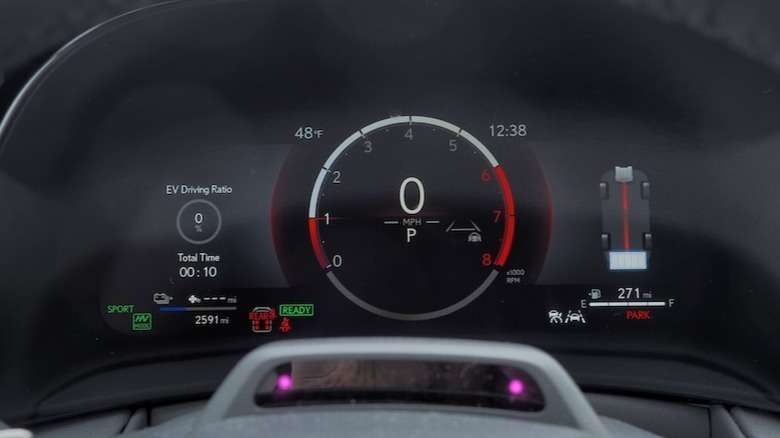
The nose isn't the only place where Lexus has shown some restraint. The TX isn't short on gadgets, but it avoids the vast dashboard touchscreens which have become shorthand for luxury in other high-end SUVs. Its 12.3-inch driver display and 14-inch center touchscreen are big and clear enough to not feel miserly, but you still get physical knobs for temperature and volume, and the cluster UI lacks the visual overload its Toyota cousins can suffer from.
 Chris Davies/SlashGear
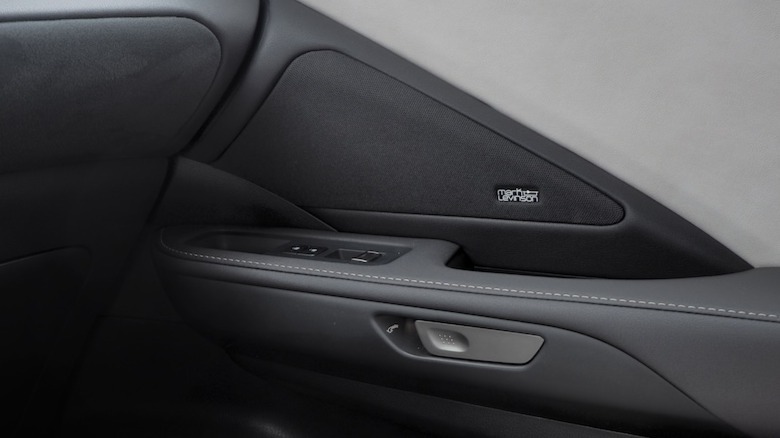
Wireless Apple CarPlay and Android Auto offer a smartphone alternative to Lexus' straightforward native infotainment; there are plenty of USB-C ports along with wireless charging, too. I'm not such a fan of the drive mode selection being buried in the infotainment menu (rather than given a dedicated button), mind, and the touchpads on the steering wheel seem needlessly complicated. Some passengers found the electric door releases confusing, too.
2. The most powerful drivetrain is also the most frugal
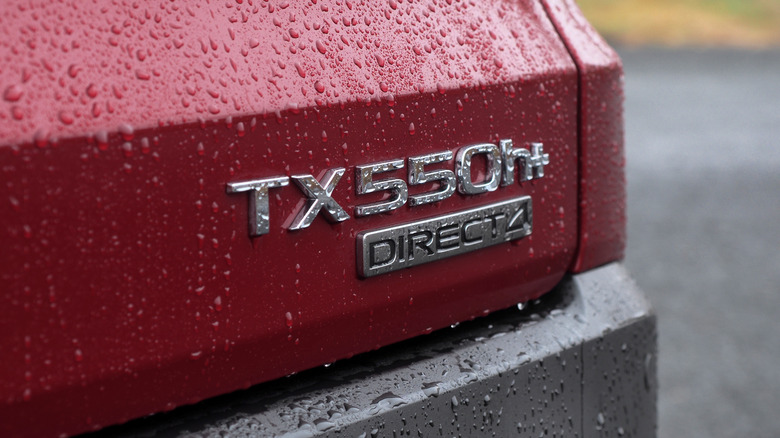
Lexus offers four powertrains for the TX. The cheapest TX 350 models get a 2.4-liter turbocharged inline-four, with either front-wheel drive or all-wheel drive. The Lexus TX 500h pairs that engine with front and rear electric motors, with all-wheel drive standard and more total power. Finally, the TX 550h+ gets a 3.5-liter V6, two more potent motors, and a much bigger battery than the regular hybrid (18.1 kW versus 1.4 kW).
 Chris Davies/SlashGear
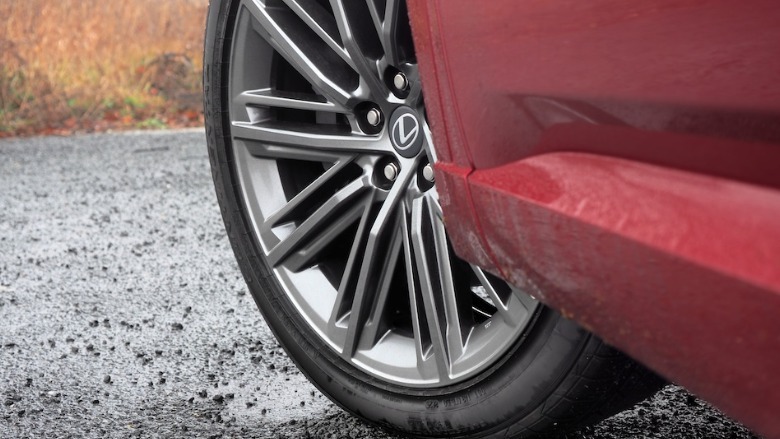
The result is 404 horsepower, which Lexus says is enough for a 0-60 mph time of 5.9 seconds. However, with a full battery charge, the PHEV is rated for 33 miles of electric-only range. Altogether, it's rated at 29 mpg in the city, 28 mpg on the highway, and 29 mpg combined. My own mixed driving landed at almost 27 mpg with no real attempt to be frugal along the way.
 Chris Davies/SlashGear
Given this is a 5,300+ pound SUV, even in 'Sport' mode there's only so much eagerness it can muster. The TX 550h+ is swift from a standing start, the motors giving a welcome shove before the naturally-aspirated V6 brings its power to bear. Problem is, that peak power — the V6 contributes 259 horses — only lands at a fairly noisy 6,000 rpm.
3. Lexus saves the trick suspension for its sportier trims
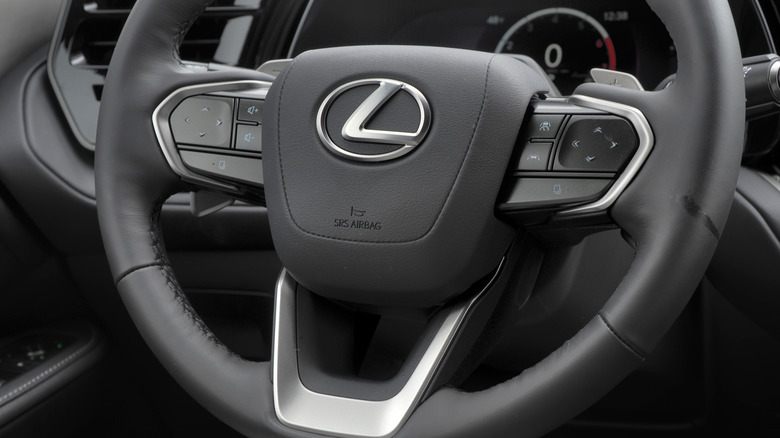
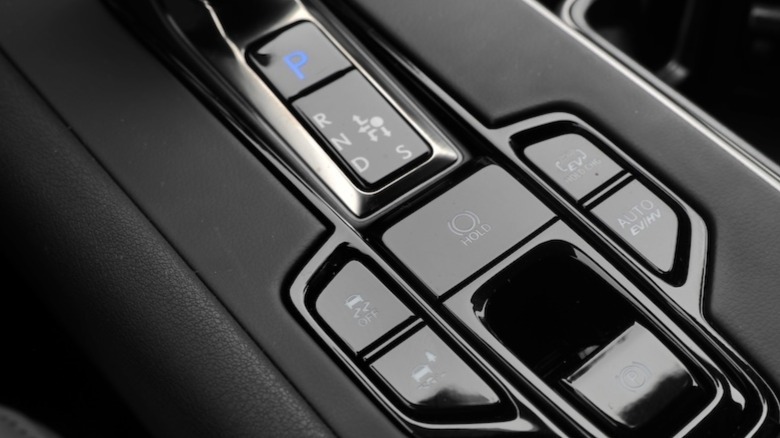
The result feels reasonably nimble around town, but yells a bit when you push harder. The CVT — used here in favor of the regular automatics in the non-PHEV — doesn't much encourage antics, either. Lexus' steering is highly assisted, which though a detriment in a sports car, here only lends the TX a sense of imperious distance from the road. It's easy to drive, and to maneuver even in smaller settings.
 Chris Davies/SlashGear
Unfortunately, only the F Sport Handling and F Sport Performance trims — which can't be had with the PHEV drivetrain — get adaptive variable suspension, softening or firming the ride according to drive mode or road conditions. That would likely help the TX 550h+ avoid its body roll in the corners, a sensation sufficient to rein in any ambitions of enthusiastic driving.
4. Three reasonable-scaled rows
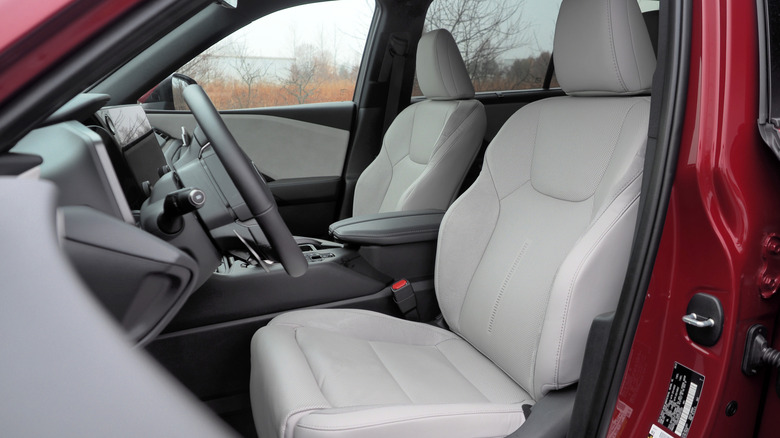
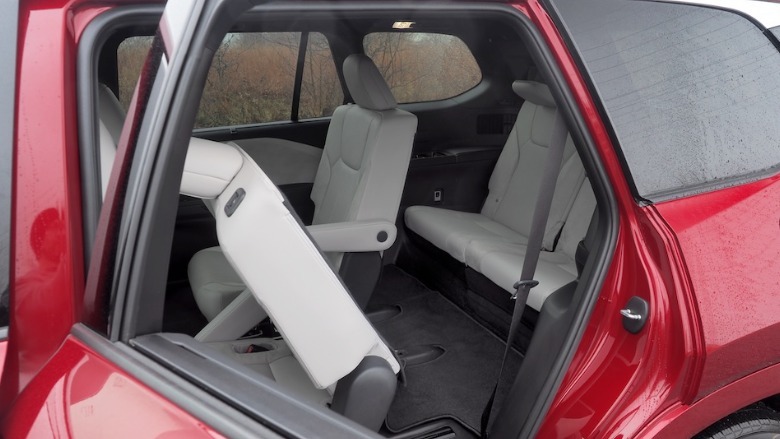
While the TX can officially seat up to seven, that's only on the lower trims. By the time you get to the electrified models, you're looking at three rows of two seats each, for a total of six spots. As you'd expect from something with the Lexus badge, they're not bad spots to find yourself, either.
 Chris Davies/SlashGear
First and second rows get both heating and ventilation, along with multi-zone climate control and a heated steering wheel. There are second row manual sunshades, too. Once you get to the third row, things start to feel a little more snug if you're adult-scale. At 5'8 myself, the 37-inches of headroom and 33.5-inches of legroom were manageable, if not lavish. A larger three-row SUV, like Chevy's Tahoe, bests the Lexus with another inch and a half of leg space, but then again it's also eight inches longer overall.
 Chris Davies/SlashGear
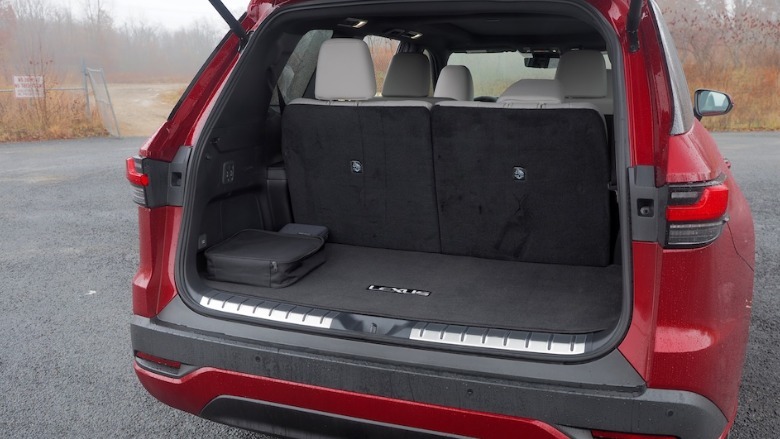
All three rows get plenty of storage space, and the trunk isn't to be sniffed at, either. There's 20.2 cu-ft with the third row upright; drop it, and that expands to 57.4 cu-ft (that Tahoe offers 25.5 and 72.5 cu-ft respectively). It's 97 cu-ft maximum; not the very largest of the three-row SUV options, but capacious still, and accessed by a standard power tailgate with kick-activation.
5. PHEV is the (expensive) way
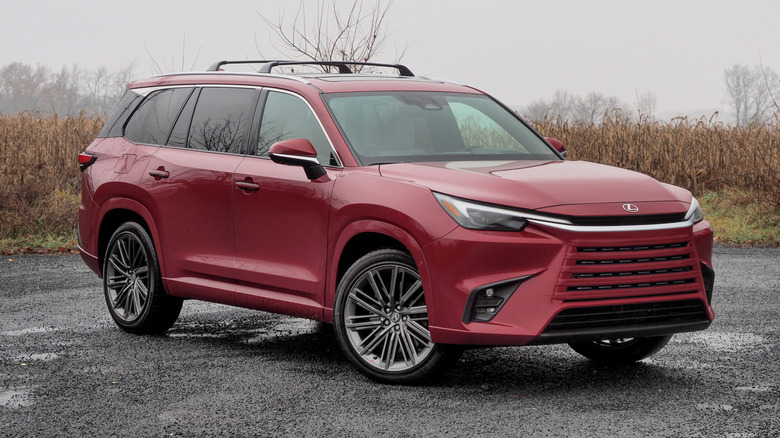
It's tough not to look at this PHEV flavor of the TX and conclude that plug-in is the way to go for big, family SUVs. Gliding around town on electric power alone is genuinely pleasant, and while the regular hybrid versions of the TX can in theory be used EV-only, the range is vanishingly small and more often than not the gas engine kicks in. 33 miles of EV use from the TX 550h+ isn't massive — though it matches the Volvo XC90 T8 PHEV — but it's enough that many drivers' day to day errands could be carried out on electric power alone.
 Chris Davies/SlashGear
The TX 550h+ also sidesteps the biggest problem facing the rest of the TX lineup, Toyota's own Grand Highlander. Based on the same platform, the three-row Grand Highlander boasts near-identical specs for passenger and cargo space, but is much cheaper — albeit less lavishly equipped, too — than the Lexus. However, it lacks a PHEV, with the most potent trim being the 362 horsepower Grand Highlander Hybrid MAX.
With a regular automatic transmission and a more torque-rich gas engine, the Hybrid MAX feels more aggressive from behind the wheel. It's also cheaper upfront, almost $24k less than the TX 550h+ (though expect to pay more if you want to come close to the Lexus' gadgets and luxury accoutrements); the downside is the lack of EV-only driving and the greater thirst.
 Chris Davies/SlashGear
Are potentially lower running costs and the uptick in prestige worth the premium? Given the plush experience the TX 550h+ offers, I could see many drivers saying yes. Arguably the bigger takeaway, though, is that it's high time Toyota made a Grand Highlander PHEV.