

12 Of The Most Powerful Hemi Engines Ever Built
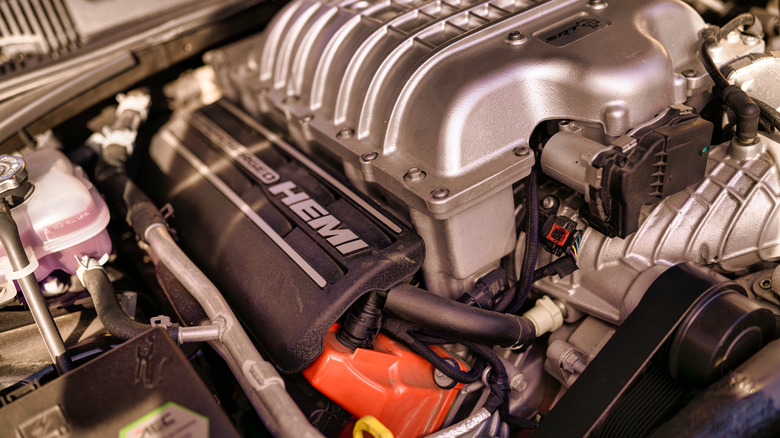
Many people have heard of Hemi engines, but don't really know what they are. To cut a long story short, Hemi is an abbreviation of "Hemispherical". The name arose because of the shape of the combustion chamber, which was domed, as opposed to the flat chambers in normal engines. When those madmen at Chrysler invented this engine, they made good on the uniquely American philosophy that if some power is good, absolutely insane amounts of power are better. This seemingly insignificant modification changed the way we see engines forever.
Today, the word "Hemi" in an engine specification means that there is an ungodly amount of power under the hood. So much power, in fact, that we as buyers have become a bit nose-blind to how much juice these engines (especially modern ones) can generate. Even half-century-old Hemi engines can still hold their own against modern vehicles, at least in terms of horsepower.
So, with all that said, here are 12 of the most powerful Hemi engines that were ever produced. We understand that there is a huge aftermarket scene for many Hemis, especially the classic ones, that would drastically increase the power figure. However, readers are requested to note that we've used the stock, official horsepower figures for each engine that we list out here. Also, while Chevy did also make Hemi engines, we'll stick to Chrysler's ones for this piece.
392 FirePower (1957) -- 375 hp
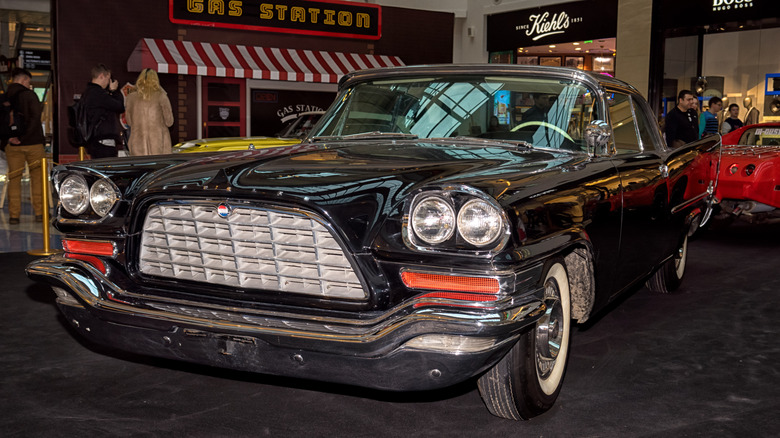
This legendary engine was an iteration of Chryler's very first Hemi. It was first released to consumers in 1957 in the automaker's 300C grand tourer. After having toyed about with their 331 cubic inch FirePower engine in the predecessor to the 300C, Chrysler decided that wasn't enough power for a grand touring car, and upped the displacement to 392 cubic inches. Then, engineers proceeded to somehow stuff that massive engine into the 300C, which was a feat unto itself. Over the years, the 392 FirePower was available in a number of vehicles from Chrysler, and it would end up making between 325 and 375 horsepower (an optional dual-barrel carb could up that to 390).
In the flagship 300C, the engine made its top figure of 375 hp at 5,200 RPM — which might sound like a lot, but this was pretty tame for the amount of power it delivered at the time. The 392 engine in the 300C also made a whopping 420 lb-ft of torque. That figure peaked well before the horsepower, as top torque was available from "just" 4,000 RPM. This meant that the 300C would not only be fast, but easier to drive without revving hard. Another fact worth noting is that in 1957, the 392 from Chrysler was the most powerful production engine available in the lucrative North American market.
426 Street (1966-71) -- 470 hp
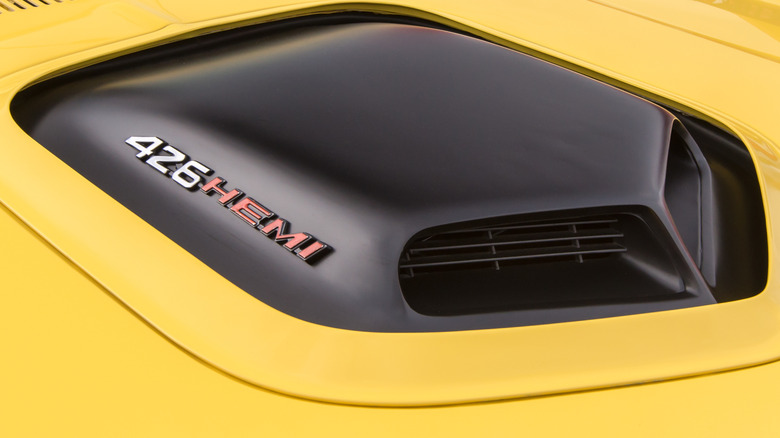
Next up, we have the 426 Street Hemi, most prominent in models from 1966 to 1971. It is an engine that made its name mostly as a formidable contender on the drag strip, usually annihilating all but the best builds. The history of this engine is rather bland, as it stemmed from a homologation program. You see, Chrysler Group had this absolutely monstrous racing engine that was creatively named the 426 Race Hemi. It dominated races and was actually banned after winning its NASCAR debut race in 1964, though a modified version did come back in '66.
After '64, NASCAR said that all race engines need to be available for purchase by the general public. In order to continue to use it, Chrysler had to include the 426 engine (or at least some version of it) in a production model Chrysler. Now, rather than make complicated changes to the engine and invest time, effort, and R&D into such a homologation program, Chrysler's engineers did the exact opposite.
In fact, they did barely anything structurally. Instead, they shoved the 426 Hemi Street engine into various road-going models and called it a day. As a result, the public got the street-legal version called the 426 Street Hemi. It would be the pinnacle of what road-going Chrysler vehicles would be powered by, at least for a while. The performance figures on this thing were absolutely ludicrous for the time; on paper, it was slated to make "only" 425 hp, but tended to do about 470 hp at the dyno.
392 Gen III Apache (2011+) - 485 hp
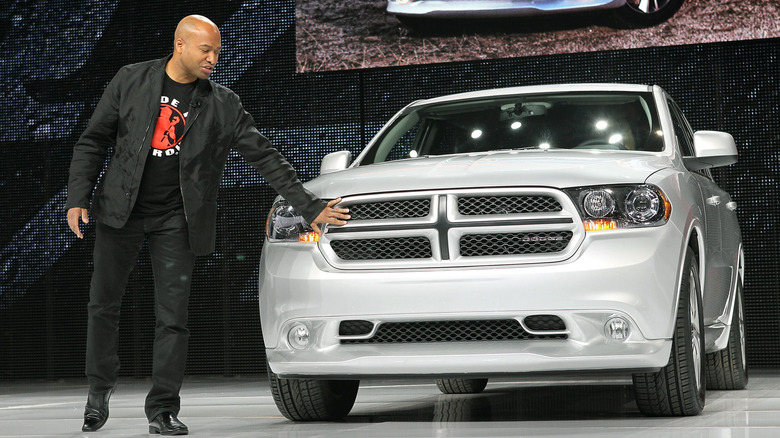
With the next engine on our list we come to the Hemis of the modern day, starting with this thing: A modern version of Chrysler's old-school 392. While spiritually a successor to the Hemi we showcased earlier, this one couldn't possibly be any more different. Officially known as the Gen III Apache 392 engine, its naturally aspirated version could make 485 horsepower in Scat Pack cars from Dodge. For those who are interested, the first generation Hemi engines were called "FirePower", while the second-gen Hemi had the "Elephant" moniker.
As for the Apache, it was fundamentally the same across vehicles released in 2011, but had different performance figures due to internal tuning. For example, the 2011 RAM 2500 would make 410 hp and 429 lb-ft of torque, the Durango would do 475 hp and 470 lb-ft of torque, and the 2015 Challenger could make 485 hp and 475 lb-ft of torque. Basic specification for the cast iron block itself was a bore of 4.09 inches and a stroke of 3.72 inches. For those calculating, that gives us a displacement of about 6.4 liters, depending on how one rounds the calculation. The 392 Apache would be used in both cars and SUVs, as well as pickup trucks.
Mopar 528 crate -- 610 hp
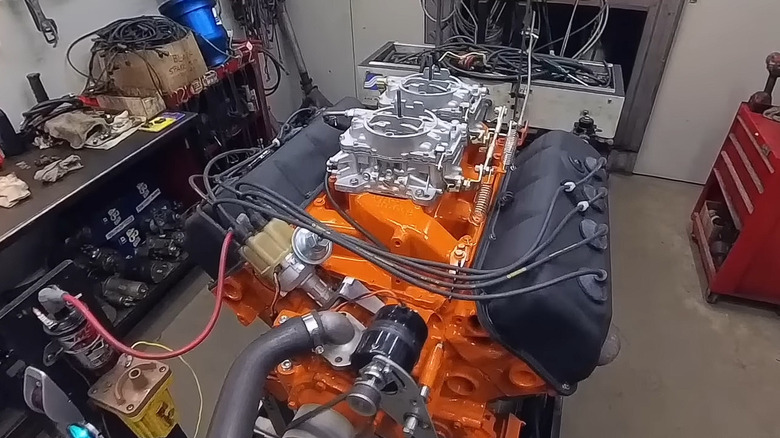
Our first crate engine on the list comes to us in the form of the Mopar 528, specifically the turn-key crate engine version that could simply be plopped into a ready-to-go chassis. In its stock, straight-from-the-factory configuration, this thing could make 610 horsepower. Also, for those who are wondering, "Mopar" is actually a portmanteau of the words "motor" and "parts", which is what the company does: It provides parts for erstwhile Chrysler (and now Stellantis) car brands. As for the 528 crate engine, this beauty was designed in conjunction with a company called World Products. The kit included the block, special Mopar Performance heads for it, and various other bits and bobs needed to get an engine running.
Because of the nature of crate engines, the manufacturer(s) naturally expect people to tune them to their own specifications. As such, we don't have a concrete horsepower or torque figure for them. However, the best guesstimate for the unit is that it outputted a stock 650 hp and 675 lb-ft in terms of torque. That said, the tuning potential on these things is almost unlimited, and buyers are constrained only by physics and their own imagination. In one case, an owner managed to get about 710 lb-ft of torque out of their 528, albeit with a couple additional bits like a special ignition box and fuel injection kit.
Mopar 426 Elephant R spec -- 650 hp
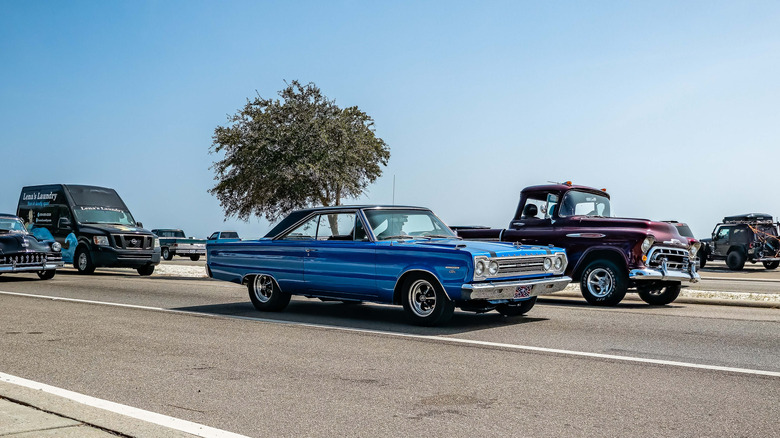
Next up, we have another Mopar engine, this time a bit older. The Race-spec 426 Elephant was named such as it's a second-generation Hemi engine. However, we should also note the production years for clarity. The Gen I FirePower engines ran from 1951 to 1958, and the Gen II Elephant engines were in production from 1964 to 1971. There was then a long hiatus until 2003, which is when the Gen III Apache Hemi engines were released. With that out of the way, we return to talking about the 426 race-spec engine.
The 426 R-spec is the infamous engine that NASCAR banned in 1964. It was a cast iron block with a bore of 4.25 inches and a stroke of 3.75 inches, giving it a displacement of 6.97 liters — in other words, 426 cubic inches. While the stock engine was rated at around 455 horsepower, compression ratio tuning for the racetrack saw that figure climb as high as 650 horsepower. The results were an engine that was so dominant in its debut year that it forced NASCAR and the NHRA to change their race engine rules. Now, the banning of the engine is something that is fairly mainstream knowledge. What not many people know is that in 1964, these 426-powered cars didn't just win the race; they finished second, third, and fifth as well thanks to not just that beast of an engine but the leadership of Richard Petty behind the wheel for Chrysler.
Mopar 572 HEMI Crate — 700 hp
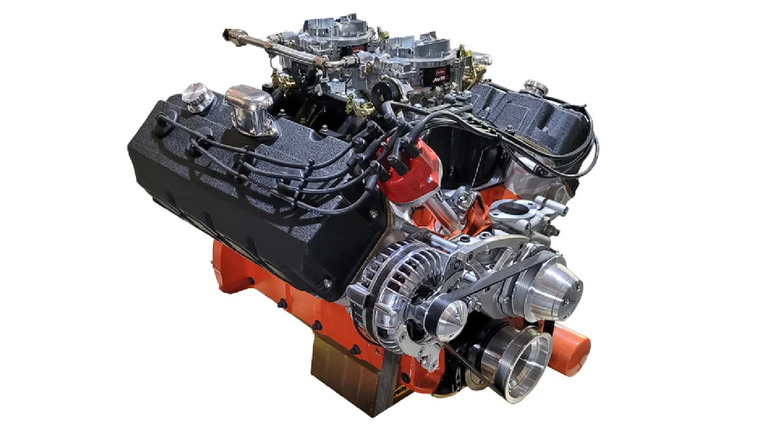
And we're back to Mopar, who this time bring a 572 cubic inch crate engine to the table. It can produce up to 700 horsepower from the factory, though of course, there are plenty of people who could squeeze more out of it with tuning and upgrades. At the root of it, the 572 is simply a 426 Hemi that has had its bore increased for a bigger total displacement.
While it might sound simple, the rest of the engine has also been given a facelift to match the added stress that the over-boring would undoubtedly have caused. And there's more reason to celebrate, because the 572 is available both as a drop-in engine that just needs to be installed, or as a project block that can be customized to the buyer's specific needs and desires.
Readers are requested to note that while similar in spirit to the 528 engine that we covered above (that one was also a drop-in unit), the companies behind the two engines are different. Where the 528 is made by World Products and Mopar, the 572 is from Mopar in association with a different company, Prestige Motorsports. Another 572 cubic inch Hemi (by Nelson Racing Engines) can also produce a blistering 2,500 hp, but that's specific to show cars.
Hellcat 6.2L Supercharged (2020) -- 717 hp
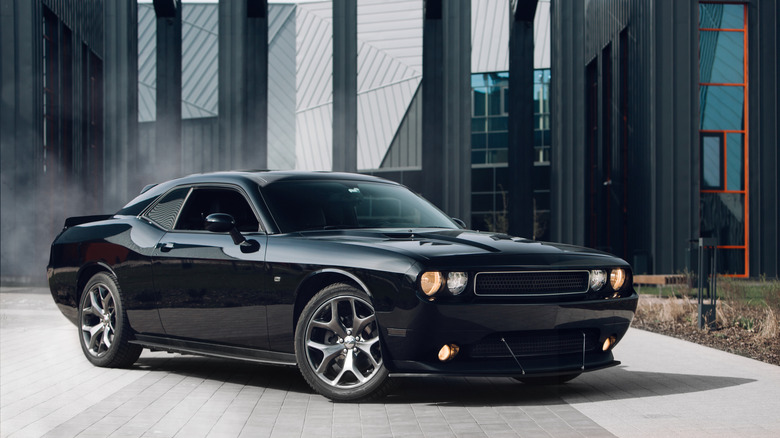
Moving on, we come to a situation where we can't decide whether it was the car that made the engine famous, or the other way around (though our money is on the latter). We're talking about the Challenger SRT and the Hellcat, both of which came equipped with a 6.2-liter supercharged Hemi. Depending on which model one went for, the total power output climbed as high as an eye-watering 717 hp at maximum output. It's worth noting that this 6.2-liter V8 Hemi in the Challenger SRT is the supercharged high-output version, meaning that the tuning will probably be different from the already ludicrous "regular" 6.2-liter Hemi V8 that it is based on.
Paired to a manual six-speed transmission as standard (though an eight-speed one is an optional upgrade), the SRT Challenger boasts a quarter mile time of 11.8 seconds flat, which is insane to think about. There's not much more to be said about the car; it's big, it's fast, and it's loud — all things that one would want from a Hemi engine.
Hellcat Redeye 6.2L Supercharged (2021) - 797 hp
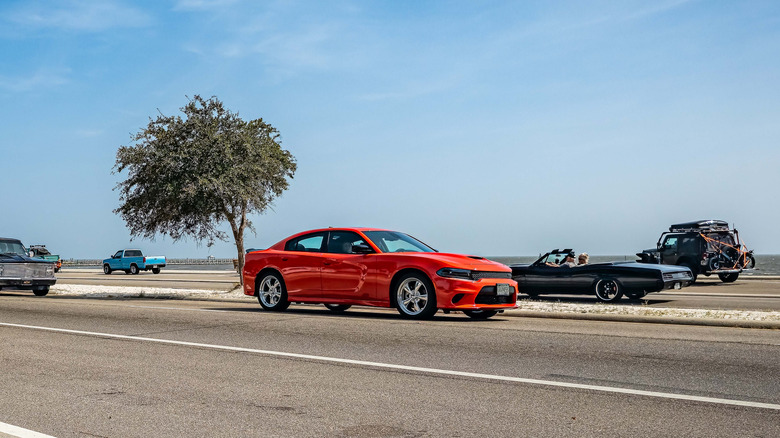
Building on the same engine that we just covered is an updated version of what's essentially the same thing. The most major difference (in our eyes anyway) is the fact that the size of the supercharger has been, in typical Hemi fashion, made even larger, sticking with the "bigger is better" philosophy that Hemi units have become known for. In fact, the superchargers on these latest Hellcat Redeye models are recognized as being the largest ever stock units on a V8 engine.
This 6.2-liter Hemi is available in both the Challenger (a two-door coupe model) as well as the Charger, which is a smaller four-door model from Dodge. In both configurations, the power output remains the stuff of legend, making 797 horsepower, along with a whopping 707 lb-ft of torque. As a matter of fact (and Dodge was clearly just going for bragging rights here), the Charger with the 6.2 liter was actually the fastest production sedan when it was released back in 2021. That's all anyone really needs to say about this particular Hemi engine.
Challenger SRT Demon 6.2L Supercharged (2018) - 808 hp
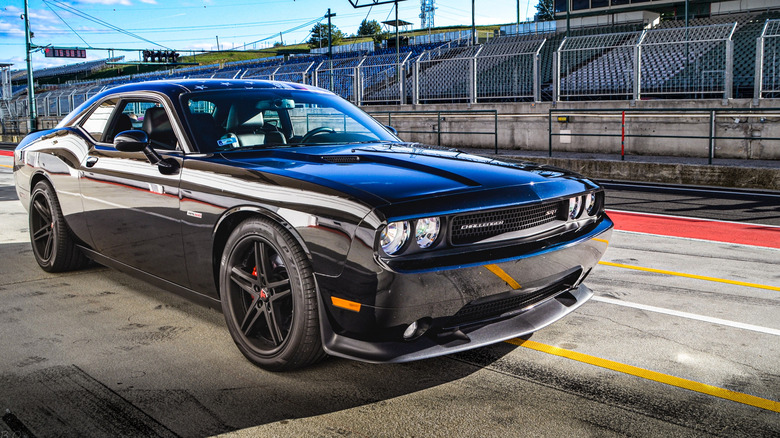
Yet even before 2021, there was yet another Dodge that used this 6.2-liter Hemi engine. It was another iteration of the Challenger, specifically the SRT Demon version. And "Demon" is exactly the right word to describe that car: It sported a 6.2-liter supercharged V8 paired to an eight-speed automatic transmission, with 315/40 tires at the rear, and seating for only one passenger as standard. This powertrain made 808 hp at 6,300 RPM, which meant that the car would constantly be screaming and deafening anyone in radius while trying to reach peak horsepower. Meanwhile, the torque was rated at 717 ft-lb — though that peaked at a far more palatable 4,500 RPM.
And did we mention that every single one of those 808 horses was sent exclusively to the rear wheels? While exciting for that nippy rear-end kick-out that all enthusiasts love, the decision probably turned tires into a monthly consumable item on this particular vehicle. Still, that's a small price to pay for the grin that a driver would definitely have when flooring the gas pedal.
Hellephant 426 Supercharged Crate – 1,000 hp
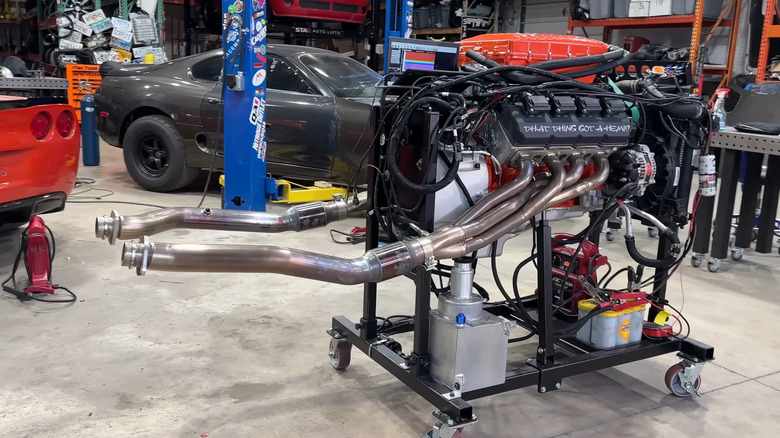
As we've outlined to readers above, the "Elephant" designation refers to the second-generation Hemi engines that were made from 1964 to 1971. The 426 engine was the cream of the crop during that time period, so the name "Hellephant" pays homage to those engines of old, as it shares the same 7.0-liter, 426 cubic-inch displacement as the ones that Richard Petty used to win those 1964 races we talked about earlier. Unlike the predecessors with which it shares a name (and also unlike both the 528 and 572 crate engines that we talked about above), the Hellephant sports an aluminum block, and everything from the supercharger to the tensioners and other internals have been upgraded.
What those upgrades are specifically, Mopar has remained mum on — secret, it seems. However, what's not secret is the absolutely insane horsepower figure, which is our first four-digit number of the list, coming in at a nice, round 1,000 hp. This is also followed up with a whopping 950 lb-ft of torque, which, in metric numbers, is a lot.
Challenger SRT Demon 170 with Gen III Apache -- 1025 hp
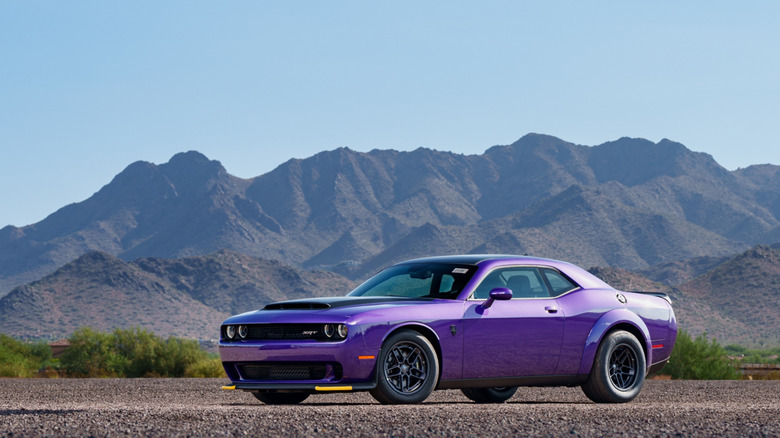
Technically the most powerful Hemi engine that was available in a production car, the Challenger SRT Demon 170 featured a Gen III Apache that made a whopping 1,025 hp on E85 gas. It backed that up with an equally eye-watering 945 lb-ft of torque. When drivers opt to use standard E10 gas at the pump, the numbers are still up there, coming in at 900 hp and 810 lb-ft of torque.
Speaking of the engine, it is widely recognized to be the first Hemi engine in a production car that had a power output of more than 1,000 hp. This also made the Challenger Demon 170 the most powerful road-legal production muscle car on the planet. We say "road legal" because the next engine on this list will send every police unit in the state into a frenzy if taken on a public road, but let's leave that for later.
The performance from the Demon 170 is, as expected, quite mind-boggling. The car will demolish the quarter mile in 8.91 seconds while clocking 151 mph across the finish line. That said, we should mention that this particular quarter mile figure was recorded under optimal conditions on a prepped surface at the Las Vegas Speedway. Even though, that's an absolutely terrifying performance.
Chrysler Top Fuel HEMI NHRA - 11,000 hp
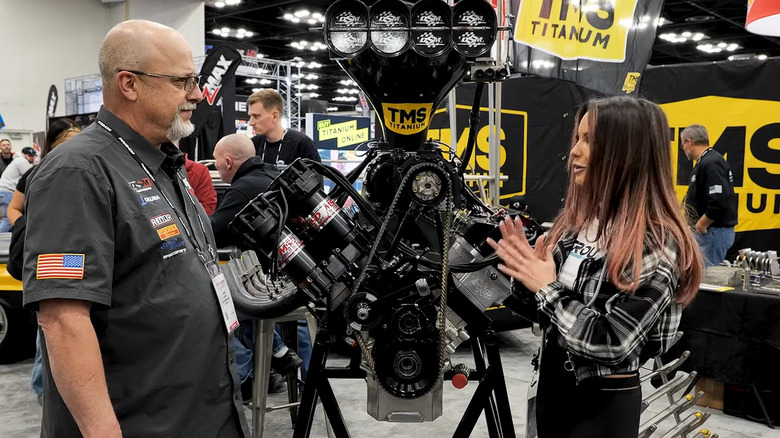
Technically speaking we're cheating a bit with this one, as it is a Hemi-derived box (not a pure Hemi unit) and is in no way a production-spec engine. However, the derivation is done by Dodge themselves, and it is used by official Dodge race teams, so we decided that it was worth including. Used for ultra-high-horsepower Top Fuel dragster racing, this engine (that we couldn't even find an official name for), makes an earth-shattering 11,000 hp.
That isn't an extra zero that was added accidentally. The Chrysler Top Fuel HEMI NHRA (which is what we've decided to name the engine) makes horsepower output that is measured in five digits. To give a sense of scale, that's more power than 50 Toyota RAV4 SUVs combined. The engine, and others in its class, can accelerate a vehicle to over 300 mph in under 200 meters (660 feet), and guzzles 92 gallons of fuel per minute at max flow.