

15 Classic Toyotas From The 1980s (And Their Resale Value Today)
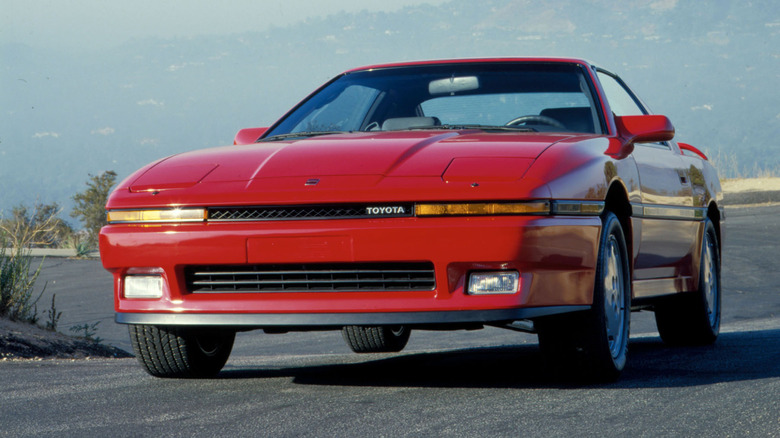
The 1980s proved to be a critical time for the success of Japanese cars in America. At the start of the decade, increasing oil prices led more buyers to switch to smaller, imported cars, while Japan was pressured into accepting "voluntary" export measures to lower the amount of vehicles it exported to the U.S. This forced Japanese carmakers like Honda and Toyota to develop new, higher-margin cars across a wider variety of segments, as well as to invest in American production facilities. By the end of the decade, the Honda Accord had risen to become the best-selling car in America, while Honda's competitor Toyota had expanded its range to include everything from sharp-handling sports cars to all-terrain SUVs.
Many of Toyota's cars from the decade have become collectible to enthusiasts today, although most remain affordably priced. These 15 Toyotas from the '80s all have keen fanbases, but you might be surprised at how cheaply you can buy some of them if you're willing to wait for the right example. To illustrate just how attainable they are, we've pulled valuation data from vehicle enthusiast site Classic to estimate their current average resale value worth based on recent auction sales.
Toyota 4Runner (first generation)
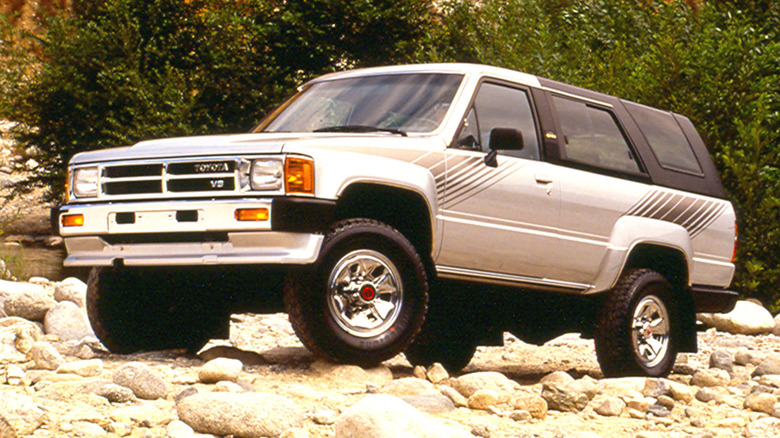
The 4Runner has changed a lot through the years, with the first generation being closer to a truck than a car. It had just two seats and a removable fiberglass rear top, with few mechanical or visual differences with the brand's pickup, which was known as the Hilux in most markets. The first-gen 4Runner was launched in 1984 and would remain in production until 1989, although during that time, it would be subject to several powertrain and mechanical changes. Among other things, these included the launch of an optional turbocharged engine and independent front suspension.
It's a very basic SUV by modern standards, but at the time it was an innovative design — the "4Runner" name was even designed to reflect that innovation, since Toyota believed that SUVs would be increasingly popular in the future. Its straightforward construction combined with the model's boxy design has helped keep it popular with enthusiasts, and according to Classic, a first generation 4Runner has a benchmark value of $17,734 today.
Toyota Celica Supra (A60)
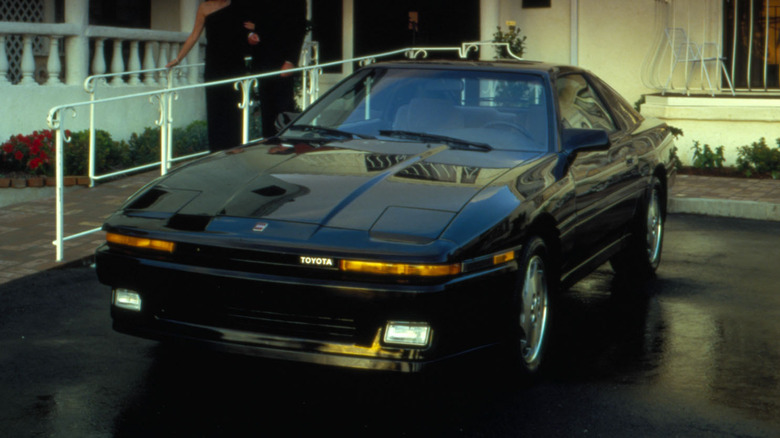
The A60 was the second generation of the Supra and debuted in 1982, with sportier handling and more standard features than its predecessor. Lotus was brought in to help fine-tune the car's chassis, while its 2.8-liter inline-six engine was fettled to produce 145 horsepower. Over the course of its production, Toyota gradually boosted the car's power output further, and by 1985, it made over 160 horsepower.
As well as improving its performance, Toyota also went to greater lengths to differentiate the second-generation Supra from the Celica on which it was based. It featured new pop-up headlights, a rear sunshade that was designed to look like a spoiler, and optional two-tone paint. Unique independent rear suspension also helped differentiate the two models.
Toyota continued to produce the A60 Supra until 1986, when it was replaced with the third-generation car, the A70. From that point on, the Celica and Supra were given completely different identities and would no longer share a platform. The A60 marked a key turning point in the history of the model, and its importance isn't lost on collectors today. However, that importance hasn't translated into a high resale value, with Classic estimating a benchmark value for the model of $17,540.
Toyota MR2 (AW11/W10)
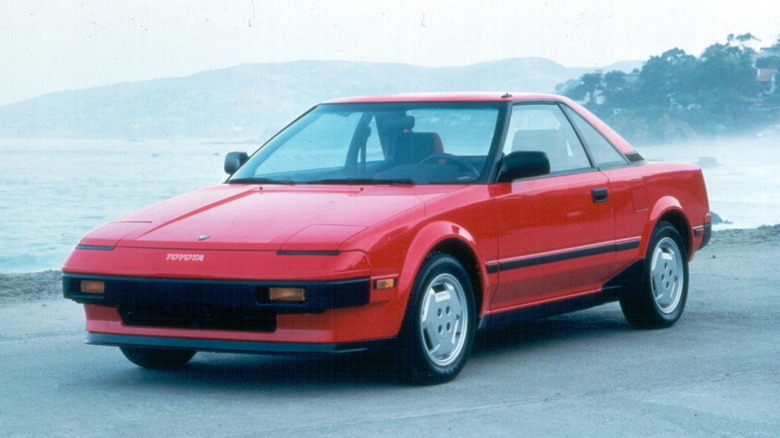
Toyota's affordable mid-engine sports car was unusual at the time of its launch, with its only real rivals being the Fiat X1/9 and the Pontiac Fiero. Today, it's even rarer, since cheap mid-engine sports cars simply aren't available in today's market, but it's still attainable for enthusiasts. The first generation of the MR2 was introduced as a 1985 model and ran until the end of the decade, when it was replaced by the second generation SW20 MR2. Like other Toyota models of the era, the MR2 was built well and designed for daily driving as much as weekend canyon carving. Its rivals were less practical and less reliable, giving the MR2 a unique advantage.
From launch, the first generation MR2 proved to be hugely popular with American buyers, with the automaker selling more than 100,000 examples annually for its first two years on sale. That popularity is part of the reason why examples aren't difficult to find today, and that in turn has helped keep resale values firmly within affordable territory. Like all of the cars here, the value of any used example will vary significantly based on its trim, mileage, and overall condition, but Classic pegs the value of a base model, manual MR2 at $12,549.
Toyota Soarer (second generation)
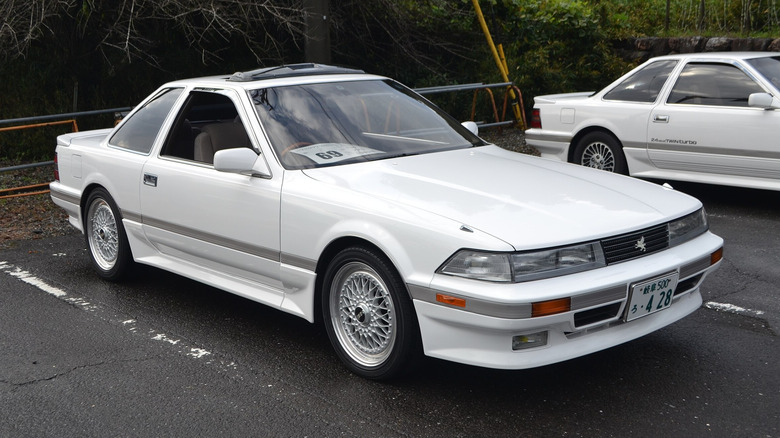
While Toyota was grappling with freshly implemented export restrictions to the U.S. at the start of the '80s, it was also busy branching into new segments in its home market of Japan. The first generation Soarer was launched in 1981 and became the brand's first foray into the personal luxury car segment, quickly establishing a reputation as one of the best cars in its class. The second generation Soarer, which launched in Japan in 1986, therefore had a lot to live up to.
Toyota didn't alter the car's styling too much for the new generation, with the biggest difference being the use of curved glass for the car's windows to give it a sleeker, more futuristic appearance. Inside, the Soarer was given a more thorough makeover, including the launch of what Toyota called the "space vision meter," a precursor to the modern heads-up display. The car remained in production until 1991, when Toyota launched the third generation of the model. While the first two generations were never sold in America, the third generation Soarer was sold in export markets as the Lexus SC. In the decades since its launch, a number of examples of the second generation car have been imported into the U.S., with Classic valuing the model at a benchmark price of $17,780.
Toyota Pickup (fourth generation)
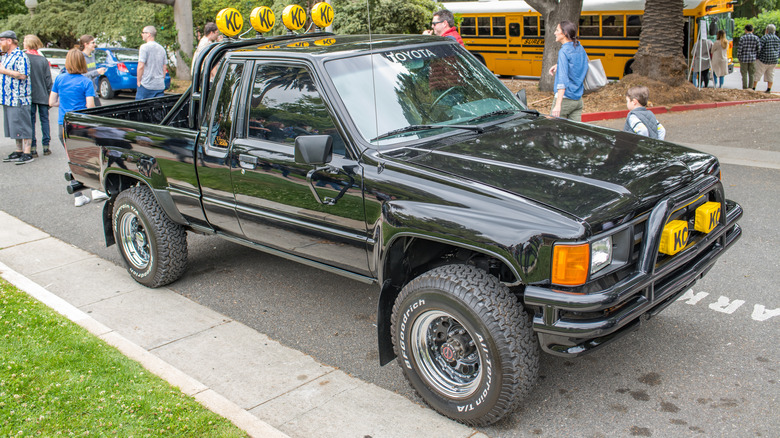
Movie buffs will recognize the fourth generation Toyota Pickup as Marty McFly's truck in "Back to the Future," with actor Michael J. Fox driving an SR5 Xtra Cab. Fans of "Top Gear" will likely know the truck as the indestructible Hilux, which was dumped in the sea, set alight, and crushed by a caravan, but still started despite all of the show's efforts to destroy it. Truck aficionados might simply recognize it as a cool classic Japanese pickup, but however you remember it, it's clear that the little truck had a big impact in popular culture.
That memorability has helped keep demand for the truck high among collectors and enthusiasts, but like most of the '80s Toyotas here, it hasn't pushed it out of the realm of affordability. Classic data shows an average sale price of $16,741 for the 1984-1988 Pickup, although the trim and condition have a major impact on the resale value of the truck, with SR5 models commanding a price premium.
Toyota Blizzard (second generation)
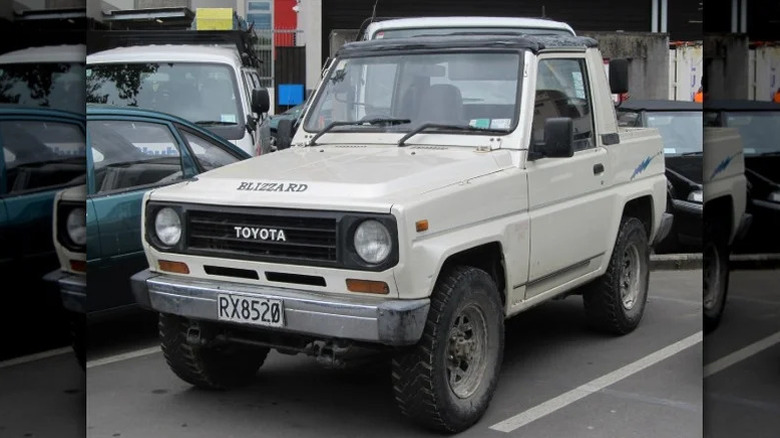
Compared to Toyota's other four-wheel drive vehicles from the era, the Blizzard is far less well known by enthusiasts. In fact, it's such an unusual Toyota that you might not know it exists at all. It remained a Japan-only model throughout its lifespan and was first introduced in 1980 in response to increasing demand in Japan for small four-wheel drive SUVs. Initially, the Blizzard featured a standard 2.2-liter diesel engine as standard, although when a second generation of the car launched in 1984, it was replaced by a more powerful 2.4-liter unit.
The second generation also sported more modern styling and had more comfort and convenience features to draw it closer in line with Toyota's passenger cars. Both first and second generation cars are very rare to find in the U.S., although imported examples do occasionally appear for sale. Classic gives the model a benchmark value of $12,270, although with so few listings to draw from, values may vary considerably based on a given example's condition and odometer reading.
Toyota Trekker
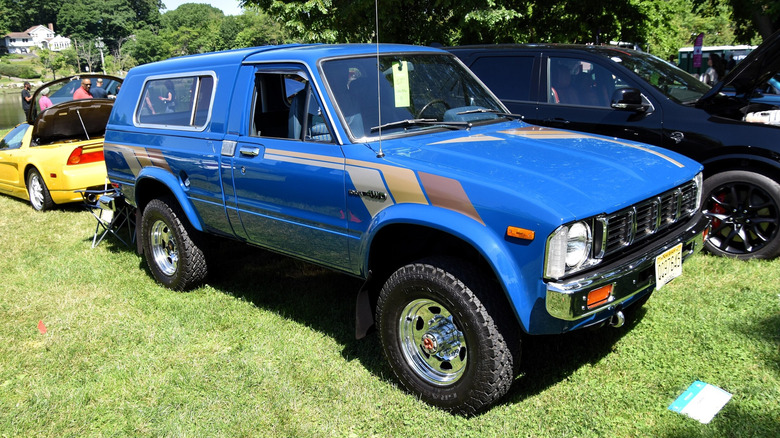
A short-lived model designed primarily as a way to test buyer demand for rugged SUVs, the Trekker was the predecessor of the 4Runner. The idea for the model was first conceived in 1979, after Toyota decided that it would no longer sell the FJ40 Land Cruiser to the American market. American Toyota dealers thought there was a gap left in the brand's lineup for a similarly tough SUV, and so set about creating one based on the brand's Pickup. The result was the Trekker, which was built in collaboration with Winnebago Industries.
The Trekker shared much in common with the later 4Runner, and it proved successful enough that Toyota began developing the latter model shortly after the Trekker's commercial debut in 1981. The 4Runner was ready to hit dealerships in 1984, and it immediately made the Trekker surplus to requirements. Toyota discontinued its Winnebago collaboration model, replacing it with the 4Runner, which would go on to become one of the brand's best-known nameplates in America. Despite being the rarer predecessor to the 4Runner, the Trekker is actually the less valuable of the pair, with Classic giving it a current benchmark value of $13,750.
Toyota Land Cruiser (FJ60)
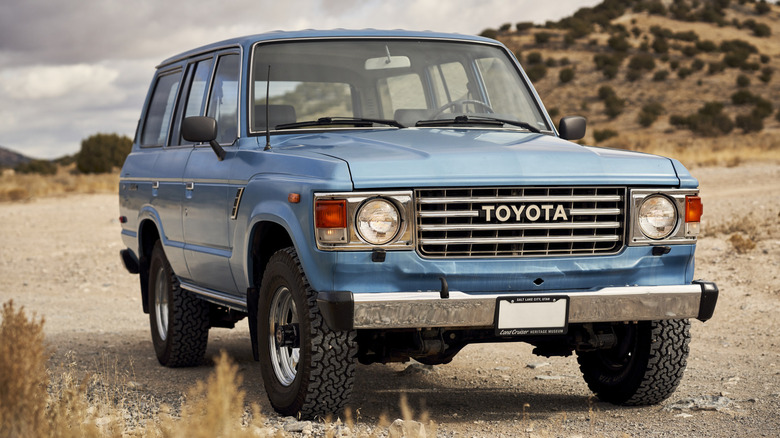
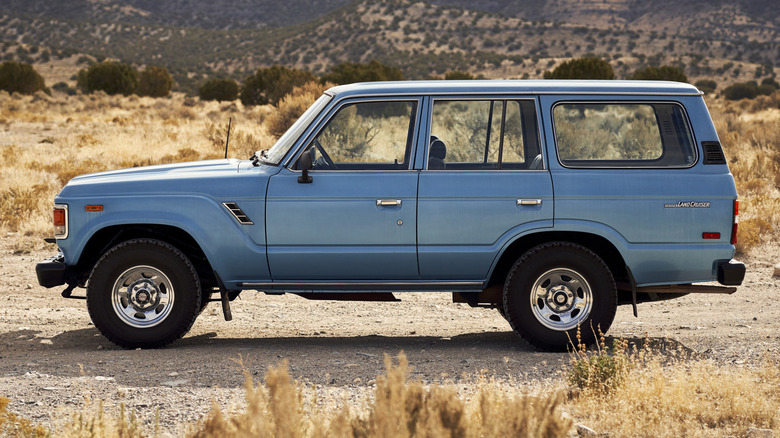
SUV buyers in the '80s wanted the capability of a traditional four-wheel drive vehicle with the comfort of a passenger car, and the 60-Series Land Cruiser was designed to meet those demands. It was more comfortable than before, with a greater focus on family-hauling capability, but it didn't lose its off-road chops. However, its engine remained unchanged from its predecessor, with a 4.2-liter inline-six engine offered as standard. The model was subject to a series of tweaks throughout the decade, with the later FJ62 model debuting in 1988.
The FJ60 first launched in 1981 and remained in production until the launch of the FJ62. Virtually every era of the classic Land Cruiser has a significant fanbase thanks to their solid build quality and all-terrain capability, which has kept resale values higher than many other Toyota models from the era. According to Classic, the average FJ60 carries a benchmark value of $31,638.
Toyota Sprinter Trueno (AE86)
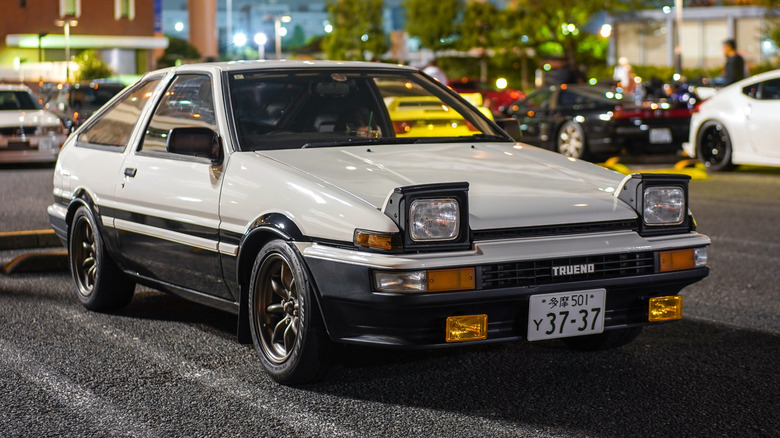
Despite its fame, the AE86 isn't a particularly interesting car in performance terms — in fact, we've previously argued that it'd be a bit boring if it wasn't so famous. That fame was driven by its appearance in the "Initial D" animated series, with the protagonist drifting a black and white AE86 through the mountain passes of Japan. Since then, the car has remained a favorite in the drift community and has become subject to what's sometimes known as the "drift tax."
This means the car has become so popular — and so consistently crashed by drifters — that surviving examples are relatively expensive to buy today. Classic puts the car's benchmark value at $27,981, a high price considering the car doesn't really boast any unique qualities that make it better for drifting than other models of its age, aside from its fame. Nonetheless, for as long as enthusiasts continue to see the AE86 as the legend from "Initial D," its value is unlikely to go down.
Toyota Cressida (X70)
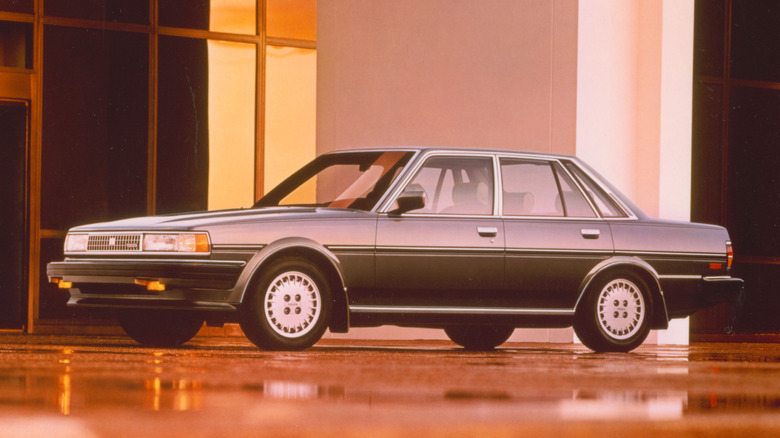
One of the cheapest ways to bag a classic '80s Toyota is to opt for one of the brand's more conservative models from the era, like the third-generation X70 Cressida. According to Classic, Cressida sales in 2025 averaged just $11,688. The model was the export variant of the Mark II sedan, with U.S. market models featuring a distinct interior from their Japanese counterparts. Production ran between 1984 and 1989, with the initial batch of third generation Cressida cars marketed as 1985 model years.
At its launch, Toyota claimed in promotional ad copy that the Cressida was designed to offer affordable performance, comfort, and luxury that compared favorably to competing European car brands. However, the sportiest engine, the 182 horsepower 1G-GTE twin-turbocharged inline-six, wasn't available for North American buyers; instead, they were offered a dual overhead cam 2.8-liter inline-six option. U.S. Cressida owners still had plenty of other powertrains to pick from, with both gas and diesel engines offered during the car's lifespan.
Toyota Supra (A70)
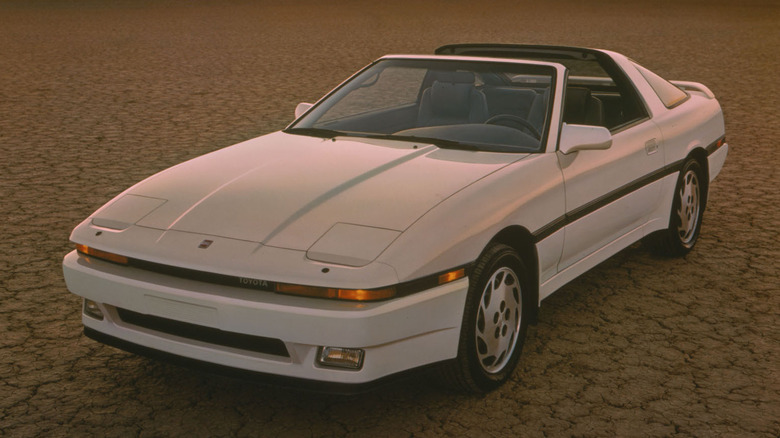
Produced between 1986 and 1992, the A70 Supra can be bought for significantly less than its successor, the A80. Data from Classic shows an average resale value of $19,896 based on 2025 sales figures. This value varies significantly based on trim, with Turbo variants of the Supra commanding a premium over naturally aspirated cars.
The A70 was the first Supra generation to feature an optional turbocharged engine, which churned out 230 horsepower. That made it the most powerful Supra in any generation at the time of its release, although the fourth generation car would later comfortably surpass that figure. The non-turbocharged A70 offered 200 horsepower.
As well as being the first to feature a turbocharger, the A70 was also the first Supra to drop the Celica name entirely. The Celica was split off and became a front-wheel drive car with a four-cylinder engine, while the Supra continued to feature a six-cylinder under the hood.
Toyota Pickup (third generation)
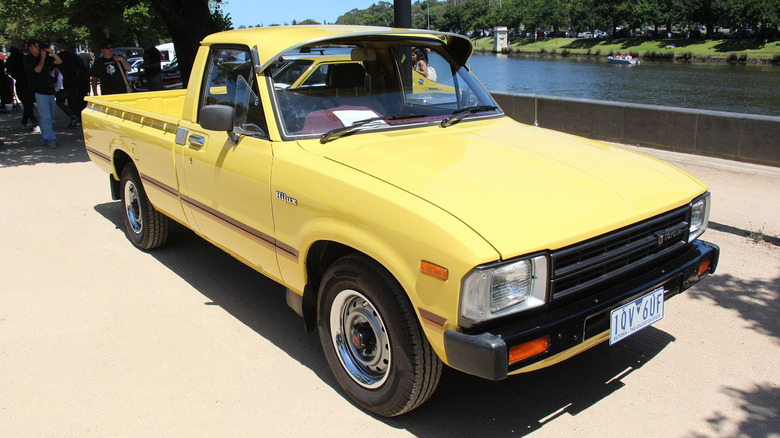
Resale values for the third generation Toyota Pickup are considerably more varied than most of the other '80s Toyotas here, with Classic data showing an average value of $22,144, but multiple examples available for less than $10,000 at the time of writing. As ever, condition and mileage plays a big part in determining how much a truck is worth. The truck's paint and graphics can also affect its value, with period-correct graphics — particularly trucks with the racing stripes that became famous as Ivan Stewart's racing livery — fetching more at auction.
The optional four-wheel drive system is also desirable, with the third generation truck being the first to send power to all four wheels. The Pickup was produced between 1979 and 1983, and its engine varied between model years. At launch, it was offered with a 2.2-liter four-cylinder engine, but throughout the latter part of its production run, a more powerful 2.4-liter four-cylinder engine was offered.
Toyota Mark II (X80)
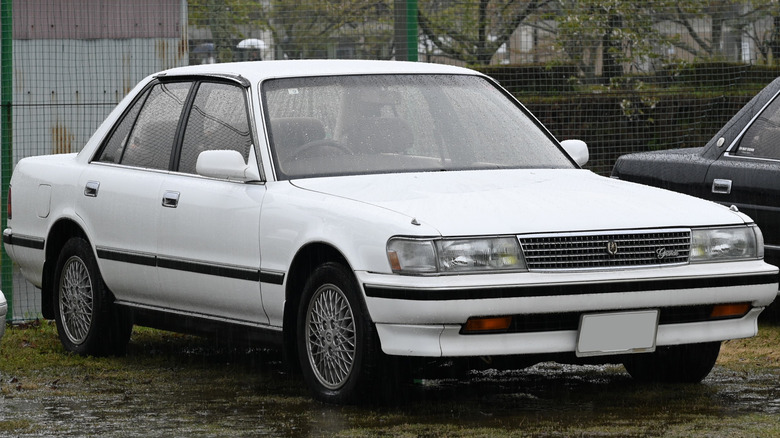
Replacing the X70 Mark II/Cressida of the mid-'80s was the X80 generation, which launched in 1988. Just as before, the Japanese Domestic Market (JDM) version was sold as the Mark II, while a lightly Americanized version made its way over to the States as the Cressida. The sedan shared an engine and suspension with the Supra, although it still wasn't all that sporty, at least not compared to other sports sedans of the era.
It also wasn't quite as luxurious as sedans from Toyota's brand-new Lexus brand, which launched in 1989. While Lexus didn't launch in Japan until the mid-'00s, the same models would be available with Toyota badges from domestic dealers. As a result, the Mark II/Cressida was never very popular, with sales of the generation ending with a whimper rather than a bang in 1992.
Buyers looking for this mostly forgotten sedan could opt for the American-market Cressida, or for something even more obscure, they could look for an imported X80 Mark II. Examples are few and far between, but Classic data shows that they do occasionally appear for sale, with the platform giving the model a 2025 benchmark value of just $9,301.
Toyota Crown (eighth generation)
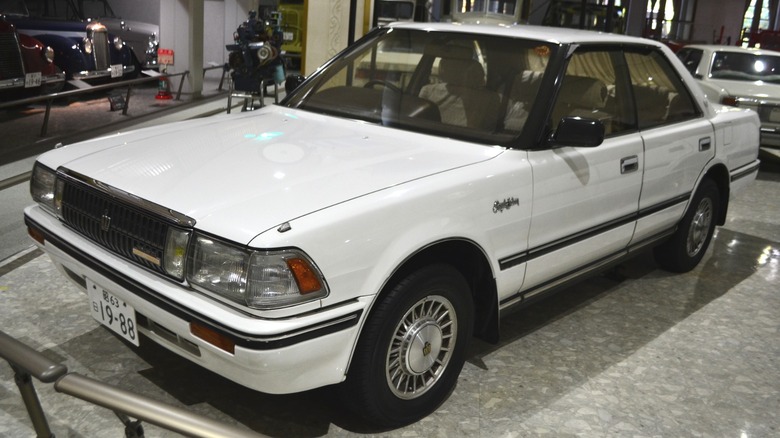
In production since 1955, the Toyota Crown has showcased some classic looks through the years, evolving to suit Japanese buyers' changing tastes over the decades. The eighth generation was produced between 1987 and 1999, making it one of the longer running generations of the model. It was a sensible, premium choice for families and could be bought in several body styles, including a wagon and a coupe. However, many enthusiasts are likely to recognize the Crown in its original form, as a sedan.
Examples of the eighth generation Crown very rarely make it over to the States, and when they do, they're mostly cars from the '90s rather than the '80s. Finding an imported example from the '80s will be tricky, but not impossible, and anyone who does find one won't have to pay that much to get their hands on it. According to Classic, the model has a current benchmark value of $8,507.
Toyota Century (first generation)
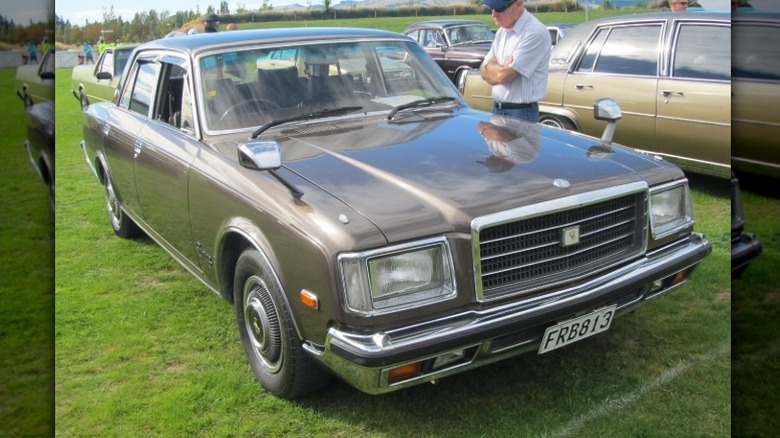
Toyota's first generation flagship limousine holds the unusual distinction of being a '60s car, a '70s car, an '80s car, and a '90s car. It remained in constant production from 1967 to 1997, without many significant changes during that time. It represented the pinnacle of Toyota quality and craftsmanship, but today, it's surprisingly cheap to buy. Classic gives the first generation Century a benchmark value of $13,405, although some '80s examples can be found for under $10,000.
While the Toyota Century isn't sold in the United States, it remains in production today, fulfilling the same role that it did back in the '80s. It's the go-to car for Japan's wealthy businessmen and politicians, and production numbers remain very low, at roughly 50 examples per month. Few cars are as rare or as uniquely Japanese as the Century; although since the first generation car was never officially sold outside of Japan, maintenance and repair costs are likely to be a lot less affordable than the car's upfront price.
Our selection methodology
Toyota produced a huge range of models during the '80s, and when picking our selections for this roundup, we aimed to include as broad a mix of models as possible, from well-known U.S.-market classics to obscure JDM finds. All of the listed models were produced for at least two years between 1980 and 1990. Listed prices come from Classic's auction tracking data and represent either the platform's benchmark value for the model, or when that data was unavailable, represent an average value of the model's sales over the course of 2025.