

5 Motor Oil Myths You Need To Stop Believing
Motor oil and the subsequent maintenance have been around since the invention of the automobile. From the earliest days, automakers made lubrication oil from animal fats and vegetable oils. Eventually, conventional motor oil (which is derived from crude oil) became the standard, and it would stay that way for decades. Today, the market is dominated by synthetic oil, which is a mixture of petroleum and synthetic products considered superior to conventional oil. Modern EVs don't require oil changes, so the practice may be coming to an end if humans embrace an electric vehicle future.
As with most industries well over a century old, there are a ton of myths surrounding motor oil, springing from a variety of sources. Some of them are old standards that have stubbornly refused to go away. Others are spread by misunderstandings, misinterpretations, confirmation bias, and a general lack of knowledge about what is arguably your vehicle's most important fluid. Motor oil is actually a lot simpler than it may appear, and a lot of folks worry over what really amounts to minor details.
While there are way more than myths about motor oil, we're going to tackle the five biggest ones to help alleviate some concerns and get people started on the right track. Many of the smaller ones, like the notion that synthetic oils are "fake oil," aren't widely spread, and usually pretty simple to explain away as false.
Changing oil brands is bad for my car
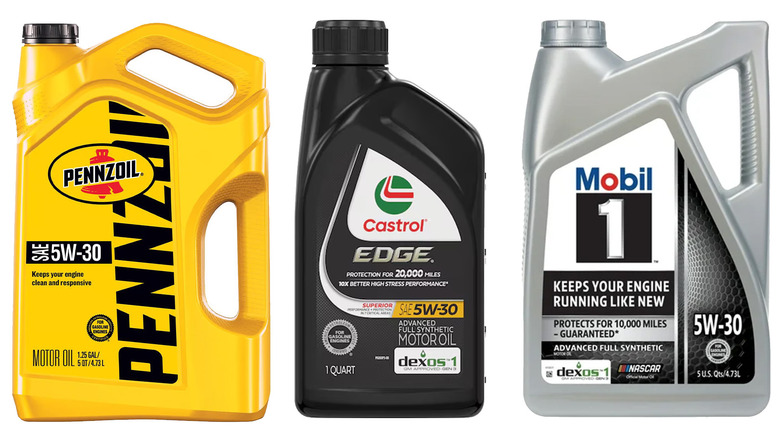
One popular myth is that changing oil brands is bad for your car, with the reasoning being that motor oil companies use such different recipes that switching will cause problems. Each motor oil company has its own recipe, and therefore its own set of ingredients, sure. These additives do everything from washing the inside of your engine to adding antioxidants to prevent rust and corrosion. However, it is perfectly safe to switch between brands.
We suspect the rumor stems from the fact that when you switch motor oils, it's not always immediately clear which new product is the correct oil. In general, you'll want to switch to a motor oil that has the same weight and type as the one you're already using. For example, if you use full synthetic 0W-20 motor oil, then you'll want to replace it with full synthetic 0W-20 motor oil. That part is pretty easy.
The complicated part is that you also want a similar motor oil rating. Ratings are assigned by the American Petroleum Institute and labeled on the bottle of motor oil. You want to make sure you get the same or higher rating than what your car requires. Oil change shops and dealerships know this already, but if you change your oil at home, you may want to consult your owner's manual to get your API rating, and then just make sure you buy motor oil with that rating (or better), and you'll be fine.
Changing your own oil will void your warranty
There is a stigma that doing work on your car voids your its warranty. However, you can do a lot of things to your car without voiding a warranty. For example, professionally installed remote starts don't void warranties. There is a long list of things that can't void your warranty, per the Magnuson-Moss Warranty Act, including having your oil changed at an independent shop or doing it yourself at home.
There are some rules you have to follow, however. First, you have to make sure to use the proper oil for your vehicle. Most DIYers know this already, but if you're a first timer going to change your oil, check your owner's manual for the proper oil weight, API rating, and type. If your manual says your car takes 0W-20 full synthetic oil, then that's what you should use. You'll also need to prepare to properly dispose of your old oil per local law.
Additionally, you must keep detailed records about when you change your oil so that if you do have a warranty claim, you have all of the receipts necessary to prove that you changed your own oil. Keeping a logbook isn't a bad idea, and keep every receipt, whether it's a new drain plug or the motor oil itself. They can't void your warranty if you change your own oil, but they can if you can't prove you changed your oil.
Thicker (or thinner) oil is always better
This one's been around for a very long time, and picked up steam since modern vehicles started using thinner oils. The theory is that using thicker (or thinner) motor oil will have benefits that your existing oil doesn't have. For example, someone may feel using thicker oils will prevent leaks, or that using thinner oils will lubricate better. This myth is particularly interesting because some parts of it are slightly true, but it rarely takes the full picture into account.
For starters, we'll go ahead and bust the myth right now. Your car's engine was designed with a specific oil weight in mind, and you should always use the one stated in your owner's manual. Thicker oils do help with oil leakage (as do oils with anti-leak additives). However, thicker oil also doesn't transfer heat as well, which can lead to overheating and engine damage. In contrast, thinner oils do lubricate better, but can have a negative impact on oil pressure, which can lead to excessive wear and engine damage over time.
Today's engines have much tighter tolerances than older engines do, which is likely where this rumor stemmed from. In the olden days, you had some wiggle room on oil viscosity since the engine could handle a range without causing damage. This isn't true anymore, so use the motor oil weight that your owner's manual suggests to reduce the risk of engine troubles later.
You can't mix synthetic and conventional oil
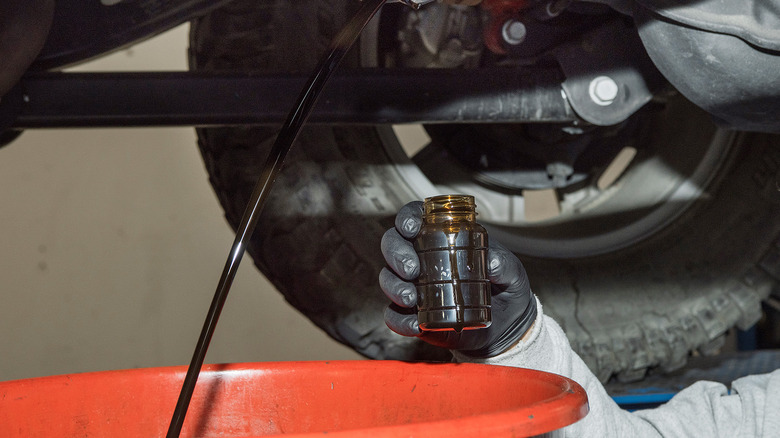
This motor oil myth stems from a well-meaning place. It's usually not a good idea to mix chemicals in general, especially if you don't know what the outcome will be. Some folks feel that conventional and synthetic oils are just too different to be mixed together, and doing so may cause various engine troubles, or even a fire. Rest assured, these ideas are in no way based in reality.
For starters, there is already such a thing as conventional and synthetic hybrid motor oils. Synthetic blends aim to offer the best of both worlds: a motor oil that lasts a little bit longer and is a little better overall than regular conventional oil, without the added cost of going for something fully synthetic. If mixing the two were dangerous, this sort of product probably wouldn't exist
In practice, you can use either synthetic or conventional motor oil in an emergency, provided they are of the same weight. It won't hurt your car in the slightest if you put a little 0W-20 conventional oil into your 0W-20 synthetic oil. You are essentially just mixing your own hybrid. The only danger is that the conventional oil will break down faster than the synthetic oil, and so you'll need to schedule your next oil change sooner than you would with synthetic oil.
Three months or 3,000 miles for oil changes
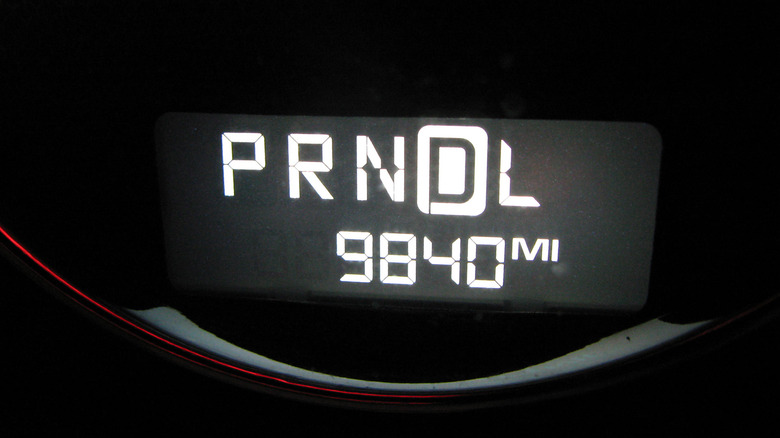
Without a doubt, the most commonly parroted myth is that you should change your engine oil every three months or 3,000 miles, whichever comes first. There are various versions of this. The one I grew up with is six months and 6,000 miles. In general, parts of these myths may be correct, but usually either undershoot or overshoot the months and mileage before you should get your next oil change.
We have a primer on this topic if you'd like to read it, but here is the tl;dr. If you use full synthetic oil, you're good for up to one year or 10,000 miles, whichever comes first. For conventional oil enjoyers, that figure drops to 5,000 to 7,500 miles, depending on the brand of oil. Some automakers, such as Honda, use a complex maintenance minder system that calculates your oil life based on a variety of factors. If your car is equipped with that, then all you have to do is wait for the car to complain to take it in.
The reason this myth still has life is that there are caveats. Older vehicles may need oil changes more often, and folks with older cars should check their owner's manual for guidance. In addition, people who make many short trips (five miles or less), engage in stop-and-go traffic consistently in extreme weather conditions, tow trailers long distances, and drive their vehicles on the track may also want to investigate getting their oil changed a little more often.