

12 Discontinued Toyota Models That Deserve To Make A Comeback
If you include the Model AA, designed in 1935, Toyota has been around for 90 years. Move the goal posts a little bit to only include North American sales and Toyota has still been around nearly 70 years, having sold its first Toyopet Crown and Land Cruiser models in 1958. In that time, the brand has made some extremely successful vehicles. It's sold over 40 million Corollas worldwide since that car debuted in the late '60s, and that's just one nameplate. Over its nearly seven decades of automotive sales in the United States, however, Toyota has seen a lot of nameplates come and go. Several of its vehicles have risen to successful highs, then dropped to lows, and eventually been relegated to the history books.
What if we could bring them back? What if it were possible to snap our fingers and re-establish long-lost (or recently lost) nameplates with modern touches? Which ones would you bring back? While we don't quite have those magical powers ready at hand, it's certainly possible to tap into imagination and tell you which ones we'd resurrect — and why. And the best thing about this hypothetical world is that we can fill it with unrealistic and whimsical options with no regard to necessary financial success of real-world vehicles. Nor do we need to actually engineer the vehicles in question. As is the case with the most entertaining imaginary exercises, realistic sensibilities are included, but not required.
Celica
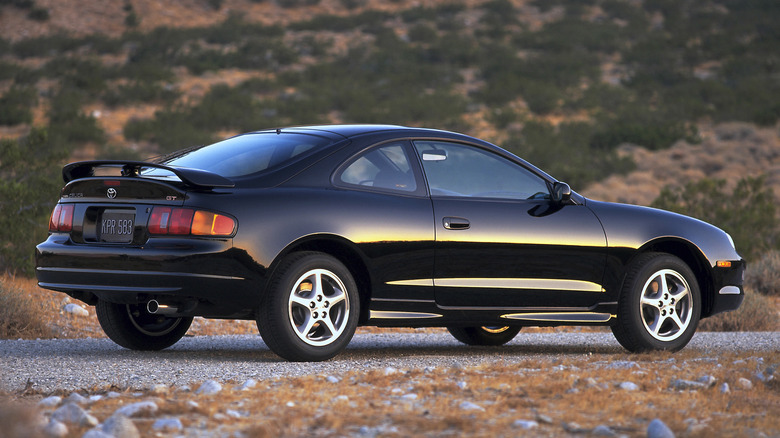
The first generation Toyota Celica was launched in the early 1970s as a two-door coupe that could seat four — it would later expand body styles into a hatchback model and even a convertible as well. There were even some high-performance versions that had success in rally racing. At its heart, the Celica was small, affordable transportation, but early models were particularly stylish, which was a big part of what made the '71 Celica so special. The Celica lasted seven generations here in the United States, being discontinued in 2005. Based solely on the success of previous models, the nameplate deserves another shot. And how would we bring the Celica back? As a cheap hatchback, of course.
Small, inexpensive hatchbacks and coupes are a great way to get enthusiasts to love your brand. Sell something attainable and fun to the average consumer at a young age, and you've got a potential brand loyalist for life. That's what a revived Toyota Celica could be. It doesn't need to be performance-oriented or even rear-wheel drive like the current GR86. A new Celica could be an efficient, front-wheel drive coupe to rival the likes of the latest hybrid-powered Honda Prelude, but at a much more approachable price. Undercut the GR86's cost by using a small, naturally-aspirated four-cylinder engine, but appeal to enthusiasts by making a manual transmission available too. A convertible wouldn't be necessary, but it would be a nice bit of icing on the cake.
MR2
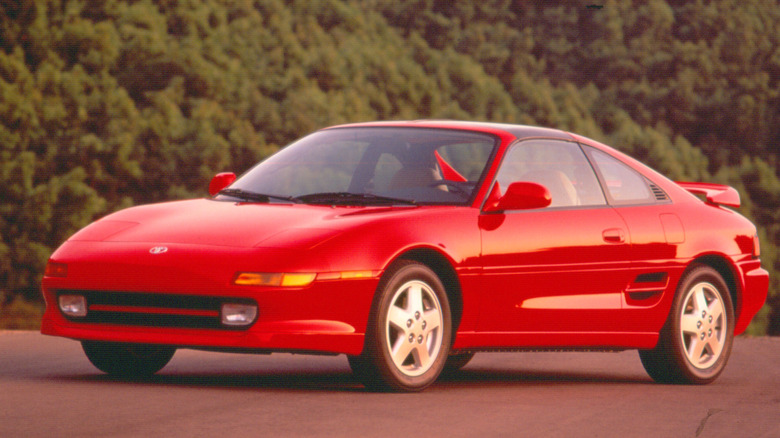
We're not sure if this is an unpopular opinion, but here goes: Every respectable lineup of high-performance cars needs a mid-engine vehicle, and a returning MR2 could fill that current void for Toyota. Name it the GR MR2 and you've got a nearly-alliterative smorgasbord of letters and numbers (which is always appealing), and a serious expansion of the current three-vehicle Toyota GR (Gazoo Racing) sub-brand. The automotive world is limited for mid-engine options right now, with the most notable (and attainable) choices coming in the form of the C8 Corvette and the Porsche 718 Cayman. A less-expensive MR2 could attract buyers who simply don't have the cash for a Vette or a Porsche, but that share our affinity for mid-engine motoring.
The MR2 (short for Midship Runabout 2-seater) was launched in the early 1980s, and over the years, the mid-engine Toyota was available with naturally aspirated, supercharged, and turbocharged engine options. Like the Celica, the MR2 was discontinued in 2005, but depending on the model year you bought one, the MR2 was available as a hardtop, t-top, or a convertible — all of which have their own appeal. It was a versatile sports car to say the least. Naturally, any new version MR2 would need to be mid-engine and have just two seats, but powertrain requirements would be a bit looser. A base model could use a naturally-aspirated engine with merely-adequate power, while a high-performance version could use any form of forced induction or hybridization to increase the power level.
FJ Cruiser
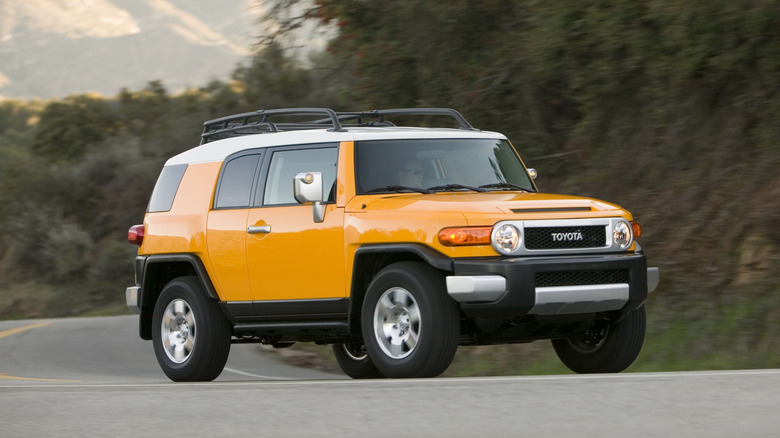
Anyone who loves to adventure in nature will agree that there can never be too many off-roaders. Yes, Toyota already has the 4Runner, which dominates trails and rock gardens alike. And the platform-shared Land Cruiser offers nostalgic styling while remaining impressively capable in its own right. An off-roader like the FJ Cruiser, however, could be built on the same platform as the Land Cruiser, just shortened up a bit. With just two doors and some unique aesthetics, it could appeal to a similar segment of buyers who don't need all the sheet metal of a four-door SUV. What's more, the FJ naming convention spawned from Land Cruisers of old, so the current Land Cruiser would make sense as a jumping-off point for a new FJ Cruiser without needing much in the way of development from Toyota.
The FJ Cruiser launched in 2007, but it wasn't able to last a full decade; it was discontinued in 2014. After its discontinuation, though, the FJ Cruiser became a cult classic with a rabid following, thanks to quirky and unique styling. It isn't as widely revered as the old FJ40, but those who love the FJ Cruiser love it dearly. A new model could use powertrains like the turbocharged four-cylinder i-Max and i-Max hybrids that are already used in Toyota's SUV lineup. A smaller Cruiser FJ model is on its way in other countries, but that probably won't scratch the same itch as a two-door FJ would in the states.
Yaris
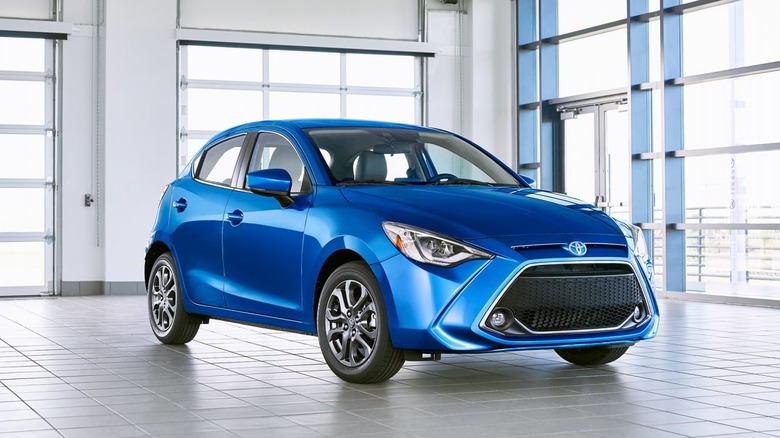
Small, efficient, and simple, the Yaris was a subcompact car that provided entry-level motoring in a number of different shapes. It was available as a two-door hatchback, a four-door sedan, and a five-door hatchback. There's even a spicy high-performance version: the GR Yaris. The Yaris launched in 2007 and it went toe to toe with other ultra-small cars like the Honda Fit and Mazda2 (it even briefly shared a platform with the latter), but it wasn't long for this world. The Yaris lasted until just 2020, when it was pulled from Toyota's American lineup because of declining sales.
Small cars like the Yaris aren't as popular as family-hauling SUVs in the United States, but we think they're still important. Like the Celica mentioned earlier, a modern Yaris could build brand loyalty with young buyers while also offering inexpensive transportation for first-time car owners. A Yaris and an SUV version known as the Yaris Cross already exist abroad, so adapting them both for the U.S. would be possible and potentially easier than creating a new car from scratch. A high-performance GR Yaris already exists, and while this hot hatch version of the Yaris is only available in other countries, this could easily change if Toyota wanted to undercut the current GR Corolla in the United States but have a similar approach to affordable performance. Sounds like a win-win to us.
Matrix
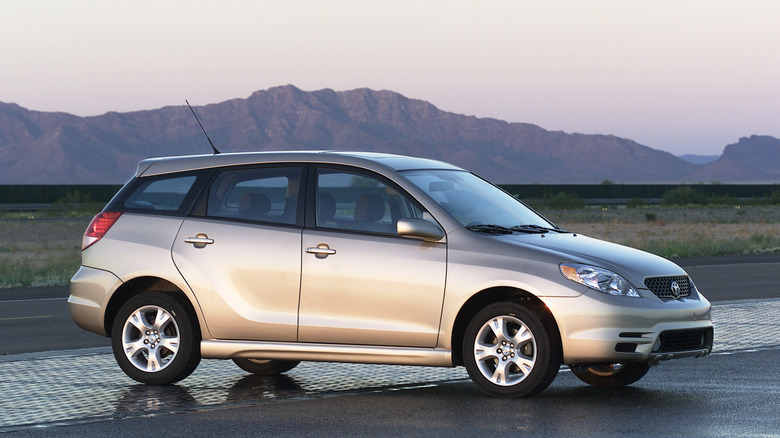
The Matrix was a hatchback/wagon version of the Corolla that was introduced in 2004 and discontinued in 2014. At this point, you might be asking yourself, "Isn't there already a Corolla Hatchback available now? Why would we need another one?" Well, like with off-roaders, there can never be enough hatchbacks or wagons, and this nameplate would be relatively simple to revive. Toyota recently announced a Corolla Hatchback FX edition that pays homage to the old FX16 hatchback. It has a wing, white wheels, and special badging — all of which are the kinds of mild modifications that could be done to create a Matrix version of the Corolla.
To bridge the gap between the standard Corolla and its high-performance GR counterpart, a revived Matrix could even have a bit more power than the standard Corolla and a few upgraded suspension bits, but without losing any of its practicality. A mild turbo and some adaptive suspension dampers would do the trick. Even a few unique paint jobs or borrowed exterior flare from the GR Corolla could help differentiate the Matrix from the standard model. We might be the only ones who want a revived Matrix nameplate, but that won't stop us from thinking it's a good idea.
2000GT
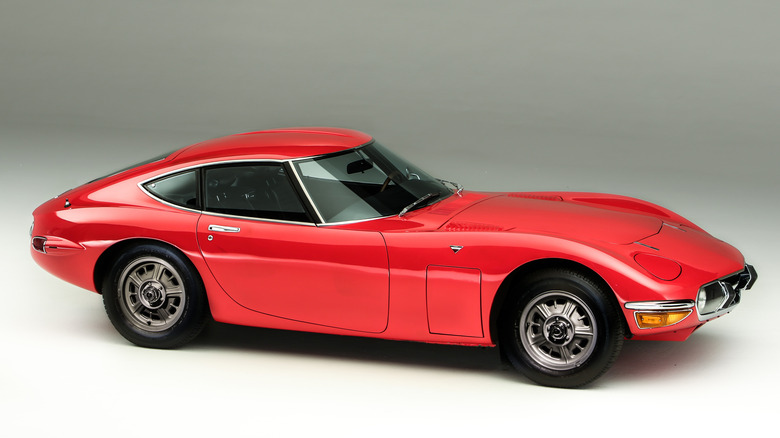
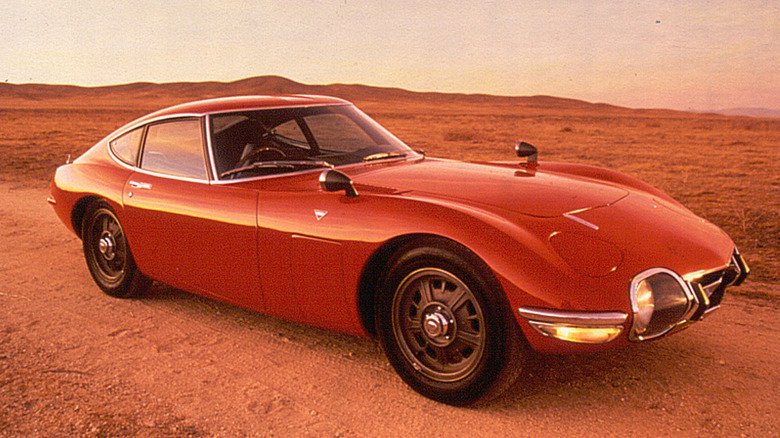
It's not an overstatement to say that the 2000GT is one of the most beautiful cars Toyota has ever built. Made in the 1960s in collaboration with Yamaha, the 2000GT's design language mirrored that of some of the world's most gorgeous coupes like the Jaguar E-Type. The 2000GT was even stunning enough to be made into a one-off convertible version for a the James Bond movie "You Only Live Twice", but it wasn't in production for very long and the world only got 351 examples of the stunning two-door sports car.
The recently-announced Toyota GR GT and its all-electric sibling, the Lexus LFA Concept, are on their way soon, as spiritual successors to the 2000GT. According to Toyota Global, the GR GT and LFA are "flagships in the footsteps of the Toyota 2000GT [and] the Lexus LFA" but early images of those two cars don't quite match the evocative spirit of the original 2000GT model, nor do they sport the legendary nameplate. Plus, both of those high-performance vehicles (the GT and LFA) are also likely going to be pretty expensive. This is where a potential 2000GT could step in. If a 2000GT were to hit performance and pricing benchmarks in between the GR Supra and the future GR GT, there might be room for a 2000GT coupe and convertible just below the GR GT in Toyota's lineup. And the more performance two-door vehicles that exist, the better — especially ones that look as good as the 2000GT.
RAV4 Two-Door
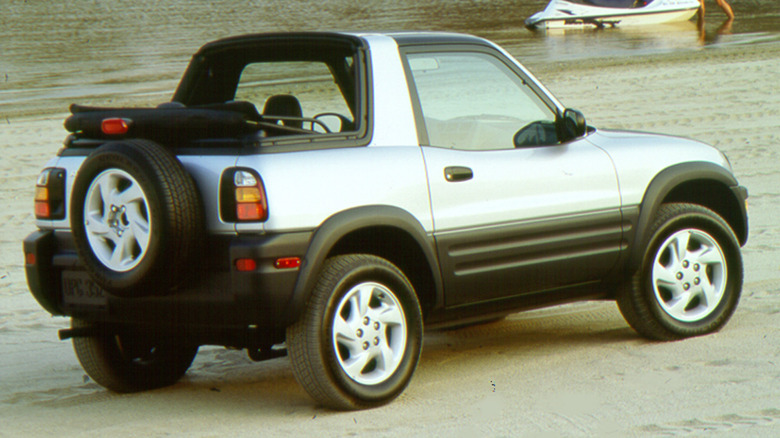
The RAV4 clearly still exists. It's one of Toyota's best-selling products and one of the best-selling vehicles in the United States, year after year. It has recently been redesigned with all sorts of modern touches for 2026, but it's lacking one important element: a two-door convertible model. The first-generation RAV4, which launched in 1996, came in both two-door and four-door variants. The two-door version had quirky beach vibes and open-top whimsy but it was eliminated from the lineup in 2001. Since then, it's been all practicality for the RAV4, but America's best-selling SUV deserves more.
No changes to powertrain would be necessary for a two-door/convertible model (at least we're not asking for any), so the transformation could be relatively basic. Toyota has already proven it's okay taking the tops off its modern vehicles; last year's 4Runner TRD Surf Concept proves that point. Feel free to file this one under the fun-but-unlikely category, but we think a modern two-door RAV4 would be a hoot.
Hilux
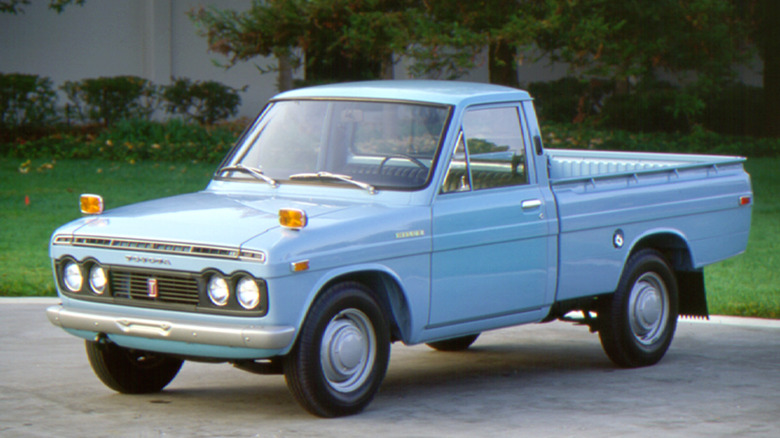
The Toyota Tacoma is one of the midsize kings of off-roading. It's available in all sorts of trim levels and configurations that give owners the ability to adventure far into the wilderness. It's also a strong rig when it comes to towing and hauling capability. But the Tacoma isn't cheap: Top-trim models like the Tacoma TRD Pro start at over $65,000. Sure, they come with tons of off-road hardware and all the modern interior tech you can think of, but there are lots of truck enthusiasts that would rather have something basic and low-tech, or even something that's just smaller than the Tacoma. That's where a new Hilux could come in.
The Hilux debuted in Toyota's lineup in the late 1960s and represented the brand's commitment to pickup trucks until it was replaced by the Tacoma nameplate in the 1990s. Outside the United States, the Hilux still exists (powered by a 2.8-liter diesel engine in some places) and with similar exterior dimensions to the Tacoma. A revived Hilux nameplate here in the states could be much smaller though, offering real mini-truck dimensions and much more diminutive stature. We're thinking of a small Ford Maverick competitor; even a Hilux based on unibody construction could be extremely competitive in the small segment of compact pickup trucks that currently exist.
Stout
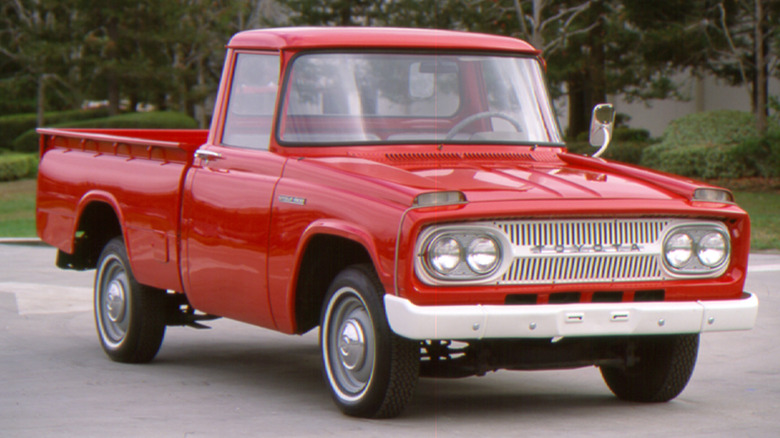
Way before there was ever a Tacoma nameplate, and even before there was a Hilux, there was the Toyota Stout. The Stout was the second Toyota pickup truck to be sold in the United States. It began production in 1960 and lasted right up until 1969 when it was discontinued, then replaced by the Hilux (at least here in the U.S.). But based on its excellent looks alone, the Stout certainly deserves a comeback tour.
To differentiate itself from the current Tacoma and the proposed Hilux revival, a modern Stout could use retro themes in its design and borrow plenty of details from the ultra-cool original model. It could even be powered by electricity instead of internal combustion. The Slate pickup truck (not a Toyota) recently debuted and set the internet ablaze with talk of a cheap, electric rig that offered utility and simplicity all in the same package. Not only does the excitement around the Slate offer a bit of an easy case study for Toyota, but it makes for a built-in competitive set. A short range all-electric pickup with a small and cost-effective battery and a few seats to go along with it would be all you need for a modern Stout.
Prius v
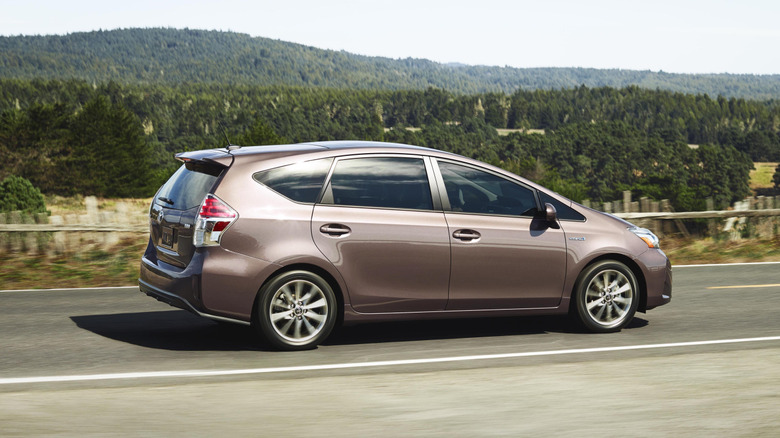
When the Prius v launched in 2013, Toyota was expanding its hybrid lineup to include other shapes and sizes apart from the standard hatchback. It made a smaller Prius c as a city-centric vehicle geared towards younger buyers in densely populated areas. The larger Prius v (the v stood for versatility) offered more cargo space and a larger overall package for bigger families. What the v should really stand for is van, based on its size and feature set. Currently, Toyota makes the highly-efficient Prius in both standard-hybrid and plug-in-hybrid variants — neither of which need to change, as they're great.
Toyota also makes the Sienna minivan, which comes exclusively as a traditional hybrid. The middle ground here is a vehicle geared towards families who want a bit of electric range for their commute, but the practicality of a hybrid with no range anxiety: a plug-in Prius v that's sized-up to be as capable as the Sienna. This might be an exercise in splitting hairs, but we think it's worth the thin slices. A Sienna-sized Prius v with considerable electric range (the Prius Plug-in currently offers 44 miles of EV range) could be a real stand-out in its segment.
Supra
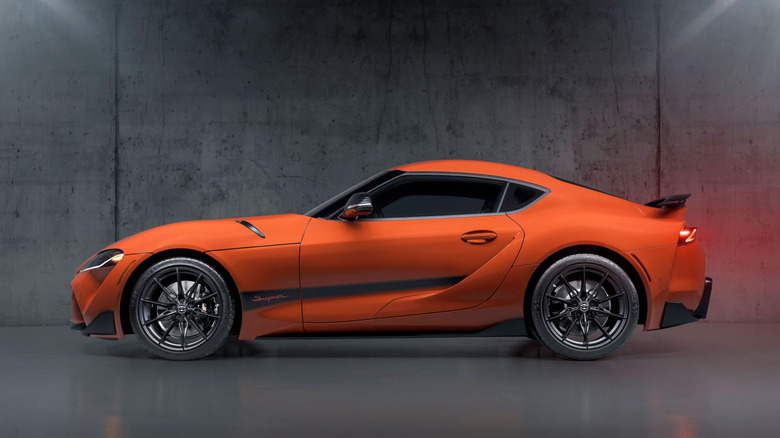
While there's supposedly a follow-up model in the works, the GR Supra's 2026 discontinuation leaves a nameplate gap for the automaker. Toyota has confirmed that the current GR Supra is ending production in 2026, along with the BMW Z4 that it's based on. The GR Supra is currently the top dog in Toyota's performance lineup, meaning horsepower enthusiasts will be left to make do with just the GR Corolla and GR86, at least for now. That doesn't just leave a big hole in Toyota's lineup, it leaves one in our collective hearts as well.
Thankfully, Toyota has confirmed that the Supra will return — but it hasn't announced any official details on when, where, or how the iconic two-door model will make a comeback. Some reports and speculation have the Supra returning as a 2027 model with a four-cylinder turbocharged engine, potentially paired with a hybrid system and making even more power than the current model. Supra enthusiasts and internet keyboard warriors will undoubtedly bemoan the lack of an inline-six, but so long as the Supra returns for another generation, we'll be satisfied.
Camry Solara
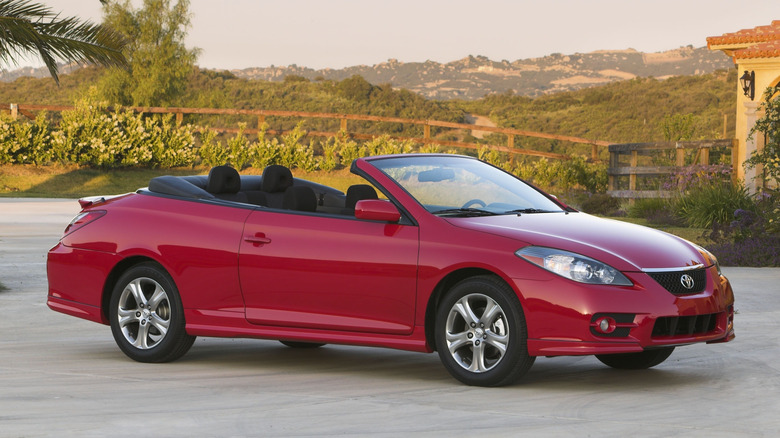
It wasn't exactly beloved in its day, but we think the Solara deserves another chance. Based on the architecture of the practical Camry sedan, the Solara was available as a coupe and a convertible. Like a few other long-gone Toyota models, the Solara only lasted a few years — going on sale in 1999 and being pulled from Toyota's lineup in 2008. It was criticized by reviewers at the time for lacking a sporty feel, but there's no reason a new Solara would need to be sporty at all.
A new Solara could be a comfortable GT cruiser with Lexus LC vibes and a bit of luxury to go along with it. Imagine a leisurely drive up the coast with the top down in something quiet, refined, and reliable — that's all the Solara would need to be. It could source parts from the latest Camry, offering the same levels of efficiency and practicality but in a two-door package. Will it break any sales records? Probably not. But we still think it would be a fun exercise. Hoping that all 12 of these models will make it back into Toyota's lineup is certainly unrealistic, and the Solara is probably the most unrealistic of them all, but that doesn't make imagining their return any less fun.