

Forgotten Gems: 5 Underappreciated Chrysler Cars From The '80s
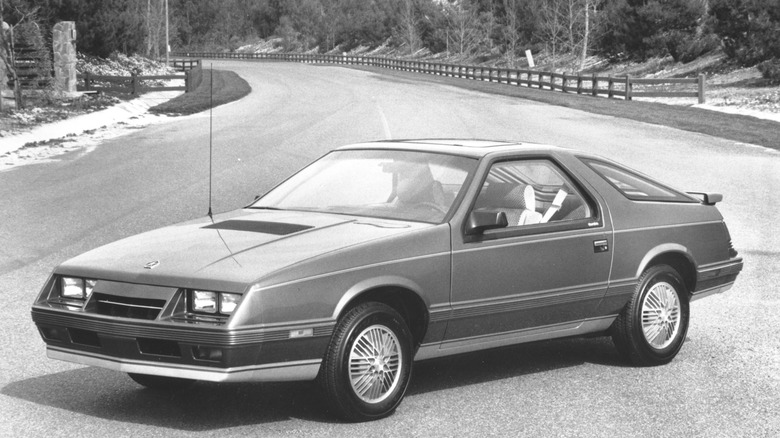
Chrysler might not have been around for quite so long as some of the other American automotive giants like Cadillac, Dodge, or Ford. However, 2025 marked a major milestone for the car manufacturer: 100 years in operation. Throughout that tumultuous century, there have been some seriously exciting and interesting vehicles to leave the Chrysler factory, such as the jet engine-equipped Chrysler Turbine car from the 1960s or, much more recently, the HEMI-powered Chrysler 300C.
However, there are of course a number of Chrysler models that time seems to have all but forgotten. This doesn't mean they are any less worthy of remembering, though. To that end, we've decided to wind the clock back and remember five here. We will visit each in some detail before establishing why they might have been left in the history books while other models stick around in our minds a little longer.
With a history that spans 100 years, we've decided to whittle down our selection to Chrysler cars from the 1980s. These models tend to be overlooked due to the unfortunate state of American auto manufacturing of the time; performance was down due to power-strangling emissions devices, and the style of the time certainly wasn't so sweet as the chrome-clad models that came in the decades before. Plus, Japanese imports were all the rage at the time, pushing home-grown models a little deeper into the shadows.
Nevertheless, domestic brands like Chrysler deserve another shot at the spotlight. Often it's the forgotten classics that can be the most rewarding to own as the years march on by, as they transport us back to another time. The exclusivity they can provide just amplifies their appeal.
Chrysler TC by Maserati
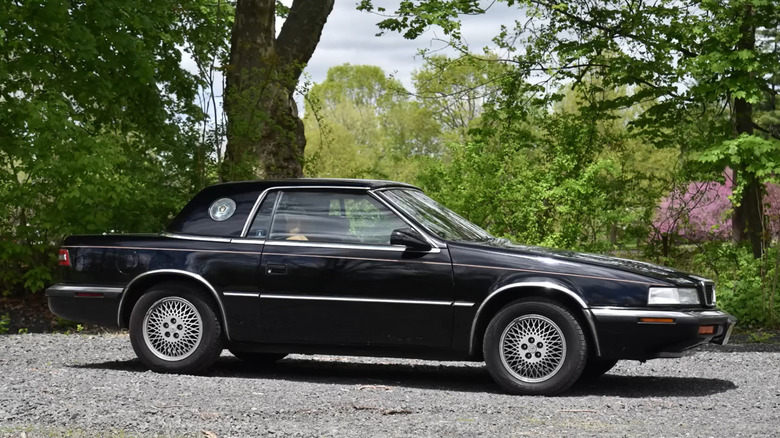
The absolutely wild Chrysler TC by Maserati was the result of both automakers putting their heads together to produce a sporting convertible, poised to capitalize on the demand for luxury excess in the 1980s. The TC part stood for Turbo Convertible, but don't get too excited, as the LeBaron-esque drop-top managed to churn out just 160 horsepower.
The engine in question was a lightly boosted 2.2-liter inline-four courtesy of the Dodge Daytona, although it's suggested that a Maserati-derived 16-valve four-cylinder was also available, this one with a slightly hotter 200 horses to play with. The latter would be equipped with a five-speed manual, while the former came with a three-speed auto transmission. To confuse things a little further, and to add another automaker into the mix, the TC by Maserati could also be had with a Mitsubishi-sourced V6.
Powertrains weren't the only reason that the Chrysler TC was a failure, though. This was the '80s, after all; just about every American car had a dismal engine thanks to what's sometimes referred to as "The Malaise Era" of car design. Rather, the TC looked far too much like a regular LeBaron convertible, but yet it commanded a far more upmarket price. In 1989, an entry-level TC would have set you back $33,000, or just over $86,000 in today's money. By way of comparison, a well-spec'd LeBaron sat not far off half that price.
It therefore stands to reason that the TC by Maserati was not a blinding success. It managed just three years in production, and in that time, Chrysler was lucky to shift in the region of 7,300 of the things. Today, even the finest examples struggle to top $15,000 at auction, making them an awfully cheap way of getting into an interesting '80s drop-top.
Chrysler Executive Limousine

The Chrysler Executive is a real rarity from the automaker's back-catalog, as around only 1,500 examples were ever produced. Like so many of the company's vehicles of the era, the Executive Limousine was based upon the Chrysler K-car platform, although its construction was a little different to the name. Chrysler employed the use of ASC — a company that cut its teeth providing convertible-roof designs to automakers in the '80s — to marry the rear end of a LeBaron Coupe to the front end of a LeBaron four-door, while slotting a bespoke 24-inch chunk of limo metalwork in the middle. The result was a stretch limousine with a 131-inch wheelbase. Pretty small by limo standards, but the Chrysler still packed everything it needed to in order to compete properly in the segment.
Amenities included the must-have dividing partition, complete with powered glass panel, an audio system for rear passengers, and space for up to seven occupants, thanks to a pair of jump seats. When introduced in 1983, the Executive Limousine kicked off at $21,900, which was reportedly quite affordable for a car of this nature at the time. Adjusted for inflation, that's right around $71,400 in today's money. However, if you fancy living the limo-life in 2025, secondhand models have sold at $10,000 or so, which means you can seat yourself in one of these forgotten and underappreciated '80s Chryslers with minimal cash layout.
Not that it ever masqueraded as such, but this was never a driver's car. For the first few years, the Executive Limousine was only available with a Mitsubishi-sourced 2.6-liter inline-four engine, which provided just 93 horses for motivation. In its final 1986 model year, the Chrysler packed a more meaningful turbocharged 2.2-liter power plant that kicked out an extra 53 horses.
Chrysler Conquest TSi
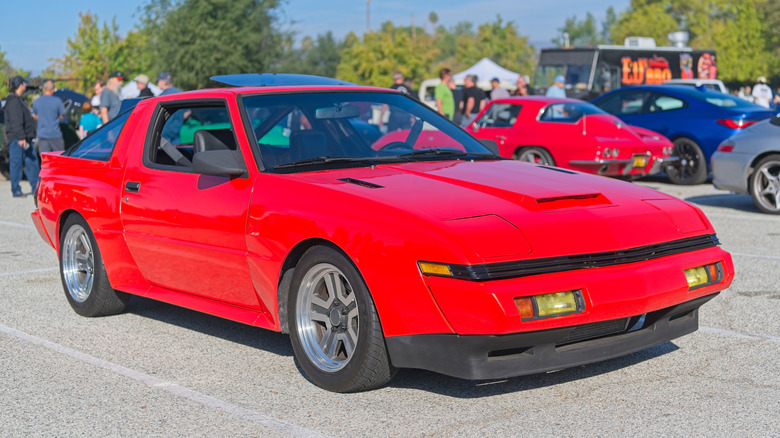
A result of the interesting Diamond Star Motors merger of the 1980s — a joint venture between Chrysler and Mitsubishi — the Chrysler Conquest was essentially just a Mitsubishi Starion with a new badge on the front. Unlike other forgotten Chrysler cars from the decade, the Conquest — when spec'd in flagship TSi guise, at least — packed a half-decent punch.
Under the hood sat a turbocharged four-cylinder which kicked out a rather handy 176 horsepower. That was enough to propel the TSi from 0 to 60 mph in just 8.0 seconds, more than respectable for a sports coupe of the time. In order to further bolster the sporting appeal of the Conquest, a widebody model arrived for the 1986 model year. These aggressive, blistered arches gave the Conquest a seriously sporting profile and housed staggered 16-inch alloy wheels.
Unfortunately, even the new wheelbase didn't help keep the Conquest TSi afloat. Sales proved slow, certainly in comparison to other sporting Mitsubishi models of the time, and so the Conquest finds itself easily forgotten in 2025. It certainly doesn't enjoy the same levels of popularity as its Japanese contemporaries, such as the early Supra or revered Nissan Z cars. Tidy examples of the Conquest can now be picked up for between $10,000 and $15,000 at auction, with truly special examples even commanding in the region of $20,000 or more.
Chrysler Laser Turbo
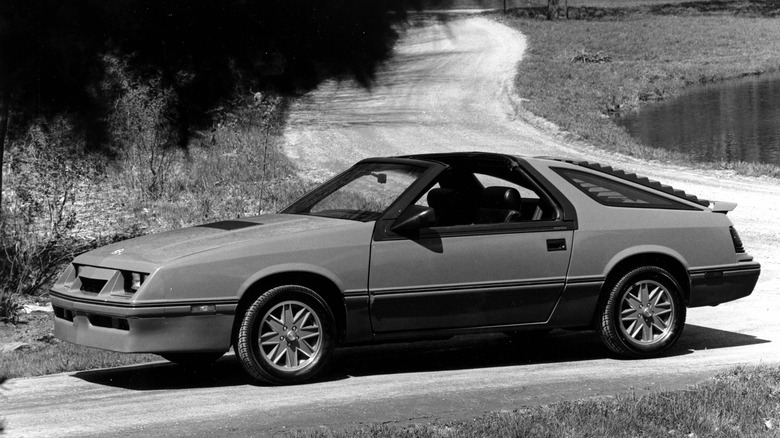
Chrysler went against the grain with the Laser Turbo. It was pushed as the brand's first sports car, although it was a hatchback and front-wheel drive too, so to call it such was quite a stretch. There were two engine options for buyers to choose from — a naturally aspirated 2.2-liter inline-four with a not-so inspiring 93 horsepower and an altogether more appropriate turbocharged version of the same engine with 142 horses to play with.
It was inside where the Laser and Laser Turbo really impressed, though. It was the epitome of the '80s with an available pre-mainstream digital dashboard, with the Laser sporting bar graphs for vital fluid read-outs. It also boasted an optional voice alert system for small issues such as blown bulbs as well as perks like heavily bolstered black leather sports seats. It was well-equipped, for sure, and the options list certainly made for interesting reading, if nothing else.
Period promotional material claimed that the Laser could outperform key competitors like the Camaro Z/28 and Mustang GT in a number of different ways, from 0 to 50 mph runs to its ability to stop on a dime, ensuring key rivals would be kept squarely in the automatic wing mirrors of your Chrysler. A total of 147,396 were produced over a three-year run, which wasn't bad, but it wasn't enough for the brand to keep it alive. Chrysler moved on, leaving the sporty cars to sportier brands. The Laser, and in particular the Laser Turbo, now represent an interesting chapter from Chrysler's back-catalog; their Dodge Daytona alternatives are much easier to find at auction.
Chrysler New Yorker Fifth Avenue

The Fifth Avenue was much more up Chrysler's alley. For many years, the New Yorker sat at the top of the Chrysler food chain, starting back in 1939. Sadly, by the 12th generation — which spanned most of the 1980s — the marque had shrunk in size and grandeur somewhat. Still, it was regal, particularly with the Fifth Avenue option package, which would have set original owners back an additional $1,244.
Inside, it was a luxurious experience. Button-tufted seats could be finished in cloth or leather, shag carpets covered the floors, a vinyl roof finished the look outside, and amenities like power locks, power windows, climate control, and a remote trunk release would have made this one easy sedan to live with back in the day. It's one of the few discontinued Chrysler models we think deserves a second chance — a 2025 New Yorker could be the sedan America needs to rival the sea of SUVs.
As complete a package as these were, they are a scarce sight on today's roads now, with sports and muscle cars of the era tending to be saved and treasured rather than personal luxury sedans like these. A shame, really, but good ones are still out there. Underpinned by 5.2-liter V8 engines and three-speed auto transmissions, even smart low mileage examples struggle to command five figures in today's classic climate, making these venerable land yachts a fun and affordable retro option.