

5 Groundbreaking Tech Inventions That Defined The '80s
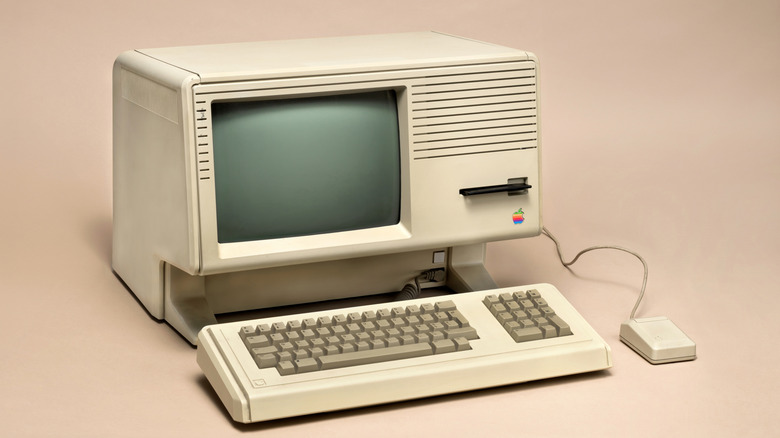
The 1980s are forever immortalized in popular culture as an era of primitive digitization, with technological revolutions spanning everything from the artificial heart to the Space Shuttle. The beginnings of the Digital Age permeated almost every aspect of daily life, influencing art, politics, and more. In fact, it's not too much of a stretch to say that the 1980s were one of the single most influential decades in remembered history, thanks largely to several key innovations and technological breakthroughs that would ultimately lay the foundations for the world we know today.
Considering the 1980s are practically synonymous with digital technology across so many fields, it's difficult to precisely nail down what was the most influential among them all. For instance, the rise of MTV would later lead to the increase in reality television with shows like "The Osbournes" in the 2000s. Then you have the popularization of other earlier inventions, such as the video game console (first developed in 1972 with the Magnavox Odyssey). Then there are medical advancements we might not readily consider — DNA fingerprinting, gestational surrogacy, and artificial hearts all debuted in the 1980s. And that's not getting into the weird stuff — it's the 80s, of course, there were many weird gadgets sold in the '80s.
In this article, we'll take a look at five of the most influential technologies from the 1980s that continue to shape our daily lives. That isn't discounting any other innovations whatsoever, especially those that revolutionized scientific and medical technology — sadly (or perhaps fortunately), the sheer number and weight of impact are simply too great to condense. Let's explore some of the most iconic of these developments from an equally iconic era of human history.
1. Macintosh personal computer
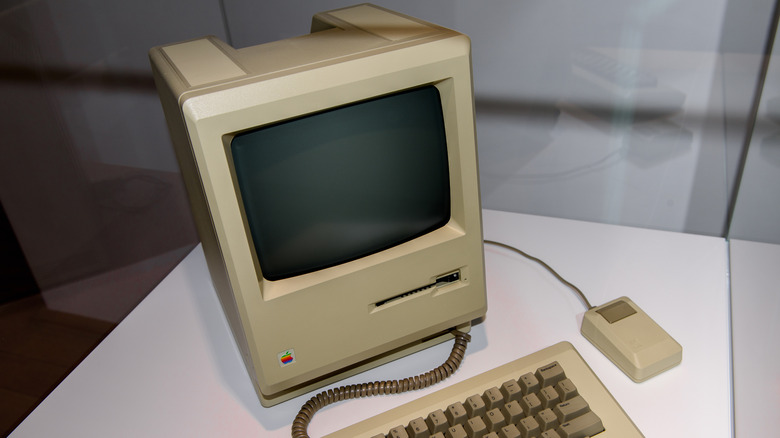
It's difficult for many people alive today to even imagine a world without computers and the innovations they brought. And it all started in January 1984, when Steve Jobs cemented his name in history with the public debut of the Macintosh. While its specs may not exactly be impressive by today's standards (the first Macintosh had a whopping 128KB of RAM), it nevertheless forever changed the way humanity interpreted and stored information. That's because of a few factors which launched right alongside the Macintosh: namely, the modern graphics user interface and the traditional mouse-and-keyboard ergonomic design.
Putting the convenience of a personal-sized computer aside for a moment, the fact that you could now look at a screen and navigate it with a mouse was nothing short of revolutionary at that time. That said, it wasn't actually the first personal computer; that title belongs to the Kenbak-1, debuting in 1971. Then there are digital word processors and separate personal computers with keyboards and separate monitor interfaces, such as the Sinclair ZX Spectrum, one of the highest-selling computers of all time.
What the Macintosh did was take all of these innovations and package them in a single housing with a monitor and floppy disk drive, then provide the user with a means to access data via a mouse. Considering the internet was just around the corner, this was effectively like assembling the first car with the traditional three pedals and shifter before we invented gas stations. What would our digital world look like without our traditional mouse-and-keyboard ergonomics? It's almost impossible to consider, and that all comes down to this one popular format. However, as an iteration rather than a direct invention, credit must also be given to the forefathers of digital computer technology.
2. Motorola DynaTAC mobile phone
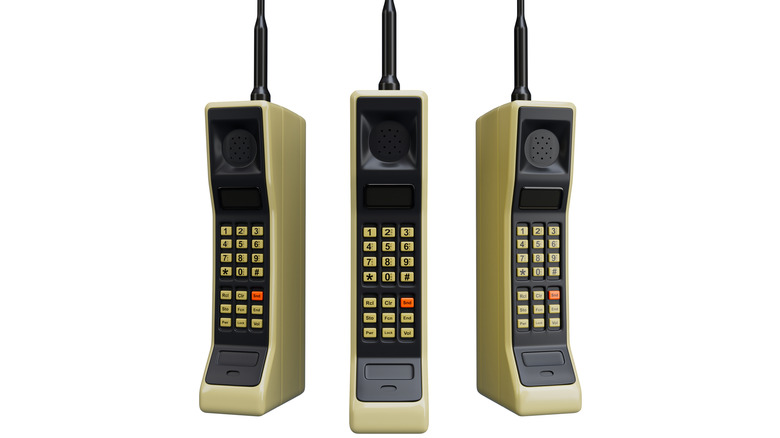
It's tough to beat the personal computer in terms of 1980s technology that shaped the course of modern history, but cellphones are likely one of the top candidates, if ever there was one. Back in the day, if we weren't at home, we had to place calls at phone booths, feeding money into a large Bell telephone connected to a hard line. They actually lasted way longer than you might expect — the last public payphone in America sat at the corner of 50th Street and 7th Avenue in New York City, removed in May 2022. They'd likely still be around had it not been for this invention, the Motorola DynaTAC, the world's first commercially available cellphone.
Invented by technological pioneer Marty Cooper, the DynaTAC debuted in 1983 and paved the way for a revolution that no one anticipated at the time. Bear in mind that Cooper placed the first-ever mobile phone call just ten years earlier, and car phones before then weighed upwards of 80 pounds and connected users to switchboard operators. The DynaTAC itself wasn't too appealing at first glance, either; for one, it cost $3,995 in 1983 and was nicknamed "the Brick" for its looks. The number of early cellphone adopters numbered in the thousands, with major cities supported by a single transmitter.
It took us only a little over four decades to go from cellphones being an interesting novelty to something near-ubiquitous and often a requirement in daily life. These days, 98 percent of American households have at least one cellphone or smartphone, and that all began in the 1980s. The number of technological innovations made possible by instantaneous communication enabled by these devices is innumerable, making this single invention likely one of the most significant in human history.
3. Fujifilm QuickSnap disposable camera
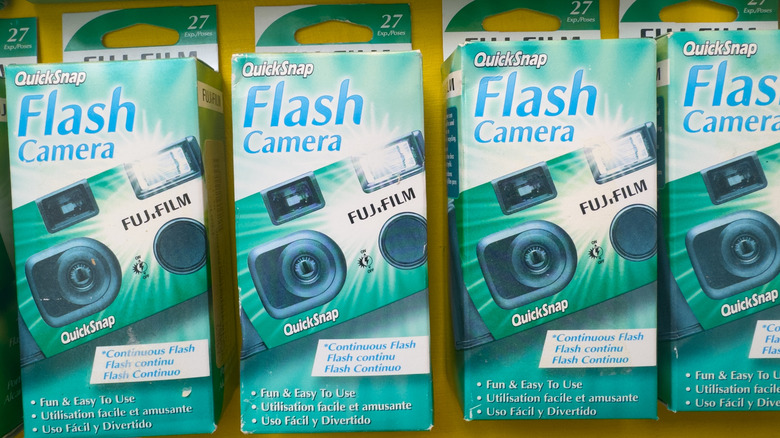
Once upon a time, amateur photography was considered a relatively niche hobby for enthusiasts. Cameras were often large and bulky, sometimes requiring external devices like flash bulbs. Polaroid changed that in the 1970s with the SX-70 SLR Land Camera; these cameras ejected pictures automatically, developing in about ten minutes. But another innovation came out in 1986, which made it possible for anyone with a bit of money to get into photography: the disposable camera. Now you could go to the drug store and pick up a camera and take pictures like the professionals (albeit with less quality).
Introducing the QuickSnap by Fujifilm, also known as 写ルンです (Utsurun Desu, literally "It Takes Pictures") in Japan. The concept originated from a revolutionary hot take in photography. Instead of fitting film into a camera, the team at Fujifilm built a camera around film, designing a single-use film roll with a lens built into the housing. This simple, easily produced design created an entirely new niche in amateur photography, one that persists to this day.
Part of the reason for the disposable camera's proliferation was an internal arms race between Fujifilm and Kodak, which began when Kodak released the Fling to compete against the QuickSnap. This spurred development between the two companies (and joined by several others) throughout the late 1980s to 1990s, much to the consumer's benefit. Of course, digital photography overtook disposable cameras as the chosen medium for photographers everywhere, followed by high-fidelity phone cameras. Likewise, disposable cameras never truly replaced beginner-friendly, higher-quality film cameras, which are still around today and relatively cheap. Despite their assumed obsolescence, the classic disposable camera (and its development sites) remains widely available to enthusiasts everywhere, albeit not as ubiquitously as it was in its heyday.
4. Sony Walkman
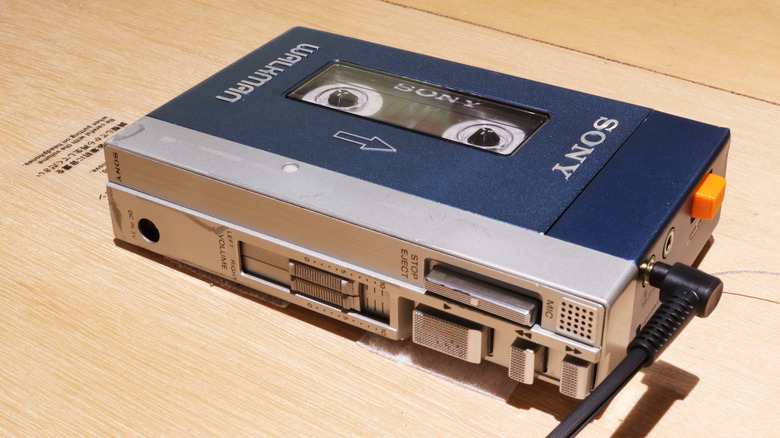
The classic Walkman is another development which began life not in the 1980s, but in the 1970s — specifically in 1979, when Sony co-founder Masaru Ibuka wished he had a way to listen to music on long flights. In July of that year, Sony debuted the Walkman to Japanese audiences, becoming an absolute sensation and revolutionizing the way people listen to music. Sales initially shocked Sony, its popularity quickly spreading internationally and cementing the company as an industry giant ever since.
To understand why the Walkman was such a big deal, rewind to before these devices existed. To listen to music on the go, one had two options: a car or building radio or a portable unit like a receiver with an external speaker. The Walkman, by contrast, afforded its user the gift of privacy. With no external means of listening to music, headphones suddenly became almost ubiquitous in high schools, in crowded spaces, on planes — anywhere in public — allowing anyone to listen to their music whenever they wanted. It's hard to imagine a world today in which you can't, for instance, go for a run in the park without seeing someone with headphones on, even if you're not wearing them yourself. All that started here.
Believe it or not, the Walkman is actually still produced today, over 45 years after its initial debut. Of course, it's not the only MP3 player on the block anymore; any phone with internet access and the ability to play audio can do the same. But before we had AirPods, we had these big aluminum tape decks strapped to our sides blasting Madonna and Judas Priest alike, and they were everywhere in the '80s.
5. Compact disc
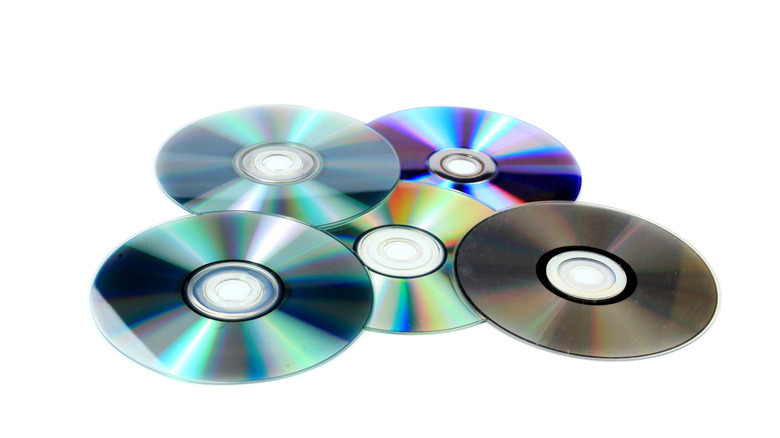
Speaking of revolutionizing the way we enjoy media consumption, how about compact discs? Or, more broadly, the digitization of music. Back before these were around, the phrase "Be Kind, Rewind" applied not just to VHS tapes but also to audio cassettes. For those unfamiliar, these were magnetic-coated film reels housed inside a plastic casing, with an "A" side and "B" side. Flip over the tape to play one side or the other; simple, right? Well, the problem was twofold. Firstly, a cassette tape's reel could be damaged, and the user had to manually scan through the reel to select individual songs, rewinding to the beginning to play the whole thing.
That all changed with the advent of media digitization, which first took the form of the compact disc. First mass-produced in 1982, the compact disc promised an end to manually seeking through audio tracks in cassettes, as well as the large, easily damaged vinyl records of old. Much like the Walkman, CDs date to 1979, representing the first viable means of storing data in this format.
At first, these were primarily used for audio — music CDs held about 80 minutes of audio. However, with increases in storage capacity, the technology later developed into DVDs and Blu-ray, among other formats. They were exceptional storage devices for their time, used to store every kind of media, from movies and music to video games and computer programs. By the 2000s, cassette tapes were largely considered niche, and 2010 marked the last car ever to feature a factory-equipped cassette player: the Lexus SC-430, a car famously considered one of the worst cars in the world.