

5 '80s Cars We Wish Would Make A Comeback
The 1980s were an iconic decade for cars, perhaps one of the last decades to feature an ubiquitous image. They were generally boxy, for starters. Sports cars were low, wedge-shaped, and featured wild aesthetics. Sedans looked like cereal boxes, while station wagons had simulated wood paneling. SUVs and pickup trucks were utilitarian, basic machines with bulletproof engines; the list goes on. From the exotic Lamborghini Countach and Ferrari Testarossa to the pedestrian Ford Fox-platform and GM B-body cars, the sheer diversity of cars produced at the tail-end of the Malaise Era crafted legacies that lasted well into the modern age.
But what about the cars that didn't make it past the 1980s for one reason or another? Perhaps it was a car that was too ahead of its time, like the proto-SUV AMC Eagle. Other nameplates simply disappeared, like the Chevrolet Nova, which became a badge-engineered Toyota 80-series Corolla at the end of its life. But what if we could magically take one of these cars that was discontinued in the 1980s and produce something with the same name, general dimensions, and role — but for today's roads? Which revivals would actually be exciting to see, or even potentially become commercial successes? Let's dive in and explore what we think would fit the bill.
Pontiac Fiero
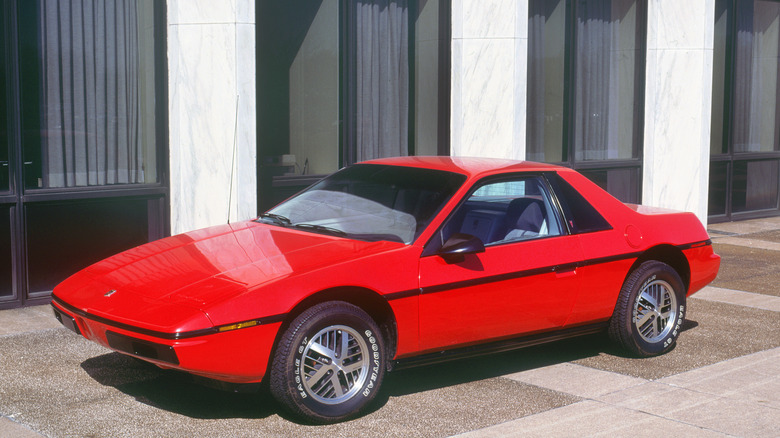
What comes to mind when someone describes a supercar, assuming money isn't a factor? It'll likely be something sleek, low-slung, mid-engined, and rear-wheel drive. It won't be practical, but it'd probably be an absolute riot to drive. Such a car exists today in the Chevrolet Corvette, except it costs almost $70,000 for the base model. Imagine if you could get something similar for the price of, say, a regular family sedan. Would it be quite as fast? Probably not. But it'd be mid-engined, fun to drive, and timelessly stylish. Enter the Pontiac Fiero.
There are a few things the Fiero is known for aside from being a less-powerful, heavier Toyota MR-2; for one, people seem to enjoy turning them into faux-exotics. But let's look at the facts here — you have a sporty, mid-engined car that's well within reach of the masses and has an aesthetic that arguably looks quite handsome even on today's roads. If one were to fit modern trimmings and powertrain options into such a vehicle, it'd effectively monopolize a niche that's been gone for decades — provided we take modern safety regulations out of the equation, at least.
What would such a car look like? A modern Fiero would retain the general shape and, crucially, the drivetrain layout. It'd be driver-focused, with a regular passenger car combustion engine and optional manual gearbox, and retail at around half the price of a modern Corvette. Basically, it'd be a mid-engined Toyota GT86, and that sounds like an incredible vehicle if you ask us. Just as long as it doesn't randomly catch on fire.
Nissan Be-1
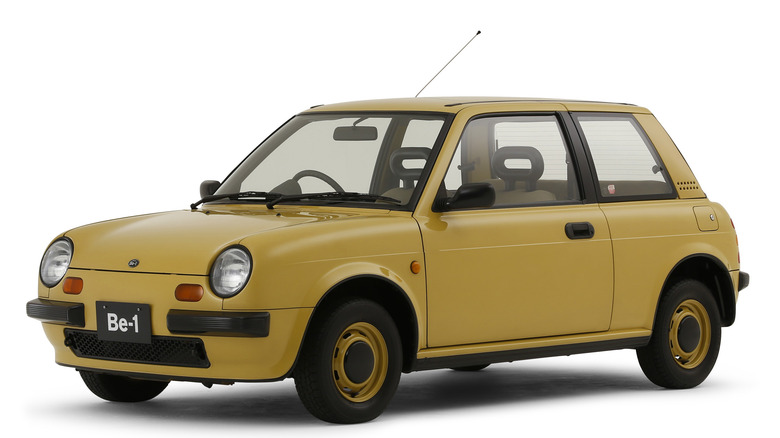
This one's a hot take, for sure, given that the '80s gave us arguably more iconic cars like the Mitsubishi Starion and ahead-of-its-time Shelby Omni GLH-S. First off, what even is a Be-1? It's not actually immediately obvious, given that the car never wore Nissan badges. In brief, it's a subcompact JDM hatchback, never intended for export, and limited to just 10,000 units. Nissan didn't even think it would be that popular, but when the public first caught a glimpse of that face, they fell in love with it, and orders began pouring in.
The Be-1 is the progenitor of the "Pike Car," basically regular Nissans designed to resemble vintage cars. In the Be-1's case, its aesthetic harkens back to the 1950s and 1960s, roughly 25 years before its introduction. For argument's sake, let's imagine that Nissan were to build something similar now, a subcompact designed to resemble what we would consider vintage today. Perhaps it could resemble something from the early 2000s, but it'd likely be boxier than cars of that era, resembling early-90s offerings instead. Something like, for instance, a Mark 3 Volkswagen Golf or a comparable Ford Fiesta, but with modern amenities and power.
With more and more crossovers on our roads today, hot hatches like these are quietly being relegated to the side. Something this small and stylish could potentially fill such a niche in an affordable package, on par with modern European hatchbacks, but with a friendlier, less aggressive design than what we commonly see. The original Be-1 struck a chord for being practical and distinctively styled without looking terrible; a modern interpretation would be awesome to see on showroom floors.
Opel Manta
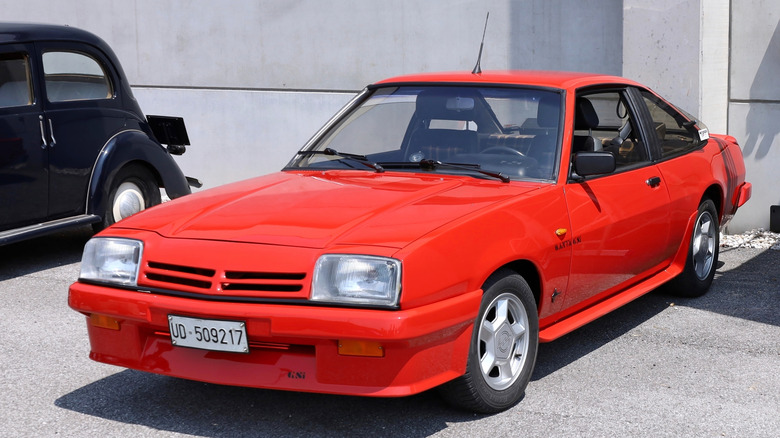
The Opel Manta isn't a car that gets talked about nearly enough, at least not in the U.S. The Manta, discontinued in 1988, is for all intents and purposes the German equivalent of a classic Ford Capri. They were affordable, lightweight touring cars with a significant rally pedigree, available in a variety of trims and powertrains ranging from basic hatchbacks up to homologation specials modeled after the Group B rally car. It was available as either a liftback or a two-door coupe, with iconic styling and prowess to boot. It proved so popular, in fact, that there was even a movie named after the car, namely 1991's "Manta, Manta."
The principle of the Opel Manta, that of an affordable touring car that was still usable as a daily driver, has been revisited multiple times since. Probably the closest analogue we have today is something like the modern Nissan Z-car, which itself sports many retro-inspired styling cues. The original Nissan Fairlady Z was also a sports car with rallying provenance, and provided that classic 2+2 foreign sports car template to the masses. A redux of a Manta could, theoretically, fill those shoes on the European end of the spectrum.
Much like the Fiero, a modern Manta would theoretically be built as a budget-friendly driver's car, featuring an internal combustion engine (unlike the electric Manta concept car), an optional manual transmission, and retro-inspired features like classic gauges, a ducktail spoiler, and round headlights. Would it sell particularly well? Probably, considering Nissan sold 2,154 Zs in the U.S. in Q1 2025. With even the Mustang GT costing nearly $50,000, an affordable sporty touring car might be perfect for modern roads.
Chevrolet El Camino
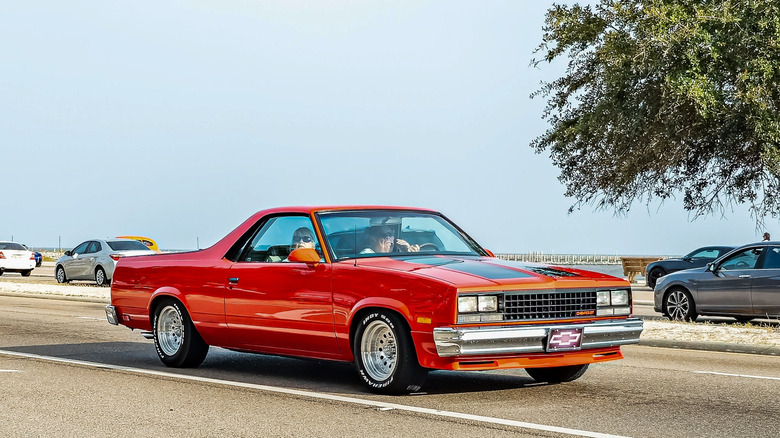
Most people associate the El Camino with the classic 1960s and 1970s models with Chevelle bodywork, but its story didn't end there. In fact, the El Camino was only discontinued in 1987, outliving its Ford Ranchero rival by almost a decade. The formula here was simple — a pickup bed on a car-sized body — and never really copied in bulk since. Australians have utes, of course, they're sadly not sold in the U.S. Instead, Americans have to settle for SUV-sized trucks at a minimum, with trucks like the Ford Maverick being among the smallest. Imagine, however, turning something like a Chevrolet Impala into a pickup.
It sounds silly in principle, but it's a formula that's worked well in Australia for decades and could work just as well in the United States. The final El Camino generation used a Monte Carlo as a base, which sounds counterproductive at first glance, given that most sedans and coupes have been phased out of showrooms in favor of crossovers, SUVs, and full-size trucks. But let's be real for a minute — how many people would be interested in a cheap, purely functional truck, as opposed to a new F-150, which costs nearly $40,000 to start with?
An El Camino would fill an often-overlooked niche in the American market — a truck for people who just need a pickup bed. It won't have ground clearance, nor a massive crew cab with a ton of luxury features, but it'd ride comfortably on longer road trips, owing to its car chassis, and be as powerful as it needed to be. In an age where trucks are getting larger by the minute, a truly compact alternative would be great to see.
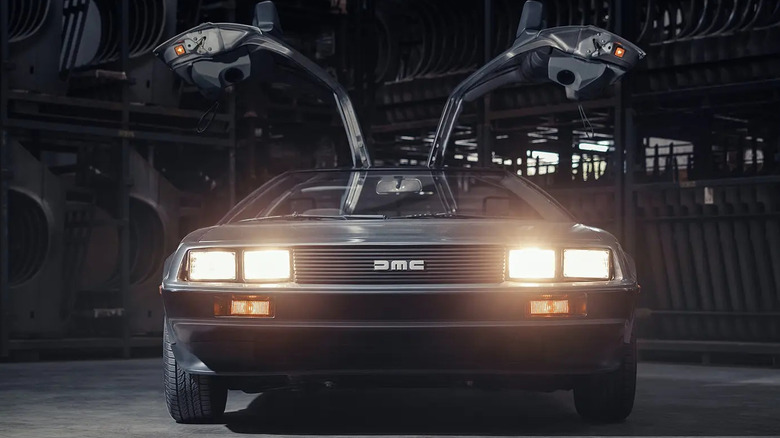
DeLorean DMC-12
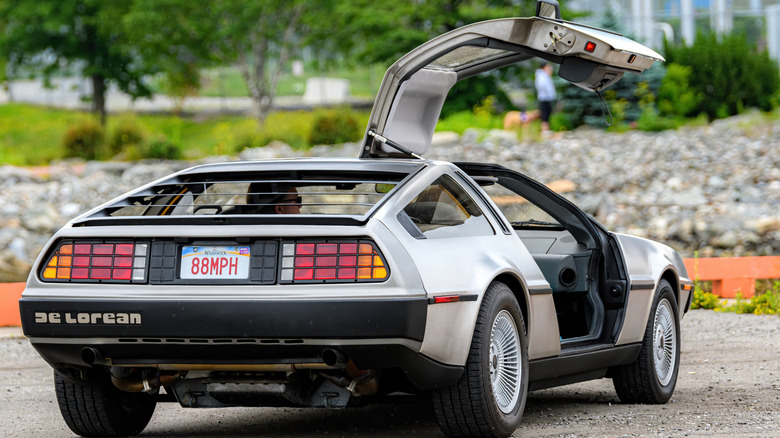
Obviously, we had to include this one. Sure, we could have chosen the AMC Eagle, but we don't need more crossovers. What we really need more of is a properly done 1980s retro weekend warrior, and what better than the DeLorean? Most people know this car from its starring role in "Back to the Future," though the actual vehicle didn't sell particularly well on its own. Its stainless steel skin, styling bordering on avant-garde, and underpowered engine doomed it to failure.
What would a modern DeLorean look like, though? Well, we have an answer to that — several, actually. For one, DeLorean is still in business, and you can get a professionally-restored DMC-12 from the company itself. But what about something with a more modern aesthetic? Take a look at the Hyundai N Vision 74, a hydrogen-powered supercar that's about the closest thing to cyberpunk with four wheels that money can buy (as long as you have over $300,000 burning a hole in your pocket).
A true successor to the classic DeLorean would combine the best of both worlds. Much like the original, it might be ahead of its time, using radical propulsion ideas, alternative fuels, or high-tech equipment. However, unlike the Hyundai N Vision 74, it won't feature an eye-watering price tag, being more of a pioneering mid-range car like the DMC-12 of old. This places it at an odd impasse, since it likely wouldn't sell well (although DeLorean didn't make many originals either, to be fair), but it'd most certainly achieve cult classic status. And unlike the Cybertruck, it'd look absolutely stunning to boot as well.