

5 Underappreciated Classic Models From The Early Days Of Volkswagen
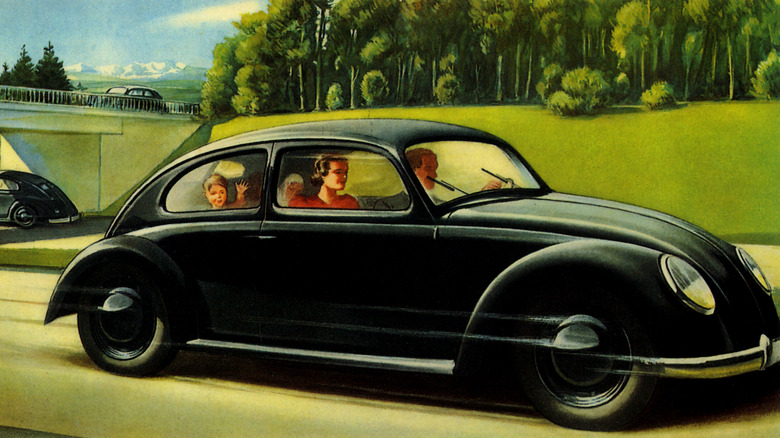
The dark history of Volkswagen started on May 28, 1937, when the German government, controlled by Adolf Hitler of the Nazi Party, founded an auto company that was soon renamed as Volkswagenwerk, or The People's Car Company. The original People's Car, designed by Ferdinand Porsche, was intended to cruise across Hitler's soon-to-be-built German Autobahn system at an original cost of under 1,000 Reich marks, the equivalent of $140 at that time. Unfortunately, Hitler also started World War II right after the prototype of the first Volkswagen vehicle had been shown to the public at the 1939 Berlin Auto Show. The People's Car would have to wait.
When the war ended, the British had Volkswagen resume production of what we know today as the original Volkswagen Beetle in 1945, followed by the Transporter/Microbus in 1950. Volkswagen began exporting the Beetle to the U.S., its first export market, in 1949, making it a leader in the reconstruction of post-war Germany. And the rest is history, with a wide variety of Volkswagen vehicles being shipped to our shores, with some even being produced in the U.S. and also coming from factories in other countries.
Let's take a look a some of the underappreciated classic models from the early days of Volkswagen, presented in chronological order. Some you may have seen, others perhaps not. They are all part of the history of a car company that started as a wing of the Nazi Party, but became a global automotive powerhouse that ships and produces cars all over the world.
1961 Volkswagen 1500 Convertible
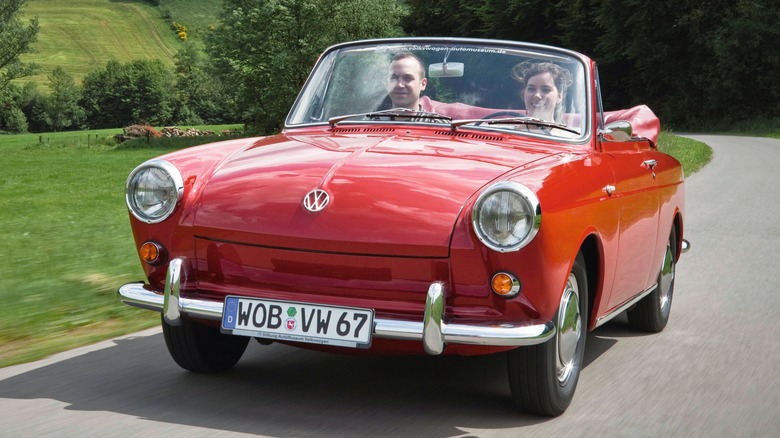
This is the 1961 Volkswagen 1500 Convertible, also known as the Type 3. This car is extremely underappreciated because it never went into production. Even though numerous prototypes of this vehicle were created, of which two survive in the museums of VW and its body-builder Karmann, Volkswagen apparently made the decision that two convertibles were enough at that point in time.
The convertibles in question were the original Beetle Convertible and the Beetle-based Karmann Ghia convertible. The 1500 Convertible, which would have been built by Karmann and was referred to internally as Karmann Ghia, did get pretty close to production, as evidenced by a U.S. brochure that promotes this open-top vehicle to an American audience.
The production versions of the Type 3 included a two-door sedan that the stillborn convertible was based on. However, it was not officially imported to the U.S. The Type 3 was instead represented on our shores by two other two-door versions. One was the sloping-roofed Fastback, a classic Volkswagen model that will look great in any garage. The other was the Squareback, VW's American marketing-speak for a wagon. Thanks to a new, flatter version of the trusty air-cooled VW engine in the Type 3's rear, it offered two trunks, one in the front and one in the rear. U.S. models of the Type 3 were sold here from 1965 through 1973, with the Dasher replacing it for 1974. Volkswagen considered the Type 3 to be successful in terms of sales, with over 2.6 million of them produced through 1973.
1961-69 Volkswagen Type 34 Karmann Ghia
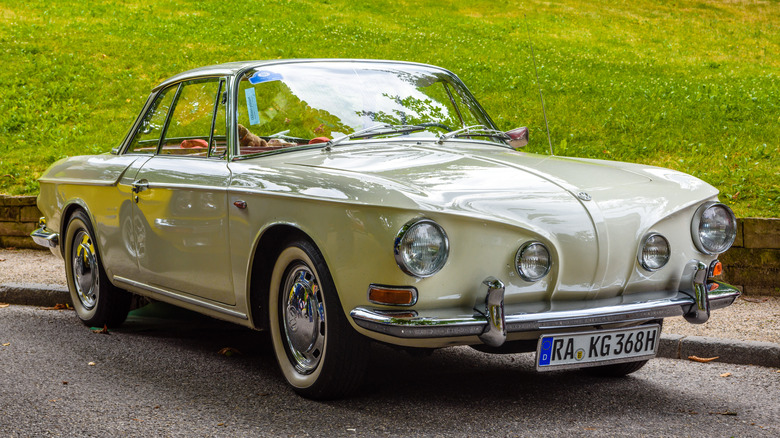
Unlike the VW 1500 Convertible above, the Type 34 Karmann Ghia, derived from the Type 3 platform, did go into production. However, it was never officially imported to the U.S., with only 42,498 produced for the rest of the world from 1961 through 1969. Compare this to the more than 445,000 Type 14 Beetle-based Karmann Ghias produced.
Considered one of the best-looking Volkswagens of all time, the Type 34 Karmann Ghia was styled by Ghia's Sergio Sartorelli, who was assisted by American Tom Tjaarda. Its running gear came directly from the Type 3, with the exception of a different cooling fan that made the overall size of the rear-mounted, air-cooled engine smaller. This left room for a small amount of trunk space over the engine, a feature that the larger Type 3 models also offered.
Over the years, numerous upgrades were made to the Type 34 KG. These included power for the steel sunroof option in 1962, a more powerful engine in 1963, a 12-volt electrical system in 1966, front disk brakes in 1967, and hazard warning lights in 1968. Another thing that the Type 34 Karmann Ghia had in common with the larger versions of the Type 3 was the development of a convertible version that never came to pass, which also happened in 1961. A total of 16 of these were made before production was canceled, largely due to the increased costs that would be necessary to make it torsionally rigid once the top was chopped off. These are very rare birds.
1973-74 Volkswagen Thing
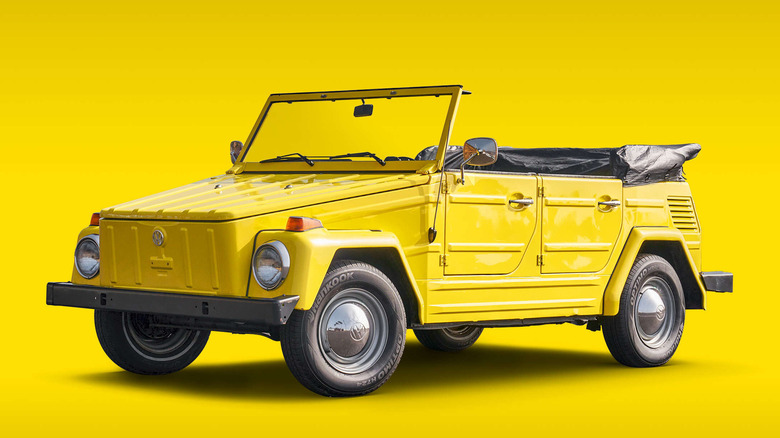
The Volkswagen Thing, which was much cooler than people realize, was the civilian version of a military vehicle, the type 181, created by VW for the German Armed Forces. The original design came from a vehicle designed by VW engineers in Australia, the VW Country Buggy. It was a stripped-down four-door vehicle with removable and interchangeable doors on each side, a folding windshield, and corrugated body panels.
Volkswagen claimed that the Thing could be cleaned out with a hose. It was based on traditional VW components, including the Volkswagen Beetle's 1.6-liter, 46-horsepower, flat-four air-cooled engine and four-speed transmission. The Thing used the chassis of the pre-1968 VW Microbus. Acceleration was leisurely, at over 23 seconds for the zero-to-60 mph run.
The VW Thing had an unconventional appeal which you'd think would attract young people, but it was priced out of the reach of most of them. At a price of $3,150 in 1973, the Thing cost $1,000 more than a 1973 VW Beetle. This limited sales, with under 26,000 sold in the two years it was available here. VW Things for the U.S. market were actually imported from Volkswagen's plant in Puebla, Mexico. This made it the first-ever vehicle to be built in Mexico and then shipped to the U.S. Another threat to the Thing came from safety crusader Ralph Nader, who claimed that it did not meet vehicle safety standards. More stringent safety regulations for 1975 spelled an end to the importation of the Thing after the end of the 1974 model year.
1972-74 Volkswagen 412 E
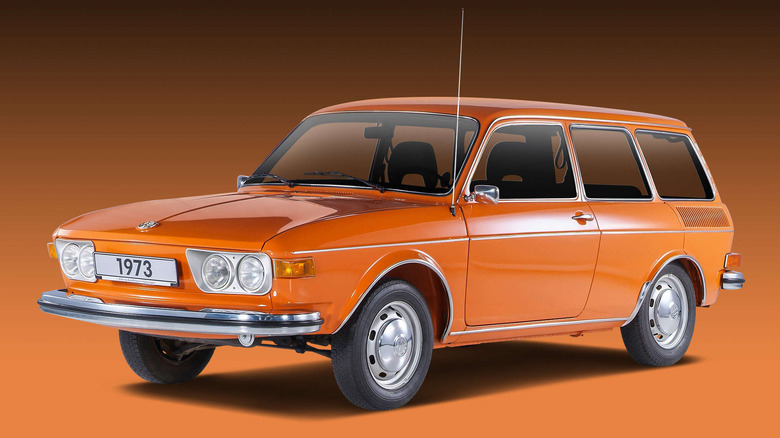
The Volkswagen 412 E was the upgraded and final version of VW's Type 4 platform, its largest and most luxurious car to use Volkswagen's air-cooled flat-4 engine. The Type 4 initially arrived in the U.S. in 1971 as the Volkswagen 411, with a fuel-injected 1.7-liter flat-four behind the rear wheels, producing 85 horsepower. Fun fact — this was the same engine used in the mid-engined Porsche 914.
The VW 411 was upgraded in 1973 to the renamed 412 E model, shown above, boasting both a restyled front end and a larger, 1.8-liter engine that, thanks to emission regulations, put out four horsepower less than the 1.7-liter engine of the previous 411. Other improvements included upgrades to the door compartments and armrests of the 412 E.
The VW 412 E was the last attempt by Volkswagen to resuscitate the rear-engined, air-cooled layout that had taken it this far but was reaching a dead end, particularly when it came to controlling the emissions of said air-cooled engines. Ironically, the VW 412 E's final year on the market was 1974, the same year that the front-wheel drive, water-cooled Volkswagen Dasher would appear beside the outgoing 412 E in VW showrooms nationwide. The tide had turned, signaling that the close of the air-cooled era was near. The start of Volkswagen's new age as a manufacturer of seriously competitive water-cooled vehicles had begun.
1974-81 Volkswagen Dasher
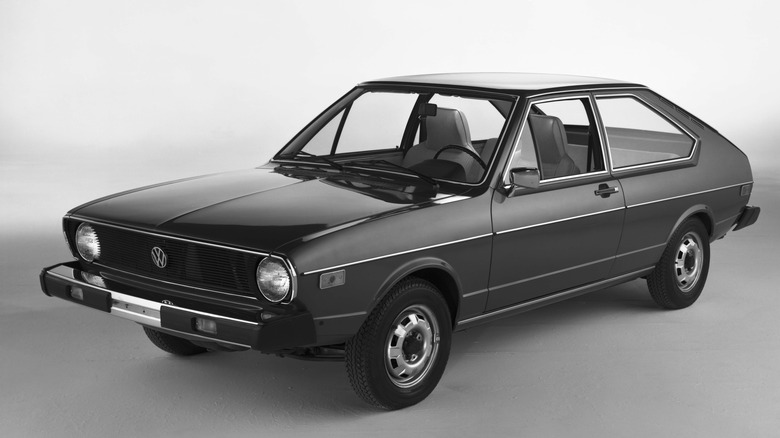
The Volkswagen Dasher, this car's Americanized name, was the first chapter in the evolution of the Volkswagen Passat. This was VW's first front-wheel drive car sold in the U.S., as well as its first water-cooled vehicle to come here. Derived from the Audi 80, or Fox in the U.S., it was also the first Volkswagen to be styled by Giorgetto Giugiaro. He would also go on to work his magic on two subsequent VW models, the Golf/Rabbit and the Scirocco.
Pitched at a more upscale audience than the bargain-basement Beetle, the Dasher two-door had a starting price of $3,975 compared to $2,625 for an entry-level Beetle. For that, you got a longitudinally-oriented 1.5-liter inline four producing 75 horsepower and strut suspension all around. Body styles included a two-door sedan, a four-door sedan, and a four-door wagon. With a curb weight of only 1,935 pounds, Car and Driver's June 1974 test of the VW Dasher produced a zero-to-60 mph time of 10.6 seconds and a quarter-mile time of 17.8 seconds at 76.9 mph, with 0.85g roadholding. For the American market, buyers also got the distinctive round headlights and reinforced safety bumpers front and rear.
The significance of the Volkswagen Dasher was that it signaled in no uncertain terms that VW had moved beyond the limitations of the Beetle and its rear-engined, air-cooled architecture. Coming 25 years after the first Beetles were imported into the U.S., the VW Dasher staked a claim for all of the Volkswagen sedans that would eventually follow it.