

The Most (And Least) Reliable Dishwasher Brands, According To Consumer Reports
We may receive a commission on purchases made from links.
When buying a new dishwasher, shoppers are often drawn to sleek finishes, futuristic cycles, and high-tech features. It's easy to focus on aesthetics and technology, but while curb appeal matters, consistent performance is the most important factor. A dishwasher is a kitchen appliance designed for functionality, and reliability should be your number one priority over cosmetic extras.
Before buying, look past the marketing hype to determine which models are truly built to last. To give an unbiased, data-driven assessment, Consumer Reports surveyed over 66,000 members, gathering real-world insights on reliability and owner satisfaction across every major brand. Their findings were a starting point, but we conducted even more research to find common issues or positive notes among current model lineups.
The results clearly show that a high price does not guarantee quality, nor does a familiar luxury nameplate mean flawless performance. You may be surprised that some of the most expensive luxury brands ranked near the bottom for reliability, while some budget-friendly options were absolute workhorses, delivering clean dishes for years without issue. Starting from the least reliable to the most, this list will help you decide how to spend your money wisely on a machine that performs, regardless of its price tag.
Least Reliable: Viking
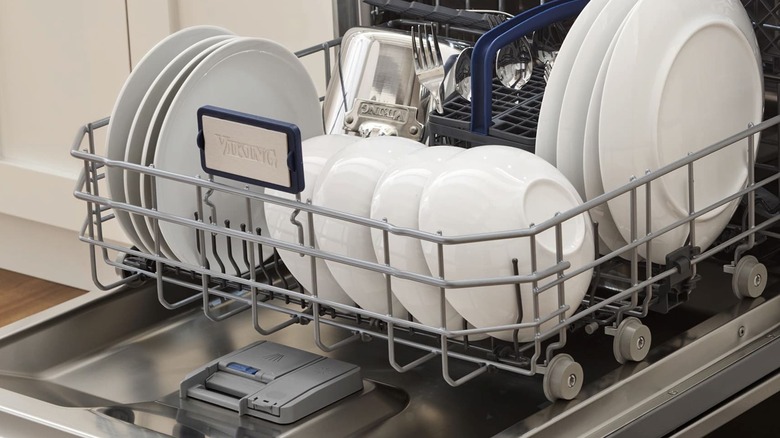
Viking holds the title of the lowest-rated brand across the entire survey. Consumer feedback suggests these units are incredibly prone to problems. Viking has issued wide-scale recalls in the past for failures that include the door, electrical glitches, and terrible drainage. Other defective Viking appliances, especially refrigerators, have led to major lawsuits and settlements as well. This is shocking when contrasted with top names like Bosch and Miele, the brands rated most reliable by Consumer Reports, which offer readily available consumer models with much better safety records.
This is a massive difference in quality, even in the luxury appliance market. The cons of these dishwashers tend to be how often repairs are needed according to consumer reviews. Some have reported that the LED displays lose lights or burn out quickly, and the control panels are prone to breakage. Additionally, the door latch mechanisms sometimes don't engage, stopping the wash cycle from starting.
Then there are the poor drainage defects that usually happen because of internal mechanical issues, like hoses disconnecting or pumps failing, which leads to serious leaks that can damage kitchen flooring and cabinetry. Even though the brand pushes features like CornerClean technology and Quiet Clean insulation, the brand stays at the bottom of the rankings.
Cove
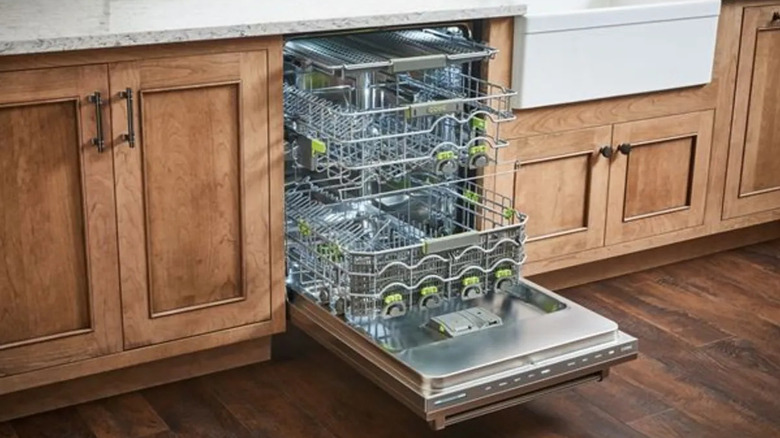
Cove is the dishwasher division of the Sub-Zero Group, which also makes Sub-Zero fridges and Wolf cooking gear. Though these luxury dishwashers start around $2,600, their reliability should make you question that price. Consumer Reports put Cove in the lowest category alongside much less comparatively expensive brands like Samsung and Electrolux.
Concerns come from major recalls, including one for heating elements that posed a fire hazard. There's also the mechanical failures, like those associated with the brand's drain pumps and control boards, which can be an expensive fix if your dishwasher's warranty has expired. For a luxury product, the breakdown rate is too high, and it would mean a lot of money spent on repairs. While you should keep an eye out for regular signs your dishwasher is about to break, these issues are likely to lead you to calling for repairs even sooner than that.
That doesn't mean there are no positives. The machine has a premium feel and features, like a quiet 41 dBA operation, four-stage water filtration, and adjustable interior with up to 43 spray jets. Cove also offers a strong 5-year warranty and responsive customer support, often covering fixes that cheaper brands would refuse.
Electrolux
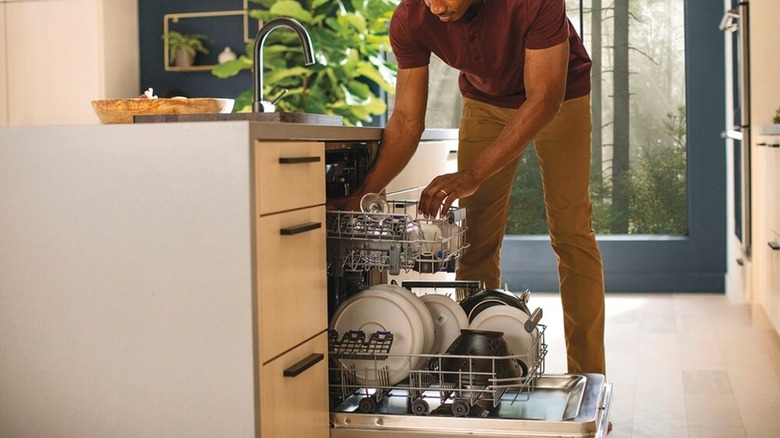
Electrolux, the parent company of Frigidaire, struggles as Consumer Reports ranks them near the bottom, placing them in the "Least Reliable" group alongside brands like Samsung, Viking, and Cove. Consequently, Electrolux dishwasher models are not recommended. If you do have one, make sure to keep the warranty handy for issues, which should be fine if you bought it from a proper seller; online retailers are often not a good idea. In fact, SlashGear has a detailed guide on which home appliances you should avoid buying from Amazon and why.
Despite premium pricing and sleek aesthetics, high failure rates undermine the value. It has persistent design flaws, like water probes prone to gunking up with grease. The machines are often difficult to service compared to domestic brands like Whirlpool or GE. Some reviews have even pointed out that parts are expensive and that owners have had to make frequent, frustrating calls to customer service.
While other brands have redeeming qualities, like smart features or other parts that work well, Electrolux sits in a place where it is hard to recommend at all. While Electrolux is not at the absolute bottom of the rankings, it is dangerously close. There needs to be a big turnaround for the company before this brand can be considered durable.
Samsung
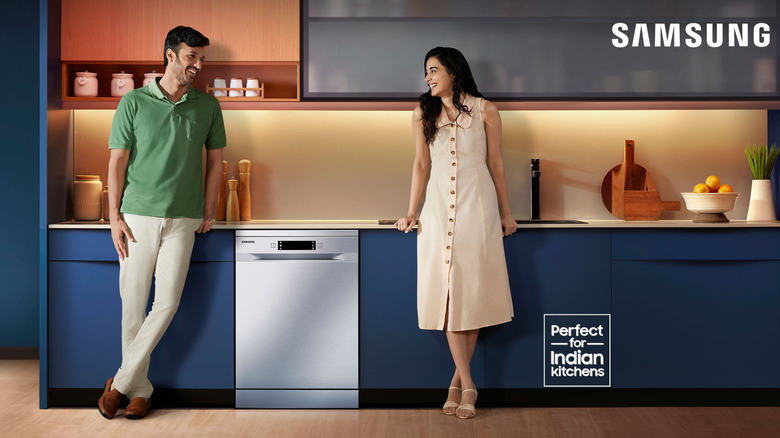
Samsung appliances usually have a modern design, but don't have the longevity. Consumer Reports identified Samsung as one of the least reliable dishwasher brands, near the bottom with Electrolux and Cove. A major contributor to this reputation was Samsung's WaterWall linear wash system, which uses a complex, sliding spray bar that created a sweeping wall of water.
The concept is innovative, but the execution was problematic. Tests showed high-end models struggled with heavy soil, causing the filter to clog and the machine to stop mid-cycle with error codes. Also, the sliding mechanism was found to be prone to failure.
Another current feature on many Samsung dishwashers is StormWash (Zone Booster), a dedicated spot on the lower rack with extra water streams for heavy pots and pans. While it is useful when it works, it is difficult to fix. Troubleshooting these digitally advanced machines is difficult, often needing many tedious button presses to access its diagnostic mode.
KitchenAid
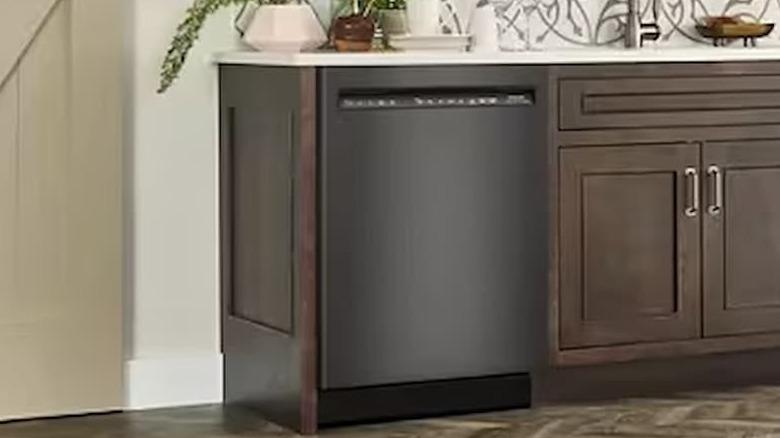
KitchenAid occupies a position as the top-tier mass-market brand for the Whirlpool Corporation. While sometimes costing more, KitchenAid has a reputation for having both great interior design and capacity. It's a solid, well-known brand, and made it to the middle-of-the-pack of the Consumer Reports ranking.
The racks on KitchenAid dishwashers are something to consider if you're shopping for this brand, especially the FreeFlex Third Rack. This versatile basket is angled and deep, accommodating more than just flat silverware. The FreeFlex version has its own rotating wash jets and drying bar, giving a thorough cleaning and freeing up lower basket space for larger pots and pans.
KitchenAid models use the Advanced Clean Water Wash System, a microfiltration setup that continuously removes food particles from the wash water. This lets them skip noisy hard food disposers, helping maintain a reputation for quiet operation. Many of the popular KitchenAid 400-series models run at 44 dBA, with some units reaching 39 dBA, making them some of the quietest available. Unlike dishwashers that rely on condensation drying, KitchenAid uses ProDry, a heated drying element and fans to make sure things dry well.
Hotpoint

Hotpoint is the budget-tier option in the GE Appliances portfolio, operating as a subsidiary of Haier, targeting the entry-level market. While lacking the flashy looks of or advanced features of other units, Hotpoint made it to the mid-range of the Consumer Reports ranking. This reliability comes from keeping the design mechanically simple, avoiding complex sensors and delicate touchscreens. That also helps the brand keep functional consistency at a bargain price.
A new Hotpoint dishwasher is great for landlords; it usually costs between $350 and $400, a fraction of the price of higher-rated options. This is an accessible workhorse for a working kitchen without draining the bank account. While a Hotpoint dishwasher won't increase the resale value of a high-end condo, it gives you the necessary utility for rental properties where low upfront cost and easy replacement are key.
Remember that the machines are basic and noticeably loud. The standard Hotpoint operates at around 60 dBA. Features like stainless steel tubs or adjustable third racks are usually absent; instead, you get a plastic interior and a simple interface.
LG
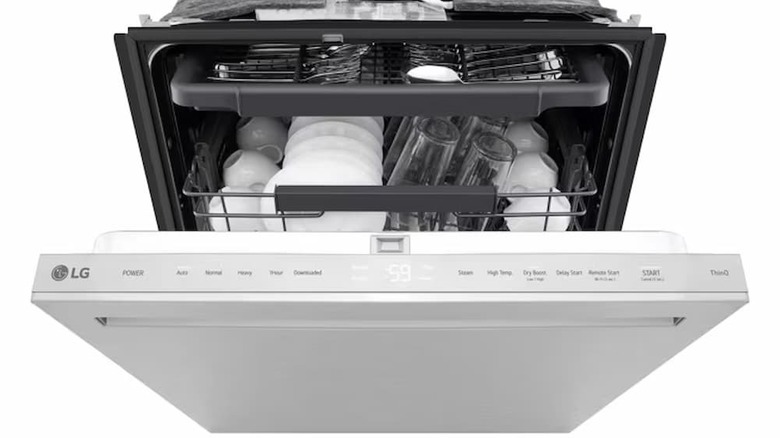
LG dishwashers are generally tech-heavy because they integrate smart home capabilities and advanced motor designs. While Consumer Reports often gives them above-average reliability scores, keep in mind that repairs can be difficult due to complex, damage-prone electronics like control boards and difficulties in finding qualified technicians. This complexity can make or break your budget, depending on which components fail.
LG uses a unique QuadWash system with four multi-motion spray arms that spin and rotate to make sure it gets complete coverage, which should remove the need for pre-washing. Dishwashers tend to be more sanitary than handwashing, so you're still getting a good clean even without spending time cleaning your dishes in the sink before hand. The QuadWash setup is powered by an Inverter Direct Drive Motor, which reduces friction, cuts energy consumption, and allows many models to run quietly at around 40-48 dBA.
Many LG models come with TrueSteam technology, which uses high-temperature steam at the end of the cycle to penetrate caked-on food and reduce water spots on dishes and glassware. Newer units also use Dynamic Heat Dry features, combining a heating element and a fan to circulate hot air for more effective drying, especially for plastics. These machines often come with Wi-Fi connectivity through the LG ThinQ app for monitoring cycles and diagnosing minor issues.
Whirlpool
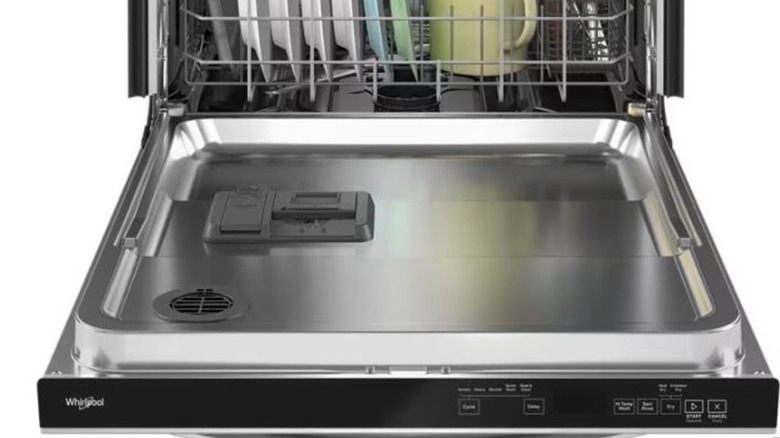
Whirlpool is a well-known, reliable American brand. A major advantage is logistics. Parts are easily available, as 80% of the appliances the company sell come from U.S.-based factories. Since Whirlpool Corporation also makes Maytag, JennAir, and KitchenAid appliances, repair professionals nationwide are typically well-versed in their simple internal setup, making repairs easy — a clear benefit over some imported brands.
Whirlpool units are generally affordable, with popular models like the WDT730HAMZ costing around $530 to $600. For usability, the AnyWare silverware basket can be moved to three different positions, freeing up space on the main rack for larger items. Many models also come with soil sensors that automatically adjust the wash cycle to save water and energy.
Whirlpool usually comes with a heated or fan-assisted drying option for better results on plastics and glass. Also, while more expensive models have stainless steel interiors, budget-friendly Whirlpool units may use plastic units. Despite that, Whirlpool's low starting price, solid cleaning power, and widespread service technician support make it a really smart option to buy.
Maytag
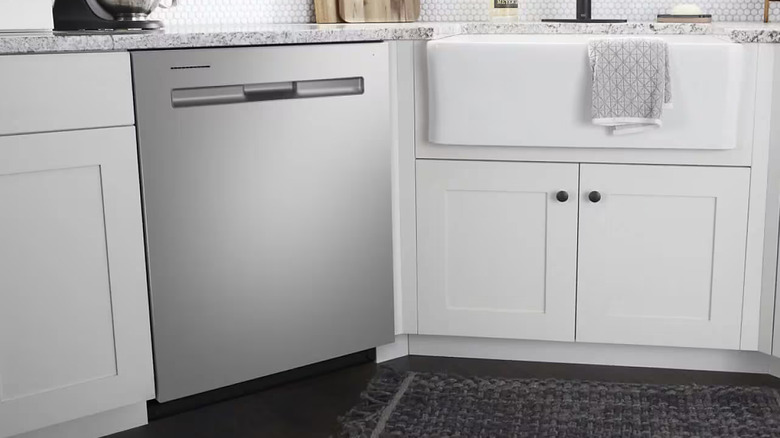
Maytag, a legacy brand under Whirlpool Corporation, is known for its rugged, heavy-duty appliances. Unfortunately, it sits just outside of the top five, but it still outdoes luxury brands like Viking and Electrolux.
Maytag's defining feature is how well it gets rid of food waste. Unlike most makers that have passive fine-mesh filters for quieter operation, Maytag use a Dual Power Filtration system. This mechanism acts as a built-in garbage disposal, using a four-blade stainless steel chopper at the bottom of the tub to disintegrate waste particles.
Maytag machines feature high-temperature cycles like PowerBlast use high-pressure jets and increased temperatures to destroy stubborn, stuck-on food like egg yolks and peanut butter, emphasizing the machine's workhorse nature. To back this up, Maytag offers a 10-year limited parts warranty covering the chopper blade, the stainless steel tub, and the nylon racks. While focusing on heavy-duty components means sacrificing the ultra-customizable racking or near-silent operation of its rivals, it's a huge advantage for anyone who wants reliable cleaning power.
Midea
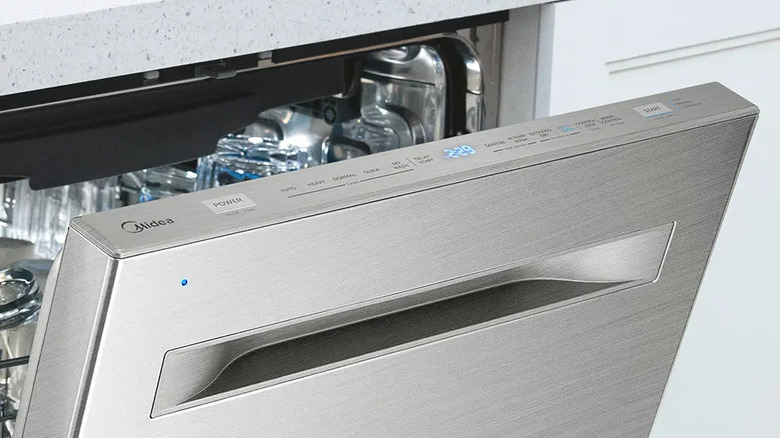
Midea is a manufacturing giant that builds appliances for many other brands. While Midea ranked less reliable than the brands mentioned below, it remains a top contender. The price is a major selling point. Models often cost less than $500, making them ideal for first-time homeowners or rental properties. Some capable models, like the MDF24P2B, have been found for as low as $299.
Despite the low investment, they are simple, energy-efficient machines. Specific models like the MDT24P3CST have earned Green Choice designations, this same dishwasher ended up on our list of cheap but high quality dishwashers. Features usually include stainless steel interiors, third racks, and extended drying options. They are worth the price, but they don't have the premium feel or quiet operation of brands like Bosch or Miele.
Midea dishwashers are typically louder compared to the top-rated Bosch (see below) at around 45 dBA or louder, which can be noticeable in an open-concept kitchen. For those who like utility over luxury, Midea has effective designs at a fraction of the cost of its competitors, like doors that auto-pop open for drying available on their portable countertop dishwasher.
Beko
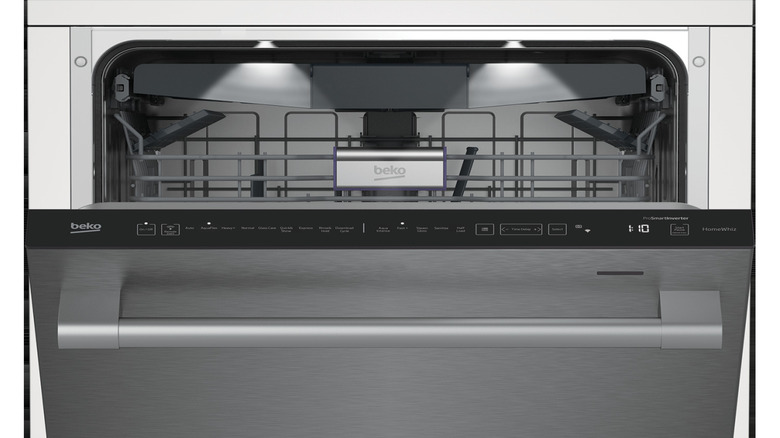
Beko is a Turkish company that is a value European brand, but that does not mean it is made with a low-standard mindset. Beko is a cost-effective alternative to expensive German products, keeping high-end aesthetics like fingerprint-free stainless steel and a strong build quality. Beko's unique CornerIntense technology uses a rectangular-axis spray arm to reach the dishwasher tub's corners, making sure all dishes receive equal water coverage.
Beko dishwashers come with features usually found on pricier machines. For example, SilentTech insulation offers quiet operation (39 to 48 dBA), and AquaIntense provides a power zone for scrubbing heavily soiled pots. This ranked really high with Consumer Reports, which should tell you about the power, but the performance of the features speak for themselves.
The brand addresses common kitchen issues with IonGuard technology, which uses negative ions to neutralize odors without chemicals, and SelfDry, an auto-open door feature that uses ambient air for better drying. Beko supports its appliances with a 2-year warranty, double the standard one-year coverage. Many models carry Energy Star Most Efficient ratings, so they are easy on your electricity budget too.
Thermador
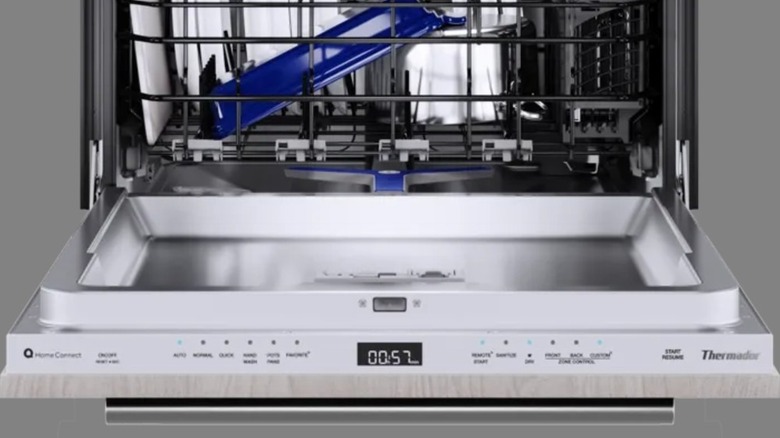
Thermador is part of BSH Home Appliances, the same German parent company as Bosch and Gaggenau. Thermador dishwashers share components with Bosch, using the same platform and U.S. manufacturing facilities. While Bosch targets the mass premium space, Thermador seems more like a luxury appliance brand focused on entertaining.
Thermador's Star Speed cycle is a feature that uses a constant flow of hot water to wash a full load in only 20 minutes, great for rapidly turning over dishes during a party. For immediate use, StarDry technology uses the natural mineral Zeolite to absorb moisture and convert it to intense heat. This effectively dries plastics and hard-to-reach crevices without a standard exposed heating element that could damage delicate items. Since you always want these kinds of features working well, it is an easy reminder that when it comes to dishwashers there are some kitchen appliances you should always buy new instead of used; electric ranges and microwaves are fine secondhand, but a new dishwasher (especially with features like StarDry and Star Speed) will always outperform an older one that's been previously owned.
The interior design of Thermador dishwashers caters to high-end kitchens and wine enthusiasts. Star Sapphire models come with a specialized glass care rack that safely holds up to 18 wine glasses. Features like the Time Remaining PowerBeam, which uses a built-in light to project the cycle countdown onto the floor of your kitchen, add even more quality of life upgrades for this 42 dBA whisper-quiet dishwasher. These dishwashers also include the Chef's Tool Drawer, a flexible third shelf for oversized utensils, freeing up space in the lower baskets.
Miele
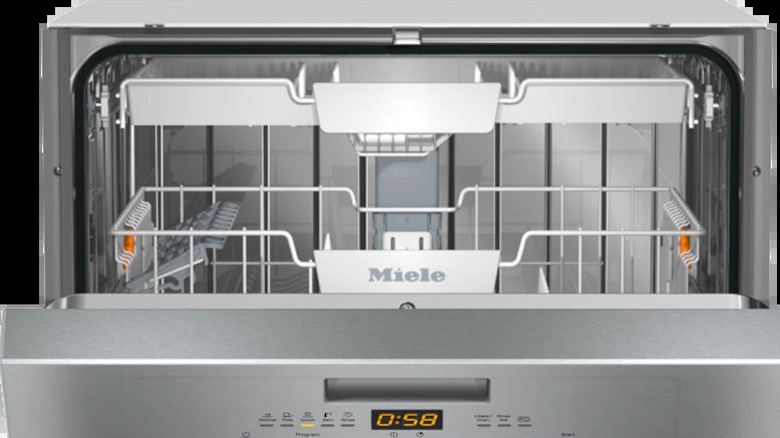
If Bosch is the reliable Toyota of dishwashers, Miele is the Mercedes. It's a luxury German brand engineered for peak performance and is built to last. The company designs and tests all of its home appliances for a 20-year lifespan, which is much longer than the industry standard. It produces almost all internal components, like the spray arms and pumps, in company-owned factories to maintain quality control.
The biggest feature is the AutoDos system with the PowerDisk, found on the G7000 Series models. This system automatically dispenses the exact amount of detergent needed for the chosen cycle and soil level. A single PowerDisk holds enough soap for about 20 cycles, letting the dishwasher run for weeks without measuring powder or fiddling with pods.
For drying, Miele uses an AutoOpen feature. Once the wash cycle finishes, a motorized latch automatically opens the door slightly. This releases hot steam and allows cool, dry air to circulate, stopping moisture from condensing on dishes. This effectively dries hard-to-dry items like plastics without using a potentially damaging heating element. You also get three full-size spray arms and a highly adjustable 3D MultiFlex rack for utensils.
Most Reliable: Bosch
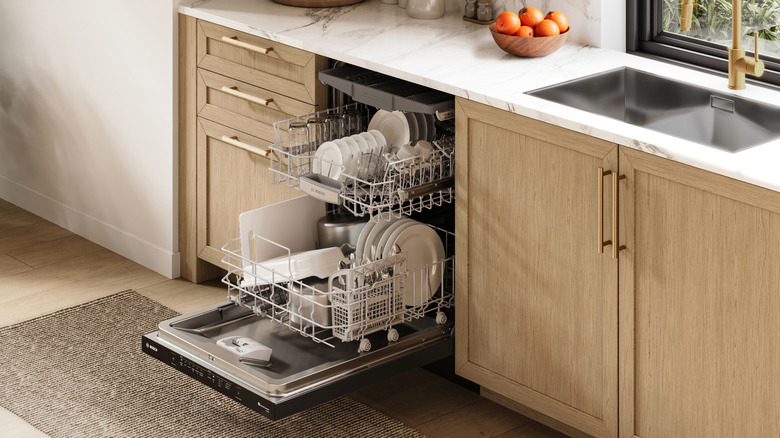
Bosch dominates the current dishwasher market and secured the top spot in Consumer Reports' reliability ranking. The brand is so good that it even ended up in the coveted #1 spot on SlashGear's dishwasher brand ranking list, and it makes sense because it is famous for its whisper-quiet operation. Many models are 48 decibels (dBA) or lower and this is done using an EcoSilence motor system to minimize friction and vibration. Meanwhile, additional features like AquaStop leak protection help Bosch dishwashers keep their coveted number-one spot.
With Bosch being a European brand, its dishwashers tends to align with the typical European manufacturer design aesthetic of being smaller, more compact, and more energy efficient, sometimes at the cost of being able to dry dishes adequately. However, Bosch addresses this weak point, especially when it comes to drying plastic dinnerware. Higher-tier models like the 800 and Benchmark series have CrystalDry technology. This patented system uses natural minerals to absorb moisture, transforming it into heat to circulate back into the tub. This makes things 60% drier than a Bosch dishwasher without the technology.
While standard Bosch models have a basic cutlery tray, higher trims have a MyWay rack. This upgraded, flexible third rack is deep enough to hold dishes like cereal bowls and ladles, offering more utility than just flatware. Some models also have a PowerControl spray arm, that you can control through the brand's Home Connect app that let users target specific wash zones in the lower rack.