

2025's Most Powerful Militaries, Ranked
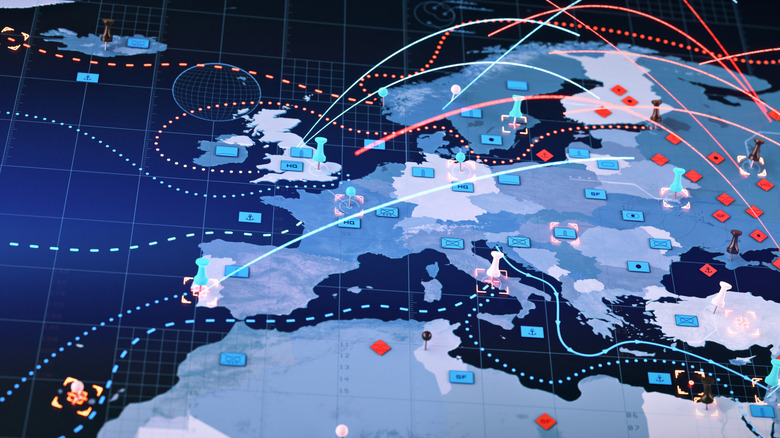
Nation-states blend diplomacy with hard power to pursue their strategic interests abroad. One of the greatest military and diplomatic adversaries the U.S. deals with today is China. The United States and China clash in several areas, especially Taiwan and the South China Sea.
China's "nine-dash line" envisions a sprawling maritime territory, and the nation is consistently engaged in activities to realize this vision. American foreign policy tools aimed at countering this desire include a partnership with Australia to supply mission-critical nuclear submarine technology to the ally (something that has angered another good friend in France).
China and the U.S. are considered the most powerful militaries on the planet, and Russia, despite its modest performance in the Ukraine war, remains a formidable military power. But there are dozens of other extremely well-armed nations that demand consideration, too.
Italy
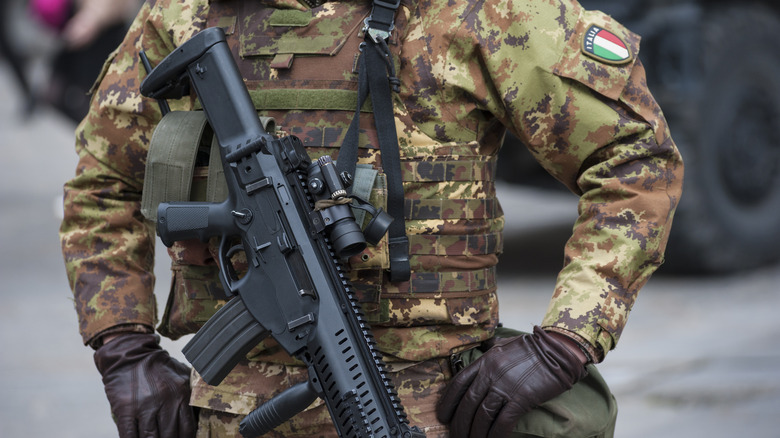
The European NATO member state lies strategically positioned as a go-between along the Mediterranean Sea. Italy is a member of the Eurofighter consortium, building advanced combat aircraft in coordination with Germany, Britain, and Spain. It was tied for 13th in 2024's top military spenders globally (down from 12th in 2023).
Italy fields the 20th largest armed force in the world, with 338,000 servicemembers. The Italian Navy has the seventh-highest total asset figure, including two aircraft carriers and over 300 vessels. Air assets are a similar story, with 800 aircraft in the Italian arsenal, placing it 12th globally.
However, unlike many nations with more total vessels in their air fleets, Italy's air combat tools are split neatly among its service branches, delivering critical aerial capabilities in important and varied ways. Comparatively, Italy fields almost as many Air Force-designated vessels as South Korea (with the seventh most total air assets), and more naval aviation tools. Italy also has roughly the same air assets as India, the 4th most prolific owner of total air assets. Italy is a linchpin NATO member and central to European readiness across the board.
Saudi Arabia
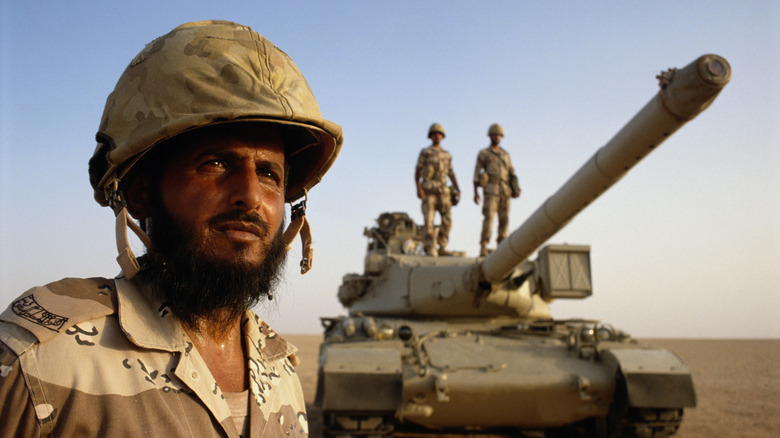
Saudi Arabia's military prowess comes in large part from the nation's coziness with the United States. Its military policy has long been something akin to a neutral observer, but the country has also exhibited a longstanding interest in stockpiling weapons and military systems. Saudi Arabia consistently purchases crucial equipment and armaments from the United States and elsewhere, and in the last decade, the Kingdom has become increasingly amenable to active engagement in foreign conflicts.
Saudi forces began a highly public bombing campaign throughout Yemen in 2015. Saudi Arabia has also been antagonistic with Iran, and the two countries actively engage in a convoluted cold war involving numerous regional players. The presence of an assertive Israel in the region helps tip the country's military priorities over the edge, keeping Saudi Arabia in a near-constant readiness stance.
The Saudi state spent an estimated $80.3 billion on military expenditures in 2024, making it the seventh highest spender that year (down from fifth in 2023). Saudi Arabia is essentially a non-existent exporter of military equipment and gets much of what it requires from foreign sources. Even without a native manufacturing program, Saudi Arabia is the 11th highest owner of air assets, with 914 total aircraft, mostly confined to its air force wing. It does not have a major naval presence, but with U.S. air tools at its disposal, the technological advantages that the country possesses are extreme.
Germany
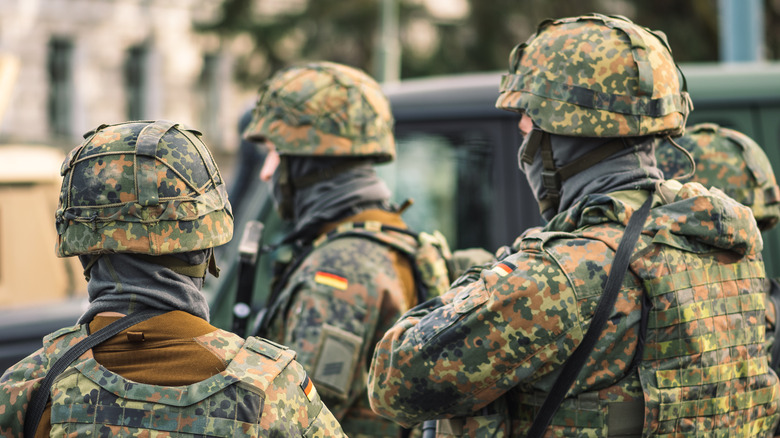
Germany is a country that's hard to pin down when it comes to military readiness. German armed forces have been a crucial point of contention in the postwar period. Until 1990, Germany was a two-state territory with limited military potential. Since reunification, Germany has remained averse to reestablishing military prominence, owing to its ghastly Nazi legacy.
However, since the Russian invasion of Ukraine, Germany has committed to building a stronger fighting force, capable of leading the way in the event of spillover. Newsweek reported in November 2025 that a new military service strategy unveiled by the government "seeks to create Europe's strongest conventional army." This will be underpinned by a surge in spending, with a target of $178 billion by 2029, and revamped troop readiness efforts.
These are sharply contracting features of the current state of German military readiness. In 2024, the state spent $88.5 billion on defense, placing it as the fourth highest. Adding nearly $100 billion to the military budget would catapult Germany up to third, passing Russia in the process. Ahead of a military buildup, Germany remains a strong fighting force. The nation possesses 618 air assets, including nearly 400 embedded within its air force. Germany maintains 296 tanks and outfits 183,000 servicemembers with another 34,600 in reserve. The state is also home to Europe's largest collection of foreign-based American servicemembers, adding significantly to its defensive stance in the continent's core.
United Kingdom

While Germany maintains a fighting force on the rise, the UK is a nation in decline across its military ranks. Britain is a crucial strategic ally within the NATO collective, and it participates in other international cooperation efforts beyond the battlefield. The UK is a keystone member of the Eurofighter program, and it's a key player in the UKUSA Agreement (known colloquially as the "Five Eyes").
British military readiness is supported in large part by its air forces and nuclear technology. The UK also operates a pair of aircraft carriers. The country spent $81.1 billion on its defense budget in 2024, making it the sixth highest globally. Equipment stockpiling and skilled special forces operators underpin the country's specialized war capabilities. The United Kingdom has proved a diligent operator in the Middle East and Afghanistan alongside its American counterparts.
Even with plenty of strong points, the United Kingdom has plans to shrink its defense spending in the coming years. Matthew Savill at RUSI suggests that a longstanding trend in strategy has seen a downsizing effect in which volume has been replaced with heightened technological capabilities across the total arsenal. This positions the country as a frightening adversary, but one that cannot sustain its footing in a conventional war with a well-stocked combatant like China or Russia.
France
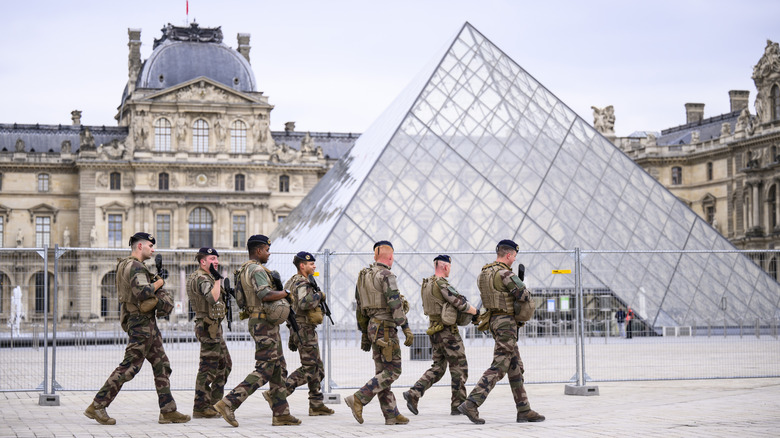
French military capabilities begin with a strong defense against conventional engagements in its 290-strong arsenal of nuclear warheads (placing it fourth in this regard). The European nation is tied as the eighth largest military spender (at $64.7 billion in 2024) and maintains a total air fleet of 972, placing it 10th in total air assets, but doesn't crack the top 20 in naval fleet size.
France maintains an armed services figure of 304,000 troops (23rd globally) with another 141,000 in reserve. Researchers at RAND suggest that France is highly capable as a coalition ally and could serve as a key member in a multipronged rebuff of enemy combatants because of its artillery stockpile and ground warfare tools, in particular. France is a nation with substantial special forces capabilities, and its success as a joint operator makes the country a capable augmentation to an allied effort.
France, like the UK, doesn't possess great longevity in its capabilities, but the French military remains strong. The nuclear-backed country is the fourth largest contributor to NATO's finances, and has been a key tentpole in supporting the Ukrainian military with crucial equipment transfers and an estimated $3.5 billion in total support as of late 2023. France's domestic aircraft industry is one of its shining gems. Some of France's fighter jets are exceedingly nimble, and others like the Bréguet Br 1150 Atlantique offer flight times of up to 18 hours, supporting anti-submarine warfare.
South Korea
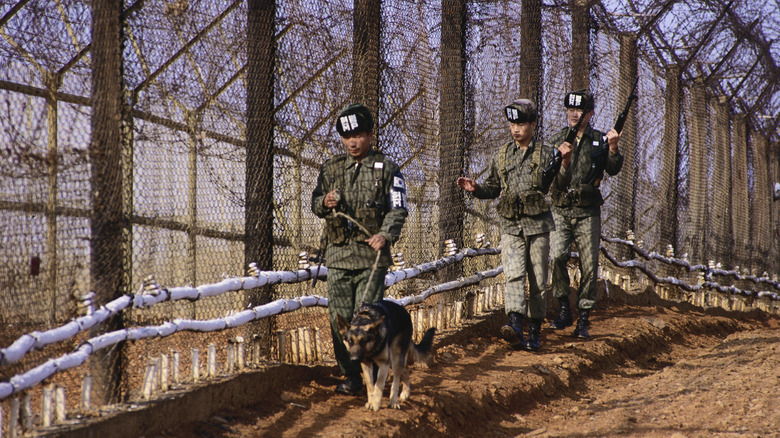
South Korea is the first country on this list with a genuine 'need' to spend substantial resources on its defensive capabilities. South Korea is the 11th highest global spender in terms of military budget numbers, with a total expense in 2024 of $47.6 billion. Amplified by American support, South Korea maintains a robust defensive posture to counter its neighbor to the north.
The two Koreas have been locked in a heavily armed standoff at the DMZ since its creation in 1953. North Korea operates a robust naval force with 505 total vessels in its arsenal (placing it third in counting stats here). DPRK also maintains 50 nuclear warheads in its total reserve of armaments as of January 2025. Ballistic missiles are a key strategic tool for payload delivery, and with a significant volume of them available in combination with tunnelling efforts, a hefty naval force, and 1.453 million soldiers, North Korea poses a lasting threat.
This has led to a country that prioritizes military service, with at least a short stint being mandatory for South Korean young adults. The country also maintains the second-largest reserve force in the world with 2.75 million members prepared to be called up to active duty. South Korea works closely with the United States on development projects and maintains the seventh largest air arsenal with nearly 1,200 air assets in total. The Navy hosts 200 vessels, including a pair of helicopter carriers, rounding out a competent defensive force with plenty of technological muscle.
Russia
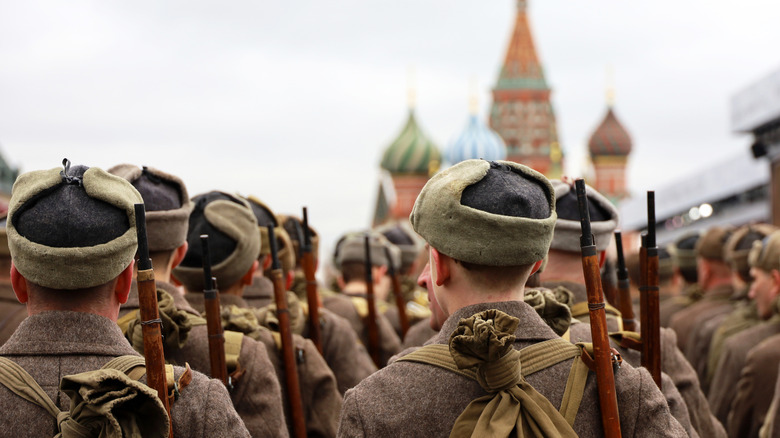
Russia's position here might come as a surprise to some. Classically, Russia has been considered alongside the United States as a supreme military power, but recent developments have shown the Russian military for what it really is: a limping shell of its former self with a fresh coat of paint slapped to spruce it up.
Russian air, tank, and naval assets are among the largest stockpiles in the world. Russia owns the largest naval fleet in the world, with 781 vessels, and is second in the other two categories. However, Russia's air assets are almost exclusively contained to its air force. Similarly, many of Russia's aircraft are old tools that can't perform against its adversaries' fifth-generation fighters. Russia has developed its own jet in this category, but with an estimated 44 Sukhoi Su-57s in service, there's not much to get excited about.
The war in Ukraine is demolishing Russian military capabilities at an alarming rate. The Guardian reported in June 2025 that Russian casualties had surpassed the 1 million mark. Countless equipment losses and a massive drain on the nation's stockpiles are accumulating, and Russian troop bonuses and death benefits started experiencing interruptions and downsizing amid budget constraints in early 2025. All signs point to a substantially diminished military readiness.
India
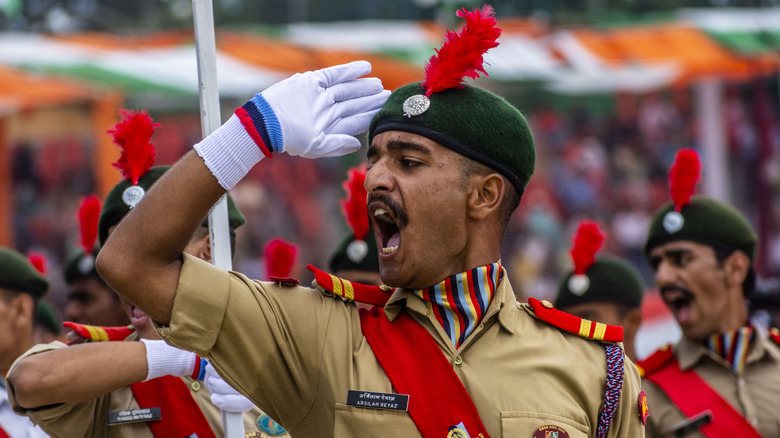
Alongside a retreating Russian capability comes a surging Indian one. India has long been adversarial with its neighbor, Pakistan, with the latest cross-border hostilities taking place in mid-2025. The two countries are virtually deadlocked in terms of nuclear firepower, with India maintaining 180 warheads and Pakistan possessing 170. The two countries have a historical beef dating back to the forcible bisection of the landscape and sectarian expulsions, but they don't pose a genuine ground war threat to one another.
China, on the other hand, is a far more antagonistic adversary. The pair scuffle over a hotly contested segment of the Himalayan landscape along their shared border, and both (along with Pakistan) make it into CSIS's missile threat assessment. Ballistic missiles come in a few key formats, and India is among the nations with a wide-reaching portfolio of strike options. Its longest range tools, the Agni-III IRBM, could strike targets as far away as Italy, Madagascar, or Sweden.
India is the fifth largest military spender of 2024 and sports the world's largest fighting force with 3.068 million soldiers and another 1.155 million in reserve. As an interesting aside, India holds the second largest collection of private firearms (behind the United States), with 71.1 million weapons in civilian hands. This is an interesting fact that helps bring invasion deterrence into greater focus. India's 2,296 air assets make it the fourth most prolific in this regard, while its 294 naval vessels place its numerical strength at eighth and its tank corps at fifth with 4,201 units.
China
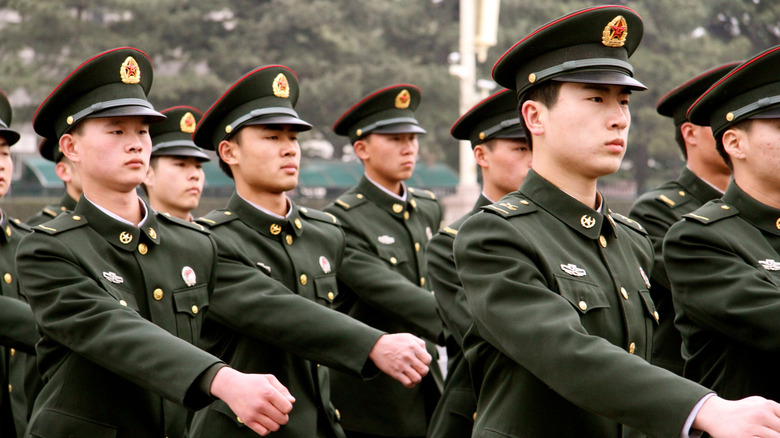
Chinese military spending in 2024 was estimated at $314 billion, making it roughly a third of U.S. output but more than double the next highest spender's figure (Russia). The Chinese way of war involves spatial suffocation. China benefits from the second-largest fighting force on the planet, with 2.535 million soldiers and 2 million reservists (tied third with Russia). It pours money and research energy into new fighting solutions and has developed its own fifth-generation fighter in the Chengdu J-20, a jet with at least 300 production units already in service. China also sends 2,545 soldiers to U.N. peacekeeping missions, making it the 10th highest contributor globally (as of 2019).
China operates the second-largest naval force with three aircraft carriers augmenting its 730-strong fleet. China also operates an estimated 564,000 fishing vessels, providing expanded cover to support routine movements in support of friendly vessels. China also enjoys a unique masking of its landscape through the use of secretive ground control points and proprietary projection tools that scramble outputs. This murkiness can shield critical infrastructure by obfuscating data collection efforts by its adversaries. China also features the third largest air asset total at 3,304 and maintains what is almost certainly the most capable stable of air elements in the Indo-Pacific region.
United States

The United States has long been considered to operate the most advanced and powerful military in the world. In the post-war environment, no country has developed a multi-pronged military threat to the same scale as the United States. At present, there are over 750 American military installations across the world.
The United States has by far the world's largest defence budget. In 2024, this was pegged at $997 billion. The U.S. also maintains the second-largest nuclear warhead arsenal. American conventional forces are also spread across a hugely diverse portfolio of capabilities. U.S. fighter jets are routinely some of the most cutting-edge examples flying, and the U.S. maintains more than 10,000 more air assets than the second-highest competitor (Russia). American aerial capabilities are also split across its four main branches, allowing for a barrage of combat readiness tools that other countries can't easily match. Naval prowess comes next, as the only nation possessing double-digit aircraft carriers in operation. Across the board, from logistical proficiency to armed force size and equipment availability, the United States stands as the pinnacle of military readiness and might.
Methodology and research notes
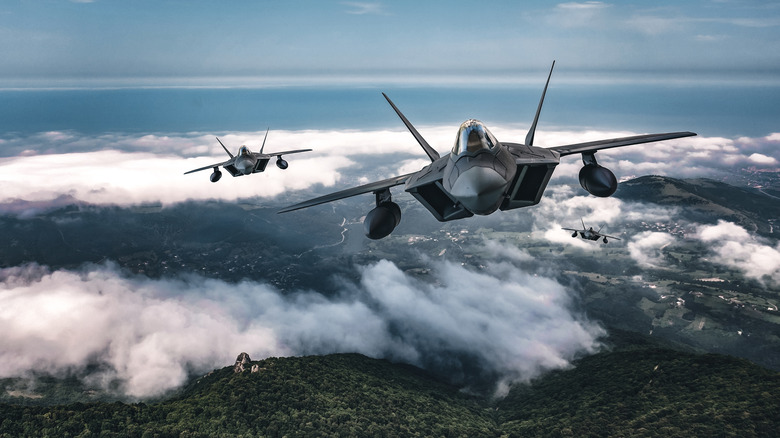
Total assets and spending commitments were central to this ranking. The most important metrics included nuclear armaments, technology, and the size of each military branch — army, navy, and air force.
We collected data from many sources. Missile threat information came from CSIS and ArmsControl.org. Statista provided data on nuclear warhead stockpiles. Tank reserves, naval, and air force capabilities were sourced from World Population Review. The World Bank provided troop count estimates, and ArmedForces.eu provided reserve force numbers. SIPRI provided spending figures, and a host of other sources were used for detailed analysis of each nation's capabilities.