

The Top Tech Trends We Expect To See In 2026
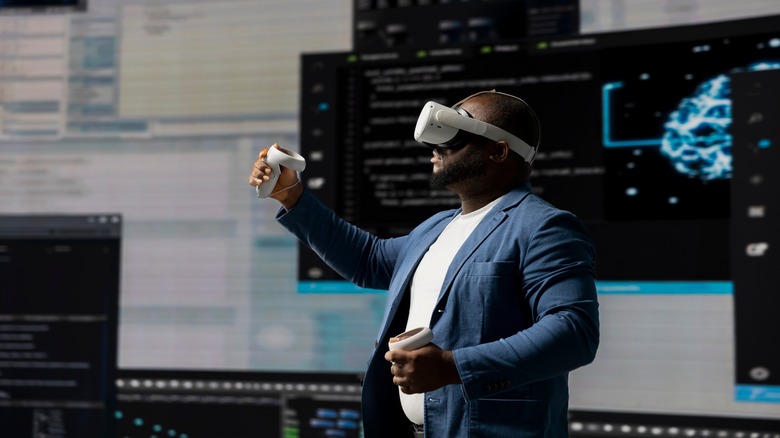
The world of tech is always one of the fastest-paced. New ideas and solutions are proposed to revolutionize the way consumers interact with the world around them every day across every sector. For instance, artificial intelligence has ushered in one of the most volatile eras of technological evolution since the dot-com bubble at the turn of the century, and the wheel of innovation doesn't appear to be slowing any time soon.
The evidence of this evolutionary strength is in the S&P 500 index; more specifically, the lopsided composition of its stocks' earnings. Although the index comprises the largest companies in the world by market cap, a new trend has appeared in the market. As of Q2 2025, the Mag 7 (Alphabet, Amazon, Apple, Meta, Microsoft, Nvidia, and Tesla) saw their earnings grow by 26% year-on-year, compared to just 1% for the rest of the index.
Advancements in AI have kept the industry booming. Given the breakneck speeds at which AI has progressed, it stands to reason that AI will shape the landscape of the broader technological economy by the end of 2026. Machine learning is already reshaping everything around us today, and we can expect that to continue. Now, we don't have a crystal ball, but here are our predictions of the emerging tech trends we expect to see by next year.
Agentic AI will knock LLMs off their perch

When OpenAI launched ChatGPT in December 2022, it radically changed the way the average internet user interacted with content online. From students engineering essays to software engineering upstarts trying to pass a HackerRank interview, users flocked to the generative AI to solve problems that would ordinarily take hours in mere minutes.
The technology has only evolved for the better — GPT-5 can excel in the Math Olympiad — and has branched out into other usable applications. Enter agentic AI, artificial intelligence systems that don't just follow preset rules or churn out data based on a specific task. They actively carry out tasks for you, acting autonomously and always adapting according to information they interact with. SlashGear presents a view of how agentic AI can change the world.
The technology is built on changing entire workflows to make life easier — whether that's through shopping for you, handling your IT support, or even analyzing your data. The point is, the use cases are broad, and it's only going to get better at performing these tasks if the rate of improvement of LLMs is any indication. Whether or not a lot of that is steeped in hype remains to be seen, but the vast potential should see it leapfrog regular LLMs in terms of usage.
Sustainable tech will get a lot of attention

While artificial intelligence has become the talk of the town with its bevy of applications, its cons need equal attention to better refine the tech. With several blue-chip companies lining up to build expensive data centers in the near future, it's more essential than ever before to develop ways to keep the Earth safe from AI's operating costs.
The Paris Agreement of 2015 is one of the markers for climate change control. However, despite commitments from world leaders, the current trajectory suggests the planet will warm by 3 degrees Celsius by the end of the century. That's not even accounting for the tangible strain that AI will put on the environment in the future, although we can paint a murky picture with current estimates.
According to the International Energy Agency, a ChatGPT request uses approximately 10 times more electricity than a regular Google search. Beyond electricity, water consumption is particularly concerning. Data centers generate heat and rely on water to cool their systems, and global AI infrastructure is consuming water at multiple times the rate of entire countries.
In light of these concerns of inefficiency and resource use, it's imperative for sustainable tech to become a frontier of global efforts to keep the planet thriving. You can expect sustainable tech to pop up in various forms in the coming years — whether that's through AI algorithm optimization or engineering renewable sources to handle the weight of AI's demands.
More consumers will seek out privacy-enhancing tech

The modern world is one with ever-shrinking privacy barriers. Companies use your data to inform ad campaigns, and some of it may even be sold if it falls into the wrong hands. While AI poses an entirely new privacy risk, it's not the only evolution that's driving the development of privacy-enhancing technologies (PETs). Cryptocurrency is gaining mainstream popularity, and there's talk of frameworks being built to tax these assets.
Already, we're seeing the seeds being planted to add another layer of user privacy in this regard. You've probably heard of Zcash, the asset whose value skyrocketed from $48 to $700 at its peak in under two weeks. The root cause behind this explosion is Zcash's "insurance" role against Bitcoin's relative transparency — users control which transactions they want on record. That means you can determine what you want to be taxed on, and you get to protect other sensitive information.
Zcash is merely a niche example. Roughly half the European Union's population uses some form of anti-tracking software to restrict access to their personal data. With AI continuing to break barriers of information storage and protection, it's a no-brainer for consumers to seek out new ways to protect their information. Thus, expect PETs to take center stage in 2026.
Interest in robotics will follow AI's trajectory
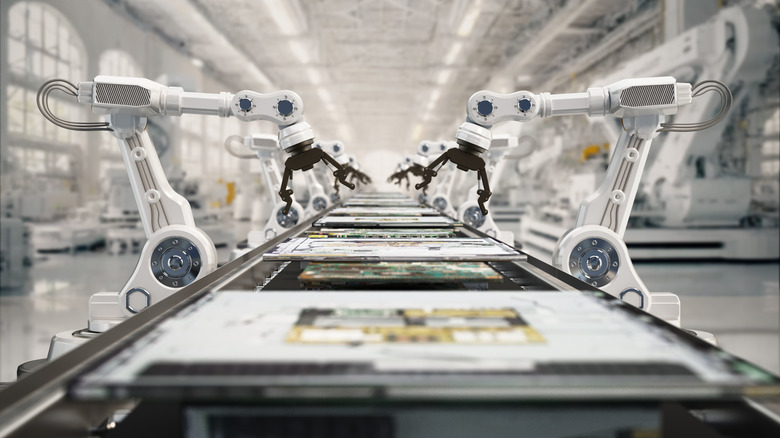
The current meta of artificial intelligence — LLMs, agentic AI, and the like — has overshadowed other forms of technology. Robotics is one of them, but attention is shifting back to futuristic robot design. Waymos are the most visible application of robotics at the moment — robotaxis that completed more than 250,000 paid rides a week in June of this year in just five American cities (San Francisco, Los Angeles, Phoenix, Austin, and Atlanta). Waymo's success wasn't overnight, although it was meteoric; the numbers gradually ticked up from 10,000 a week in 2023 to the hundreds of thousands seen today.
While Waymo's success is considerable and should inspire a healthy inflow of new ideas, the main catalyst for growth in the robotics industry will be the vested interest of the American government. The Trump administration is reportedly considering issuing an executive order on robotics next year to accelerate its development.
The idea behind this substantial support is to catch up to China and its manufacturing prowess — more robots were installed in Chinese factories last year than in the rest of the world put together. If America and the rest of the world are to catch up in this field, it'll be by way of intentional efforts (like the rumored executive order), which would make robotics one of the top industries in 2026.
AI cybersecurity will change the data protection game

We've talked at length about the applications of AI and the dangers of trusting it with your personal information. However, a new frontier of danger — and opportunity — has opened up in artificial intelligence in recent months. Last month, Anthropic (developer of the Claude AI system) released a report detailing the involvement of AI in cyberattacks. According to the details, AI didn't simply play the role of an advisor; it executed the attacks completely autonomously at the behest of certain actors.
It'll be interesting to see how companies respond to this evolving threat, but one thing is clear — the conventional way of defending websites and data will have to change to keep up with the times. That's already showing up in the way AI is being applied to cybersecurity. The old way of threat detection, for example, used to define threats as anomalies to a predefined set of rules. However, there was a risk of missing new patterns. Now, AI can flag unusual activity even if said actions aren't explicitly stated as risky.
So, where data protection was a comparatively rigid affair, AI cybersecurity will turn the field into a behavioral pattern monitoring game.
The complexion of extended reality will change significantly
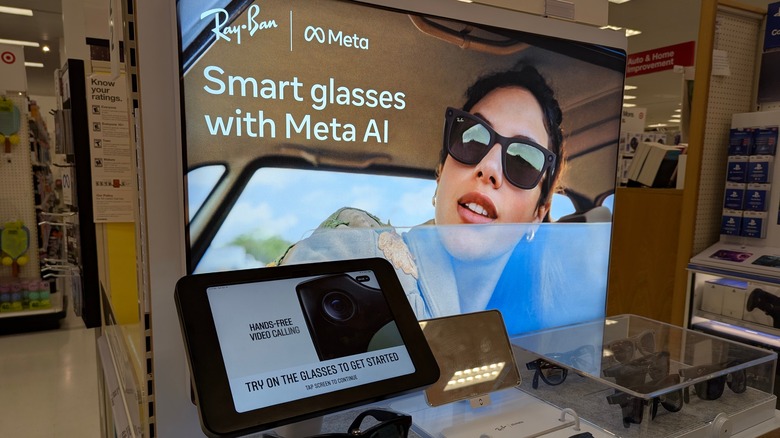
It wasn't too long ago that all anyone could talk about was virtual reality. Personally, at the height of the pandemic, the Oculus Quest 2 was my best friend — it felt practically glued to my head. At the time, it made perfect sense for reality to transition to the headset — the opportunities were just so vast. It's part of what informed Mark Zuckerberg's vision with the Metaverse; a vision that would cost Meta $77 billion before it decided to cut its losses.
Right after the announcement at the start of December, Meta's stock spiked 3% in mere minutes. Judging from the heavy losses and the unpopular nature of the Metaverse, virtual reality is no longer the face of extended reality. It simply never lifted off the ground the way it should have.
So, what's next for the field? Smart glasses, apparently. The tech has been out for a while now, but 2025 saw Meta's Ray-Ban smart glasses triple in sales in the first half of the year — and demand is still growing. With Meta's resources freed up from the Metaverse and competitors seeing the success it's having, it stands to reason that the smart glasses market will become even bigger than it is now, taking VR's place as the face of extended reality for the foreseeable future. However, privacy concerns pose a good reason to be cautious before buying AI glasses.
More companies will employ digital twins technology

Efficiency is the name of the corporate game at the moment. Whether that's manifesting through AI integration or some other means, companies are on the lookout for ways to perfect their workflows. The digital twin concept is one such method — and it works exactly how it sounds. A digital twin is a way of merging the physical world with the digital. A virtual clone, if you will. The purpose of the virtual clone is to simulate its real twin's performance in a set of conditions using real-time data.
Sounds like something out of a science fiction movie, but the technology has already been applied in various forms. For instance, NASA used the digital twin concept extensively to test and monitor the James Webb Space Telescope. The telescope's size did not permit certain tests to be carried out physically, so digital twins stepped in to model its behavior. Since digital twins are essentially a copy of the real-world object, engineers were able to run multiple simulations to figure out the best way to deploy the telescope despite the size restrictions.
The tech is spreading its wings beyond space — digital twins could also help detect health risks early. The time and cost-saving considerations of the technology are considerable, and as a result, the digital twin market is expected to grow by 35% by 2030, some of which should trickle down to next year.
Quantum computing will finally evolve from being purely cosmetic
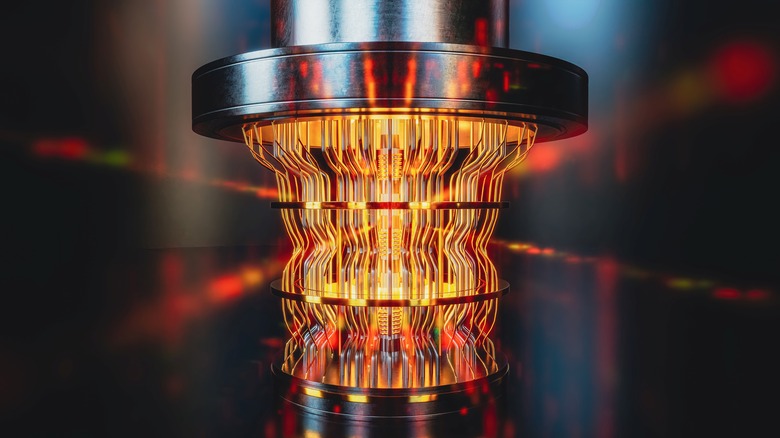
"Quantum" has been one of the favorite buzzwords of the last decade. In the case of quantum computing, physical evidence of the technology being applied has been sorely lacking. As you would imagine, that has left the credibility of the entire industry on loose soil. Quantum computing is an incredibly complex concept to understand — much less implement — but there's some recent progress that should spark interest.
Before this year, the most high-profile development in quantum computing came in 2019. Google claimed to have achieved quantum supremacy through Sycamore, its quantum computer. According to Google's claims, Sycamore performed a sampling task that would take state-of-the-art supercomputers 10,000 years in 200 seconds.
The specifics of this performance have been debated by experts in the field, with some alleging an exaggeration of Sycamore's speed. Couple that with the sentiment that quantum computing isn't truly useful yet — a feeling backed up by Nvidia boss Jensen Huang, who suggested that the tech is still about 15 to 30 years away — and you have an industry that is borderline cosmetic.
However, things are heating up lately. Last month, Quantinuum commercially launched its Helios system. As part of early testing, firms such as JP Morgan Chase, Amgen, and BMW are reported to have used the framework to conduct industry-relevant research. This development, coupled with the considerable influx of investment capital, points to a turning of the tide for quantum computing sooner than anyone expected.
Prediction market globalization

The gambling economy has since evolved from casino walls to phone screens, with consumers able to place wagers on virtually any sport. But who said gambling had to be restricted to sports? The rise of Kalshi and Polymarket this year has been nothing short of meteoric, and they're primarily fueled by the ability to gamble on literally anything you can think of. These companies are called prediction markets, and whether or not you agree with the ethics, they're here to stay.
It's not just the enlarged gambling landscape that makes prediction markets trendy. Polymarket, for instance, is built on blockchain technology, which means users can wager crypto or dollars on predictions. In a world where cryptocurrency is increasingly relevant, prediction markets are positioning themselves as a valuable real-world crypto use case.
The ethical lines are still blurry — suspicions of insider trading netting bettors millions of dollars place real question marks on its viability. Despite these risks, the market is expanding. Polymarket is onboarding U.S. users for the first time since it went offshore in 2022. Also, Kalshi and Polymarket both hit their highest-ever trading volumes last month. That's a trend that should continue as the market grows in 2026, as the industry leaders raise billions of dollars in funding and head for IPOs.
Hyperautomation fever will take manufacturing by storm

Just as with digital twins and robotics, the idea driving hyperautomation is simply efficiency. As robotics grabs government interest, hyperautomation is one of the closely related fields that should benefit from the attention. You might be thinking: What's the use of the "hyper" prefix?
Well, hyperautomation takes a high-level view — its primary aim is to create a cohesive workflow where machines communicate and adapt to changes without human supervision. Where automation narrows its focus to individual tasks, hyperautomation encompasses the workflow process.
Hyperautomation has many applications, but in light of the anticipated robotic boom, the manufacturing industry in particular could soon experience a fever-like spread of the technology. Robots already play an instrumental role in the supply chain, but the combination of robotic process automation, machine learning, and process mining that hyperautomation provides could significantly cut production time.
It offers this boon by removing bottlenecks through highlighting repetitive tasks that are ideal candidates for automation and connecting said tasks into workflows. This way, robots, AI, and humans can work together in manufacturing to churn out high-quality products at scale. And this potential isn't limited to factory floors — a McKinsey study reported that about 25% of the tasks in some occupations, such as CEOs, could potentially be automated, gains that companies will be eager to capture.
Asset and enterprise tokenization will grow even more

Digital currency is radicalizing the financial economy, and asset tokenization is a branch that has emerged from the frenzy. With the rise in relevance of cryptocurrency, tokenization is the next bus stop on the evolutionary route of the financial world. In a nutshell, tokenization is the conversion of a real-world asset (property, stocks, and even luxury items like watches) into a tradable digital token.
The idea behind this technology is to create a marketplace accessible to investors from all over the world — especially with the opportunity for fractional ownership that it provides. If you follow the crypto markets, you've probably heard of non-fungible tokens (NFTs). Remember the fuss about computer-generated ape images? Those are examples of artwork tokenization, and the applications are now spreading into more conventional investment engines. Tokenized stocks are forming another frontier — and in a different way than you'd think.
Decentralized exchanges like Hyperliquid are offering equity perps as a service, a way for customers to apply leverage of up to 50x their investments on the prices of stocks and indexes. Within 24 hours of Hyperliquid launching this service, it raked in nearly $100 million in volume. Although experts advise caution in navigating these new markets, there's clearly a demand for this type of asset tokenization that should continue as crypto goes even more mainstream.
The institutional hesitance to embrace cryptocurrency will fade

It's not so long ago that institutions basically turned up their noses at the idea of cryptocurrency. In fact, some influential players like JP Morgan Chase boss Jamie Dimon famously called Bitcoin a "fraud" that would "ultimately blow up," suggesting it was only fit for criminal use cases. The market has done a complete about-face since then, and there's suddenly a lot more warmth from institutions towards the technology.
The first vote of confidence came from BlackRock in 2022 when it unveiled a partnership with Coinbase. Major banks like Bank of America, Fidelity, and Morgan Stanley recently followed with recommended investment allocations in the cryptocurrency market. The biggest indicator of institutional acceptance, however, comes directly from the U.S. Government. Earlier this year, the GENIUS Act was signed into law to create USD-backed stablecoins (digital tokens with a stable value pegged to the dollar). The United Kingdom is expected to follow America's stablecoin lead in the first quarter of 2026, and Canada is also looking to amend legislation to allow broader tokenization.
With strong interest from ruling and commercial institutions, it's logical to assume that cryptocurrency will play a larger role in everyday finance in the near future as the barriers surrounding the technology are lifted.
Methodology
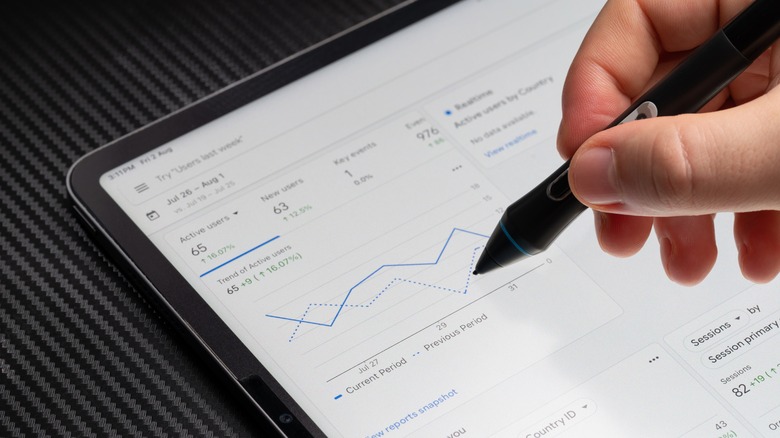
All trends listed in this article are based on current happenings in the media, from executive orders to IPO listings and investment rounds. They've each grabbed considerable amounts of search engine volume as well — the interest over time metric has hit the max multiple times late this year. Judging from the mindshare, both consumer and institutional, these trends have the most potential to take off in 2026.