

I Drive Cars For A Living: Here Are 5 Of My All-Time Favorites
Like many car enthusiasts I know, my obsession started when I was young. Riding around swap meets in a tiny wagon while my father searched for hot rod parts transformed into pulling my own digital wagon around, searching for my own parts on eBay, Craigslist, and Marketplace. Playing with Hot Wheels and building miniature racetracks turned into modifying my own car and driving it around full-sized race tracks in the real world. And luckily for me, begging my friends to drive their new and exciting cars evolved into a career of asking auto manufacturers for the keys, then driving vehicles, evaluating them, and telling their tales.
So now, as an adult, it's my job to drive new cars and write about them. Not a bad glow-up for a Hot-Wheels obsessed toddler, right? For the better part of 15 years, I've been behind the wheel of all sorts of cars, comparing their strengths and weaknesses, making sense of prices and features, and summarizing various cars' places in the automotive market. I've driven pickup trucks of all different shapes and sizes. I've piloted just about every consumer-friendly SUV and sedan you can think of. And I've driven some pretty wild and entertaining sports cars too. Here are five of my favorites.
Mercedes-Benz SLS AMG
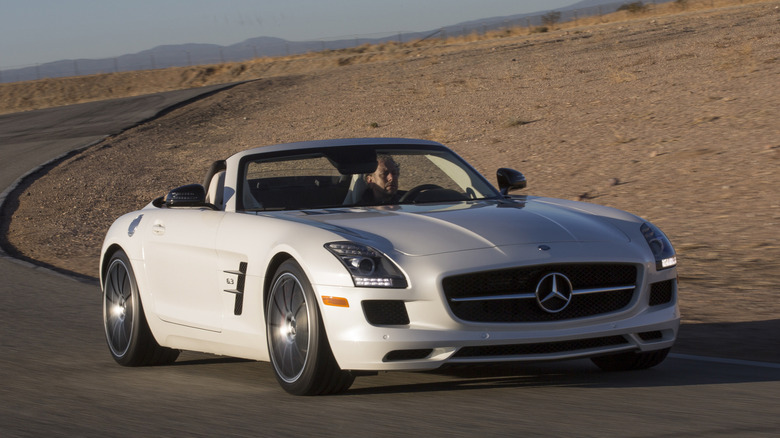
The Mercedes-Benz SLS AMG was my first real taste of supercar speed. When I began my automotive writing career, it was one of the first high-horsepower cars I got behind the wheel of, and there was no going back. The SLS AMG was powered by a naturally aspirated 6.3-liter V8 that produced 563 hp and 479 lb-ft of torque (technically, it was 6,208ccs but Mercedes called it a 6.3-liter engine for some reason). That power output might not seem impressive by today's standards, but over a decade ago it was a real powerhouse. The Corvette of the era, for example, used a 6.2-liter V8 that nearly rivaled the SLS in size, but it had to make due with over 100 fewer ponies (the 2012 C6 Vette put out 430 hp).
The 6.3-liter V8 under the hood of the SLS was an absolute riot. It made fantastic noises, produced insane numbers on the speedometer, and absolutely devoured gasoline. I was able to achieve single-digit fuel economy with a heavy right foot while driving the SLS. More than just powerful and thirsty, though, the SLS was stunning to look at and nearly perfect as a Grand Touring car. The SLS was comfortable on long highway road trips and had a large-enough trunk for a few duffle bags, which many modern mid-engine supercars can't boast. I never got the chance to drive the gullwing version of the SLS with its exploding door hinges, but the convertible felt pretty special, even without the vertically-opening doors.
Jeep Sandstorm Concept
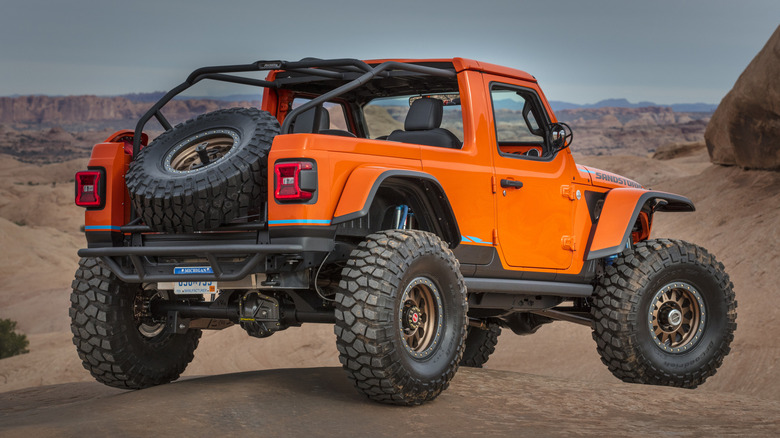
Years ago, at Easter Jeep Safari in Moab, Utah, I drove a topless concept version of the Jeep Wrangler and immediately chatted up the Jeep executives in attendance. "Build this rig, exactly like this, with a manual, and I promise that I'll buy one." The concept known as the Sandstorm was one of many engineering exercises/showcases on display that year during the annual off-roading pilgrimage to the Utah desert. It was powered by a 6.4-liter V8, riding on massive 39.5-inch all-terrain tires, and you could row your own gears via a six-speed manual transmission.
The Sandstorm was a baja truck of sorts, with the rear doors sealed shut and the top chopped off, covered only by a beefy roll cage. The Sandstorm's exhaust note was raw and visceral, the open-top design lacked any protection from the elements but it provided a bit of whimsy, and the six-speed manual provided a real driving connection with the concept – hence my expression of willingness to buy one.
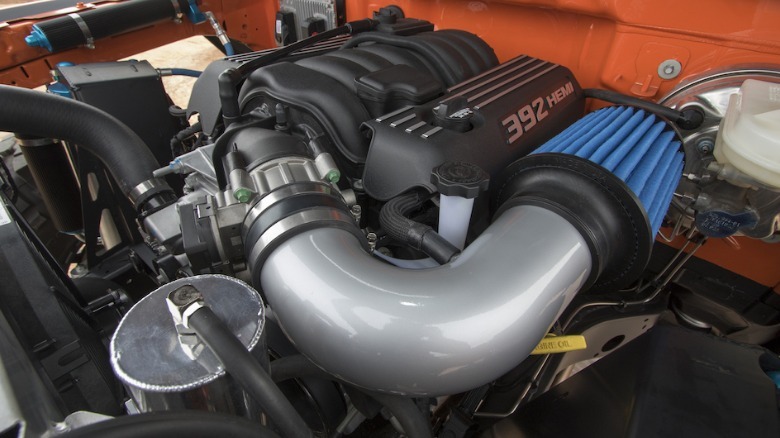
Unfortunately, Jeep never built the Sandstorm for the masses, but they did come close with the Wrangler 392. It uses the same 6.4-liter V8, putting out 470 hp and 470 lb-ft and it's about as close as the buying public can get to the Sandstorm, minus the manual transmission of course. Jeep has put some pretty wild concepts together since the Sandstorm (including my favorite from EJS 2025, the Bug-Out), but none quite as thrilling.
Cadillac CT5-V Blackwing
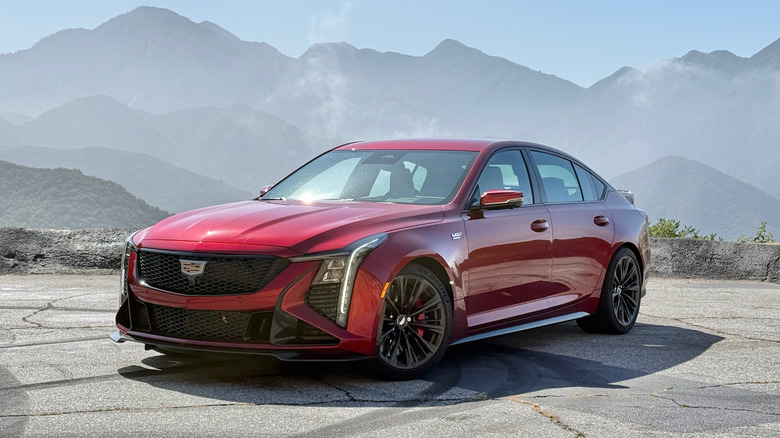
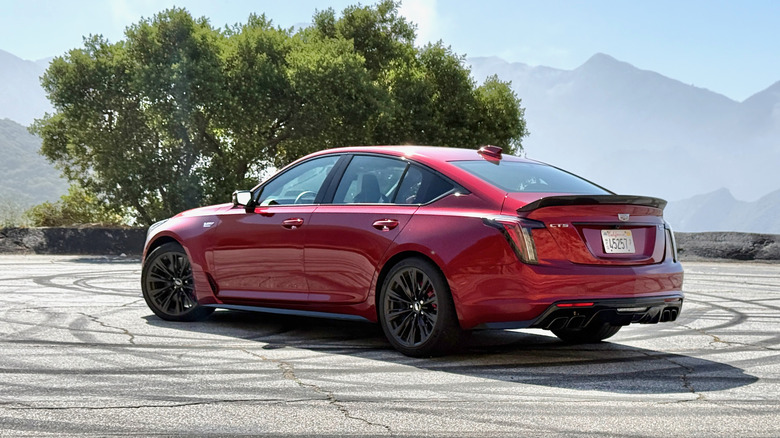
For a little over 20 years, Cadillac has been producing sedans, coupes, wagons, and even some SUVS with big power and a luxury vibe, badged with a big "V" on the back. The best of the best from GM's luxury division get the V designation, while the ultra-special run of modern high-performance Caddy's are set apart as Blackwing models – adding even more spice to the recipe. And in my opinion, the current CT5-V Blackwing is the pinnacle of all Cadillac V products, making it one of the best four-door performance machines I've ever driven.
The CT5 is a potent luxury sedan on its own, but the latest CT5-V Blackwing is powered by a supercharged 6.2-liter V8 that produces 668 hp and 659 lb-ft. It's available with a 10-speed automatic transmission, but my choice is the six-speed manual transmission instead. It turns a preposterously-powerful sedan into one with ultra-rare levels of engagement for its segment. Burnouts, donuts, and all sorts of anti-social tire-shredding activities are available on demand, but so is truly-fast high-performance driving. What's more, you can rip up your local racetrack on the weekend, then return to your cushy, high-paying corporate job on Monday with the same luxury sedan. It'll be just as impressive on the track as it is in your reserved parking spot and tha sounds like the perfect one-car solution for any wealthy enthusiast.
Scion FR-S
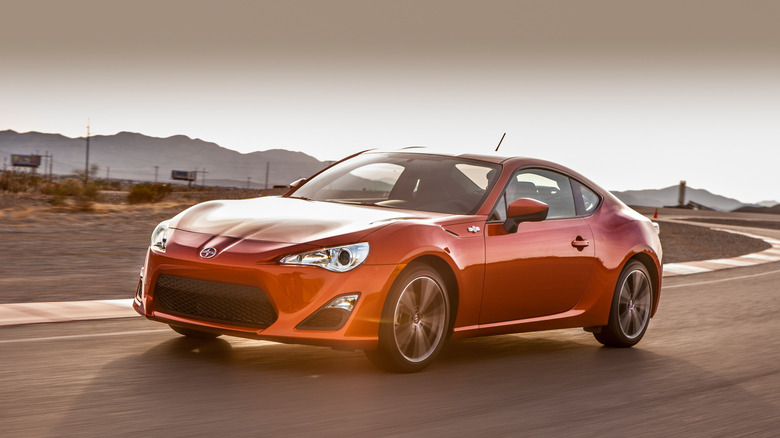
Not every car that's a favorite of mine is powered by a fire-breathing V8 — I promise. And here's some proof: Right around the time I was starting my automotive career and becoming infatuated with the SLS AMG, I was almost equally thrilled by the launch of the new Scion FR-S. A two-door coupe with a much-more affordable price tag, but also sporting rear-wheel drive, the FR-S offered enthusiast thrills for the masses. The best part? It still does. The FR-S has evolved a bit, being refreshed, changing names and sporting a few different badges over time (Toyota 86 for a while, BRZ if you bought/buy one from a Subaru dealership, and now GR86), but the idea is still the same: cheap, fun, rear-wheel-drive motoring.
The FR-S and its descendants (now the GR86 and the still-sporting-its-maiden-name BRZ) offer entertaining driving dynamics despite their relatively low horsepower, and they're priced in a way that young enthusiasts can buy one and modify to fit their taste. They're also relatively practical with decent fuel economy, a small back seat for extra storage, and enough space in the trunk for some luggage. Early models were bare-bones, priced around $25,000, and ripe for upgrades, so naturally the enthusiast community responded. You can get big power for FR-S/GR86/BRZ models from a variety of upgrades like turbos and superchargers, or you can leave them bone stock and just enjoy the ride. It's a blank canvas with four wheels.
Porsche Cayman
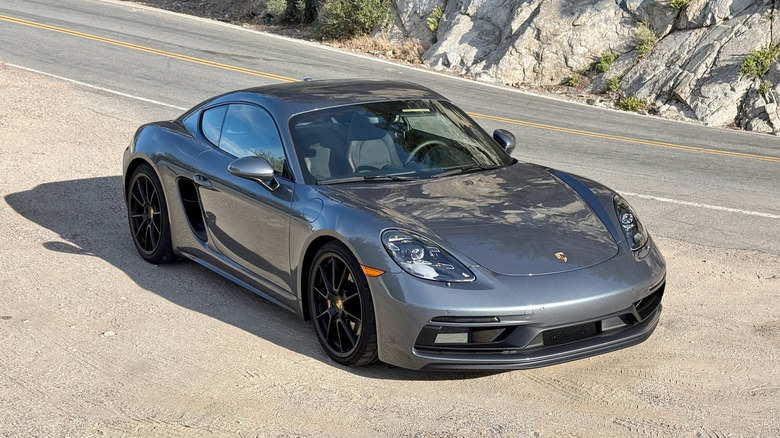
It might be the "entry-level" Porsche coupe, but the Cayman is my favorite two-door vehicle with a Stuttgart logo on the hood, and by extension, it's one of my favorite vehicles I've ever tested. Sure, the 911 is faster and more prestigious. And yes, it's a lovely thing to drive. I've driven plenty of different variants of the Porsche 911, including some preposterously quick GT3 models. I've even lapped a few racetracks behind the wheel of a 911. But I've never really connected with the 911 on a visceral level. By contrast, on just about every occasion I've tested a Cayman or Boxster, I've felt like it was a vehicle I could live with and make my own.
Being smaller than the 911, the Cayman feels a bit more maneuverable in tight spaces. On tight, curving mountain roads the Cayman feels a bit less restricted by the size of the road. And it's still properly fast, especially when you get one of the higher-performance trims like the latest GTS 4.0. There's no back seat in the Cayman, but the frunk is large enough for a few small bags, and the money you'll save for giving up back seats is considerable. The base 718 Cayman currently starts at around $75k, while the least-expensive 911 you can currently buy starts at over $130,000. Take the extra cash and invest it in modifications, factory upgrades from Porsche, or performance enhancements and you'll have a pretty unique and speedy Cayman on your hands.