

The 2026 Rogue Plug-In Hybrid Is Intriguing, But Not For The Reason Nissan Intends
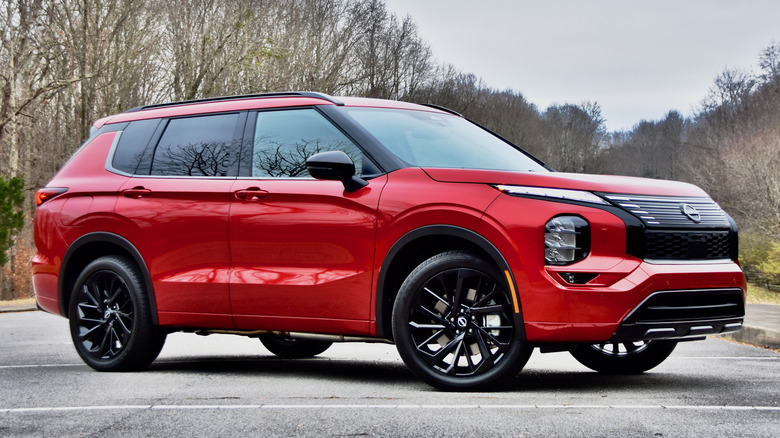
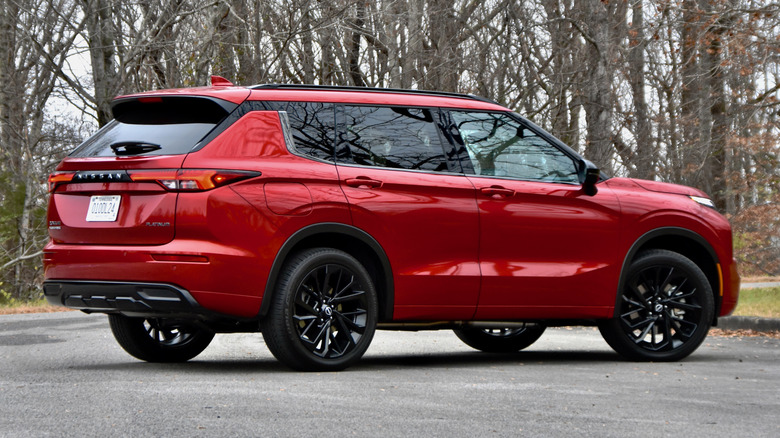
The latest addition to the Nissan Rogue lineup will have anyone familiar with this crossover SUV doing a double-take. That's because the 2026 Nissan Rogue Plug-In Hybrid is a Mitsubishi Outlander PHEV with minimal rebadging that will be sold alongside the existing Rogue starting in early in the 2026 calendar year. The non-hybrid Rogue and Outlander do share a platform, but they look completely different inside and out. So, that might create a bit of confusion for customers.
This is a surprise move, albeit an inconsequential one in the long term. Nissan confirmed a Rogue plug-in hybrid in late in 2024, but it was assumed Nissan would just borrow a powertrain from Mitsubishi, not an entire vehicle. The rebadge job will likely be a temporary placeholder until a redesigned Rogue arrives with a Nissan-designed hybrid system for the 2027 model year, but it gives Nissan dealers a competent plug-in hybrid to sell in the meantime.
What is going on here?
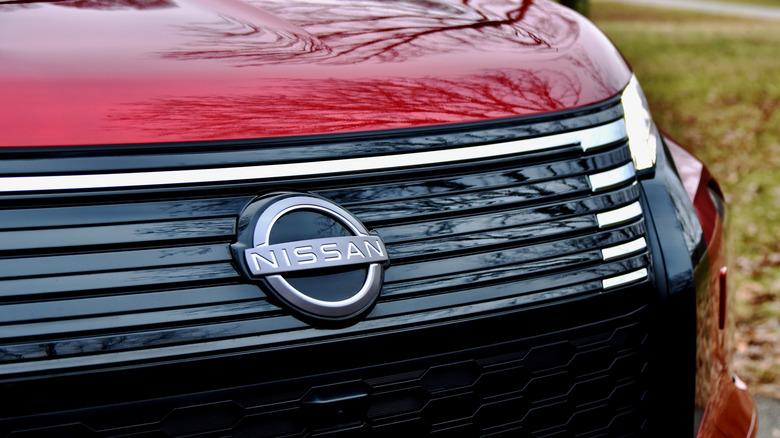
Nissan is Mitsubishi's biggest shareholder, having acquired a 34% stake in the smaller automaker in 2016. That led to platform sharing for the current-generation Rogue and Outlander, which launched as 2021 and 2022 models, respectively.
Mitsubishi may have needed financial assistance and a new vehicle platform, but it also had something Nissan lacked: experience with plug-in hybrid powertrains. It duly launched the second-generation Outlander PHEV for the 2023 model year, combining its own plug-in hybrid tech with the Nissan platform. The Rogue, meanwhile, continued as one of the few small crossovers without a hybrid or plug-in hybrid powertrain option.
Selling an existing vehicle under a different brand also isn't unheard of, although it's much less common than it used to be. So is selling two distinct vehicles under the same model name, although Nissan has done that before. It previously rebadged the European-market Qashqai as the Rogue Sport and sold it alongside the larger, standard Rogue.
Nissan name, Mitsubishi styling
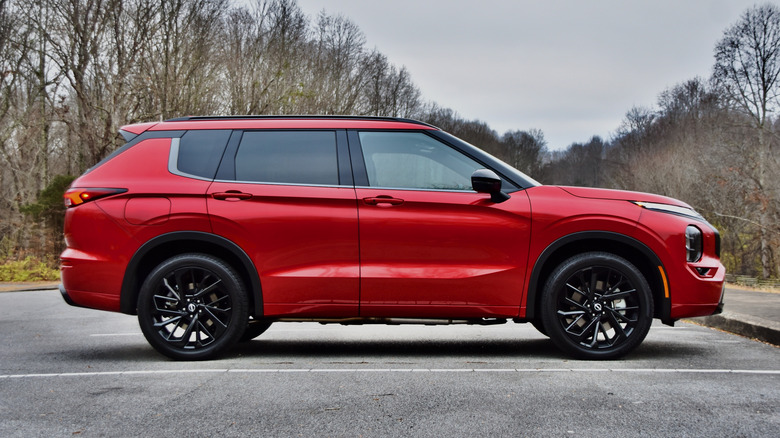
A Nissan public relations representative was quick to note that the plug-in hybrid model is the same as the non-hybrid Rogue underneath, but everything you can actually see is pure Mitsubishi. That's not a bad thing, as the current-generation Outlander has distinctive styling and the visual presence of a proper SUV. It's just that said styling was intended to express Mitsubishi's distinct character, and slapping a Nissan badge on it undoes that.
Similarly, Nissan's designers ostensibly made the stylistic decisions they did with the non-hybrid Rogue in order to make something distinctly Nissan. Pairing the two in showrooms indicates that Nissan doesn't think that matters. The automaker is betting that customers are only paying attention to the Rogue badge and not what the crossover they're spending tens of thousands of dollars on actually looks like. Which, to be fair, is probably a safe bet.
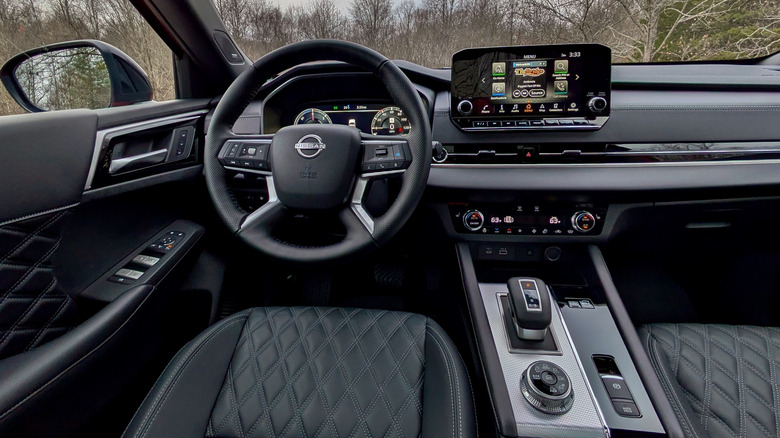
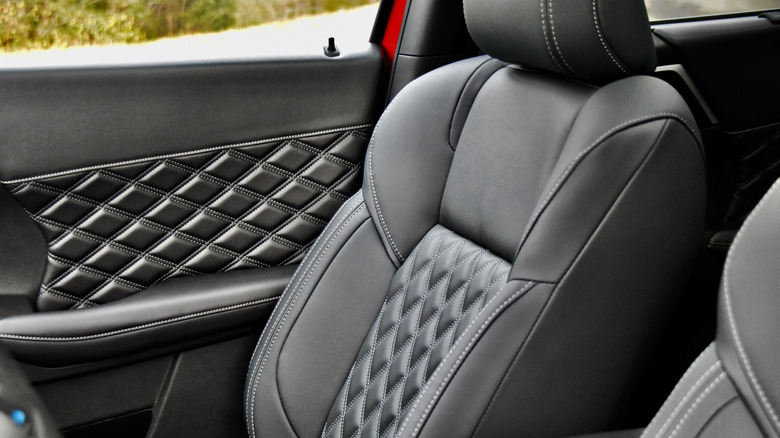
Mitsubishi positions the top Outlander PHEV trim level as a more upscale option, but that didn't really translate to the monochrome interior of our Rogue Plug-In Hybrid Platinum test car. Leather upholstery with quilted stitching was the only unexpected touch in this nondescript interior, and Nissan buyers miss out on the massaging front seats available in the Mitsubishi version.
Outdated tech
The Rogue Plug-In Hybrid does get the Outlander's third-row seats, making it a seven-seater. But the third row is so cramped that even small children will barely fit. Better to fold it and gain access to 30.8 cubic feet of cargo space. Even that is less than what you get in a Kia Sportage or Hyundai Tucson plug-in hybrid, though. So is the 64.7 cubic feet of space with the second row folded, although the Korean's advantage here is marginal.
The infotainment setup is a far cry from the slick curved displays offered in the Hyundai and Kia. Instead of the 12.3-inch touchscreen available in some versions of the standard Rogue, the plug-in hybrid makes do with a 9-inch screen. A 12.3-inch digital instrument cluster is standard, however, along with wireless Apple CarPlay and Android Auto.
The touchscreen's main menu looks like it came from a 1990s desktop computer, but the generous amount of analog controls means you won't have to use it much. A 10-inch head-up display is also available, along with a nine-speaker Bose audio system that carries over from the 2025 Outlander PHEV. The Mitsubishi is slated to get a new Yamaha system for 2026.
Nissan's ProPilot Assist driver-assist system is available as well, but only in version 1.1 form. This includes automated lane centering but not the full hands-off capability of the ProPilot Assist 2.1 system available on the non-hybrid Rogue.
Great plug-in hybrid powertrain
The infotainment tech might be dated, but the powertrain isn't. As in the Outlander PHEV, a 2.4-liter four-cylinder engine acts primarily as a generator, but can also drive the front wheels in certain situations. Two electric motors—one for each axle—do most of the work, drawing power from a 20-kilowatt-hour battery pack. The Rogue Plug-In Hybrid has the same 248 horsepower and 332 pound-feet of torque as the Outlander.
The way that power is delivered is what makes the Rogue/Outlander stand out from plug-in hybrid rivals. Response to the right pedal is decidedly EV-like, with a generous burst of torque off the line and smooth acceleration after that without any messy handoff between gasoline and electric power to interrupt the flow. That makes this crossover feel quicker than it is. The strong regenerative braking was EV-like as well, although it did tend to cut out abruptly just before the car was about to stop.
The Rogue also features Mitsubishi's Super All-Wheel Control (S-AWC) system, with three powertrain modes (Eco, Normal, Power) and four chassis modes (Tarmac, Gravel, Snow, and Mud). The entire test drive was done on dry pavement, where the Power and Tarmac settings made the Rogue feel a bit more lively, but couldn't compensate for suspension aimed more at comfort than handling. That's also the case with the Outlander; overall there isn't any real difference between the two when it comes to ride and handling.
Reasonable electric range
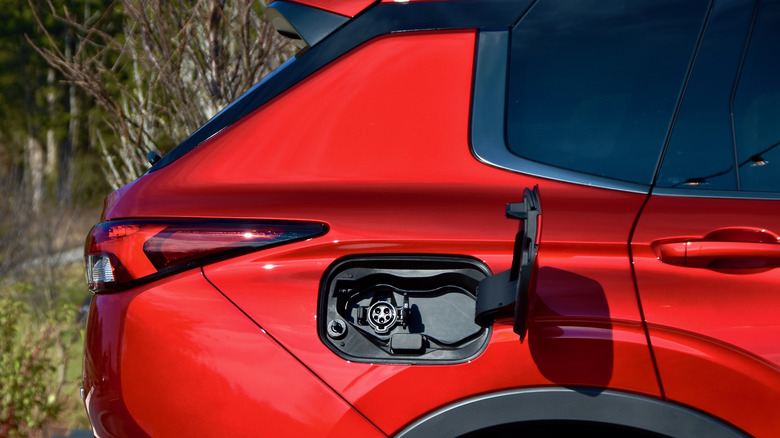
Nissan expects the same efficiency ratings as Mitsubishi, including an EPA-estimated 38 miles of electric range and 26 mpg combined in hybrid mode. That gives the Rogue Plug-In Hybrid a slight advantage over the 32 miles of the Hyundai Tucson plug-in hybrid and 34 miles of the Kia Sportage plug-in hybrid, respectively. But both Korean crossovers are rated at 35 mpg combined, and Toyota expects the redesigned 2026 RAV4 plug-in hybrid to return up to 52 miles of electric range.
The Rogue skips the Mitsubishi's DC fast charging, likely as a cost-cutting measure, but Nissan drivers probably won't miss it. The Outlander PHEV uses the orphaned CHAdeMO fast-charging standard, and a 10%-80% charge still takes 38 minutes at the maximum 50-kilowatt power level. With a gasoline engine onboard, it's not really worth wasting time on such long charging sessions during a road trip.
Using the 3.5-kW AC charger, a full recharge takes 7.5 hours, according to Nissan. That makes overnight charging easy, so unless you have a very long commute, it should be possible to accomplish a lot of daily driving on electric power alone. As in the Outlander PHEV, dual 12-volt, 1,500-watt power outlets in the cargo area can also draw power from the battery pack to run appliances or electronic devices for camping or tailgating. You have to upgrade to the Platinum trim level to get them, though.
2026 Nissan Rogue Plug-In Hybrid verdict
Nissan hadn't released pricing information at the time of publication, but we do know that there will be fewer possible configurations for the Rogue Plug-In Hybrid than its Outlander sibling. Nissan is offering only SL and Platinum models, while Mitsubishi currently has six Outlander PHEV trim levels.
Unless the Rogue turns out to be cheaper, the only reason to buy it over the Outlander is if you can't find a Mitsubishi dealer. The Nissan looks the same, drives the same, and is just as efficient. That still makes it pleasant to drive and very efficient for a vehicle of its size, although its infotainment interface lags behind the non-hybrid Rogue, as well as rival plug-in hybrids.
Nissan isn't concerned about selling a rebadged Mitsubishi. The Rogue Plug-In Hybrid is a stopgap until the next-generation Rogue arrives with the automaker's e-Power hybrid system. A series hybrid system that only uses the engine as a generator, it also promises an EV-like driving experience, but without the option to plug in.
In the meantime, Nissan feels it needs some kind of hybrid in its lineup to help drive showroom traffic. That could make the Rogue Plug-In Hybrid a one-year-only affair, but Nissan acknowledges that plug-in hybrid customers aren't the same as regular hybrid buyers, and may keep it around longer if it sells well enough. Otherwise, this plug-in hybrid looks set to be a curious footnote in automotive history, and that's about it.