

7 Of The Most Comfortable Cars You Can Buy, According To Consumer Reports
The importance of comfort in a car can't be overstated. Sometimes, there's no better feeling than reclining in your seat after a long day at work and having the fabric hug your back as you sink into it. It's little things like that which transform a car from a simple vehicle to a true feat of engineering — getting you from one point to another, and making the experience enjoyable.
Beyond build quality, other factors contribute to comfort. Safety, cabin noise levels, legroom, and a host of characteristics play a role in how much passengers can unwind and enjoy rides in a car. Naturally, cost can be a barrier to this type of niche relaxation; the higher quality materials used to furnish a car, the more expensive it is. However, comfort as a whole doesn't necessarily have a linear relationship with price — you don't need to break the bank to buy a comfortable vehicle.
The definition of "comfort" can be difficult to quantify. Not every driver or passenger has the same tastes, but standards can be extrapolated through vigorous testing. For instance, SlashGear recently covered the best cars, trucks, and SUVs for short drivers. That list might be different based on any other qualifying metric. Consumer Reports compiled a list of "The Most Comfortable Cars You Can Buy," and with no further ado, we're going to delve into the meat of what makes some of these vehicles a match made in heaven for relaxation.
Honda CR-V
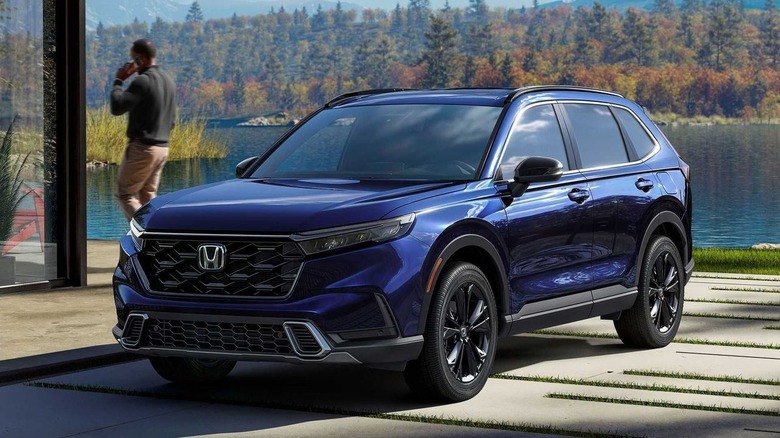
One of the pioneers of the compact SUV market in America, the CR-V helped redefine what comfort meant to riders; it brought a 4-wheel double wishbone suspension to the SUV genre for the first time. Although the primary reason for this structural change was to improve maneuverability, it also served to reduce sound permeating into the car from vibrations and other road noises. That resulted in a quieter cabin — one of the golden characteristics of comfort.
Delving into more physically interactive features, the vehicle's design has evolved through the generations. SlashGear has ranked each CR-V generation from worst to best, but we'll focus on the current generation, the CR-V's sixth, which started in the 2023 model year. For this meta, Honda decided to spruce up the interior — the sixth-generation model has the most cargo and cabin space since its inception.
This translates into more legroom for occupants to stretch their feet, and also doubles as storage whenever it's needed. In terms of driving experience, the suspension tuning and damping keep rides pleasant even in bumpy terrain and around corners. That smooth riding ability, coupled with the quiet cabin, makes the CR-V an objectively comfortable vehicle.
However, there are drawbacks: Its 190-hp engine isn't the best for quick bursts of acceleration, and if you're a fan of screen-heavy dashboards, the CR-V instead maintains a practical blueprint. You get the customary three climate controls, an infotainment screen that borders on being too small, and dashboard finishing that feels somewhat dated.
Subaru Outback
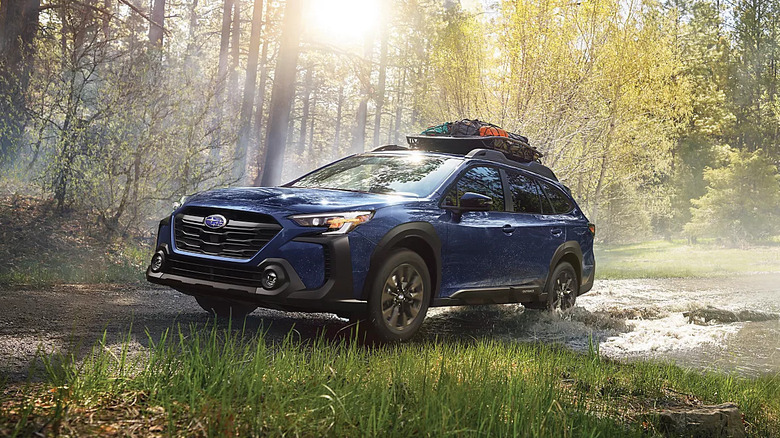
Comfort may be associated with hefty price tags, but one of Subaru's main selling points is comfort on a budget. In the case of the Outback, it has offered its riders an affordable and relaxed driving experience since it launched in 1995. Built as a station wagon, its legroom and cargo space were primary attractions for buyers, and that's something the manufacturer has continued to capitalize on.
The Outback's flirtation with comfort began in the mid-to-late 2000s — the exterior design became smoother, and more importantly, the cabin saw leather seats and other high-quality materials incorporated into the fold. By the fourth generation, the Outback was outfitted with a 2.8-inch wheelbase gain. That translated to even more legroom, and the increased ground clearance at 8.7 inches kick-started the model's transition into a full-blown SUV.
In terms of impact, these measurements are pronounced at the back seats — there's enough room to stretch even for taller passengers. Ride quality on the Subaru Outback has remained one of its strongest features to this day; the cabin is quiet even on highways, and it rides smoothly, although there's notable body roll when going around bends in the modern models.
Seating comfort varies by trim and passenger height. It's on the firm side, which could be slightly uncomfortable for taller passengers or those with back problems, but the adjustability on higher trims makes even long trips feel good. We've covered a whole list of things you should know before getting an Outback.
Subaru Ascent
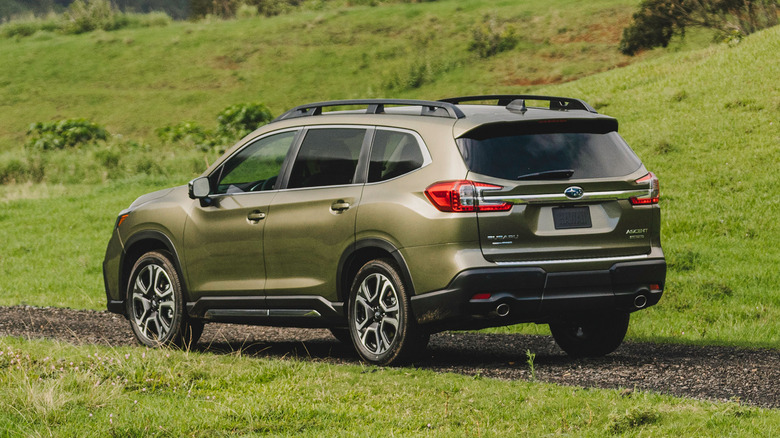
The second Subaru on this list, the Ascent is still a relatively new sight on highways – the manufacturer only began production in 2019. However, despite its youth, it has gained the distinction of one of the most comfortable vehicles around. Specifically designed for space considerations, it's a three-row family SUV that can seat up to seven passengers.
One of the Ascent's standout features is its visibility, especially for shorter drivers; it's got a low beltline and elevated seating, so drivers don't have to subconsciously crane their necks to get a good view. Like the Outback, the Ascent is spacious and makes for comfortable seating — at least for the first two rows. The third is best reserved for kids; adults would have a hard time being convinced of the Ascent's comfort if they managed to squeeze in there.
That said, despite the cabin being comparable to competitors in terms of size, the interior dimensions are a bit of a downside. The limitations here are more glaring when you've got items you want to store in the cabin — it fills up really quickly. This is a bit of a surprise, considering that the Ascent is the biggest Subaru SUV on the market.
In terms of ride quality, the Ascent glides smoothly over errant bumps with its suspension without disrupting occupants. There's a drawback in this category, though; engine and road noises are very noticeable in the cabin. Navigating the safety features can also get a bit annoying. Additionally, the lane departure assist and driver attention monitors have been reported to blast warnings at the slightest opportunity.
BMW X3
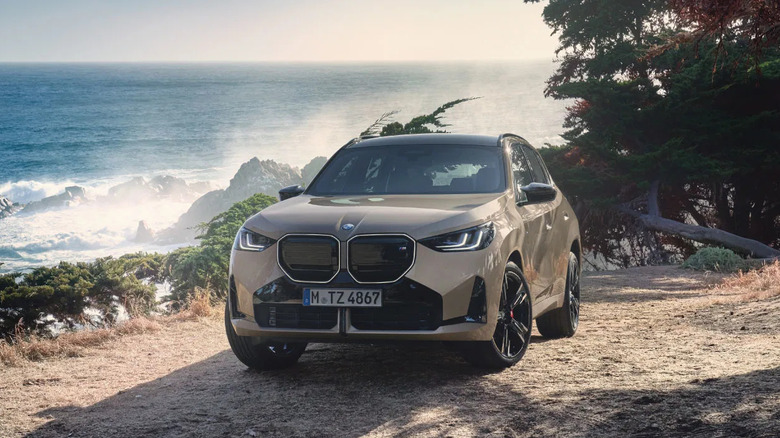
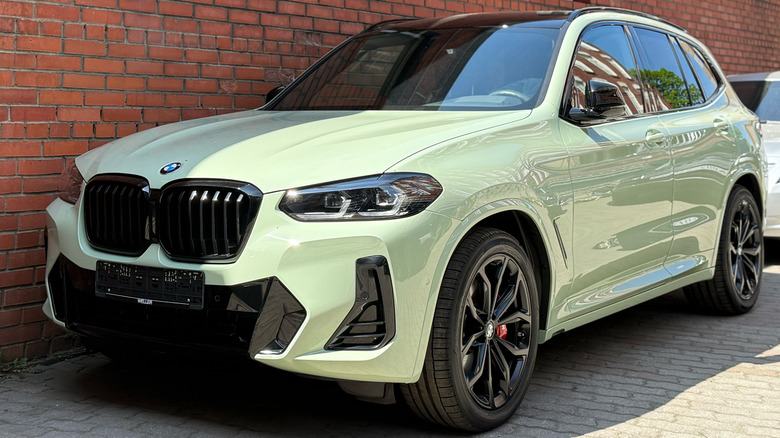
Transitioning into automakers that typically come to mind when thinking of luxury, the BMW X3 was one of the catalysts behind the boom in the compact luxury crossover genre. The X3 may not have become a force to be reckoned with in the comfort game initially. However, in the early 2010s, the cramped interior and rough ride quality of the original design gave way to executive-level experience. Solid suspension, good handling, leather upholstery, and heated seating became a part of the X3 package.
Since that time, the comfort level of the X3 has grown in tandem with its wheelbase expansion and automation. Much of this increase in length is most obvious in the back seats and in the cargo space behind them. Rear legroom and storage are two of the X3's strengths, even in modern models. Its greatest trump card in the comfort game, however, is how quiet and firm the ride quality is.
Although this variable is largely influenced by the trim you buy (sporty versions or larger wheel options reduce the comfort level), the suspension and wheels nicely smooth impacts from the road. It's also worth noting that the X3 effectively mutes road noises and wind drag — the absence of the grating sound of tires pounding against concrete goes a long way in helping occupants relax.
One thing to note: The 2025 model leans heavily into tech in its dashboards, so the displays might get a bit confusing if you're used to minimalistic driving experiences.
BMW X5 PHEV
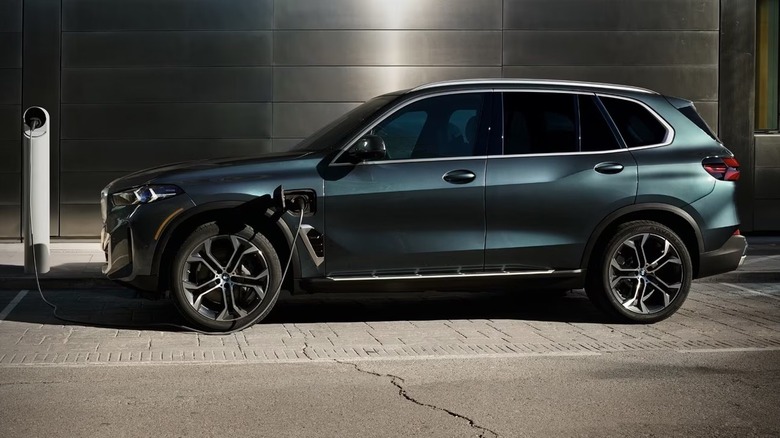
The second BMW on the list, the hybrid X5 is the manufacturer's take on the mid-size luxury SUV market. Accordingly, any vehicle in this class needs some juice to stand out, and the X5 PHEV has plenty. It's really quick; the 0-60 mph sprint takes just around 3.9 seconds courtesy of a 483 hp engine.
Zippy cars like the X5 hybrid aren't always fluid to steer, but it's athletic enough to handle regular twists and turns with little, if any, body roll. Braking is also firm, and the few engine hums that permeate into the cabin are pleasant to listen to. What this means for the cabin is that it's almost as quiet as the X3. However, its wheels are larger, so more pronounced bumps in the road will occasionally break through the tranquility.
In terms of seating feel and practicality, the material quality lines up with luxurious expectations. The seats are made of faux or real Merino leather, depending on trim, and you have the option to include a massage feature in them to hug your back. The leather configuration is also applied to the dashboard to make contact points pleasant to the touch. The X5 hybrid can comfortably seat adults in both rows, and the cargo space is particularly plentiful.
Again, like the X3, things might get confusing in the infotainment department. The X5 hybrid's dashboard is about two-thirds screens, and navigating each of these optimally poses a steep learning curve for drivers.
Subaru Legacy
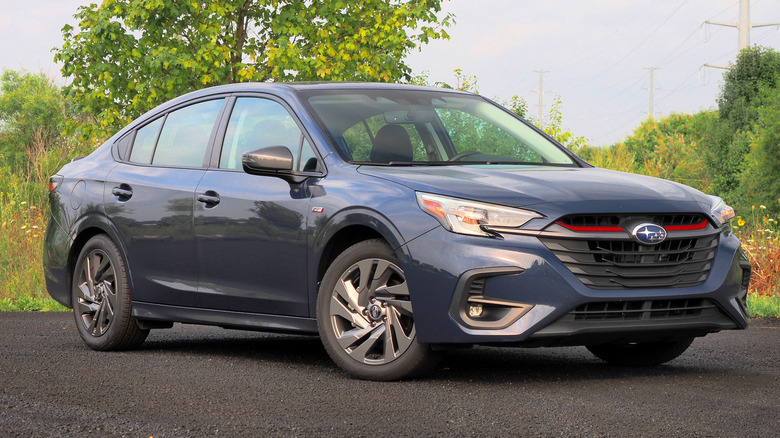
The Legacy is powered by the same 182-hp engine as the Outback, down to the transmission and all-wheel-drive systems. The first variable where you're likely to notice this is in fuel efficiency — its 30 mpg combined mark for the non-turbo trims isn't particularly impressive.
With a turbo powertrain, the Legacy can hit 60 mph in just over six seconds. Considering the standard engine takes north of eight seconds to reach the same acceleration, it's safe to say your enjoyment of the Subaru's juice boils down to the trim choice. Slowing down isn't perfectly linear either – you might run into some nosedives along the way that disrupt your rhythm.
In terms of the driving experience, the strongest boons for the Legacy are visibility and grip. Like the Ascent, the 2025 Legacy features large windows. That's great for seeing the road ahead or behind you, regardless of height.
Grip-wise, the Legacy performs well around curves with minimized body roll. Bumps also don't rattle the cabin as much, thanks to the AWD configuration. However, since it has a lower ground clearance, rougher roads are bound to trouble occupants more than they would an Outback.
Road and wind noise also leak into the cabin, unlike most of the other cars on this list. The model year is also very important to your degree of enjoyment; some drivers report the 2018 Subaru Legacy as uncomfortable in both seating and riding comfort. Meanwhile, Subaru has made the decision to stop building this vehicle entirely — the last Legacy rolled off the production line in September 2025.
Audi A6
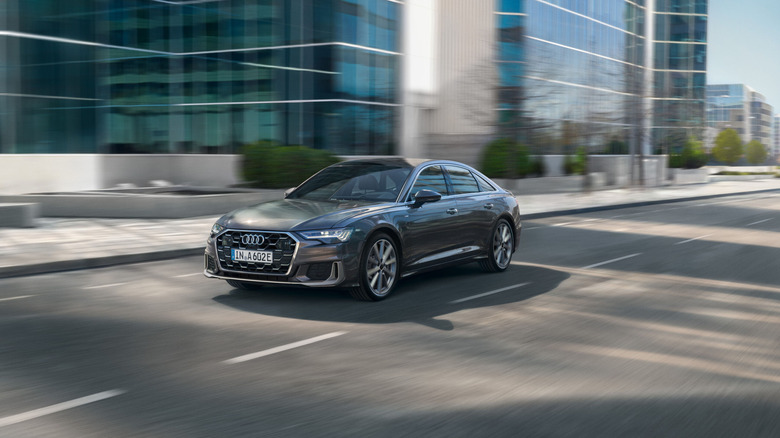
The A6 is Audi's entry into the comfy sedan market, and it distinguishes itself with its practical styling – it isn't skewed to the opulent end of luxury. Despite the muted pampering stance, the standard quality features you'd expect from a pricey sedan are there; some trims come with a Bang & Olufsen audio system, wireless charging pads, heated seats (and even ventilated ones in the front).
The Audi A6 has some burst to its engine to match the luxurious interior. The 2025 base comes with a 261-hp powertrain, although you could get a 335-hp V6 if you're willing to shell out a few more dollars. That power translates into sufficient acceleration; it goes from 0-60 mph in 4.8 seconds in the V6.
While this is quite rapid, you'll be reminded that the Audi A6 isn't a sports car by the way it runs. You're not likely to feel that exhilarating rush that comes with acceleration; it cruises along instead of delivering raw power to your hands. Ostensibly, that's to maximize the feeling of comfort in the cabin, although the size of its wheels introduces noticeable bumps that can disrupt the executive flow you'd expect from the A6.
For interior design, the A6 uses soft leather for its upholstery. Its big brother model, the A8, made SlashGear's list of cars with the most comfortable seats. A wood and nickel-finished metal combo makes up the dashboard aesthetic, and the cargo space is quite spacious, too, for tugging luggage along.