

These Old Storage Types Are Seeing Their Way Out
We may receive a commission on purchases made from links.
A general trend in the advancement of technology is the slimming down of devices. Phones have become pocketable, computers now actually fit on our laps, and cameras don't have to be bulky anymore. Despite this positive push towards compactness, the internal bits in our everyday gadgets have gotten far more complex and capable. With demand for sophisticated apps and games increasing, we've seen massive jumps in processing power, battery life, and, most obvious of all — storage.
With smartphones growing capable of shooting 8K videos, and games filling up entire drives on PCs and consoles, there is an ever-increasing need for not just more, but also faster storage. In fact, improvements in connection interfaces thanks to Thunderbolt and newer generations of USB-C have allowed for the use of external storage drives for purposes like video editing, or even gaming — all without having to transfer files to the computer's internal drive. The way we store and access our data has also been changing, with a shift towards faster, denser, and more compact storage drives.
For instance, though it's rare to find phones with SD card support anymore, we do have less to complain about with base capacities increasing. With flagship smartphones, you now typically get 256GB of fast internal storage. Similarly, other forms of expansion are being phased out slowly in favor of smaller, faster, and more convenient storage types. If you're still rocking these storage devices, here's why you should probably look to upgrade as well.
SATA hard drives
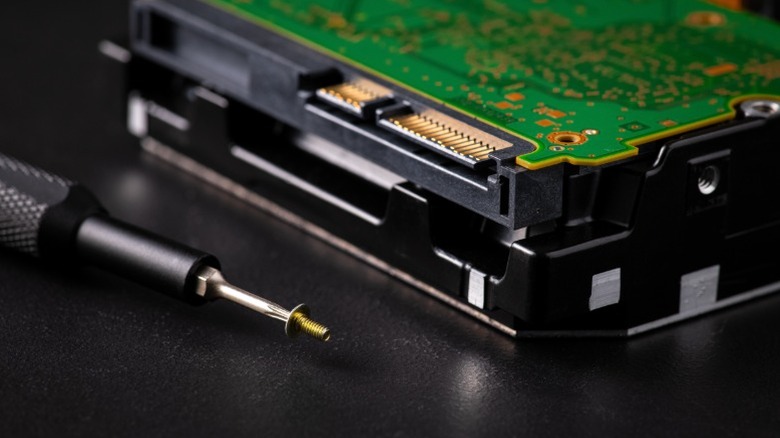
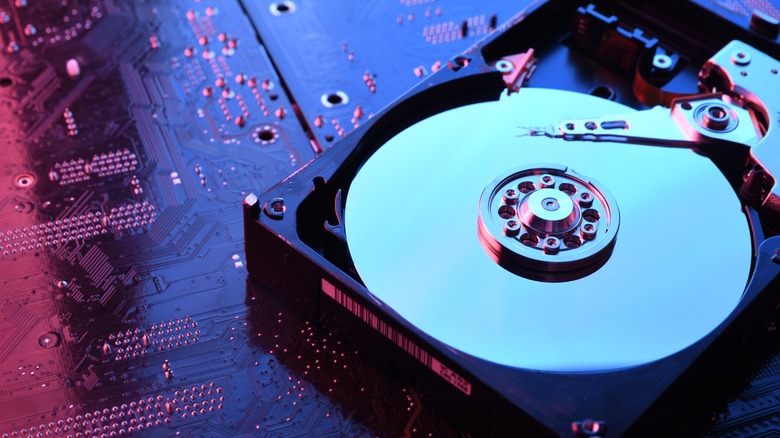
SATA, short for Serial Advanced Technology Attachment, largely replaced older interfaces like IDE in computers, and is still in use. It can be used to connect SSDs and optical drives, but is most popularly paired with hard drives you find inside computers. SATA hard drives are far from extinct, but you'd be hard pressed to find a modern laptop or computer that still ships with a mechanical hard drive.
For years, internal hard drives of different form factors and capacities have been used in computers and consoles. Though affordable, the mechanical bits in these drives are susceptible to physical damage from sudden movement, heat, or even power fluctuations. HDDs are also notoriously known for slowing down over time due to fragmentation. All of these issues, coupled with rather slow max speeds of around 300 MB/s, helped pave the way for SSDs, or solid state drives.
SSDs, by contrast, fixed everything that was wrong with HDDs — no moving parts, a smaller size, and theoretical read and write speeds surpassing 20 times that of a traditional hard drive. Now, most laptops ship with M.2 SSDs and even feature expandable slots for user-upgradability. That said, hard drives are still in great use for archival storage given their lower price points and high storage capacities. External hard drives like the WD 5TB My Passport continue to offer high capacities at affordable prices. The consumer side of things, however, has mostly transitioned to using fast portable SSDs instead.
CDs and DVDs
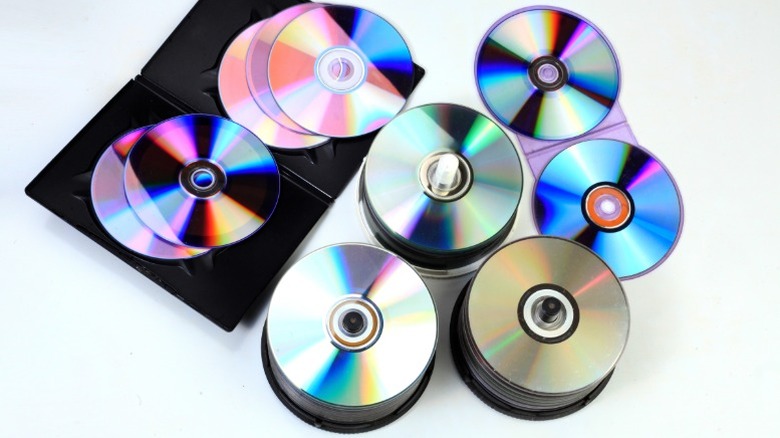
In the past, the gold standard for storing movies, games, and software had been optical storage devices like CDs and DVDs. Every desktop and laptop shipped with an optical drive to accommodate this form of storage. In the modern day, however, optical media has practically vanished given how the industry has moved towards digital downloads. Now that fast internet has become an essential commodity, streaming platforms like Netflix have replaced everyone's DVD player.
The same goes for software that is regularly being updated with patch fixes, making it far more ideal for it to be available as a download over the internet. There are disc editions of consoles like the PS5 and Xbox Series X, but their respective digital-only variants have been a popular buy given their lower price points. Moreover, games like "Red Dead Redemption 2" require over a hundred gigabytes of data to be downloaded, which goes beyond the maximum capacities of consumer-grade DVDs.
As for personal use and document sharing, resorting to flash drives turned out to be a much faster alternative to carrying around delicate CDs — with cloud storage services providing a completely hardware-free file sharing experience. However, optical discs still find use in archival storage purposes, especially for sensitive data in sectors like healthcare and government agencies. They are highly resistant to magnetic interference and are therefore quite reliable for very long-term data storage. Movie enthusiasts and collectors also continue to rely on Blu-ray discs for lossless quality video and audio.