

7 Disadvantages Of Classic Big-Block Engines
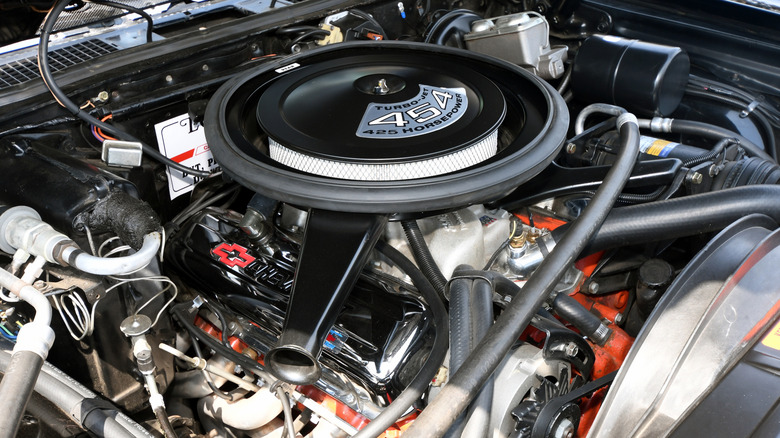
If you find yourself wandering around a Cars and Coffee meet-up and the talk turns to classic American muscle cars and the dreams they inspire, it won't take long before the legendary names of the big boys start getting thrown around: Chevrolet's 454, Ford's Cobra Jet, the 426 Hemi. Many of these big-blocks have names that have become almost sacred in the halls of motorsport lore, but beneath the nostalgia, the history, and the bigger-is-better vibe, classic big-block engines aren't without their disadvantages.
Having a big-block between your frame rails is undoubtedly cool, but watching your fuel gauge drop while idling at a stoplight can be frustrating. So is cleaning baked-on oil off a cross-member or careening through an unexpected corner with all that weight over your front axle. Throw in an occasional round of waiting patiently at a gas station for your massive motor to cool enough to give your heat-soaked starter a fighting chance, and you will realize it's not all wine and roses with big-displacement engines from the dawn of the muscle car era.
Cheap fuel and engineering trade-offs when these motors first rolled off assembly lines mean there are definitely some disadvantages to a big block. However, if you throw any gearhead with a toolbox the keys, they are still taking one of these old Detroit monsters out for a run any day of the week.
Crushing weight
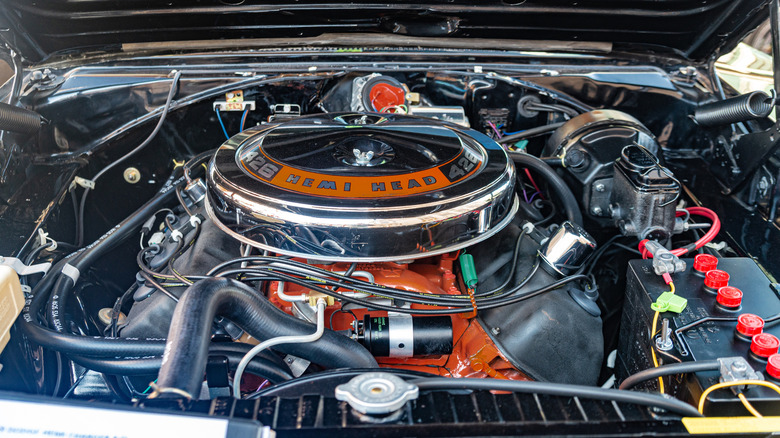
They don't call them big-blocks for nothing, and their sheer mass means they come with plenty of trade-offs in ride and handling. Classic big-block motors are weighty all-iron beasts, and motors like the Mark IV 454 under many a Chevrolet hood or the 426 Hemi found providing giddyup to Charger R/Ts can tip the scales at the better part of a ton, coming in at between 650 and 750 pounds.
Race teams and performance car designers alike are obsessed with cutting weight wherever they can. Less weight means better handling, better braking, better acceleration, less wear... and more.
The big-block motor shrugs and drops its rotund self right over the centerline of its host car's front axle. The compromise most manufacturers leaped to in order to handle this excess weight was simply stiffer spring rates up front. However, stiffer springs don't insulate the rest of the suspension system from the cumulative toll of that weight, and worn ball joints and worn-out steering gearboxes can suffer, making the steering feel worse. Classic muscle cars with big-blocks out front resisted quick turn-in, wallowing stubbornly through corners rather than plowing straight through them.
As thirsty as they are big
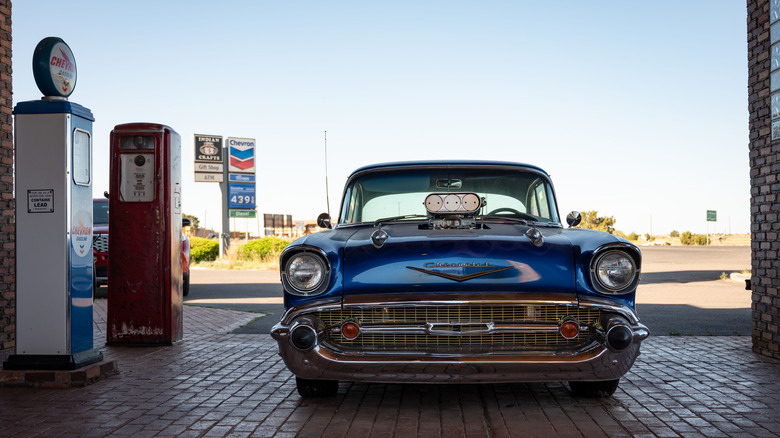
These motors were designed as blunt-force weapons, simple and brutal, and in large part they succeed. Catch up to one at a stoplight on a Friday night, tuned up right and riding on the right rubber, and a big-block-equipped classic can still put on a show. Heavily built, these motors had durability, tons of low-end grunt, and other charms, but they were certainly not designed to get the most out of a gallon of gas.
Instead, in pursuit of going fast in the day of cheap gas, designers engineered these rigs to guzzle fuel. Big four-barrel carbs had their work cut out for them: they had to supply enough fuel under acceleration when there was so much room for air, and therefore combustion, due to the big displacement of a big-block. This made them thirsty back then, but in the modern era, when a fill-up requires a credit check, the fuel consumption rate is punishing.
This profligate use of fuel meant that even in the days of cheap gas, owners would need to keep an eye on the fuel gauge, or risk taking a walk with a jerry can. Over the years since, most big-block motors are either showing their age or festooned with all manner of performance parts swapped on by various owners. Neither case has likely resulted in any efficiency gains, to say the least. Keeping a big-block running under the hood today is more about preserving a piece of automotive history than preserving your fuel budget.
Tight spaces and knuckle-busting design
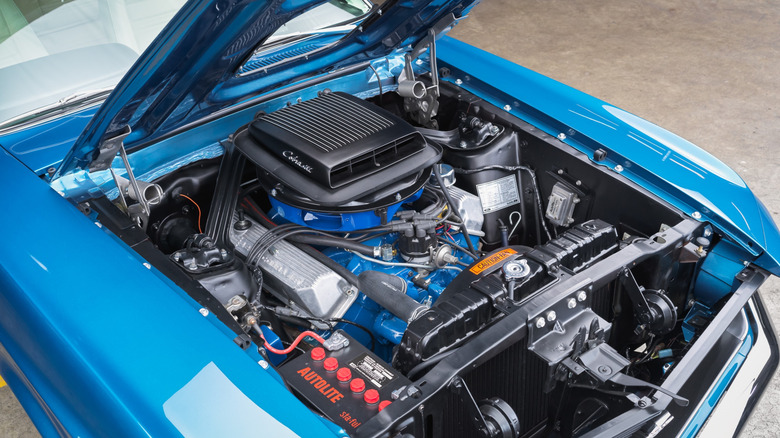
If you spend much time wrenching on a big-block, it won't be long before you start to muse over the benefits of a small block, and all... that... space. You may also start wondering where to find a new supply of better curse words, since the ones you use most will likely wear out while working on a big block. With a small-block, you have room to maneuver, access, check, inspect, and turn wrenches. But with a big-block wedged under the hood, there is barely enough room for an extra decal.
This lack of space plagued most cars equipped with big-blocks from the factory and has kept the big block from becoming the ubiquitous go-to engine swap the small-block motor has become. Swapping in a big-block motor is a herculean effort if it wasn't a factory option.
Even factory-equipped cars had to compromise on under-the-hood space. Midsize rides, like the Chevrolet Camaro or Ford pony cars, had to make serious design compromises in order to access the big torque the big-block promises. This meant fabricating tools or detaching the motor from its mounts to do simple maintenance, like changing spark plugs in the rear bank. Big blocks crowded into tight engine bays produced a prodigious amount of heat, particularly under heavy load, and contributed to heat-related service issues.
Drivetrain stress
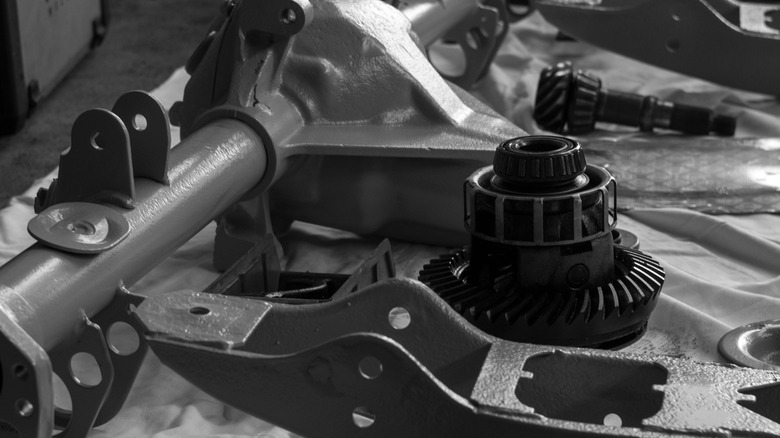
Torque causes and solves so many automotive problems, and the big-block motors of the muscle car era had it in spades. That legendary gut-punch low-end torque that made them famous for dominating a quarter mile came with trade-offs.
The massive stress on every downstream component meant maintenance on rear ends, U-bolts, and transmission tail housings became par for the course much more often than in vehicles equipped with a small-block motor. Many manufacturers back then famously underreported how much power their engines could put to the pavement. Well-tuned performance variants of classic big-blocks could produce over 500 lb-ft of torque.
The practical upshot of all this torque is great launch and acceleration, but it also means hooking up puts a lot of stress on downstream components. Pair the big-block option with heavy-duty axles and strong transmissions built to handle the power a big-block can put out. Running a built big-block requires heavy-duty diffs, subframe supports, a reinforced transmission, chromoly driveshafts, and other performance parts to match the engine mods.
Sluggish rev response
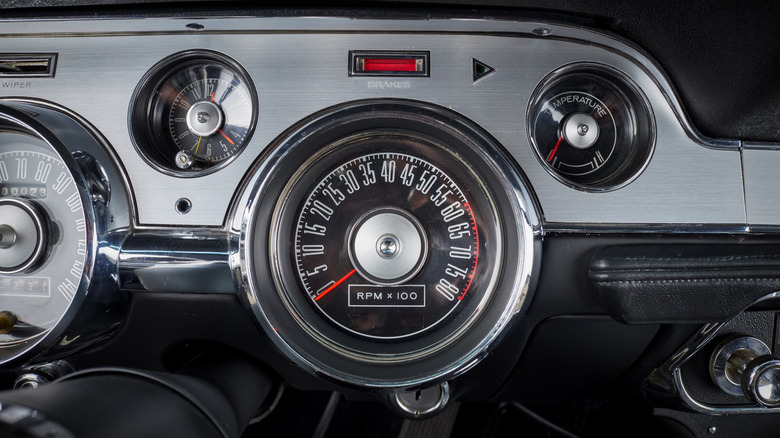
Oversized pistons, heavy-duty connecting rods, and massive crankshaft counterweights may sound like a gearhead's Christmas wish list, but you still have to accelerate all that mass every time you push the go-fast pedal. Blipping the throttle of a big block just turns money into exhaust noise, unlike quicker-revving small-block mills.
With a big block, you have to commit, like accelerating a freight train. All that iron fights quick velocity changes and adds rotational inertia, which can help or hurt you depending on the situation. You can't drive a big-block-equipped classic the same way you would a similar model with a small-block engine. Big-blocks don't change quickly, and they don't like high revs.
This means that while big-block engines deliver strong pulling power right off the line when you hold the throttle, they sacrifice some crisp throttle response. This can create a delayed driving feel, as heavy, big-block-equipped classic muscle cars can feel heavy on their feet and a little slow to respond compared to a lightweight sports car effortlessly rowing through a manual gearbox.
The infamous Big Block Tax
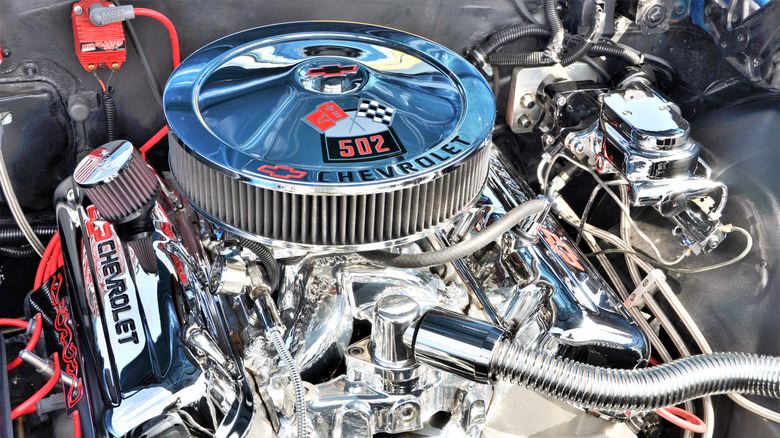
Over the years, the classic muscle car scene has seen the small-block motor steal the big-block's spotlight as the preferred power plant for swaps or for numbers-matching builds. This success has created thousands of suppliers of both parts and know-how for small-block performance and routine maintenance.
Supply and demand mean that prices for almost every aspect of maintenance can run high, more so on a big-block motor than on its more ubiquitous small-block brethren. Big-blocks do not have the same economy of scale as small-blocks, giving rise to the expression in muscle car circles of "the big-block tax."
If you are restoring a vehicle to its original condition, roll up your sleeves and do the extra work, or pull out your wallet and pay the little extra a big block will demand. However, you can argue that modern small-blocks, with their lighter weight, higher-revving nature, and competitive power outputs, not to mention modern LS crate motors, are a more cost-effective and better-supported option for any new custom build of a classic muscle car.
Power-to-weight issues in the modern era
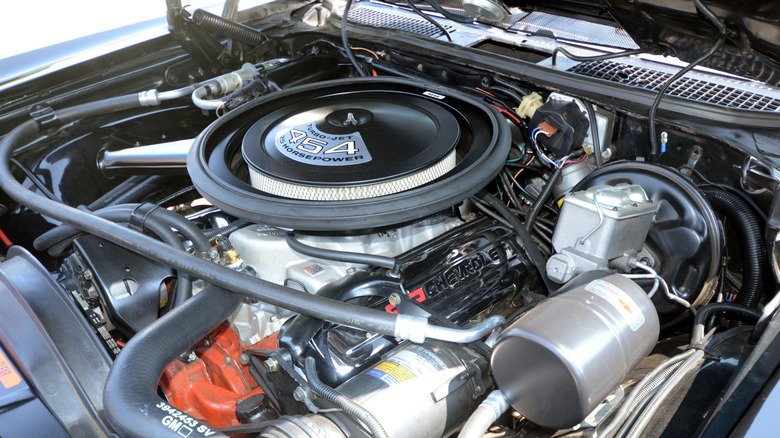
While there is no replacement for displacement, as they say, the cost of that displacement in classic big-blocks is that almost everything downstream of the motor's prodigious power output also has to be heavy-duty, which often adds its own weight penalty. This is because everything else is oversized, overbuilt, and heavy-duty to handle the extra weight the heavy motor brings up front.
This also stresses the suspension and introduces handling compromises. Excessive weight centered on, or even in front of, the forward axle throws off the car's fore-and-aft weight balance and makes the rear end feel light. In the classic era, the trade-off was worth it for the extra displacement, but advances in technology in the intervening years mean small blocks set up for higher-RPM operations can rival big-blocks for power while weighing less, which improves handling.
Modern takes on small-block motors can match the horsepower, if not the torque, of even custom-built big-block mills while shedding a lot of weight. To make matters more complicated, the big-block value proposition is the type of performance that can be derived from dropping in a modern LS motor, and builders realize that you have your work cut out for you to get that type of performance from a big-block, and you better have your wallet ready to make it happen.