

3 Disadvantages Of Cast Iron Engine Blocks
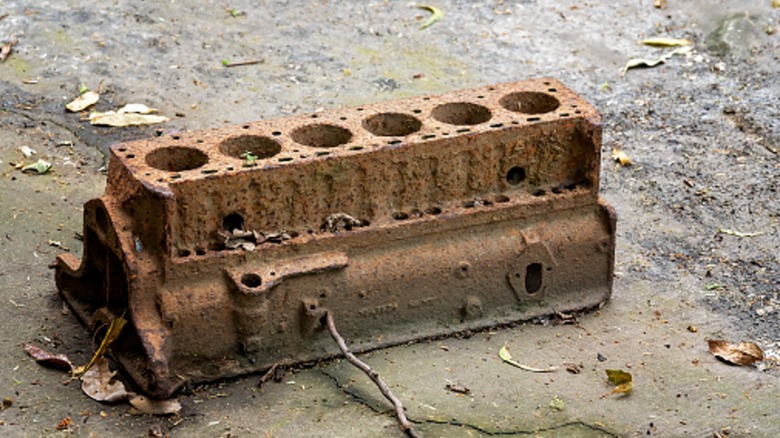
Cast iron has been the standard material for casting engine blocks since the beginning of the internal combustion engine. Given the material's strength and budget-friendly price point, cast iron engine blocks are often better for big power builds where strength, cost, and machinability are primary concerns. Alternative engine block materials and manufacturing processes have evolved, becoming more cost-competitive over the years. As a result, most car manufacturers have switched from cast iron to aluminum for some or all of their cars' engine blocks.
While cast iron engine blocks are still generally cheaper to manufacture and stronger than cast aluminum engine blocks, they have some distinct disadvantages. The most significant disadvantage of cast iron compared to aluminum today is its heavier weight, but there are other disadvantages. Cast aluminum isn't the only alternative engine block material. While many automakers are using aluminum engine blocks in passenger vehicles, others are utilizing engine blocks made from compacted graphite iron (CGI). One notable example is Ford's 6.7-liter Power Stroke Turbo Diesel, arguably one of the best diesel engines ever put in a pickup truck. Other automakers, including Audi, Porsche, Volkswagen, and Hyundai, have engines with CGI engine blocks.
Cast aluminum engine blocks are common in fuel-efficient cars, and CGI is finding its way into applications that require higher durability. Regardless of the material cast iron is compared to, there are significant disadvantages to its use, pushing automakers to implement alternative materials.
Cast iron engine blocks are heavier than the alternatives
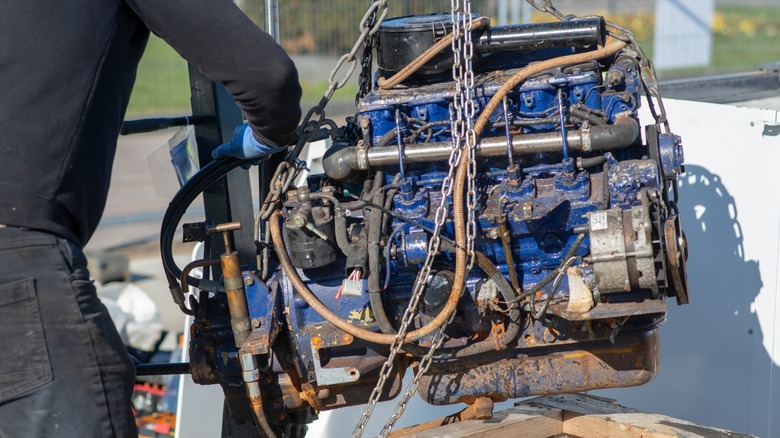
Anyone who's ever picked up a cast iron skillet understands the substantial weight difference compared to a standard aluminum frying pan. While the two materials exhibit a similar weight disparity when used in engine blocks, aluminum's lower strength requires reinforcements that dilute its weight advantage somewhat. Still, for most daily-driven passenger car applications where fuel economy is a primary concern, an aluminum engine block that weighs 40% to 50% less than its cast iron equivalent helps automakers achieve their efficiency goals.
In addition to a cast iron engine block's extra weight reducing fuel efficiency, the heavier engine, typically located at the front, affects the balance and handling of the vehicle. Your car's weight distribution can affect your driving experience. In many cases, the ideal vehicle weight distribution is 50/50, with all four tires carrying the same load when parked on level ground. With a front-engine car, this goal is easier to achieve without the added weight of cast iron.
While more weight up front might not make a noticeable difference under normal driving around town, having a higher percentage of the vehicle's weight on the front tires can lead to excessive wear on suspension components. Affected suspension components could include control arm bushings, ball joints, tie rod ends, struts, and shocks.
Cast iron retains more heat than aluminum

An engine's cooling system is one of its most critical systems. Overheating can ruin an engine in a matter of minutes and leave its occupants stranded on the side of the road, even if the engine is otherwise unharmed. Of course, overheating can occur in any engine regardless of the material from which it is cast if the cooling system fails. However, compared to aluminum, cast iron's tendency to retain heat keeps more heat trapped near susceptible components like pistons and bearings.
On the other hand, cast iron engine blocks offer some advantages where heat is concerned. While aluminum can shed heat faster, it's also more likely to warp than cast iron when overheated. Warping can put increased stress on internal components and increase the likelihood of gasket failures, including head gaskets. In addition, although aluminum dissipates heat more quickly than cast iron, most aluminum engine blocks use combustion chamber liners made from denser materials to protect the soft aluminum engine block from the friction generated by the pistons.
Furthermore, engine block designers must consider the thermal expansion properties when choosing a material, especially for those engines that will see longer duty cycles. While aluminum can expand considerably when heated to operating temperatures, cast iron and CGI are more stable, offering higher durability margins under extreme operating conditions.
Cast iron Is outdated for modern manufacturing
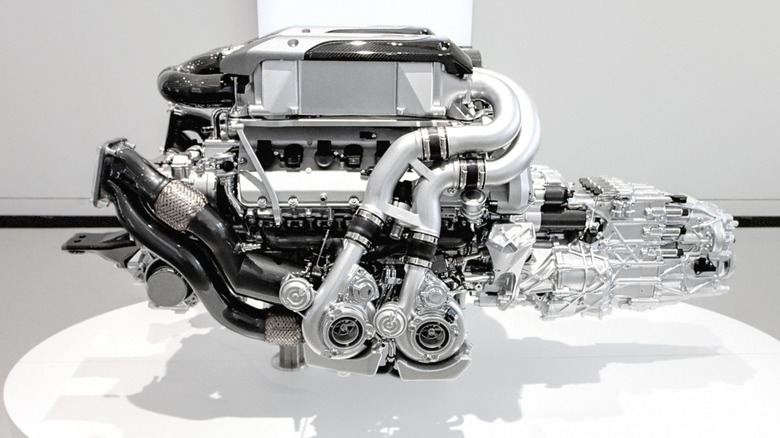
That's not to say that old-school tech is always bad. If you're reading this, you'll likely agree that any muscle car with a cast-iron engine will always be cool. However, there are better materials available today for casting mass-produced engine blocks as well as those intended for specialized performance applications.
We've discussed some of cast iron's disadvantages compared to cast aluminum engine blocks and briefly mentioned compacted graphite iron, or CGI, engine blocks. In addition, there are specialized producers that manufacture magnesium engine blocks and others that machine engine blocks from solid aluminum billets, typically for high-performance applications. While magnesium engine blocks are rare in modern automobiles, the legendary Volkswagen Beetle was an example of a widely mass-produced automobile featuring an engine block composed of a magnesium alloy.
Compacted graphite iron engine blocks could be the way of the future for mass-produced heavy-duty and high-performance vehicle applications. While CGI still exhibits some characteristics and associated disadvantages of cast iron when used to produce engine blocks, it also offers advantages. Although CGI carries approximately the same density and weight as cast iron, its stiffness allows engine block designers to achieve the durability of cast iron using thinner cross sections, saving weight by using less material. Ultimately, there is no clear engine block material winner across the multitude of use cases. While cast iron has its share of disadvantages, so do aluminum and CGI.