

Aluminum Vs Cast Iron Engine Blocks: What's Actually Better For Big Power?
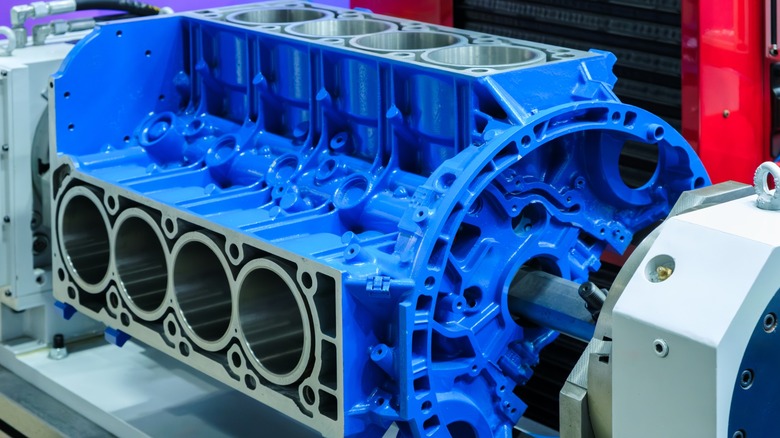
Automakers employ teams of automotive engineers and engine design specialists to create the best automobiles for various purposes. Engine designs intended to make big power range from the familiar V configuration to unusual designs like Bugatti's W-16. The most powerful American engines ever built typically rely on V8 or V10 designs. However, despite the agreement on the V configurations, performance engine designers are divided on the use of aluminum or cast iron as the material that forms their engine blocks.
It's true that there are aluminum-block engines making tremendous horsepower. Mopar's 1,000-horsepower Hellephant 426 Hemi crate engine springs to mind as an example. However, all else being equal, engines featuring cast iron blocks are better for making big power. The only advantages aluminum has when used as engine block material are its corrosion resistance, light weight, and heat dissipation characteristics. Cast iron engine blocks have more advantages geared toward horsepower production.
Why are cast iron engine blocks better than aluminum for making big power?
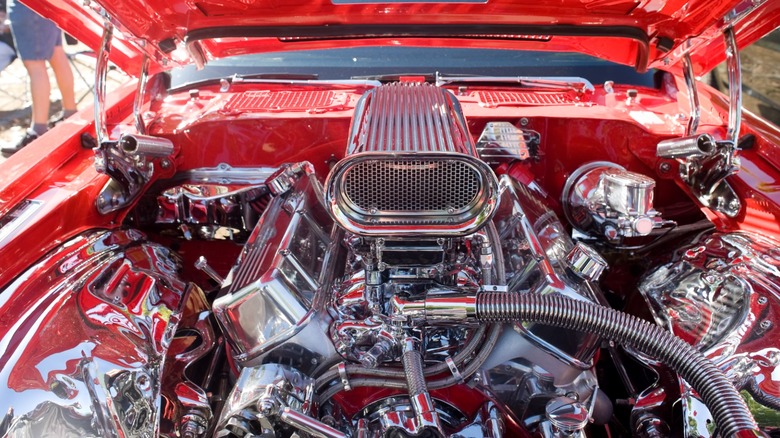
The cast iron engine block's cost and strength are among the reasons it's used in some of the world's biggest engines. Some engine builders estimate using a cast iron engine block instead of a cast aluminum block reduces build costs by at least 40%, and opting for a billet aluminum engine block pushes costs higher still. Even without the difference in cost, cast iron is still the better option for maximum power due to its superior strength, which helps in a couple of ways. One of the ways powerful engines benefit from cast iron's strength is rigidity. Cast iron engine blocks don't flex as much as aluminum blocks when cylinder pressures and other internal engine forces reach maximum levels.
A cast iron block's resistance to deflection results in a direct gain in horsepower by providing a better seal between the cylinder wall and piston rings when cylinder pressures increase. Another benefit is longer life from other engine components, crankshafts and camshafts for starters, that undergo less stress when the block doesn't twist. Catastrophic events, like dropping a valve or cracking a piston, can occur in naturally aspirated engines, but they're more common and often magnified with the addition of boost through forced air induction or nitrous oxide. The increased strength of cast iron engine blocks increases their ability to withstand these kinds of events compared to aluminum blocks.