

4 Disadvantages Of Aluminum Engine Blocks
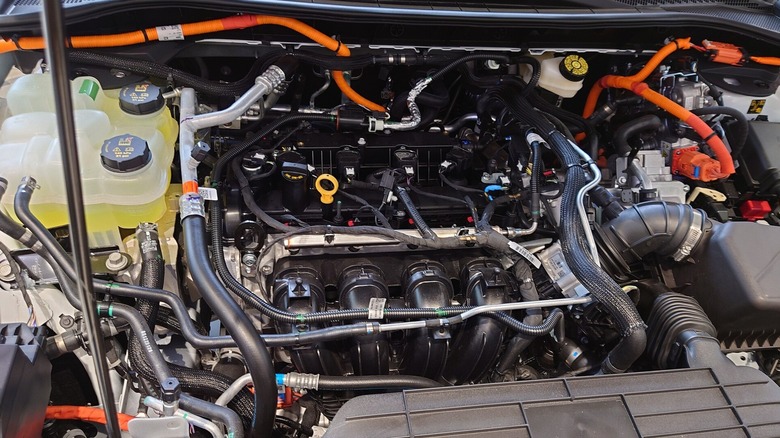
The history of metals and technology have a fascinating overlap. In the case of military battle tanks, for instance, there was a time when the most practical defensive measure possible to deploy was simply making the metal shell as thick as possible, but as technology evolved, it became possible to make more effective and efficient use of lighter-weight metals. The rise of aluminum engine blocks, for instance, has been very important.
Aluminum is only around one-third as heavy as steel, but it's very strong for its density. This means that it can replace some of the commonly-used heavier metals in certain machines like vehicles, potentially avoiding some concessions necessary to accomodate big, heavy engines. Specifically, the engine block itself is among the heaviest elements of an engine, and the introduction and popularization of aluminum ones was a huge step for the industry.
Aluminum alloy engine blocks are widely used in modern models for their light weight and respective strength, but that certainly doesn't mean that they're a direct improvement over counterparts like cast iron. Manufacturers and drivers alike have to bear in mind that this is a more lightweight metal that can struggle to hold up to extremes of temperature. These factors can have considerable consequences for your engine and the maintenance of your vehicle more broadly, and dramatically drive up the price you pay.
Aluminum is a much softer metal

Aluminum is far lighter than the likes of steel. The interesting thing, though, is that aluminum is typically used as an alloy, including small amounts of, commonly, zinc or copper. Alloys such as these are still light and resilient, while also making the resultant blend more resistant to common threats to metals, such as corrosion. These alloys are also popular in other tech fields, like aircraft manufacturing. For those sorts of specialized needs, of course, the crucial concern of minimizing weight is perhaps even more important.
Cast iron engine blocks are still relatively common, and their advantages are plain to see. Cast iron is often a metaphor for sheer resilience and strength, and so an engine block made from this material may be able to withstand a beating, including a potential collision, without requiring as extensive repair and reconstruction work as an aluminum model might.
This is also true in the sense that iron models can withstand a lot of power. A racing machine, for instance, would naturally make use of the lighter weight of an aluminium block, because weight is at a premium and hefty elements can very easily compromise a model's aerodynamism. This doesn't mean that aluminum models are better for vehicles in all circumstances, though. Far from it, in fact. For weight distribution reasons, it can be best to have an aluminum one in order to prevent such a lot of weight being held in the front of the vehicle, but the high pressure of some hard-working engines can be a lot for an aluminum one to practically and comfortably withstand. Heavy duty vehicles like trucks can be best served by a resilient cast iron model as a result.
They're generally more expensive than other options
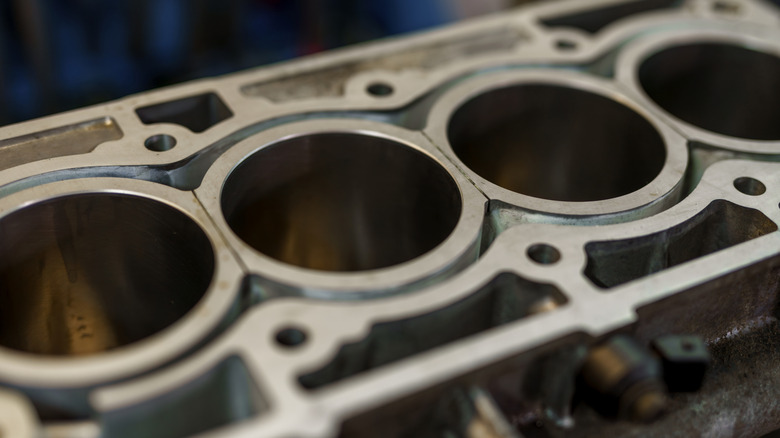
When designers and manufacturers are creating a new vehicle, and when potential buyers are considering the purchase, they bear some of the same priorities in mind: Which components are used, and how much does it cost. Of course, these two factors are intrinsically linked, and for the buyer, it's a matter of getting the performance that best suits their specific needs for the best price. Budgetary concerns are key, and a cast iron engine block tends to be cheaper.
One of the biggest factors in this is the raw material itself. Aluminum is more costly to acquire and work with than iron, especially when it comes to making the alloys. As always, this translates to a heavier price for the consumer at the end of it all. Cheaper manufacturing costs will typically result in cheaper purchases, and so all of this really benefits the drivers of vehicles with iron engine blocks. There are potential downsides to this too, though, because the decision isn't just about the upfront purchase costs.
If an aluminum alloy block operates more efficiently and potentially lasts longer, being more resistant to corroding than an iron counterpart, it's possible that a driver could save money with one in the long run. It's important to remember, though, that a billet aluminum block will be far more expensive than a cast aluminum one. This is because billet aluminum must be expertly machined from pure metal blocks, a complex and expensive process that results in significant differences between cast aluminum and billeted aluminum engine blocks.
Excessive heat can be trickier for aluminum models to manage
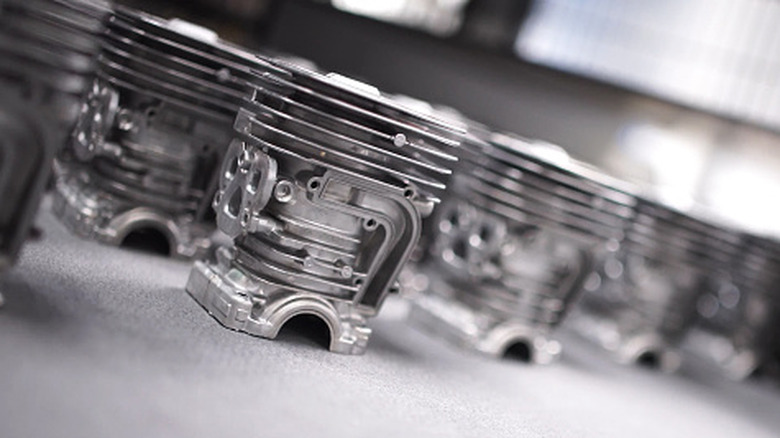
Aluminum doesn't tend to get as hot as its counterpart materials during operation, and it dissipates built heat towards the coolant more efficiently, thereby funnelling the heat to where it should be and allowing the dedicated systems of the vehicle to manage it. However, this doesn't mean that heat is broadly easier to manage for an aluminum engine block, because there's another important trait of aluminum alloys to consider. Aluminum engine blocks can crack like cast iron, and in fact, the situation can be much worse with them.
This leads back to the fundamental fact that aluminum is much lighter and softer than iron, and so can't retain its shape as easily after cooling down from higher temperatures. Inefficient cooling systems can be very bad for aluminum models. Different types of vehicle engines and components are created for different purposes, and so tolerances for different levels of heat and their potential impact on performance must be taken into account.
Repairs can be difficult and costly to make

The manufacturing of aluminum engine blocks can be more expensive than the same process with iron blocks. They are fundamentally different materials, and though their needs are similar at a mechanical level, there are some factors that will complicate the process of working on them.
There are indeed some potential advantages to aluminum when it comes to servicing, such as the possibility of TIG welding to restore any potential smaller damage that an aluminum block may have sustained. This is more challenging with an iron counterpart. The issue, however, is that it's potentially more difficult to catch an aluminum model while it's still possible to make such a repair, because they're more susceptible to damage as a softer material.
The block itself, of course, is reinforced by other materials such as sleeves and higher quantities, so as to still keep its significant weight advantage over heavier iron models but not be too soft at the same time. Even so, despite its heat conducting advantages over counterparts, aluminum can still overheat, and if it does, a pricey replacement might even be called for.
If your engine block is made from a specially-machined block of aluminum, in particular, it will have a precisely-worked shape, and after structural damage, it's very difficult to restore that. Possible, of course, in some cases, but a job for specialists for certain. All in all, for a lot of auto makers, aluminum engine blocks have replaced their cast iron counterparts. The latter are still very much relevant though, because, for instance, vehicles that carry heavy loads are far better suited to the resilience and power-tolerance of iron engine blocks.