

Do Aluminum Engine Blocks Crack Like Cast Iron?
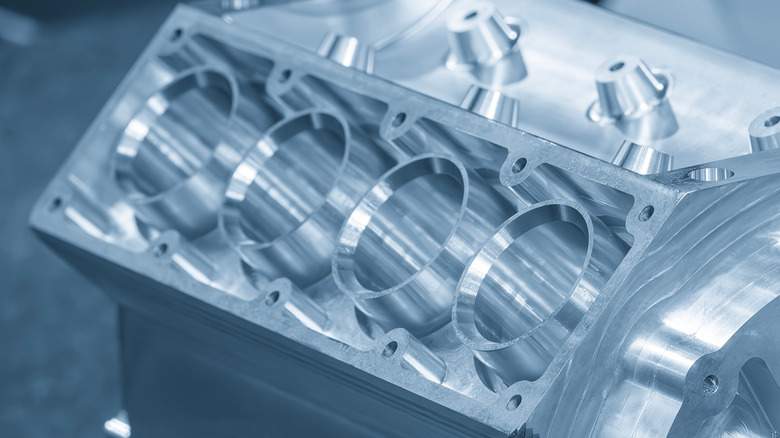
Aluminum engine blocks (which are different from cylinder heads) are prone to cracking under some circumstances, just like their cast iron counterparts. However, the factors that cause them to crack, and how both materials react under various stressors, can differ significantly.
Aluminum engine blocks do have some advantages over cast iron blocks, but immunity to cracking isn't one of them. Both metals can suffer structural damage as a result of severe overheating, coolant freezing, flaws during casting, collision damage, improper machining, or long-term wear and fatigue, amongst other contributing factors. Whether or not a block will develop cracks is largely dependent on usage, as well as the conditions (and quality controls) under which it was manufactured.
A major distinguishing feature between cast iron and aluminum is thermal expansion. Aluminum expands a great deal more than cast iron as the temperature rises. That doesn't mean that aluminum is inherently more fragile, however. Engine blocks and other components will be designed with this kind of expansion in mind in order to mitigate any damage.
Cast iron expands less than aluminum throughout a heat cycle. That's not to imply that a cast-iron block is immune to failure: casting defects and excessive heat can still produce cracks. And in aluminum blocks with cast-in iron liners, researchers have found that the mismatch in thermal expansion creates residual stresses and increases susceptibility to cracking.
Heat, ice, and casting flaws are the major culprits
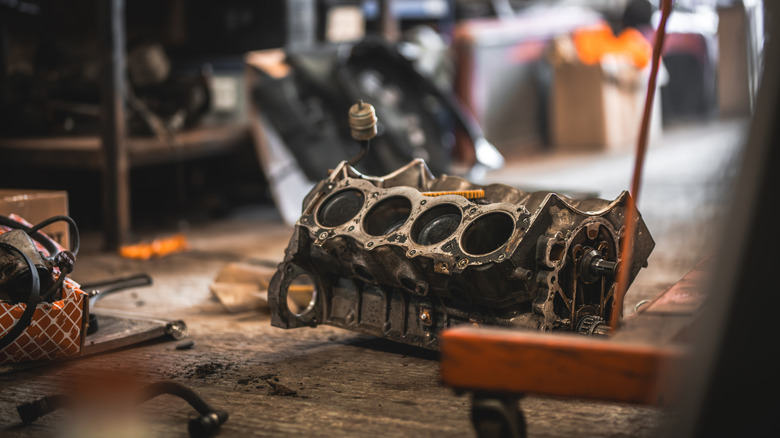
While aluminum blocks are generally designed to accommodate a certain level of thermal expansion and other temperature-related stress, they tend to crack around cylinder bores and other places with the complex geometry, where distortions can occur over the course of repeated heat cycles. In terms of open deck vs. closed deck blocks, open models may have a slight edge here, as they tend to run cooler than similar closed designs.
Naturally, freezing also applies tremendous acute stress to both materials, and is another major cause of cracking. Systems with an imbalanced ratio of water to antifreeze are particularly susceptible to this, as expansion can split thin areas of the block or crack cylinder walls when the coolant freezes.
Because of aluminum's increased susceptibility to thermal expansion, cooling system maintenance is extremely important. Blockages and coolant loss, and more severe problems like failed fans or water pumps, can lead to hot spots where temperature exceeds what the block surface can safely handle.
Casting quality is the third piece in the trinity of major failure triggers. Aluminum engine blocks are castings, and cast aluminum is subject to defects like gas porosity, shrinkage porosity, and oxide inclusions. A pore doesn't automatically mean an unusable block, but it can become a focal point for stress. A peer-reviewed study published in the journal Materials found that fatigue failures associated with porosity almost always began at pores when it comes to high-pressure die-cast aluminum alloys, while other research clearly indicates that pore size strongly affects fatigue performance in cast 319 aluminum alloy.