

Engine Block Vs. Cylinder Head: What's The Difference?
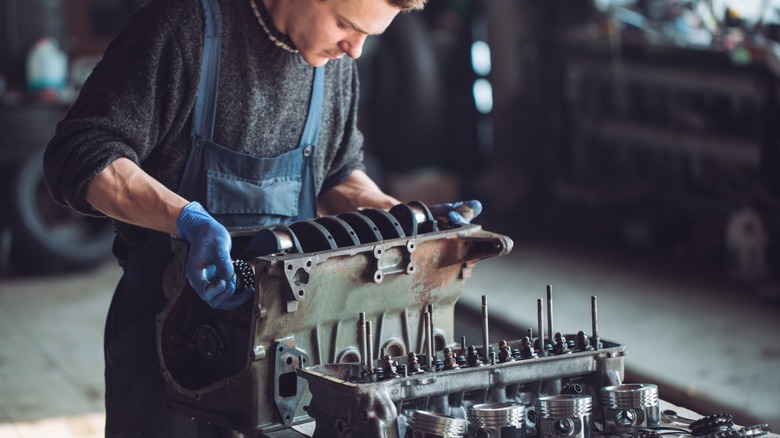
When it comes to engines, the term "block" can mean a few things. There's big block versus small block and short block vs long block, but at the heart of the matter is the engine itself. The difference between big block and small block is based on physical size, but short block and long block engines differ based on the absence, or presence, of cylinder heads, or head in the case of an inline or single cylinder engine.
Since a long block, a common type of remanufactured engine, comes with their requisite cylinder head(s) attached, it could cause confusion surrounding the differences between an engine block and a cylinder head. However, the fact that they are two separate engine components with different tasks is an important distinction.
The engine block forms the foundation of the engine, providing a solid structure for mounting the engine to the vehicle's frame and the surface where the cylinder head attaches. Inside the block you'll find the engine's rotating components like the crankshaft, connecting rods, and pistons. Depending on the engine's valvetrain design, the camshaft may also be found within the engine block.
Engines with overhead cam valvetrains have camshaft components on their cylinder heads. Regardless of where the camshafts are located, the cylinder heads of most modern engines house the valves that regulate the engine's intake and exhaust flow. Ultimately, the cylinder head's primary function is to close off the open end of the combustion chamber, with a tight seal aided by a head gasket, to contain the compression and power of the engine cycle.
Different types of engine blocks
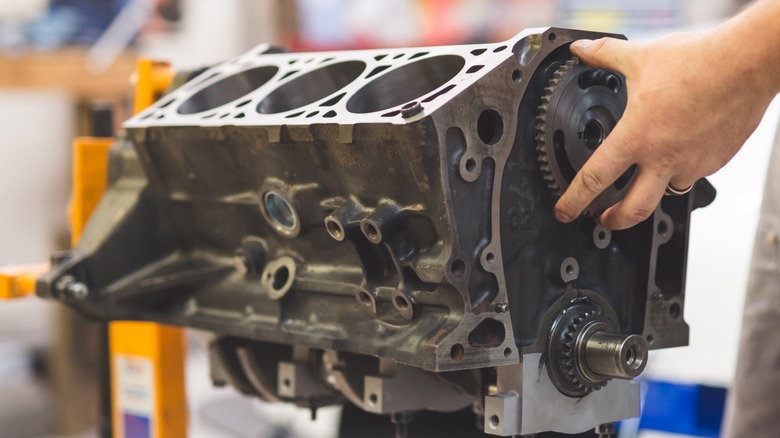
Engine blocks come in a variety of sizes, configurations, and materials. Blocks made from aluminum are becoming more common with manufacturers taking advantage of the lightweight material. Cast iron engine blocks were the long standing favorite for the materials strength and low cost. Ford's 6.7L Power Stroke, one of the best diesel engines ever put in a pickup truck, uses a compacted-graphite-iron (CGI) engine block, which is touted as being stronger than cast iron with less weight.
There are also a few different layouts of engine blocks. Notable examples include the V-engine design made popular with names like the V-Twin, V6, and V8. Of course we should include the V10, V12, and V16 varieties as well even if they are less common.
While single cylinder engines are often overlooked, they power a number of machines that we encounter often, like lawn care equipment, boats, portable generators, and smaller motorcycles to name a few. Inline engines ranging from two to six cylinders are popular as well, powering a wide variety of motorcycles, cars, and trucks.
Our final engine layout is the horizontally opposed engine, sometimes denoted as the H-engine. These engines have evenly numbered cylinder counts often coming in at two, four, and six. While H4 and H6 engines power cars from brands as varied as Volkswagen to Porsche, several motorcycle brands also use them along with the H2.
Internal engine block structures vary as well. Closed deck and open deck engine blocks offer two obviously different designs. In short, open deck engine blocks have more space around the cylinders for cooling liquid to circulate than closed deck designs. However, less supporting material means less rigidity and strength which can lead to cracked engine blocks, leaving engine designers to strive for a middle ground.
What makes cylinder heads different?
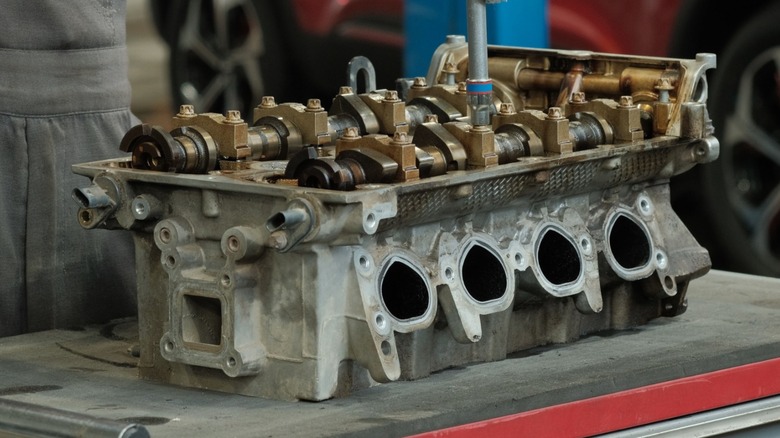
The differences in cylinder heads don't get talked about as much as those of engine blocks, unless you're in a group of gearheads that enjoy the minutia of squeezing the last bit of performance from their engines. You might hear someone talk of porting and polishing cylinder heads in polite conversation, but you usually have to get to know someone before they'll reveal their possession of a set of Chevy double hump heads.
We can simplify the workings of an internal combustion engine by describing it as an air pump. It pulls air (and fuel) in and pumps air (and exhaust gases) out, and it all flows through the cylinder head.
High-performance cylinder heads typically have larger intake and exhaust valves, often two of each for every cylinder, unobstructed ports to and from their respective manifolds, and small combustion chambers. Makers of less efficient cylinder heads don't worry so much about performance as they do simplicity and cost. Some cylinder heads, like the one on a simple lawn mower, don't do anything except seal in the pressures of the combustion chamber.