

5 Disadvantages Of Front-Wheel Drive Cars
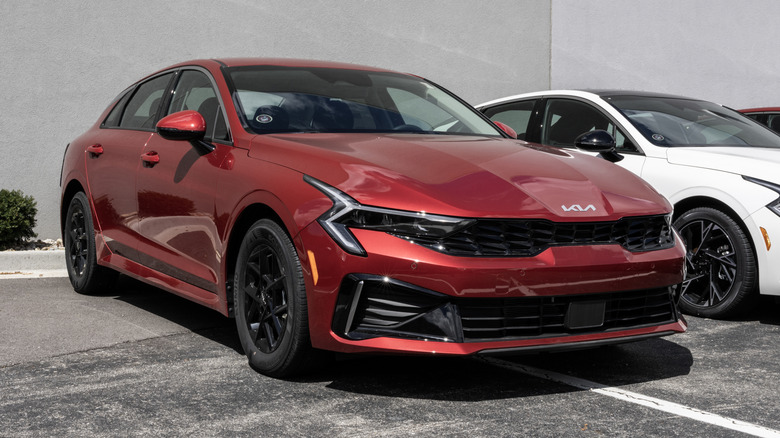
Imagine yourself stuck at a red light on a rainy and cold evening. You press the gas a little too bravely, the front tires lose grip, and the steering wheel gives a small but noticeable tug. If that sounds familiar, there's a good chance you've spent time behind the wheel of a front-wheel drive car, and you've already met one of its character traits firsthand.
Front-wheel drive (FWD) truly is everywhere, and recently, many car brands have started offering fewer RWD options in favor of FWD and AWD. It underpins sedans, hatchbacks, and family-friendly crossovers, and for many drivers, it's the only layout they've ever known. Placing the engine and the driven wheels at the same end of the car makes for a compact, efficient package that's cheaper to produce, easier to fit into a small footprint, and decent with cabin space.
The engine's weight sitting over the drive wheels also helps with traction. Be that as it may, every engineering decision involves a compromise. When the same pair of wheels is responsible for steering the car, putting the power down, and carrying most of the car's weight, something has to give.
Sometimes that shows up as handling that feels less composed when you push hard into a corner. Other times it shows up at the shop, or in limits on how much power the car can realistically put to the surface. None of this makes a FWD car worse. Still, if you're weighing FWD against AWD or RWD for your next car, it helps to know the downsides going in. Here are five disadvantages of front-wheel drive cars.
Torque steer
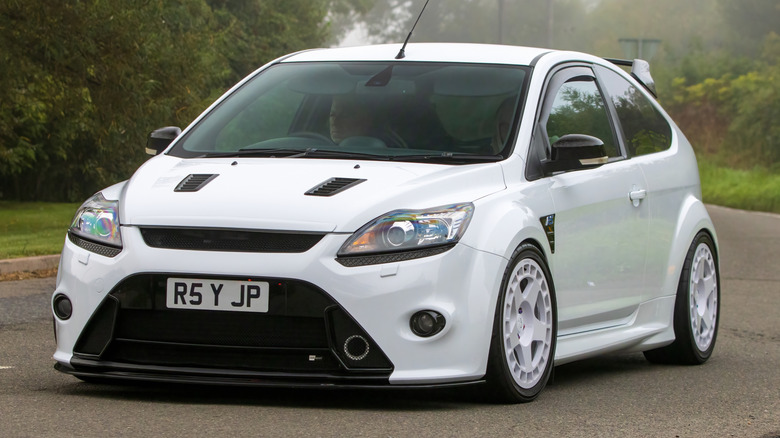
In a RWD car, the rear wheels are the ones driving the car. This means that the front wheels are only tasked with steering. When the front tires are both driving and steering the car, the two jobs can end up competing with each other in certain situations. For example, if you drive a front wheel drive sports car, you have probably felt the car tugging to one side when you mash the accelerator pedal.
This is called torque steer, and as the name implies, the torque sent to the front wheels pulls on the steering. Although this can be experienced with RWD and AWD cars due to tire or suspension specifics, with a FWD car it mostly has to do with the engine orientation and how the car puts its power down across both tires.
Specifically, FWD cars typically have transversely mounted engines, and the transmission is likely closer to one wheel than the other. This means that the shaft that sends power to the wheels is shorter on one side than the other. When the accelerator is pressed hard, one wheel can end up getting slightly more or less torque than the other, and that difference is what tugs the steering to one side.
Torque steer can also happen due to worn-out suspension components, damaged tire sidewalls, a rough patch of road with poor traction, or even problems with your car's engine mounts. It also tends to get more noticeable as engine power goes up, which is why a powerful FWD car can feel unsettling under hard acceleration.
Understeer
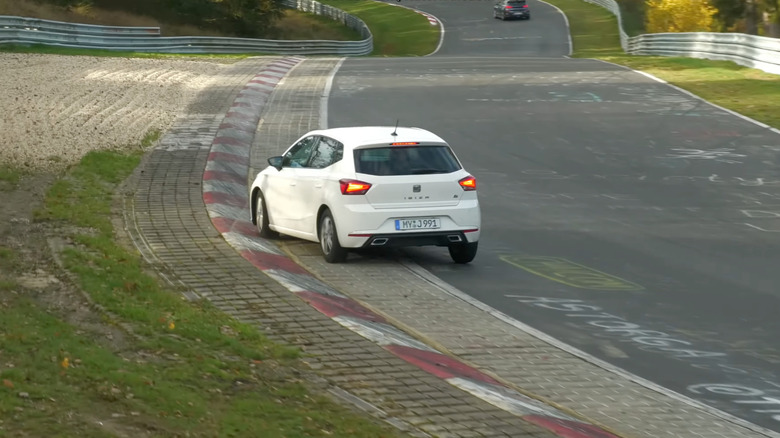
Torque steer isn't the only way the front wheels' double duty starts being a problem. Most FWD cars carry most of their weight over the front tires, since the engine and transmission both sit there, and that puts the front tires under constant load. Those tires then have to steer, brake, and provide drive all at once, and there's only so much grip to go around. Ask for too much and they let go, which is what understeer is: the car keeps pushing straight on when you want it to turn.
In practice, that means a FWD car driven hard into a corner tends to run wide rather than tuck in. You turn the wheel, the car barely responds, and the natural instinct is to turn it even more, which can make things even worse since the front tires are already at their limit. Speed, corner shape, and road surface all change how soon it happens, wet pavement especially. A RWD car usually feels more balanced, since the rear tires handle the pushing and the front tires can focus on steering.
That doesn't mean FWD cars are inherently dangerous on the limit. Understeer is predictable, and many manufacturers tune their FWD cars to behave this way on purpose, because easing off the throttle is an easy and natural way to get the grip back. Still, it's a limit you'll run into sooner in a FWD car than in a RWD one, and it's one of the main reasons enthusiasts tend to avoid them.
Limited performance potential
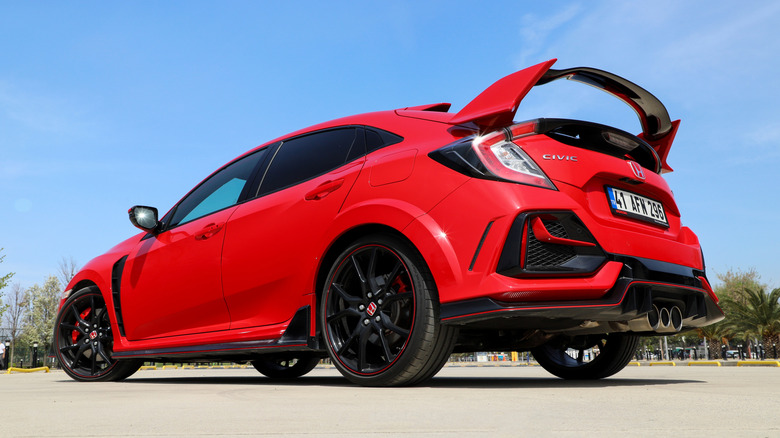
Many compact cars that are fun to drive use FWD, and in many cases, the reason they're fun is partly that they handle well, and partly because people like the imperfections of a dynamic front wheel drive car. However, no matter which performance FWD car you look at, you won't see massive horsepower and torque numbers. There's a ceiling on what this layout can do, and the numbers make that clear.
If we look at the Car and Driver list of the quickest FWD cars it has ever tested, we'll see that a four-second 0-60 mph time is at the very top end of what these platforms can do. Moreover, the Car Throttle list of the most powerful FWD cars ranks the 1960s Oldsmobile Toronado first, coming in at 400 horsepower. Although both of these figures are impressive, they are nowhere near the best RWD and AWD cars, which routinely make far more power and get to 60 mph much quicker.
This is, once again, because asking the front wheels to steer, brake, and drive the car all at once has its practical limits. We already noted how mashing the accelerator can cause understeer and torque steer, and even a well-sorted car like the Golf GTI has only so much front grip to go around. Now imagine what would happen if the car in question had 800 or 1,000 horsepower.
The front tires simply couldn't put that much power down, which is why most of the quickest and most powerful cars on the road send it to the rear wheels or to all four. Although specialized FWD drag cars can make those sorts of power figures, as far as road cars go, the upper limits of front wheels providing drive are pretty clear.
Quicker tire wear
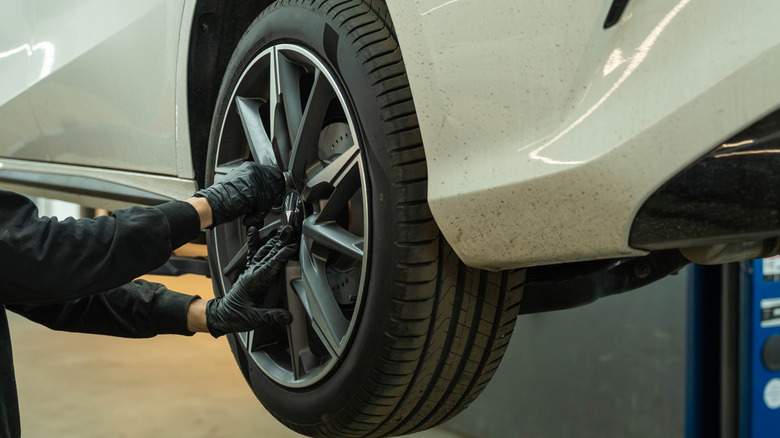
Oftentimes, in something like a FWD sedan, around 60% of the car's weight up front, while 40% rests on the back. A 2026 Golf GTI, for instance, carries 61% of its weight on the front axle and 39% on the rear.
Now, with all that added weight, there is a clear drawback in tire wear, because the front tires have to endure more weight than the tires at the back. Moreover, when the car is driven in anger, and especially when braking heavily, even more weight is transferred to the front axle, which wears the tires out even quicker.
Most of a car's braking force goes to the front tires as well, so the same pair carrying the most weight is also doing most of the stopping, and being that the front wheels are the drive wheels, combined with the mass they have to carry, that also causes them to wear out quicker. Bridgestone puts the gap at up to 2:1 on FWD cars, which is a big reason to rotate your tires regularly.
It is a similar reason why RWD cars wear out their rear tires quicker, except here the front tires are doing everything at once. On top of that, they are the ones turning the car, so every corner adds sideways stress to the same tires that are already carrying the weight, putting the power down, and braking. In practice, that means the front tires on a FWD car often need replacing sooner than the rears, which makes regular rotation more important.
A tighter engine bay
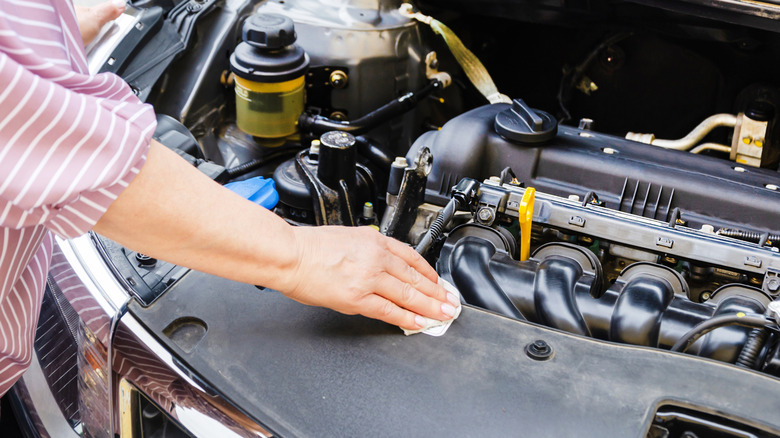
What is it that a FWD car packs up front that a rear-wheel drive car packs in the back instead? First of all, you've got the front differential, which doesn't exist on a RWD car because a RWD car doesn't send any power to the front wheels. Moreover, the front axle half-shafts, the front CV joints, and the wheel hubs designed to transmit drive torque are all components you will find at the front end of a FWD car, but not a RWD one.
The integrated front transaxle (the transmission and differential in one unit) also sits up front, and many FWD cars add an intermediate shaft and support bearing on top of that. Since the engine is usually mounted sideways, there is very little spare room around all of this hardware, and everything has to share that space with the suspension and steering components too. With so much packed together, it can be harder to reach various parts in the engine bay. If that happens (and it often does), the mechanic will have to spend more time on the job, and more labor time means a bigger bill for you.
Some of these parts also take a beating. The CV joints and half-shafts have to transmit power while the wheels are turning and moving up and down with the suspension, which is why they are a common wear item on FWD cars. None of this makes a FWD car a nightmare to own, and plenty of routine jobs are no harder than on any other car. Still, when something major needs addressing, the tighter packaging can add time to the job, and that time adds up on the final bill.