

Why Are So Many Car Brands Offering Fewer Rear-Wheel Drive Options Now?
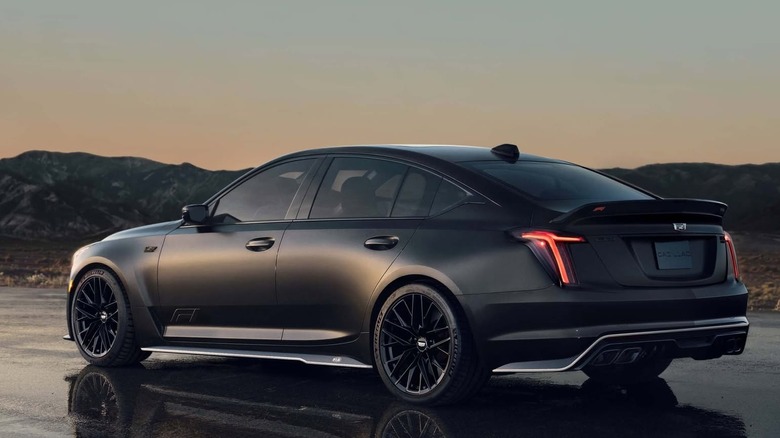
A vehicle's drivetrain influences many other design elements. Packaging, safety, expense, weight, maintenance costs, and more all factor into an automaker's decision about which drivetrain to use. It's a choice between four different configurations: Rear-wheel drive, front-wheel drive, all-wheel drive, and four-wheel drive (or 4x4). But you may notice that RWD has taken a back seat to the others, especially FWD.
Let's rewind to 1966, when GM introduced the front-wheel drive Oldsmobile Toronado. The Toronado handled well in inclement weather and had a flat floor, as it didn't need a driveshaft running to the rear axle. That let designers lower the car without needing an intrusive tunnel in the passenger compartment. More room for passengers, better packaging. Similar guidelines dictated the original Mini, the classic British hot hatch known for being roomier than one might expect. Basically, FWD offered spaciousness, better on-road manners, and a more compact frame.
Manufacturing has evolved significantly since the mid-20th century, but physics hasn't. Modern RWD cars still need a driveshaft if they're not mid- or rear-engined, putting them at a disadvantage. Safety also plays a part: Having all the mechanical components up front, as in a FWD car, and biasing the car to understeer helps with emergency maneuvers. FWD cars are also more efficient, thanks to reduced parasitic drag from the long shaft running to the back. These have all combined to make RWD a less appealing option for carmakers.
The advantages of other drive configurations
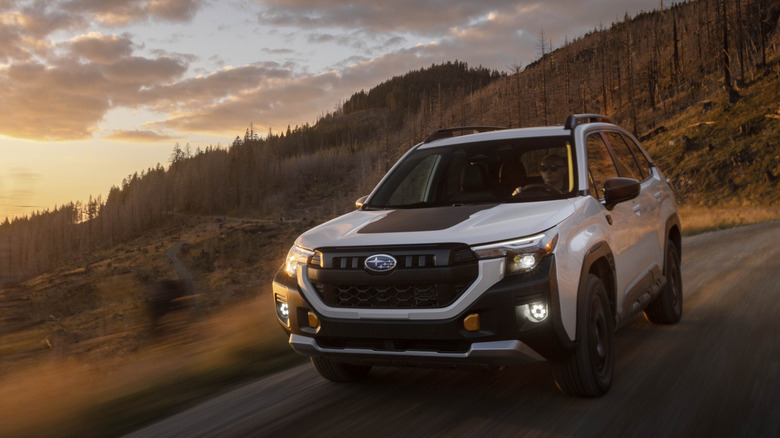
Aside from being more space-efficient, safer for the average driver, more fuel-efficient, and lighter than cars with other drivetrains, FWD cars also have a cost advantage. They don't require driveshafts or any other components required to send power to the rear wheels. But while FWD is eminently practical, it can be sporty, too, as proven by fun FWD sports cars like the Alfa Romeo GTV and Volkswagen Scirocco.
If your modern car isn't FWD, it's likely AWD, which has a different set of pros and cons. Since it drives all four wheels, AWD obviously offers the most off-the-line traction. However, it's typically more complicated, pricier, and adds a lot of weight to the vehicle. But modern AWD systems' ability to vector torque to individual wheels on the fly arguably makes the safety and traction benefits worth the weight and cost penalties.
There are several AWD systems on the market; Subaru's Symmetrical AWD, for example, differs from Audi's Quattro, BMW's X-Drive, and so on. Generally, though, the point is to provide better traction than you'd otherwise get in a 2WD car, without the roughness of a 4x4 system. FWD trades some of that traction for more room, less expense, and potentially lower maintenance costs.
Why RWD was phased out
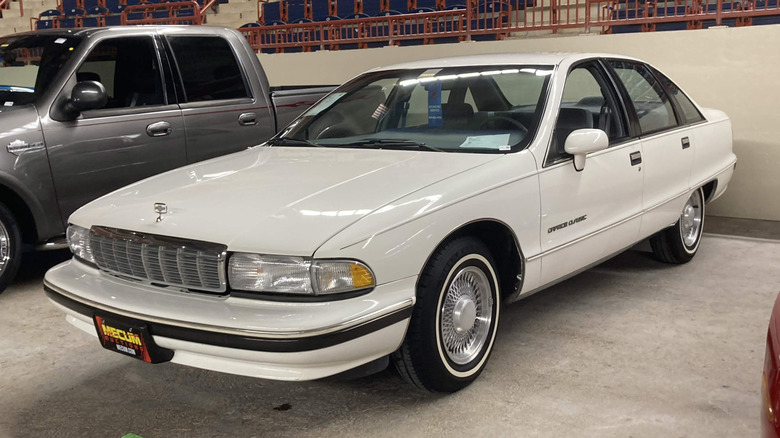
Of course, RWD also has upsides, including potentially more enjoyable handling, so why did automakers ditch it? One obvious reason is safety. Imagine swerving to avoid an obstacle and overcorrecting, causing your vehicle to break traction. In a RWD car, the rear wheels will start to swing around and oversteer. FWD cars, with extra weight over the front and non-driven rear wheels, will understeer instead.
Understeer is generally considered less dangerous than oversteer, as if you do hit anything, you'll likely hit it head-on. While crashing into anything is bad, a head-on collision is the lesser of two evils, as there's just more car to absorb the impact than in a side impact caused by oversteer. Unless you're used to RWD and know how to compensate for snap oversteer, which isn't exactly easy in a panic situation, FWD is the safest option, and automakers know that.
FWD's downsides, such as the tires having to do double the work (being driven and doing the turning), are also generally less of an issue these days. Modern tires grip well and last a long time; the name of the game is fuel efficiency, interior room, and safety. Put simply, FWD offers a better experience in those aspects than RWD. The only other major downside is that you have everything up front, which is one reason why certain components are impossibly hard to reach in some cars. But evidently that's a trade-off that most manufacturers are willing to make.