

5 Downsides Of Plug-In Hybrids You Should Consider Before Buying One
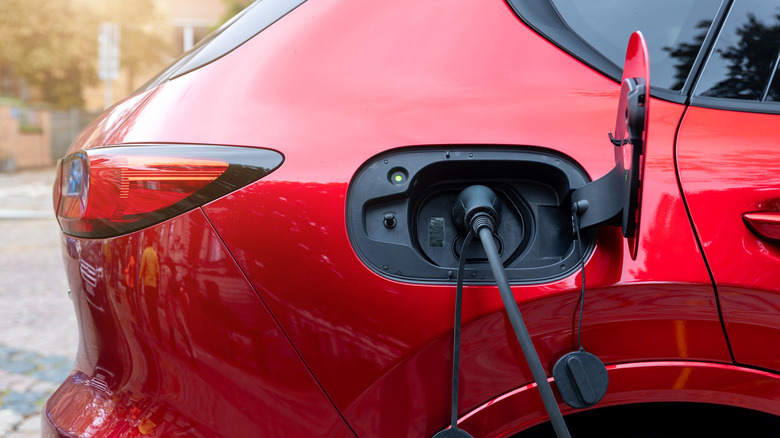
Hybrids are considered to be more environmentally friendly and have the advantage of using less gas than their traditional ICE counterparts. As fuel prices have risen — and continue to stay elevated as of the time of writing — it has led increasing numbers of buyers to make the switch to hybrid vehicles. First-time electrified vehicle buyers can pick from a range of different powertrain types. Knowing the differences between them is important to both maximize savings and minimize inconvenience.
At the least-electrified end of the scale are mild hybrid electric vehicles (MHEV), which feature an electric motor that assists the main combustion engine. Then, there are full hybrids (HEV), which can drive for short distances on all-electric power but still rely on the combustion engine for most of their grunt. The next step along the scale is plug-in hybrids.
Plug-in hybrid electric vehicles (PHEV) combine a gas-powered engine with one or more electric motors to offer a middle ground for drivers who want the benefits of all-electric driving but aren't ready to switch to a pure EV (also called a BEV). At first glance, it might seem like they offer the best compromise between electric and gas power, but there are a few downsides worth considering before you buy one.
PHEVs need regular charging
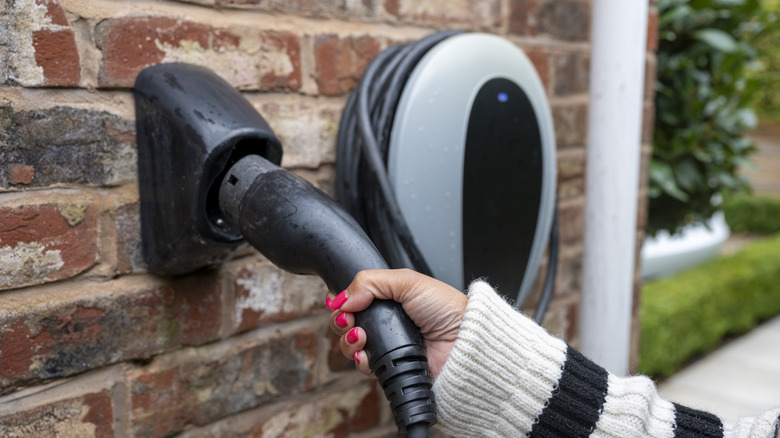
Part of the appeal of buying either a mild hybrid or full hybrid is that there's no need to change your daily habits. You'll benefit from the increased fuel economy that electrification brings. But aside from taking fewer trips to the gas station, your everyday driving experience remains pretty much the same. In contrast, to make buying a PHEV worthwhile, you'll need to be able to regularly plug it in.
Anyone who isn't able to charge their PHEV's battery consistently would likely be better off with either a mild or full hybrid, since the fuel economy of many PHEVs drops considerably when they're running off gas power alone. The most practical way to recharge the battery is via a charging point installed at home. That way, things like charging speed matter less, since you can always replenish the battery overnight when the vehicle isn't being used. Relying on the public charging network is not as practical, although we'll get into the details about that later.
Most PHEVs will offer an all-electric range of between 20 and 40 miles, although some, such as the Mercedes-Benz GLC 350e, have official range approximations of more than 50 miles. Data from the AAA Foundation for Traffic Safety estimates that the average American drives 28.6 miles per day, which means that many drivers could feasibly cover their everyday trips in a PHEV without needing its gas engine at all. For many PHEVs, a Level 1 charger is sufficient to fully replenish the battery overnight. However, longer-range models may require faster Level 2 charging to achieve a full charge in that time. Installing a Level 2 home charger costs an average of $1,700, with prices ranging from $749 to $2,500, so be sure to factor this expense into your total upfront investment.
PHEVs have higher maintenance costs
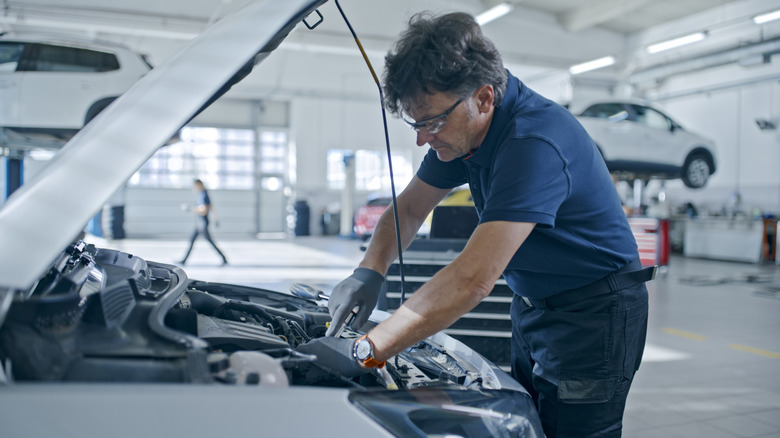
PHEVs are, by their nature, complex vehicles to design and build. They have combustion engines, hybrid batteries, electric motors, and plenty of clever systems that make all of those components work in harmony with each other. Given that complexity, it shouldn't be surprising that they're more prone to going wrong. In J.D. Power's 2026 U.S. Vehicle Dependability Study, PHEVs emerged as the most problem-prone powertrains, ahead of both BEVs and other types of hybrid vehicles.
Research by the Department of Energy found that PHEVs and gas-powered vehicles have significantly higher scheduled maintenance costs per mile compared to BEVs, primarily because electric motors don't need as much upkeep as combustion engines. A 2026 study by MIT also revealed that, in areas of the U.S. where electricity was affordable, PHEVs tended to have higher lifetime ownership costs — about $4,500 more than comparable BEVs.
The electric batteries and motors in new PHEVs and BEVs will be covered by a manufacturer warranty. But once that expires, there is also the risk that the battery pack will eventually have to be replaced. However, it's worth noting here that the chances of that replacement actually being needed may not be as high as many people might think. A 2024 Stanford-SLAC study suggested that batteries evaluated in real-world driving conditions could potentially last up to 40% longer than what conventional laboratory tests had indicated. Ultimately, the concern for PHEV owners may not be battery replacement, but the added maintenance and repair bills that come with a complex powertrain.
PHEVs might not be as green as you think

It's easy to assume that buying a plug-in hybrid is automatically much more efficient than purchasing a gas-powered vehicle. For years, they've been touted as a green alternative, an eco-friendly way to keep an engine under the hood without needing to rely entirely on the patchy public charging network. In reality, while they can reduce emissions compared to pure-combustion cars, recent data from Europe suggests that PHEVs aren't quite as clean as many buyers are led to believe.
Data collected by the EU and analyzed by Transport & Environment revealed that the latest PHEVs produced up to six times more carbon dioxide emissions in real-world driving, on average, than their official estimates suggest. Furthermore, the gap between actual emissions and lab tests was found to have widened between 2021 and 2024, which was the most recent year figures were available, as of this writing.
There are some caveats here: The official estimates came from Europe's WLTP test cycle, which is different from the American EPA test cycle, and the range of models available in the European market is not the same as that of the American one. Even so, it's worth taking any PHEV manufacturer's emissions claims with a healthy dose of skepticism.
Many PHEVs don't support DC fast charging
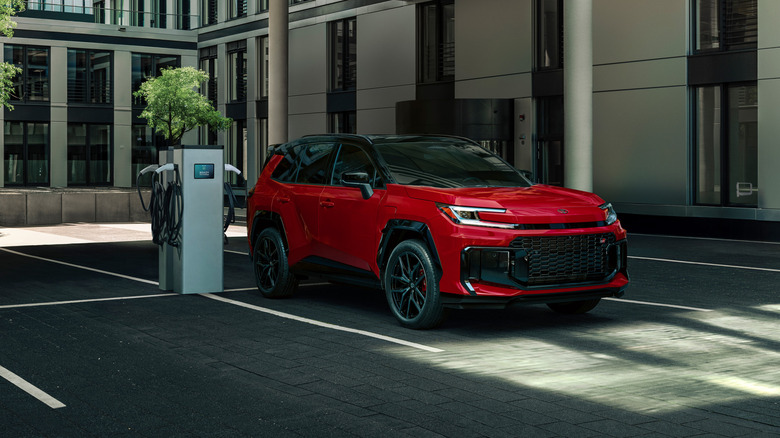
Drivers looking to minimize the real-world emissions of their PHEVs will want to use them in all-electric mode as often as possible, but that might not always be practical if they're away from home. Certain trims of models like the 2026 Toyota RAV4 PHEV support DC fast charging, but other versions do not, and many other PHEVs don't support it at all. Our reviewer asked Toyota's representatives why only certain RAV4 models get fast charging support, and they were told that it was more important to European buyers than it was to Americans.
When we tested out the 2026 Kia Sportage PHEV, one of our (admittedly few) complaints was that charging its battery took a long time. The Sportage's J1772 AC charging connection and lack of DC fast-charging capability meant we couldn't take advantage of some charging stations that a modern BEV would have been able to use.
The difference in charge time between a PHEV with and without fast charging is stark: the fastest charging trims of the RAV4 PHEV can charge from 10-80% in 35 minutes, but models without fast charging capabilities will take 2.5-3.5 hours to recharge. That makes it very impractical to rely primarily on public charging points to replenish the batteries of most PHEVs. So unless you have a charging point at home or at your work, it's probably better to opt for a different powertrain type. A BEV will usually charge much faster, while either a mild or full hybrid won't need charging at all.
PHEVs aren't best suited to long highway drives

Shorter trips with frequent stops and starts are where PHEVs shine, while longer highway journeys are better suited to other types of powertrains. This is because sustained driving will deplete a plug-in's battery. When usable electric range is completely exhausted, PHEVs switch to charge-sustaining hybrid mode, with gasoline supplying the net energy. Since PHEVs feature larger, heavier hybrid batteries than mild or full hybrids, the added weight makes them less economical when they're running on gas power alone.
To take an example, the Environmental Protection Agency (EPA) estimates that the 2026 Kia Sportage PHEV returns 36 mpg combined on gas power alone. Meanwhile, the FWD version of the regular Sportage Hybrid hits 42 mpg combined. On the highway, the Sportage Hybrid should achieve 44 mpg, according to official figures. The EPA does not provide estimates for the Sportage PHEV's gas-only highway miles per gallon. But given the 6 mpg difference in the combined figure, drivers will almost certainly use less gas if they're at the wheel of an FWD Sportage Hybrid for long highway drives.
PHEVs have their fair share of downsides. But even so, they still remain a solid choice for drivers who aren't yet ready to switch to a BEV. From famous nameplates like the Toyota Prius to plug-in hybrid versions of bestselling family SUVs, there are plenty of PHEV options out there to suit a wide variety of buyer preferences.