

9 Of The Best Smart Glasses You Can Buy Instead Of Ray-Ban Meta Models
We may receive a commission on purchases made from links.
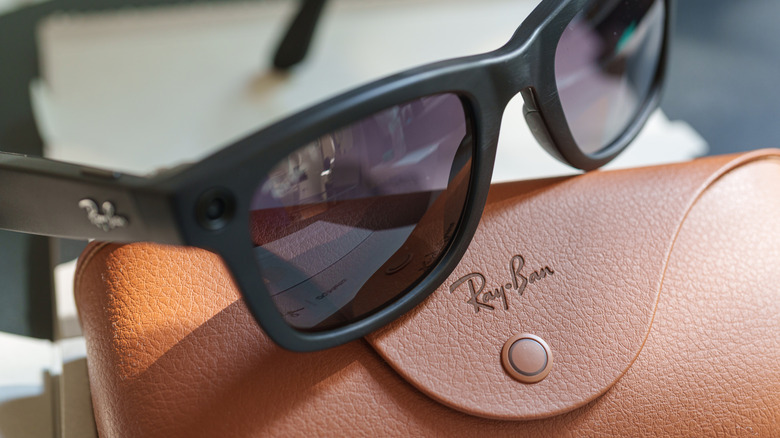
The third-generation smart glass collaboration between Ray-Ban and have a better battery life and more stylish form factor than their predecessors, as well as improved overall audio quality. However, these glasses aren't a massive improvement in every area — the cameras and water resistance haven't changed at all, for instance — and any its software improvements will arrive on previous generations as well. This can make it harder really determine whether the Ray-Ban Meta AI glasses are worth the $449 cost for everyone.
If you've decided that you don't want to stick with Ray-Ban and Meta's smart glasses, then you can always check out other models from different manufacturers that may provide more bang for your buck. With great reviews and a litany of features, many of the smart glasses from brands like Viture, Oakley, Xreal, and beyond can serve as valid alternatives to the Ray-Ban Meta glasses. Let's a take a closer look at some of the more compelling alternatives.
Viture Beast
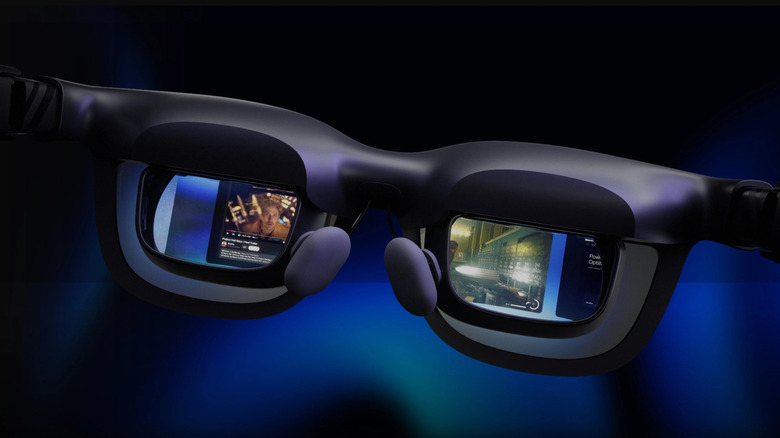
While wearing smart glasses to play games isn't a reality quite yet, products like like the Viture Beast shows that it may happen sooner rather than later. While, the Ray-Ban Meta glasses use an in-lens display instead of a proper screen, these $549 smart glasses use built-in micro-OLED displays, and that's their biggest perk. Multiple reviewers have noted just how large and colorful the results of such an approach are, though IGN did note that on-screen text could get a bit blurry at times. That issue would likely be straightforward to fix if Viture had added a focus dial to these glasses, but the Beast does at least include controls to tweak picture size and position.
Reviewers also loved the speakers of these smart glasses, which were co-developed with Harman Kardon, praising the loudness and crispness of the sound effects, musical scores, and dialogue. According to PCMag, audio was pretty light in the bass department, but that is to be expected from the open-ear nature of this device. Another great perk is that these glasses have dimmable lenses, helping them double as sunglasses when you're out and about.
Xreal a01+
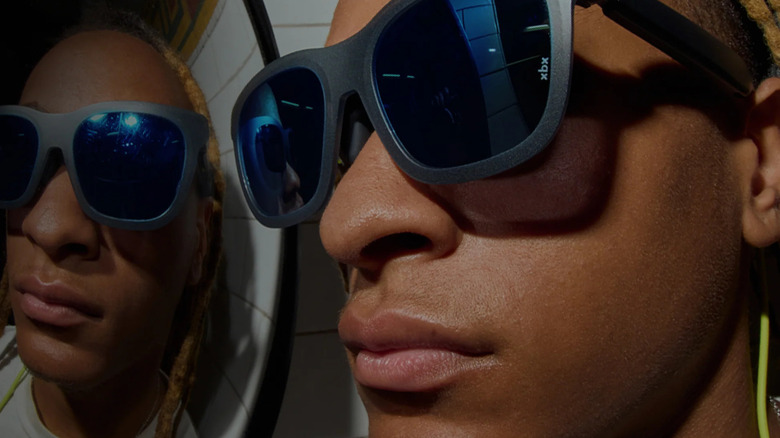
For $299, the Xreal a01+ is a far, far cheaper alternative to the Ray-Ban Meta smart glasses. Despite its price, multiple reviewers (including us) concluded this piece of tech punches above its weight in terms of its display. The picture quality of these smart glasses is very bright and vivid, offering an equivalent viewing area to a 147-inch screen. PCMag felt that activating HDR10 had little to no effect, but this is a minor complaint.
With a weight of just 2.2 ounces, these glasses should be pretty easy to wear for extended sessions. For people who enjoy customizing their eyewear, the front plate can be switched out for a fresh look. The dual stereo speakers perform well, according to our sister site Engadget, though bass was apparently lacking. However, anyone buying smart glasses to enjoy bass-heavy audio is going to have a bad time because of how they're designed.
As long as you don't mind the inherent clunkiness of a wired connection — and you don't own a Nintendo Switch, since the a01+ is incompatible with both versions of the console — these smart glasses can become a novel way to carry a screen on the go. In our review, we found the Xreal a01+ to be a great and affordable way to bring a home theater to your living room.
Oakley Meta HSTN

If you want smart glasses made by another company, but feel fine about staying within the Meta ecosystem, the Oakley Meta HSTN may be a good fit for you — or maybe almost a good fit. According to Android Central's review, the Ray-Ban Meta does a better job of staying put on your face during intense workouts. $399 also isn't exactly cheap, despite being a little more economical than its Ray-Ban counterpart. Audio quality is one area that impressed multiple reviewers, barring the ever-present bass problem. PCMag noted that sound leakage wasn't a problem on this pair of glasses, which is impressive given how smart glasses typically favor an open-ear design.
The high-quality video capability was also a highlight to reviewers. These smart glasses can capable of shooting 3K videos, although people who want stabilized video need to stick to 1080p. Unfortunately, the Oakley Meta doesn't let you tinker with any of the camera settings you'd usually find on a phone to adjust the frame. Videos are only shot in portrait mode, which could be great for people who want first-person Instagram content, but may be pretty disappointing otherwise.
Battery life is an area where the Oakley Meta HSTN shines. An 8-hour battery life on the smart glasses themselves, coupled with 48 hours of charge in the case, was far better than the Gen 2 Ray-Ban Metas when this gadget came out. The new Gen 3 variant may have a slightly better battery life, but the difference isn't huge.
Viture Pro 2

If price is what is preventing you from getting the Gen 3 Ray-Ban Meta glasses, the Viture Pro 2 is definitely more budget-friendly. For $299, these smart glasses offer a display that multiple reviewers have praised, emphasize its color, brightness, and impressive field of view. This is could be an attractive option to people in the market for gadgets that make long-haul flights easier. Digital Trends noticed a bit of shimmer in the picture output, but it seems like a minor issue. However, if you want to use it for work, Tom's Guide found the edge blurriness to be a major distraction. Sound was another area they weren't too happy about.
The Viture Pro 2 uses the same speaker array as its predecessor, which wasn't great in the first place. As a result, it apparently sounds very tinny. The 2.2-ounce weight should make it a comfortable enough device to wear, although Digital Trends noticed that the temple area started heating up after extended use. The VR mode that lets you enjoy a 360-degree view of the screen is pretty neat, but there's a catch. While Android users have unrestricted access to this feature, anyone with an iPhone will need to purchase an expensive $80 dongle to use this mode.
Even Realities G2

If you want a pair of smart glasses that look normal enough to fit into social settings, the Even Realities G2 is worth considering. Its unassuming looks were mentioned by many reviewers, as was its waveguide display. Trusted Reviews appreciated the information these smart glasses provided without being too distracting, while Lifehacker was impressed by how bright the monochrome micro-LED display was. The battery life is also very impressive, with the G2 rated for 48 hours of use before it needs to be plugged in. This comfortably outclasses the Ray-Ban Metas, which need multiple charging rounds in the case to measure up.
One thing you will miss out on if you opt for this pair of smart glasses instead of the Ray-Bans is the convenient Meta ecosystem. Compared to the company's robust software experience, Even Realities' app ecosystem is pretty limited. Lifehacker noticed in their testing that most third-party apps you can get for this pair of smart glasses are woefully unoptimized. Another thing to keep in mind is the astronomically high price — the Even Realities G2 retails for $599.
Reviewers commented on the unintuitive controls of the glasses. Wareable found that using the Even R1 smart ring with it fixed that, but this solution will set you back an additional $249, which makes the overall package far too expensive for the average user.
RayNeo Air 4 Pro
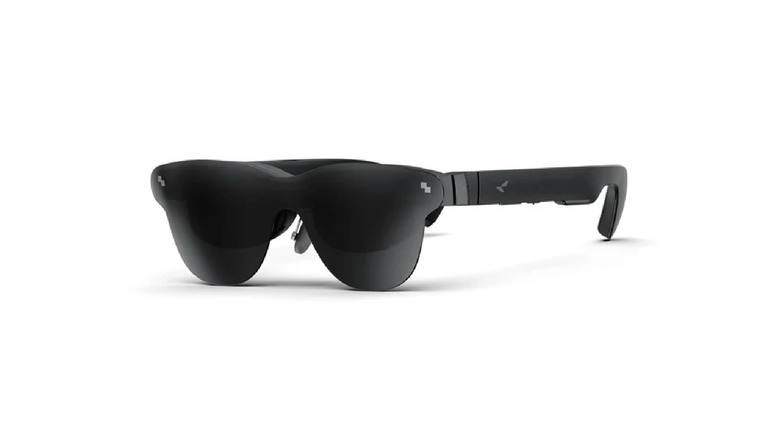
Yet another budget-oriented pair of smart glasses, the RayNeo Air 4 Pro retails for $299. This is hardly a perfect device. Android Authority highlighted blurry edges that could impact your overall immersion, and PCMag didn't find any major improvements in picture quality after enabling HDR10. The latter may be a boon for Pixel owners — since the RayNeo XR app isn't supported by Pixel phones, owners of these devices won't be able to view 3D or HDR10 content.
However, the image projected by these smart glasses should makes for a compelling counterpoint to all that. While the lack of integrated ambient light blockers — only present in the Batman and Joker editions — and a limited 47-degree FOV aren't great, the inclusion of three picture modes (Standard, Movie, and Eye Comfort), a peak brightness rating of 1,200 nits, and a 201-inch screen all hammer home the high-quality nature of its display. The Bang & Olufsen quad speakers were also the subject of praise from reviewers, who mentioned that the audio output was rich and clear. You can switch between Standard, Whisper, and Surround audio modes as well to make the most of this speaker array.
Viture Luma Pro

Yet another set of smart glasses from Viture featuring a micro-OLED display, the Viture Luma Pro is slightly cheaper than the Beast, with a $499 price tag. These smart glasses feature an electrochromic film to monitor brightness in well-lit areas, and a picture that reviews have praised for its color and sharpness. However, the dreaded edge blurriness issue rears its ugly head once again, with PCMag noticing this distortion at a high 1,920 x 1,200 resolution. However, this may not be a huge deal given the substantial 52-degree field of view, which should keep the major chunk of the screen real estate right in the center of the display.
This pair of smart glasses even comes with a focus dial that can account for up to -4.0 myopia. However, for all its perks, one area where the Luma Pro falls short in the eyes of multiple reviewers is audio quality. Despite integrating speakers that have been worked on by Harman, the sound itself is apparently rather lacking. This will make earbuds mandatory for anyone who wants to watch a movie on this wearable gadget when they travel.
Oakley Meta Vanguard

If you want a pair of smart glasses for grueling exercise, consider the Oakley Meta Vanguard. At $499, it's more expensive than the Ray-Ban Metas, but it's arguably better equipped for more rugged use. The smart glasses feature deeper integration with popular fitness apps like Strava and Garmin, and it can even display your exercise stats on top of the first person-video you may want to shoot while out on a run.
Meanwhile, connecting your Meta Vanguard to a Garmin smartwatch helps you auto-record footage during peak workout moments. This hands-free functionality is very convenient for people who don't want to pause their workout to adjust their video all the time. GearJunkie felt that the videos were a bit too bouncy and erratic for their taste, but your mileage may vary.
Wired didn't find the camera's specs to be anything to write home about, but people who want a dedicated action camera mounted on their forehead that doesn't weigh them down may find the Meta Vanguard appealing.
Everything in this pair of smart glasses is designed for working out. Multiple reviewers pointed out that the sound quality was great and loud enough to overpower any background noise. A 9-hour battery life means it'll stay active for a workout session, and IP67 water and dust resistance gives you the confidence you need to bring this pair of smart glasses for a glorious adventure.
Xreal 1S
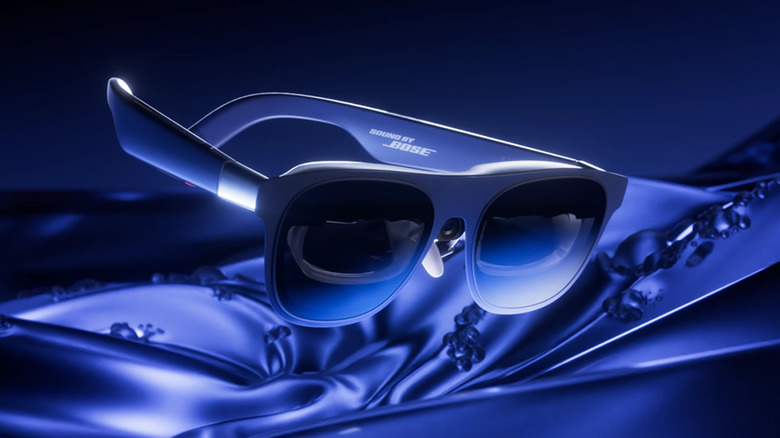
Anyone seeking out an affordable pair of smart glasses that uses a micro-OLED display should check out the Xreal 1S. At time of writing, this gadget is on sale for $399, $50 lower than its usual price. For that price, you get a massive 171-inch virtual screen, with a projected 1,920 x 1,200 resolution, a 120Hz refresh rate, a peak brightness rating of 700 nits, and Bose-tuned dual speakers. All of this is completed with Xreal's X1 Chip that runs Optic Engine 4.0, which impressed Tom's Guide with its performance. However, there are some minor caveats regarding the display — the 120Hz refresh rate is missing in ultrawide mode, and the 52-degree FoV was considered to be slightly lacking by TechRadar.
The 1S comes with multiple useful viewing modes. You can either place a massive virtual screen in a fixed space or make it follow you. There's also a Real 3D mode that converts 2D images from your movies and video games into 3D. This works really well since the X1 chip supports native 3DoF tracking. Except for a lower frame rate, Tom's Guide was largely impressed by this image conversion. The device doesn't weigh too much either, coming in at just under three ounces. Tom's Guide did notice that these smart glasses became uncomfortably hot after continuous use, which may negatively impact the comfort factor of these glasses.
Methodology
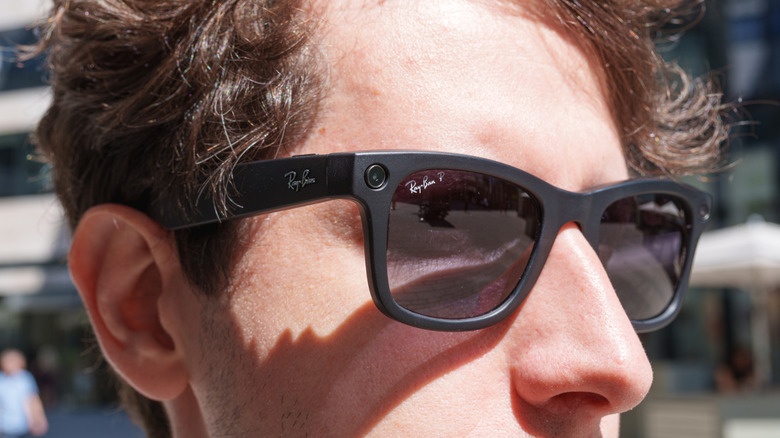
All the smart glasses mentioned on this list compete with the Ray-Ban Metas, either in terms of price, features, or both. To ensure high-quality recommendations, all these smart glasses have ratings of 4 out of 5 or 8 out of 10 scores from three or more reviews in reputable outlets. The only exception is a qualitative recommendation for the Xreal a01+ from us at SlashGear. Reviews consulted came from outlets like CNet, Wired, Tom's Guide, PCMag, Wareable, Lifehacker, GearJunkie, Gaming Nexus, IGN, Trusted Reviews, Android Authority, Engadget, Digital Camera World, Digital Trends, Gizmodo, TechRadar, Android Central, Stuff, The Guardian, and PhoneArena.