

3 Disadvantages Of Front-Load Washing Machines

Considering electricity in the United States now costs more than 30% more than it did in 2020, a good place to start when shopping for a new washer is to figure out how each type of washing machine ranks in terms of efficiency. On that front, a front-loading washing machine is pretty good at conserving water and energy. Plus, front-loaders are gentler on fabrics and spin much faster, which cuts down on the time your clothes spend in the dryer. And speaking of dryers, it's often possible to stack one on top of your front-load washer. That way, you can make the most of vertical space.
As persuasive as all this sounds, there are a few other things to keep in mind. First, washing cycles on front-load washing machines often take longer compared to other types. Second, the design itself, with the door on the front, makes the machine more prone to mold and mildew. To keep that nasty musty smell away, you'll have to be hands-on with maintenance.
Then there's all the bending and crouching you'll have to do when loading and unloading the drum. None of these things make front-loaders a bad buy per se. In fact, some of the cons we'll explore have workarounds. Knowing them upfront just helps you understand what you'll be dealing with and whether a front-loader is the right fit for you.
Wash cycles can be considerably longer
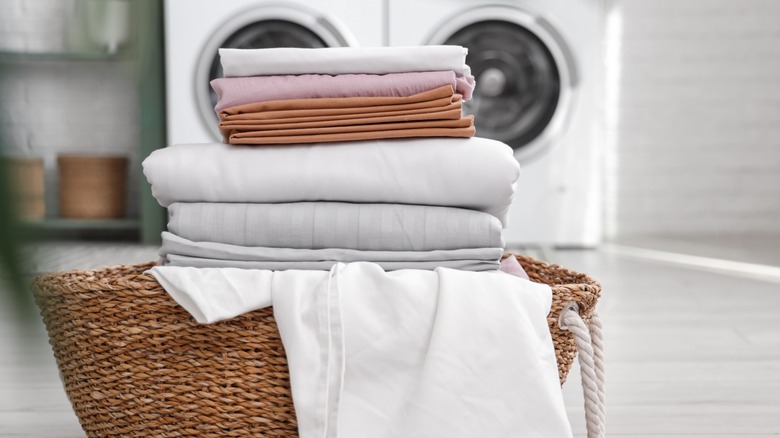
A good number of people dread laundry day, mostly because of how much of a time sink it ends up being. Now, that efficiency we were talking about earlier doesn't quite translate into how long it takes a front-loader to get through a load. In fact, after a series of tests, Consumer Reports found that front-load washing machines are actually the slowest at the job, taking anywhere from 65 minutes to two hours. Top-loaders, meanwhile, can wrap things up considerably faster.
Top-loaders without an agitator in the center, for instance, take between 55 and 85 minutes, while the ones with an agitator can get it done in as little as 35 minutes. Now, keep in mind that while agitator top-loaders seem to save you a whole lot of laundry time, one of the biggest disadvantages of a top-loading machine is the wear and tear it exerts on your clothes. And this in itself is a double-pronged issue.
That same intensity can make agitator top-loaders effective at removing stubborn stains, including mud and grease. That comes down to the extra scrubbing action of the agitator. But most people aren't itching to pound out tar, and for everyday stains, front-loaders are often more than sufficient. Being gentler on your clothes also means you get to wear them longer. And the extra time you spend waiting on a load is made up for in dryer time, thanks to the faster spin cycle. Plus, many newer models now come with quick wash settings.
Front-load washers are more prone to mold and mildew

To be clear, every type of washing machine can end up smelling musty. And when it does, it's usually a sign you're probably not cleaning your washing machine as often as you should. With a front-load washing machine, though, the odds are often not in your favor. Consumer Reports' 2025 member survey found that 13% of front-loader owners reported mold or mildew in their machines. That might explain why, in recent years, more people have been reluctant to buy front-load washers. According to OpenBrand, sales of front-load washers trailed behind top-load washers: 28% to 66%.
It all comes down to the way it's designed. Since the door sits at the front, manufacturers have to fit a rubber seal, otherwise known as a gasket, around it to keep your floor from flooding, something top-load washers don't need. The gasket does its job, but it also traps moisture in its folds, creating a damp space where mold can grow on detergent residue, lint, and hair.
This problem even escalated into a class action lawsuit. Since then, manufacturers have taken great care to add vents, doors that stay slightly open, and self-cleaning features to keep mold from developing. So, if you're consistent with cleaning your washing machine's door seal and leaving the drum open to air out, you can avoid most of the mold, mildew, and mustiness. But if you want one less thing to babysit, you might want to reconsider the front-load washer.
There's the ergonomic issue
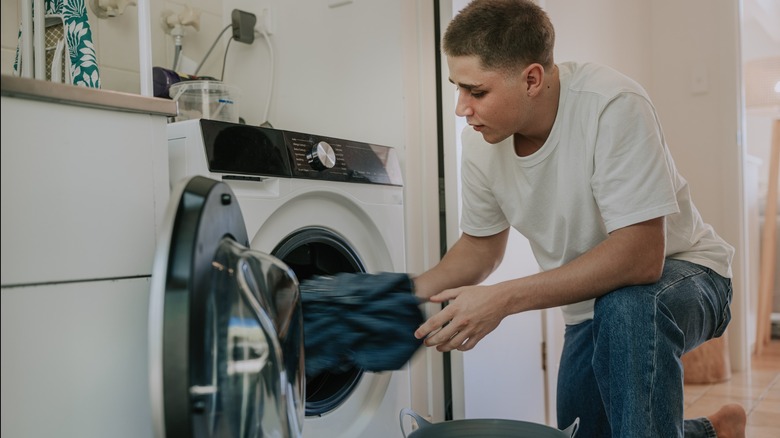
You'll often need to bend to get a load in there and to unload it after a wash cycle. And that's not a practical choice for everyone because of the physical toll it takes. You can put a front-loader on a pedestal or a riser to reduce how much you have to bend, and while this works, it can also exaggerate another problem if the pedestal or riser isn't even. Mind you, you're paying extra for this, and top-loaders are already cheaper than front-loaders to begin with.
Anyway, moving on. Compared to a top-loader, front-loaders tend to vibrate a lot, especially when they're particularly compact, or not level and all four feet aren't flat on the floor. It might not be such a big deal on a concrete floor, but it can be a real pain on wooden floors, especially if you're anywhere near the washer. Because the drum spins on its side, the machine needs to be completely level to keep it steady.
That said, manufacturers are steadily closing the gap between what a top-loader and a front-loader offer, so many newer models pass the vibration check with excellent scores. That's because manufacturers have started adding better suspension systems to keep the drum in check.