

How To Clean Your Washing Machine's Door Seal (And How Often You Should)
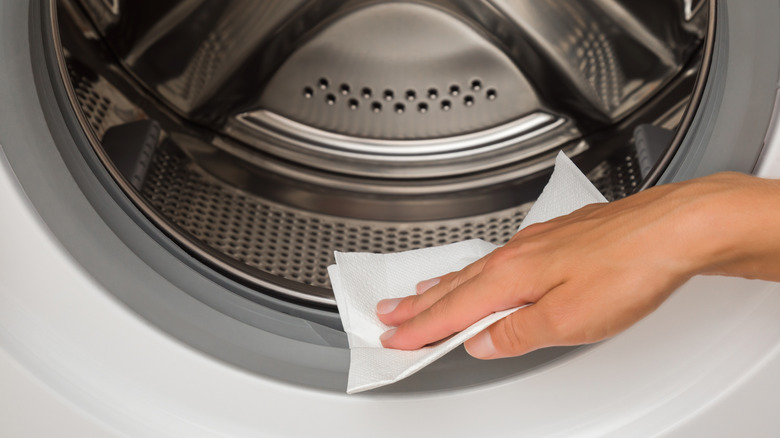
A washing machine is one of those appliances that is easy to forget about maintaining. As long as it looks, sounds, and functions fine, there's not much to do, right? Not exactly, since, despite cleaning clothes, a washing machine doesn't clean itself. You need to clean your washing machine often and remember to clean easy-to-overlook spots. Areas like the rubber door seal, for example, are prone to collecting laundry debris and moisture, so it's crucial to keep it clean. Fortunately, getting the seal cleaned up doesn't take long, nor is this job extremely tool- and cleaning material-intensive.
- Empty the washing machine and open the door.
- Using a slightly wet paper towel or cleaning rag, do a surface-level wipe-down of the rubber door gasket.
- Apply an all-purpose appliance cleaner of your choice, even one with bleach for an especially grimy gasket. Contrary to popular belief, vinegar as a homemade cleaner is a no-go here, since it can damage the rubber. Let your cleaner sit for a few minutes so it can work away at the dirt and debris.
- Using a sponge dampened with warm water, scrub away at the gasket. Give it a few passes to ensure all debris and stains have been removed.
- Once the gasket is as clean as you can get it, dry it with a dry towel. Make sure to lift the gasket flap and wipe out as much moisture as possible.
- Leave the door open so that the gasket can air-dry any remaining water and cleaner.
Cleaning a washing machine rubber door seal isn't too hard, though it should be done on roughly a monthly basis. Otherwise, you could face a bevy of negatives that range from annoying to costly.
The importance of cleaning your washer gasket routinely
There are a host of consequences for not cleaning your washer gasket on a consistent basis. Naturally, the build-up of dirt, dust, and hair within can become an issue. Not only could it create a nasty odor from the machine, but it's unsanitary and can lead to moisture retention in most washer models. That's not a good thing in any home appliance, as it means that mold and mildew growth are likely to follow. For the sake of your machine, your health, and the condition of your clothing, using a strong bleach-included cleaning solution isn't a bad idea.
On top of keeping things sanitary, there are risks to the machine itself that a dirty or clogged gasket can present. A gasket loaded with chunks of who-knows-what from dirty laundry could compromise the door seal. This means leaks while the washer is in use and an even bigger mess to clean up. Worse yet, it can negatively impact other parts of the machine and reduce performance. Increased gunk and debris can spread to areas like the drum, pipes, and hoses, clogging things up throughout. This forces the machine to work harder, and if it can't drain properly, this will harm your laundry and reduce cleanliness.
Even if you have one of the most reliable washing machines on the market, you still need to take proper care of your unit. Something as simple as a monthly rubber door seal wipe-down can go a long way in helping out your washer and the clothes that tumble within it.