

What Does Vinegar Do To A Washing Machine?
We may receive a commission on purchases made from links.
Having a washing machine in your home can be a major labor-saver, as it takes care of scrubbing your clothes, sheets, and towels for you. However, owning a washer does come with some minor headaches, including having to clean it frequently and certain issues that may lead to your clothes not being as clean as you'd like. For either problem, a bit of old homemaking wisdom is to employ vinegar, which can be used to clean and soften fabrics, as well as for things like stain removal.
The tricky thing about taking old homemaking wisdom at its word, though, is that it may not always be congruent with science and safety. Depending on who you ask, adding vinegar to your washing machine can yield all of those advertised benefits and more, or it could end up corroding and destroying all of the device's sensitive components like its rubber seals and hoses. Understanding the potential positives and negatives of using vinegar in your washing machine is heavily dependent on understanding how vinegar works from a chemical perspective, as well as exercising a healthy bit of caution.
The potential pros and cons of using vinegar in your washing machine
There's all kinds of advice floating around on the potential benefits of using vinegar in your washing machine. For example, you may have heard that vinegar in your laundry cycle can help to soften up stiff clothes, clean out mildew, and remove unpleasant odors. This advice comes not just from users, but even washer manufacturers themselves.
An FAQ on Samsung's Canadian website, for example, says that white vinegar is an excellent tool for removing hard water buildup in your washing machine's water-carrying elements like the inlet filter, which multiple users on the r/CleaningTips subreddit concur with. Appliance manufacturer Maytag adds that using vinegar in your washing machine can help to remove stubborn stains from clothes from sources like coffee, grass, and deodorant, as well as helping to brighten whites.
However, despite stating potential benefits, Maytag also notes that using vinegar in your washing machine can potentially damage some of its soft components, including rubber seals and rubber hoses. This could also extend to elastic elements in your clothing. These concerns are echoed by manufacturer Whirlpool, which adds that using vinegar could also damage the sensitive components hidden within your washing machine's drum. These are many of the same reasons why vinegar doesn't mix with engines, for instance.
If you're going to use it, treat it like the acidic substance it is
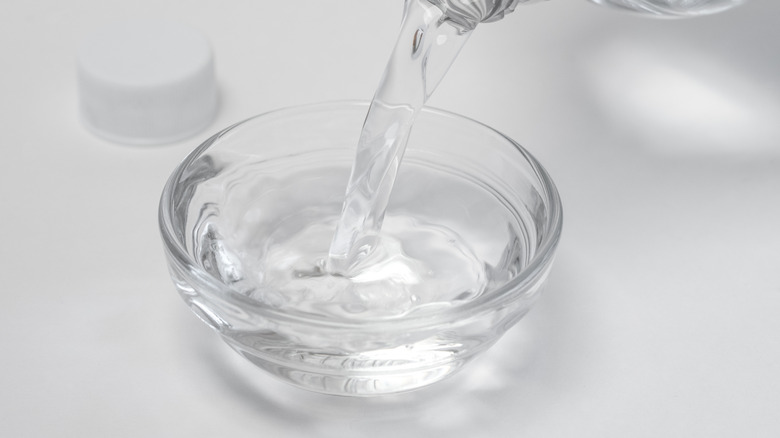
If you're determined to utilize vinegar's potential cleaning benefits, the best way to approach it is with a healthy, scientific skepticism. Vinegar's alleged cleaning capabilities come from its acidic properties. It is rated low on the pH scale for how potentially corrosive it can be. Technically, a jug of "cleaning vinegar" you may find at your local supermarket is usually just 6% vinegar, with the rest being water. Vinegar that has been diluted in this fashion is safer for laundry use, as it's less corrosive than vinegar of a higher, industrial-grade concentration.
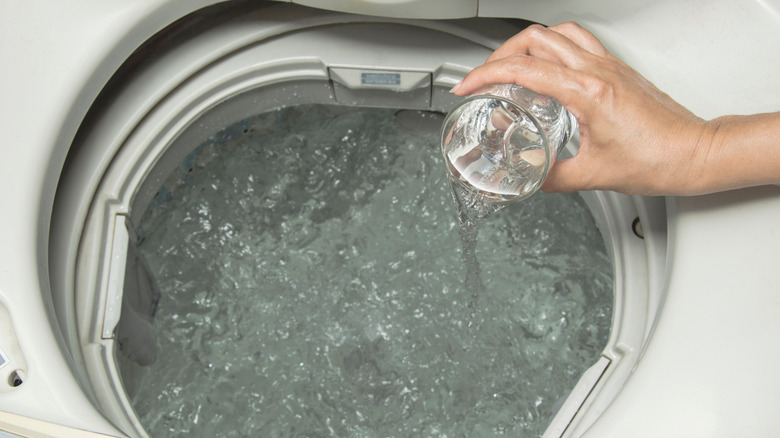
If you want to use vinegar in your washing machine, specifically with your laundry, keep it to half a cup of diluted white vinegar, added in either via the fabric softener dispenser or poured into the drum during the final rinse cycle. If you do add it into the fabric softener dispenser, you should clean the dispenser thoroughly afterward. If you just want to clean hard water buildup in your washer, add four cups of diluted white vinegar to the empty drum and run the hottest wash cycle you can. After the cycle, wipe down the interior with a damp sponge, then run the hot wash cycle again to rinse it all off. In either case, try to keep your usage of vinegar limited to once every other week so as not to corrode your washer's components.
One last thing, and this bears stressing: If you are planning on using vinegar in your washing machine, do not use vinegar at the same time as laundry bleach. Mixing bleach with any kind of acidic substance, like vinegar, will create extremely toxic gas.