

Why Are Top-Load Washing Machines Cheaper Than Front-Loaders?
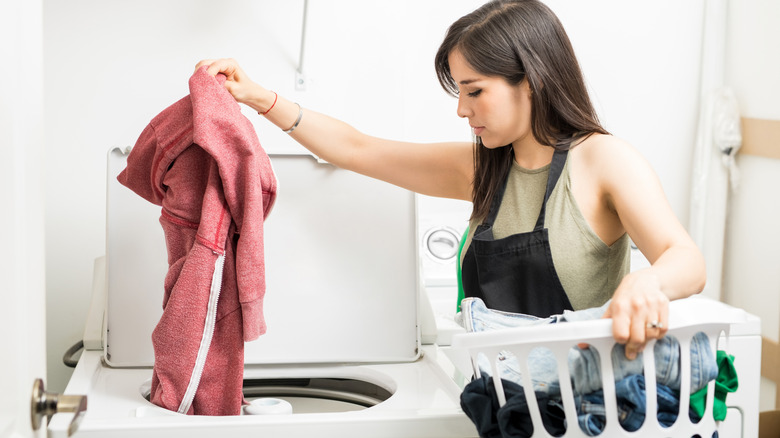
When you need a new washing machine, one choice you're going to have to make is between one that loads from the front or from the top. This may feel like an arbitrary decision, but generally, there are a number of differences between these two designs, even if both of their goals is to wash your clothes. The most immediate difference you'll see is in their respective prices. By and large, top-loading washers are going to cost you less up front than a front-loading one.
For example, look at the current offerings from Consumer Reports' top front-load washer brand, LG. The average price of one of its top-loading washers is around $913. Meanwhile, the average cost of a front-loading model goes up to around $1,235. Only eight of the 22 top-loaders cost over $1,000, while 13 front-loaders go over that threshold of the 21 models on sale. The most expensive top-loader is $1,299, which is $1,000 less than the most expensive front-loader. It's not just LG though. Top-loading washers are just generally cheaper.
There are several reasons for this. Top-loading washers generally use cheaper materials for their design than front-loaders, such using plastic tubs instead of stainless steel ones. They also don't require things like concrete counterweights like front-load washers do, and they typically don't indulge in the more advanced technological features of the newer design models. These are fairly simple machines that can be easy to repair. You add all of this together, and it's plain to see why a top-loading washing machine can have a cheaper upfront cost.
Which washing machine costs less over time?
The cost of a washing machine isn't just what you pay at the retail store. You also need to take into account the amount of energy and water they're going to use over time. By these metrics, the front-loading washing machines are far better for saving money than with top-loaders.
A top-loading washer uses anywhere from 13 to 19 gallons of water per load on average, whereas a front-loader could use as little as seven. Top-loaders fill their entire drum with water to soak your laundry and uses an agitator to do the cleaning. Front-loaders, on the other hand, don't need to fill the drum up entirely. Instead, it uses the rotation of the drum with its blades to move the laundry in and out of the water for the required agitation. Based on a study by CNET, the average front-loader uses a little over 4,000 gallons per year, nearly 1,800 gallons fewer than the average top-loader, saving people almost $30 annually on average.
You see similar savings with energy costs. The two are correlated because washers need a lot of energy to heat the water. If there's less water to heat, it doesn't use as much energy. That same study puts an average front-loader's total annual operational cost at $86.36 per year, while top-loaders cost $123.44 per year. For a decade of use, that's roughly $370 worth of savings (and that's before you include the roughly $300 off your water bill in that timespan). So, while the sticker price of a top-loading washing machine may be lower, you could end up spending less with an equivalent front-loader by the end of its life.