

13 Cars Every '80s Diehard Should Drive At Least Once
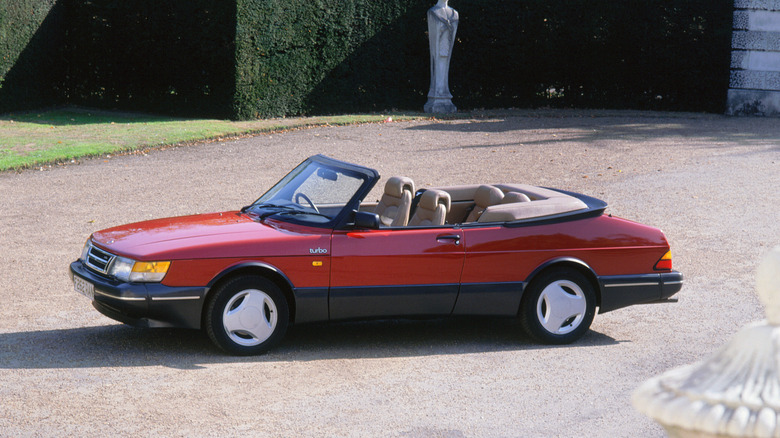
It was the golden age of the shopping mall, with industrial structures of hair held together by copious amounts of hairspray, music made of only electronic instruments, bright pink and green windbreakers, and MTV in your living room. It is hard to think of a decade more purely fun than the 1980s. As goes the passage of time, many of these things are now looked back upon with a cringe, but one can't deny the almost whimsical tang of the time period.
There is perhaps no better reflection of this attitude than in the cars of the 1980s. They featured fun colors, pop-up headlights, space-age vents and aero bits that were almost always only there for cosmetic reasons, and interiors that screamed spaceship instead of car. Hollywood took a particular liking to cars too, and it felt like almost every TV show or movie release featured a car that became just as iconic as the star. Here are some examples from the era every '80s diehard should drive at least once.
DMC DeLorean
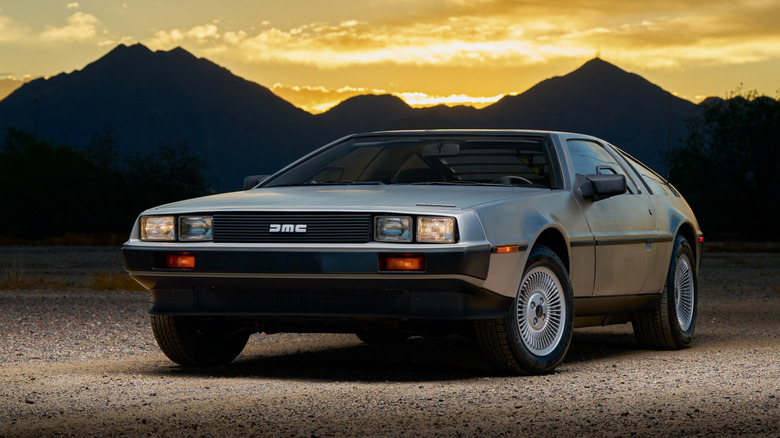
In some early versions of the screenplay for "Back to the Future," Doc Brown's (Christopher Lloyd) famous time machine was actually a refrigerator. Squeezing into a lead-lined icebox next to the mayonnaise is certainly one way to do a time jump, but thankfully, it's not the one the filmmakers went with. How do you make a time machine cooler? Turn it into a car of course. However, the average Ford Taurus just doesn't have the right kind of swagger. That's where the DMC DeLorean came in.
Even without Doc's flux capacitor, nuclear reactor, or other modifications, looking at the DeLorean, it's hard not to wonder whether it can do more than just drive. When John Z. DeLorean quit his position as a manager at GM and founded the DeLorean Motor Company in 1974, he wanted to build a car that turned heads. To help him in this pursuit, DeLorean contracted ItalDesign to shape the DeLorean. He was trusting of their touch, but insisted on a few key points, including gullwing doors for an added cool factor. After some successful rounds of financing, DeLorean then contracted Lotus, who elected to scrap the original four cylinder for a Renault-sourced V6 making 130 hp. With a black box of a gauge cluster, stainless steel bodywork, and blocky, sharp angles, this is a car any '80s kid will remember.
Mercedes-Benz AMG Hammer Coupe
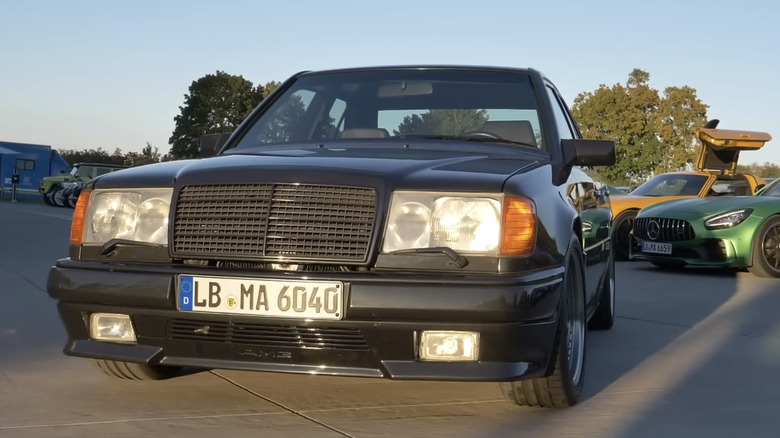
Long ago, before the dreaded four-cylinder C63, AMG was building true German muscle cars. In 1986, AMG was still an independent tuning house separate from Mercedes, but Benzes were its specialty. Two years earlier, BMW premiered the first M5 concept the world had ever seen, and AMG took that personally. It felt that it had the ingredients and the expertise for a better take on this new recipe for a high powered executive saloon, AMG brought us the Hammer.
A name like Hammer conjures a certain weighty vibe, and that'll make more and more sense the more you learn about this car. Each Hammer started life as a regular Mercedes 300 E. Then, you could choose from a list of packages that would turn the car from fast to ridiculously fast. If you want the full monty, you'd have to come up with about $161,422. Among other things, this included a 6-liter M117 V8 with 396 hp, racing suspension, and a limited-slip differential. With a top speed of 190 mph, the Hammer could go faster than most exotics of its day, all while keeping you comfortable.
Saab 900 Turbo
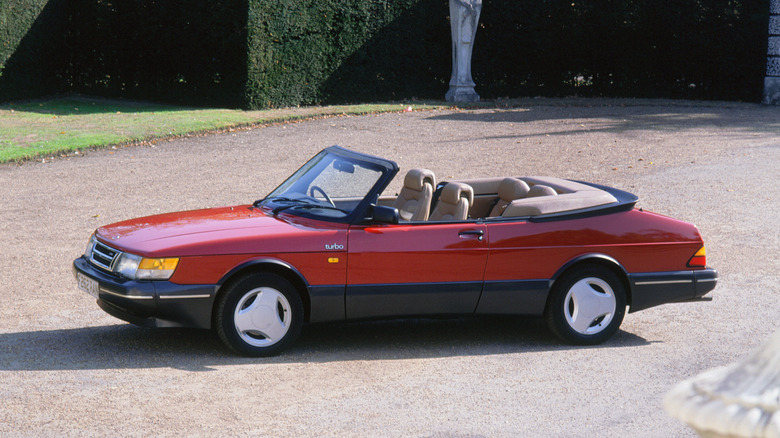
So often, the conversation about fast European daily drivers stays in Germany, locked down between Mercedes, BMW, and Audi — you probably won't be considering a Saab today. The company no longer makes cars, but back in the early 1980s it gave everyone a reason to include it in the conversation. When the Saab 900 Turbo came out in 1979, that last word, turbo, was a big deal. At the time, turbochargers were exceedingly rare to see in consumer cars.
Powered by a 2-liter four-cylinder engine, the original Turbo made 135 hp, all sent to the front wheels. By 1982, Saab introduced a knock regulating system, allowing it to safely increase the compression ratio, improving performance and fuel consumption. By 1985, power jumped to 185 hp, and could go to 190 hp with the Special Performance Group package, which also included new aero elements, leather trim, and more. The 900 Turbo was also quite handsome, incredibly reliable, and pleasant to drive. It was a fantastic, game-changing car of the '80s, with the added bonus of coming from a company that made fighter jets.
Audi Quattro
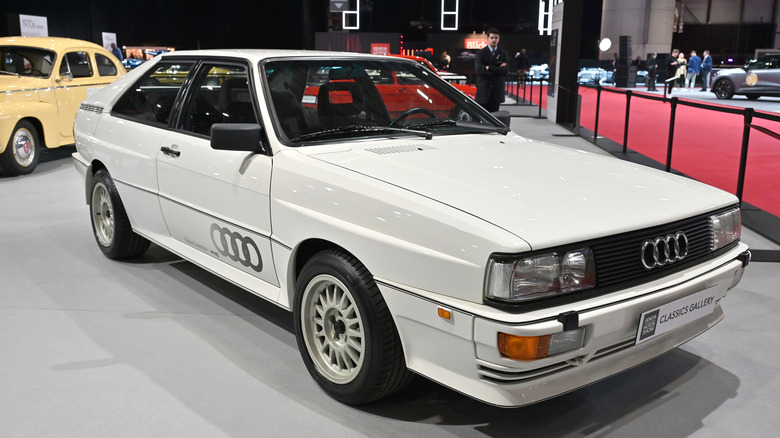
You might see a lot of Audis wearing a Quattro badge, and if you don't know much about cars, you might wonder what interest a brand you thought was German has with the Italian word for "four." Regardless of nationality, you'd probably deduce that four was meant to indicate all-wheel-drive, technology so ubiquitous we often take it for granted. In the 1980s though, AWD and 4WD tech was reserved for pure off-roaders. Most systems were awkward, clunky, and heavy, until a man called Jörg Bensigner changed everything.
At the time, Audi was participating in Group B, the world's premier rally racing championship, with rowdy cars and even rowdier fans. The company knew that if it could somehow make an AWD system for a rally racer, it would dominate. And that's exactly what happened, with Bensinger's revolutionary design of a hollow driveshaft housing another shaft to split power from front and rear playing a huge role in making the Audi Quattro the most iconic rally car of all time. The car racked up 23 WRC wins overall, making the Homologated road car a purchasable piece of racing spirit. With a 12.3 psi-pushing turbo bolted onto a 2.1-liter inline-five, the Quattro made 200 hp which could be applied to the surface of your choosing like never before thanks to its AWD.
E30 BMW M3
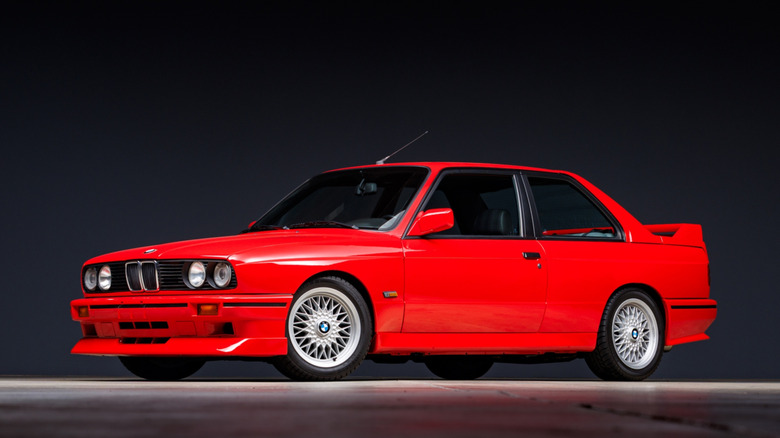
Thankfully, a lot of trends from the 1980s stayed in the 1980s. Stepping out in a Canadian tuxedo with a mullet falling down your neck, a bright red swatch on your wrist and a Walkman clipped to your side would have people wondering if you were on your way to a costume party, or stepping out of Doc's DeLorean. Trends taken out of their time show their age, but every now and then, you get something timeless, and few cars are more timeless than the original E30 BMW M3.
One look at the E30, and you can see it's a product of the '80s, but there's no gut feeling to recoil or cringe. Its wide haunches, boxy proportions, and integrated wing are lovely to look at even today, and they come from a purebred DTM racer. To qualify for Group A, BMW had to make a homologated version of its racecar, and sell 5,000 units in 12 months. BMW then took the 2.3-liter inline-four engine from the 3 series, bumped power up to 200, and threw in some other goodies like ventilated discs, independent suspension, and a five speed manual. The result was a car that was highly engaging to drive and great to look at. It became the foundation of the M car philosophy, and represented the best of its era.
Ferrari F40
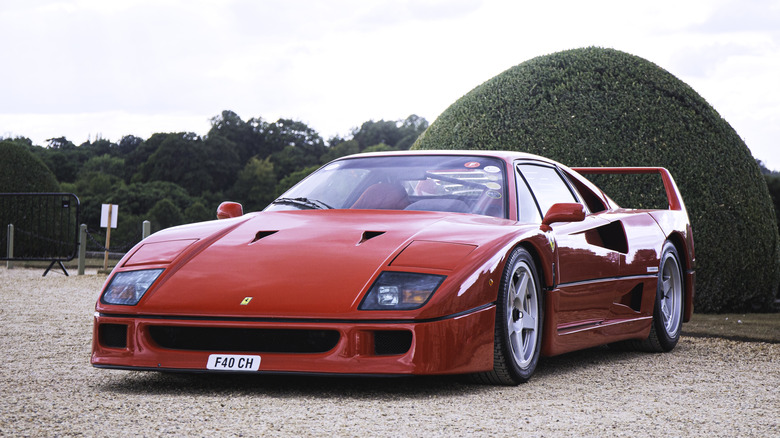
Even uttering the name, "F40" has gravity to it. Ferrari deals seemingly endless hands of iconic cars and every so often, they make a car that ascends their usual grandeur. In the late 1980s, Porsche revealed what many argue to be the world's first true supercar in the 959. It was a tech-stuffed racing computer, and it was so impressive that Ferrari felt it threatened their position as the world's finest carmaker. Working as a successor to the 288 GTO, they responded with the F40, which presented a completely different philosophy to the 959.
Originally, Ferrari only planned to make 400 units of the F40, but its driver-first, analogue approach to the supercar proved so desirable, Maranello finished the F40 production run with 1,311 units. The car's name celebrated Ferrari's 40 year anniversary, and the company went all out for its production. Designed by Pininfarina, it was a beautiful red wedge, stuffed with a twin-turbo V8 making 478 hp, all sent to the rear wheels by a five-speed manual transmission. With a tubular steel chassis and body panels made of Kevlar and carbon fiber, the F40 was light and savage. The interior was stripped of all creature comforts, with a small set of dials and gauges, crank-operated windows, and cloth-wrapped bucket seats. It was a driver's car in the purest sense and it was one of the world's first supercars.
Pontiac Firebird Trans Am
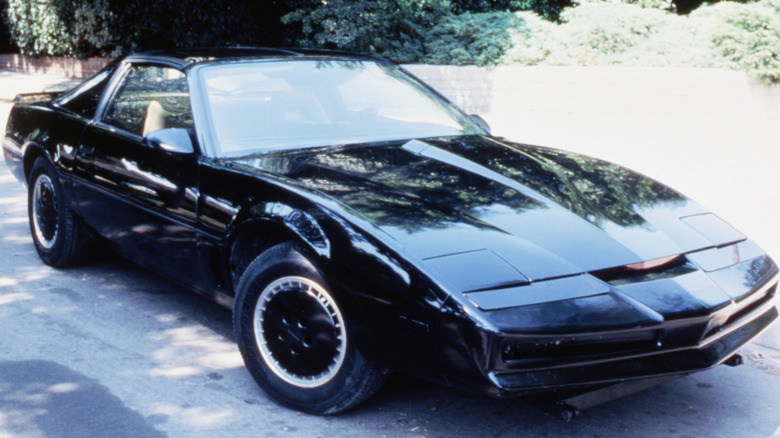
Turning on your now comically large TV in the 1980s was like drawing straws. You might find an episode of "MacGyver," with the hero building some ridiculous gadget from a ballpoint pen, an apple core, an old shoe, and a car battery, or you might land on a pink neon-soaked episode of "Miami Vice" (more on that later) stuffed with enough jet skis and Uzi submachine guns to make Tony Montana blush. You might also land on an episode of "Knight Rider," whose most famous stars were David Hasselhoff and a third-generation Pontiac Firebird Trans Am.
Powered by a 305 Chevrolet V8, the Trans Am made just 200 hp, but its looks were clearly enough for Hollywood stardom. Originally, Pontiac promotion manager Jim Graham was opposed to the idea, but other executives knew Pontiac was in desperate need of a sales push, and injecting their product into the culture via television was exactly what they needed. In the show, the car was known as the Knight Industries Two Thousand, or KITT, for short. Although KITT was virtually indestructible, could talk, and had a spaceship-esque interior, the outside was virtually unchanged (other than its red light bar).
Porsche 959
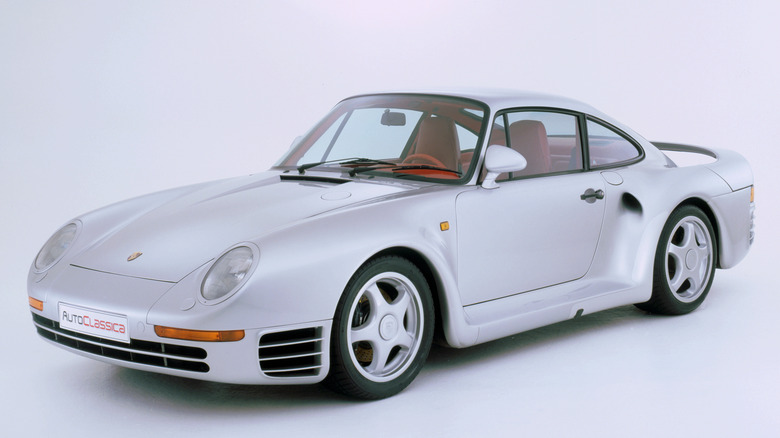
If the Ferrari F40 represents one side of the supercar coin, the Porsche 959 represents the other. For so much of Porsche's commercial history, nothing topped the 911, but in the late 1980s, the company began developing what would become its first true flagship, a halo car that set the blueprint for one pathway of the pursuit of the supercar. Porsche knew it had something special with the rear-engined layout, and it wanted to bring that platform to Group B, so the natural conclusion was AWD.
The 959 went far beyond a simple application of AWD tech. Most important perhaps, was its engine. The twin-turbo flat six used a sequential turbo system, which staggered the boost application and hugely improved turbo lag, making the car's 444 horses easier to work with. Its AWD system could send the car to 60 mph in just 3.6 seconds, and it had other goodies like adjustable dampers, ABS, a torque biasing system, and hollow magnesium wheels with built in tire pressure sensors. It was the stuff of science fiction, and one of the quickest cars of the '80s. Only produced from 1987 to 1988, the world is graced by just 292 examples. Should the car gods ever bless you with the chance to drive one, take it.
Lamborghini Countach
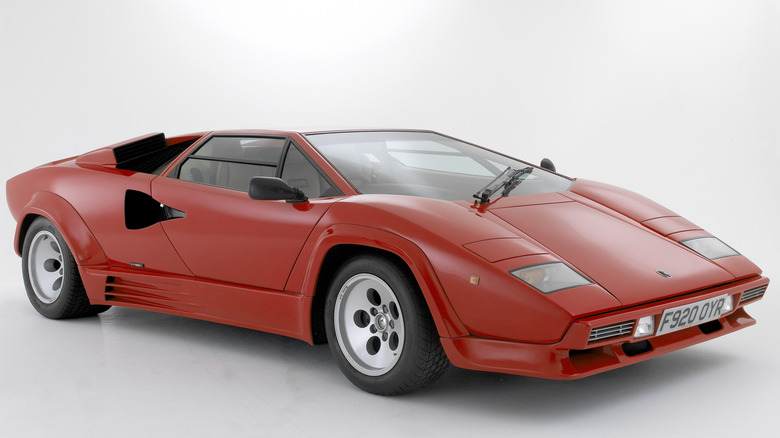
Whether you remember it boasting an extra spoiler on the front evading the cops in "Cannonball Run," or as the trusty steed of a comically inebriated Leonardo DiCaprio in the "The Wolf of Wall Street," the Lamborghini Countach is perhaps the most iconic car the brand has ever made. If an alien came to earth and for some reason wanted to understand Lamborghini, this would be the most illustrative example. It is dramatic, nearly obscene, and so, so cool.
The Countach nameplate was long lived, but the QV 5000 (QV standing for Quattrovalvole) has become a sort of mascot for it. First and foremost, it was powered by a mid-mounted V12, which made 420 hp, all of which went to the rear wheels, doled out by a five-speed manual transmission.
From the inside, visibility was poor and it was raucously loud, with Car and Driver measuring 83 decibels at a 70 mph cruise, and 102 decibels at full throttle in a Countach 5000S. Outside, the enormous wing didn't do much except impede top speed. But if that bothers you, you're missing the point. Approach the Countach with a "why not" mindset instead of "why," and you will begin to understand the greatness of this scissor-doored machine.
Jeep Cherokee
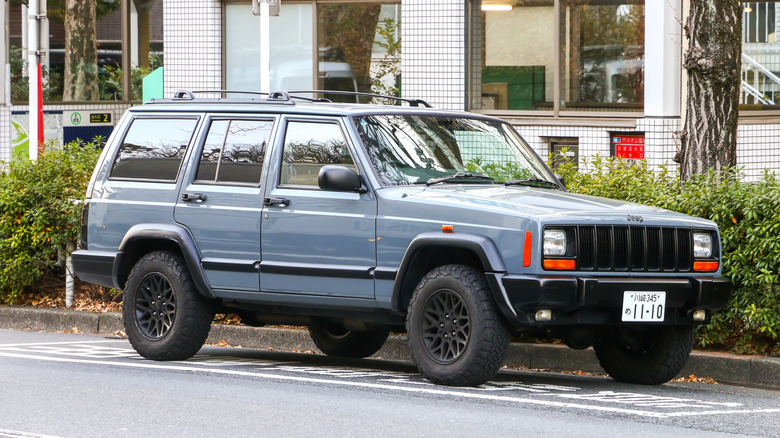
When the first Jeep Cherokee came out in 1984, it was the first all-new model from the brand in 20 years. The Cherokee helped the brand freshen its face, and it was also one of the first true examples of the modern SUV. At the time of its release, that nomenclature hadn't caught on yet, and Jeep was advertising the Cherokee as a "sport wagon," but it was packed full of features new for the time, that we come to expect in our SUVs today.
One such feature was the Cherokee's AWD system, which had two modes Jeep called Command-Trac, and Select-Trac. The first was meant for your low-speed high-torque needs during typical off roading, and second was meant for everyday driving. The Cherokee was built with a revolutionary, body-on-frame design that gave it massive torsional strength benefits over its closest competitor in the Chevrolet Blazer, with Jeep claiming the Cherokee was three times as stiff. It could be had with a 2.5-liter four cylinder, or a 2.8-liter V6, with the former boasting 110 hp. It was also quite nice to look at, with a design language that is unquestionably '80s and yet full of cues we can still see on today's modern Jeeps.
Porsche 944 Turbo
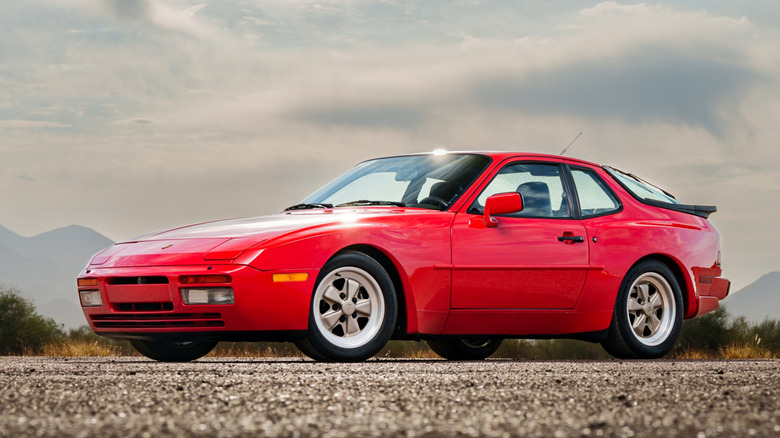
Even in the 1980s, the Porsche 911 was considered one of the world's finest examples of the sports car. Everyone wanted a Targa, or a Turbo, or basically any 911 trim they could get their hands on, but not everyone could afford one. Then, along came the Porsche 944 Turbo. This was the entry-level Porsche, but it still boasted legitimate racing chops. The base car was modeled after the 924 GTP, a Le Mans racer, and unveiled at the Frankfurt Motor Show in 1981.
The 944 debuted with a 143 hp 2.5-liter flat four that was essentially one half of the V8 found in the Porsche 928. It came with ABS and its front-engined, rear-transmission layout made it one of the first transaxle cars from Porsche. Then, in 1985, the brand introduced a turbo model, boasting an increased power output of 220 horses. Famously the Porsche 911's design only evolves, but never changes, and while this makes it timeless, it can also get a bit bland. If you want to see Porsche at their most 1980s, a 911 won't do, but a 944 certainly will with its spaceship clean lines and pop-up headlights.
Ferrari Testarossa
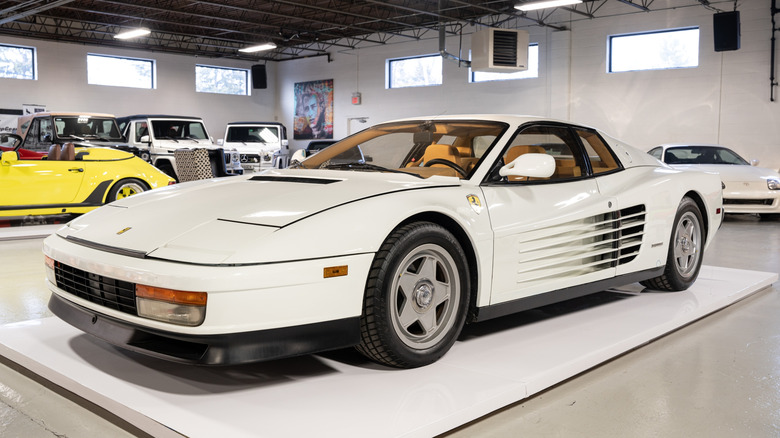
Although some of the early seasons of "Miami Vice" had a black Ferrari Daytona as a star car, the white Ferrari Testarossa is far better known as the vehicle of choice of Sonny Crocket (Don Johnson). Designed by Pininfarina, the Testarossa is perhaps not as classically elegant as the Daytona, but it showed all the ridiculousness that the 80s had to offer. It was truly a wedge, low slung with pop-up headlights, and long-bladed side strakes slicing across the side.
Those cutting lines provide iconic style to the Testarossa, but they also helped feed air into the side intakes for the mid-mounted flat-12, a truly unique engine. The Testarossa made 380 hp, which was controlled by a five-speed manual transmission. You might be wondering if the Italians chose the name Testarossa just because it sounds cool, but its title is actually a callback to Ferrari's racing history. Testarossa is Italian for "red head," which might seem strange considering Enzo's black hair, but the red heads in question are actually the red-painted cylinder heads on the original 250 Testa Rossa race car. Whether in white, red, or any other color, the Testarossa is one of the mascots of 1980s car culture.
Toyota MR2
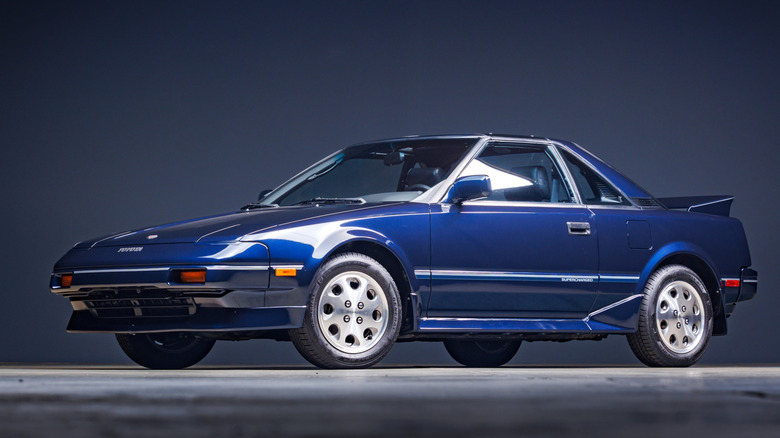
No, MR2 does not stand for Mister 2. It's actually Toyota's short form for "Midship Runabout 2-Seater," one of the best, and least-appreciated, mass-produced sports cars of the 1980s. Often, the AE86 steals the thunder as Toyota's most iconic 80s sports car, but the MR2 is just as cool, if not cooler. Development began in the late 1970s, as Toyota wanted to expand into the untapped North American market. It wanted a successor to the Sports 800 — a tiny, economic coupe — and that's just what the MR2 was.
Unveiled at the 1983 Tokyo Motor Show, the MR2 was a tiny car. It weighed just 2,153 pounds, and housed a 122-hp inline-four borrowed from the AE86. Things went from good to great in 1987, with the introduction of the supercharged model, the first supercharged car to hit American markets in 20 years. Now with 145 hp, it was even snappier, while retaining its featherweight agility. It looked like a European supercar that had been hit by a shrink ray. It was mid-engined, wedge-shaped, and had pop-up lights like a cutesy F40. It was Toyota at its best, at one of the most fun time periods for cars in history.