

Why Are Japanese Mini Trucks Typically So Cheap?
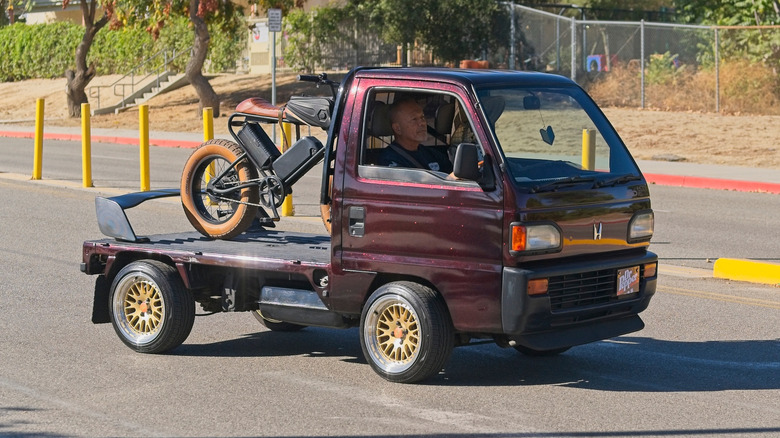
Serving as an antidote to the increasingly hefty American trucks that dominate sales charts, Japanese mini trucks, otherwise known as kei trucks, have become increasingly popular in recent years. They're far smaller than anything that's available from a Ford, Chevy, or Ram dealer, but thanks to their cab-over design and upright proportions, their beds are larger than the truck's diminutive size might suggest. In fact, a typical kei truck has a bed roughly the same size as a full-size American pickup.
Adding to their appeal, most Japanese kei trucks are cheap too. Plenty of U.S.-registered examples of trucks like the Honda Acty sell for $10,000 or less, making them a very affordable way to drive something that sticks out from the crowd. It's easy to wonder what exactly makes them so cheap, and there isn't one simple answer to that question.
Instead, it's down to a variety of factors. Most kei trucks are basic workhorses with relatively few creature comforts, and they're designed for a life of hard use. Thanks to the 25-year import rule, every kei truck you'll find on U.S. roads is at least a quarter century old too, and some are significantly older than that. It also helps that kei trucks were designed to be cheap to buy in the first place, and they're still cheap in Japan today. Combined with the country's higher taxes for older vehicles, Japanese business owners are incentivized to swap to newer trucks, so there's plenty of used inventory for importers to pick from.
Kei trucks are very affordable in Japan
A used kei truck in Japan might only cost only a few thousand dollars at auction, with the rest of the costs coming from the process of physically importing the truck to America, registering it, and paying an importer a fee for handling the process. This is unlikely to change for the foreseeable future, since new kei trucks are still remarkably cheap to buy in Japan today.
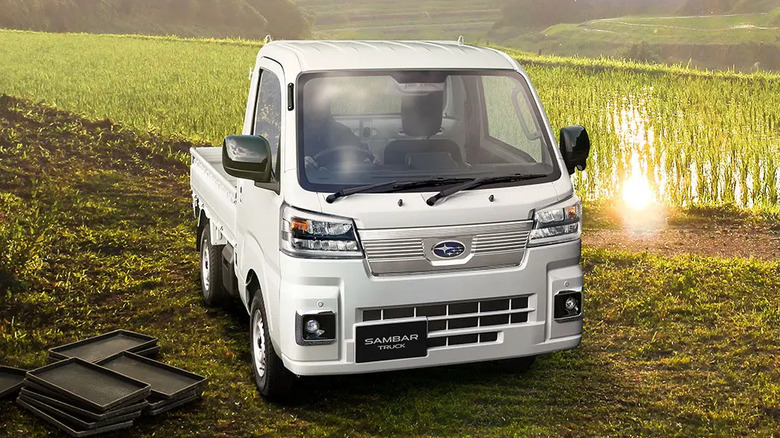
To take an example, Toyota's current kei truck is called the Pixis, and Japanese buyers can purchase a brand new example with 4WD and a 5-speed manual transmission for 1,463,000 yen. At current conversion rates, that equates to roughly $9,300. A 2WD example of the same truck with a CVT transmission starts even cheaper, from 1,149,500 yen, or around $7,300. This isn't unique to Toyota's truck either, with the latest Suzuki Carry and Subaru Sambar carrying similarly low starting prices.
Of course, American buyers can't directly take advantage of these low prices, as new trucks cannot be legally imported. However, a Japanese buyer might choose to buy a new truck because of its lower cost, rather than because their old one has worn out. That means there are many older kei trucks on the Japanese market with plenty of life left in them.
There are some significant practicality limitations in America
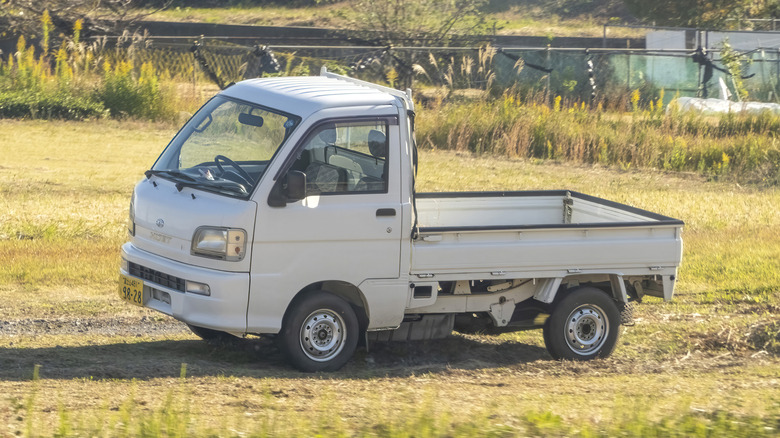
Although they're becoming an increasingly popular choice among American enthusiast owners, there are still some practicality limitations that limit their appeal and help keep prices reasonable. One of those limitations is their top speed. Japan's roads generally have lower speed limits than in the U.S., with around 70 percent of local roads being subject to a 30 km/h limit (roughly 18 mph). So, there's no need for kei trucks to be speedy. Even the fastest kei trucks will struggle to keep up with the speeds of American highway traffic.
Most kei trucks also have a limited weight capacity, despite their spacious beds. To haul heavier cargo around, especially at anything above typical urban road speeds, you'll need a bigger truck. There are also safety concerns about kei trucks, since they're not crash tested to American standards and may not have the same safety features you'd expect to see in an American truck of the same age.
Even if the drawbacks of the trucks themselves don't deter buyers, some would-be owners are unable to purchase them simply because of regulations in their state. Kei trucks are only legal to drive on the road in some parts of the U.S., although legislation in states like Colorado is changing to pave the way for kei trucks to be registered soon. In other parts of the country, they remain only legal with major restrictions or are outright banned from the road altogether. Before buying any kei truck — regardless of how cheap it might be — you'll want to be sure to check the laws in your state if you'd like to use it outside of your own property.