

8 Of The Best Travel Cameras You Can Fit In Your Pocket, Ranked By Price
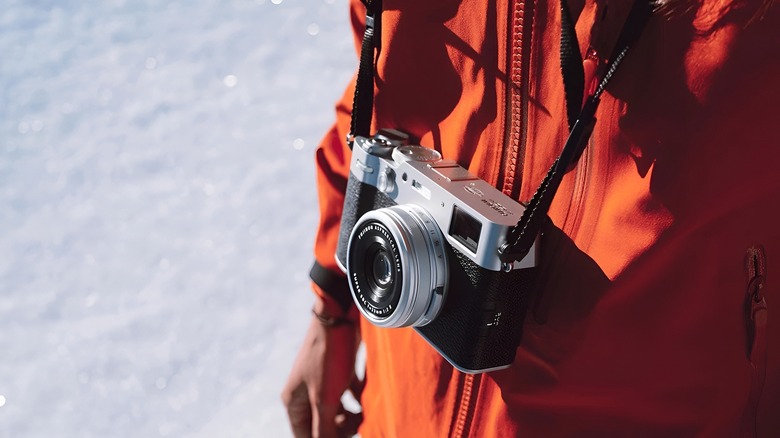
We may receive a commission on purchases made from links.
Traveling the world is a dream for many, and when you do, it's important to capture memories. Nothing can beat the convenience of taking photos with a smartphone. But as MKBHD said, all phones take similar photos today. They have that heavy HDR look that tries to make everything perfect, and many people are getting tired of it.
A dedicated camera usually beats a smartphone photo. However, there's one tiny problem. For the longest time, action cameras like GoPro were the obvious choice if you wanted something small. No shade to action cameras, but they are for zipping across a mountain bike trail or skydiving.
The good news is that camera makers have heard our sorrows. Today, you can buy a very capable shooter that fits inside your pocket. Plus, it doesn't distract you from the moment as a phone would. Which one should you buy, though? The answer depends on your priorities. Some may want the best image quality, while others need the most portable setup. Whatever your requirements, we've ranked eight of the best travel cameras that fit in your pocket, from $350 to $1,799.
DJI Osmo Nano
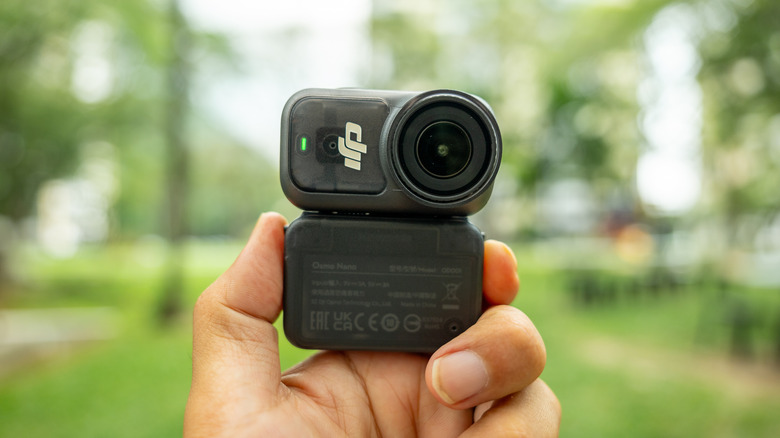
Tiny action cameras used to be mediocre. Their small sensors couldn't capture enough light, leaving colors washed out and sharpness lacking. Fast forward to 2026, and the DJI Osmo Nano ($349 on Amazon) is nothing like that. It packs a 35MP 1/1.3-inch CMOS sensor into a body smaller than a Snickers bar. You can stick it on your hat, keep it as a pendant, or attach it to any magnetic surface. Don't worry, the box includes clips and attachments for those.
The Osmo Nano's party piece is the Multifunctional Vision Dock. The Nano attaches magnetically to the dock, which lets you preview footage on its 1.9-inch display and adjust camera settings. Battery life: the Nano lasts 60 minutes when recording 4K footage. It's also IPX8-rated, so you can take it for a swim.
Performance-wise, the Nano is exceptionally capable. It can record 10-bit 4K/60 FPS video and supports D-Log M and HLG profiles. This opens the door for creators who want to color grade their footage afterward. If you can't be bothered with that, YouTuber Brandon Li says the normal output is good enough. Daytime videos are sharp, accurately colored, and even the HDR performance (13.5 stops) is decent, except for some banding in extreme sunlight. Nighttime videos can also look detailed, but you'll need to change some settings. Features like RockSteady 3.0 and HorizonBalancing stabilization reduce jitters while you run. That said, we wouldn't recommend the Nano if you plan to take a lot of zoom shots. The fixed 143-degree lens just isn't made for it.
DJI Osmo Pocket 4
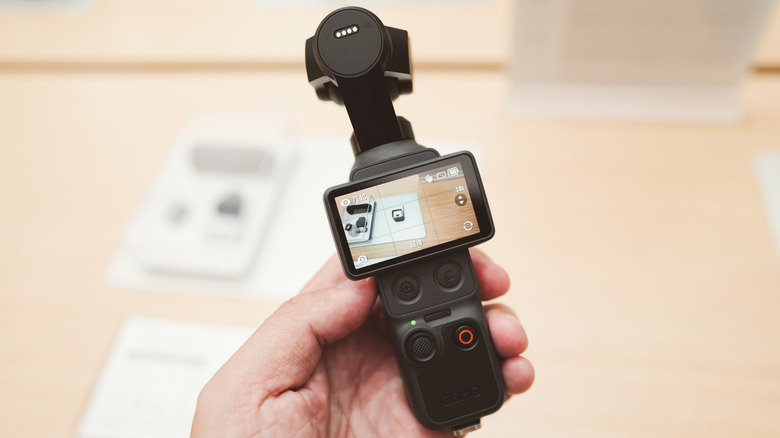
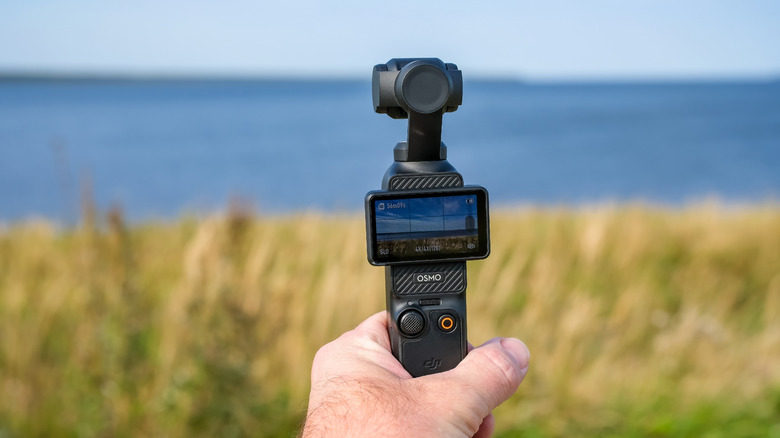
The DJI Osmo Pocket 3 was one of the most popular cameras in recent years. You might even have seen plenty of travelers carrying it around the city. The reason was simple: it captured great, super-stable footage without taking up much room. So, when DJI announced the newest iteration, the Pocket 4, it had big shoes to fill. The biggest upgrade is the 1-inch CMOS sensor, which can record 4K/60FPS video in 10-bit color. While you do get D-Log support for post-production, DJI has added six different film looks. They let you play with colors before shooting and suit different lighting conditions. You can also shoot slow motion at up to 240 FPS (4K).
Compared with the Pocket 3, YouTuber HTX Studio found that the Pocket 4 captures brighter videos with more accurate skin tones. Details in both the subject and the blue sky are clear. In low light, the advantage becomes even bigger. In our Pocket 4 review, noise doesn't creep in much, colors aren't washed out, and you can crop in up to 2x.
Beyond video, the Pocket 4 includes a 2-inch screen for previewing shots, switching shooting modes, and dialing in camera settings. You also get a joystick to move the gimbal. Or double-tap a subject, and ActiveTrack 7.0 follows it precisely. The Pocket 4 has 107GB of internal storage, and DJI says the 1,545 mAh battery will last four hours when recording 1080p footage. There is just one small problem: you cannot officially buy the Osmo Pocket 4 in the US. However, you can buy it from third-party retailers on Amazon.
Insta360 Luna Pro
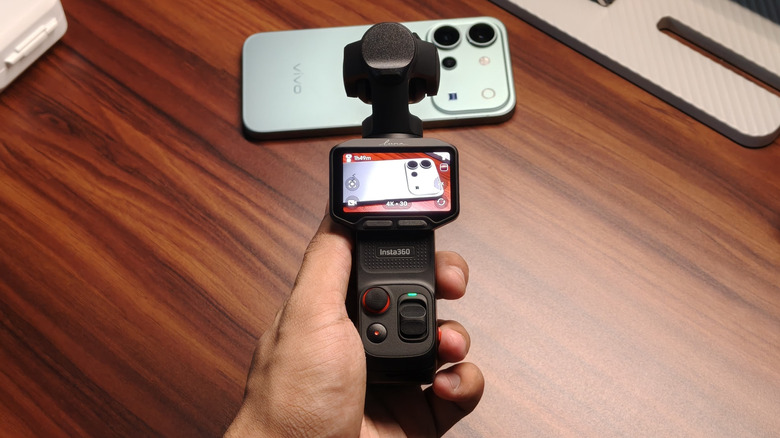
As good as the Osmo Pocket 4 is, its limited availability will concern US buyers. If you are in the United States, the Insta360 Luna Pro ($599 on Amazon) is a great alternative. It has a 1-inch CMOS sensor that shoots 4K/120 FPS or even 8K/24 FPS. You can also shoot in I-Log for editing, and Insta360 has partnered with Leica to bring some film looks. With the right profile, footage looks punchy, with strong contrast and crisp details. Skin tones are natural, and you can zoom in 2x without losing quality. Unlike the Osmo Pocket 4, it shoots true 4K portrait videos for Instagram, and its subject tracking is excellent. The camera can get warm when shooting 4K content, but that wasn't a major issue.
The control module is where the Luna Pro gets interesting. Normally, you would use the 2-inch OLED display to tweak settings and configure shooting modes. This works great, but when you're shooting solo, you can't see what you're actually shooting. Plus, you cannot control the gimbal from the front. The Luna Pro solves this problem by letting you detach the control module. You can carry it around and control the camera remotely. The module also has built-in microphones for recording voiceovers. The audio quality isn't the best, but it's good enough for quiet environments. The camera can shoot continuously for up to 4 hours at 1080p with the screen off
DJI Osmo Pocket 4P
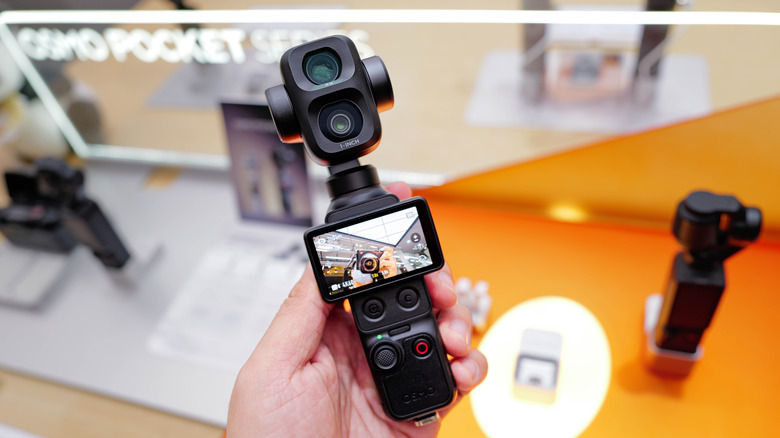
The DJI Osmo Pocket 4P takes what worked on the Pocket 4 and improves it. You liked the single 1-inch CMOS sensor? Now you get a second 1/1.28-inch sensor that handles 3x telephoto shots. You also get a new D-Log 2 shooting profile. Combined with LOFIC support, it unlocks 17 stops of dynamic range, although only on the primary camera.
In our Pocket 4P review, we were impressed by the footage. Highlights and shadows retained plenty of detail, and colors looked consistently good across the different filming modes. Even at night, noise and color inconsistency were minimal. With the telephoto sensor, you get a shallow depth of field and can zoom in 6x losslessly. It still supports DJI's excellent tracking features that keep the subject in frame.
Plus, the 2-inch display lets you preview footage and adjust camera settings. You can also customize the two buttons to perform your preferred actions. While DJI says the 1,545 mAh cell lasts 3.5 hours, that runtime is for 1080p footage, so 4K recording will drain the battery faster. Sadly, like its smaller brother, the Pocket 4P isn't officially available in the US. We also found the camera to be a little top-heavy and bulkier to carry. You can put it inside your pocket, but then the gimbal will move around, so it's better to store it in the carrying case.
Insta360 Luna Ultra
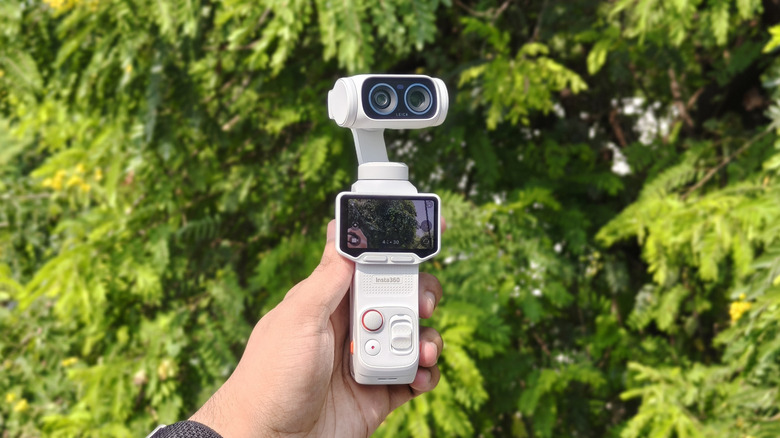
About a hundred YouTube videos compare the Insta360 Luna Ultra with the Osmo Pocket 4P, and everyone has a different opinion. The truth is, the Osmo Pocket 4P has better dynamic range (17 stops) in the harshest scenarios, better 240 FPS slow motion, and a lower price, though availability in the US is a different story.
If these factors aren't that important and you'd rather have an easier-to-use camera, then the Luna Ultra is the better pick. It also improves on the Luna Pro by adding a 1/1.3-inch 3x telephoto sensor. You can zoom up to 6x without loss. The Luna Ultra can record videos at up to 8K/30 FPS and supports Dolby Vision and the I-Log profile for post-production color grading. For casual users, the Leica film emulations give the footage a unique character, and PureVideo night mode preserves detail in the darkest scenes.
Still, the biggest reason to consider the Luna Ultra is its detachable control module. You can preview footage, adjust camera settings, and switch between shooting modes. Super helpful if you're a solo vlogger. The module also has four built-in microphones, which our Luna Ultra review found to be quite decent. Insta360 has also designed a clever plastic carrying case that houses the camera, a dedicated mic, and ND filters. The best part? You can keep the camera inside your pocket without messing up the gimbal. All this does cost more: $749, to be precise.
Canon PowerShot V1
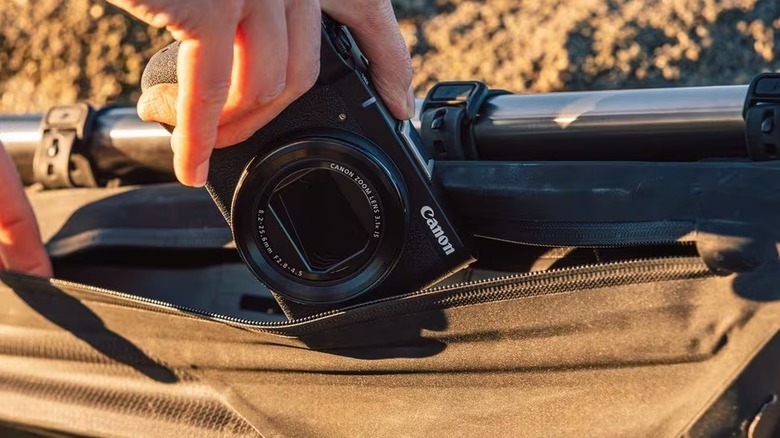
While gimbal cameras like the 4P and Luna Ultra are great, many still prefer a traditional camera design. According to TechRadar, the Canon PowerShot V1 ($849 on Amazon) is the best compact vlogging camera. The reason? It has a 22.3 MP, 1.4-inch sensor, considerably larger than those in the cameras we've mentioned so far, while still being compact enough to carry around. As a result, the V1's footage looks more natural, without that digitally oversharpened feel.
The camera handles HDR well, and Canon's color science produces pleasing results, though it has some skin-tone inconsistencies. You can adjust the white balance to compensate, or shoot in Canon Log 3. Video recording goes up to 4K/60 FPS, but digital stabilization isn't available at that setting, and the footage gets a 1.4x crop. The f/2.8-4.5 aperture also isn't class-leading, but nighttime performance is still decent, and you can zoom 3x optically.
On the flip side, Canon's Dual Pixel AF II system can track and lock onto different objects without losing focus. As a vlogging camera, the V1 gets a fully articulating touchscreen to help you frame your shots and a tally light that shows the live recording status. It also has a built-in microphone that records 16-bit audio, and Canon bundles a dead cat to cut down on wind noise. It's good enough for spontaneous recording, but for serious work, we'd recommend spending the extra money on a dedicated microphone. Battery life, sadly, is just okay-ish. You'll get less than an hour of 4K recording on a single charge.
Sony a6700
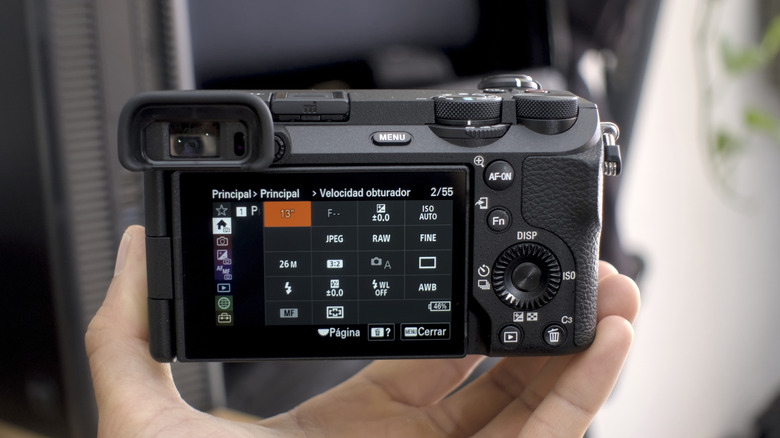
The best Sony cameras top every vlogger's wish list. Sadly, they are expensive. But if video quality is your top priority, the Sony a6700 ($1,498 for the body on Amazon) is worth considering. The camera combines Sony's 26.2 MP BSI APS-C image sensor and 5-axis optical image stabilization with the flagship BIONZ XR processor.
Unsurprisingly, the a6700's video performance is superlative. According to TechRadar, the results are detailed in all lighting conditions, keeping highlights and shadows visible and colors pleasing. The 5-axis stabilization keeps out jitters well, and you can upload custom LUTs. Just remember that the camera tends to underexpose in overcast conditions. You can shoot 10-bit video at up to 4K/60 FPS, or slow motion at 120 FPS (4K) with a 1.6x crop.
The a6700 uses Sony's AI real-time recognition autofocus system and can track subjects as they move across the frame. Just tap a subject on the screen. As for the build, we know the camera won't fit inside your jeans pocket. That said, it shouldn't be a problem in a coat or jacket. The a6700 also features an articulating touchscreen for better framing and 11 FPS burst shooting to capture action. Battery life is fairly decent, with over 100 minutes of 4K recording on a single charge. The only concern we saw in reviews was overheating when taking longer videos, particularly after the 30-minute mark.
Fujifilm X100VI
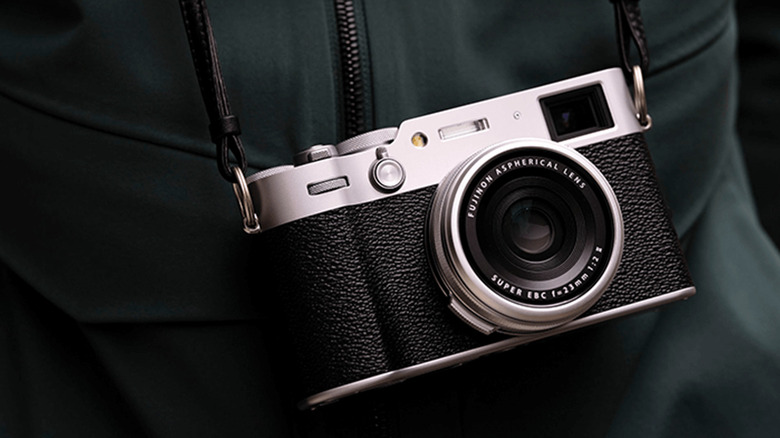
Travel isn't just about taking videos or vlogging yourself. It's also about photographing the people you love. That part, however, is not easy. Many cameras aim for relatively neutral colors, leaving you to add the look in post. Sometimes, you just don't have that time to edit while traveling. And if you'd rather skip that headache altogether, the Fujifilm X100VI is worth considering.
Much of that appeal comes from Fujifilm's Film Simulation modes, which recreate the look of film stocks like Provia, Velvia, and Astia. According to our X100VI review, images from the 40.2 MP X-Trans CMOS sensor look very aesthetic, with plenty of detail, balanced dynamic range, and enough contrast. For videographers, it supports 6K/30 FPS video and 6.0-stop in-body image stabilization (IBIS).
The best part about the X100VI is you don't have to stare at a screen, thanks to the hybrid viewfinder. It's a clever setup, with a digital frame overlay that helps you compose your shots. You do still get a 3-inch LCD panel to change camera settings. The design is compact, with a fixed lens, a vintage aesthetic, and physical dials for shutter and aperture. It should fit in a jacket pocket, although its 521-gram weight makes it heavier than some smaller cameras on this list. In our tests, the battery lasted roughly 50-80 minutes of continuous recording. There's one big problem: you'd be lucky to find the X100VI at $1,799 MSRP. Some Amazon listings price it above $2,000, so we'd recommend checking Fujifilm's official site first.
Methodology
Given the list's title, every camera had to fit in a pocket. That said, we took some liberties, including jacket and coat pockets. Since everyone travels differently, we also tried to make this list diverse. Some cameras excel at photography, while others suit vlogging better.
To decide which cameras made the cut, we combined hands-on testing with expert reviews from publications like Digital Camera World, TechRadar, and PCMag. We evaluated each camera on image/video quality, stabilization, portability, battery life, and travel-specific features like subject tracking and film simulations. We also considered value for money and ranked them by price, from $350 to $1,799.