

13 Of The Best Sony Cameras You Can Buy In 2026
We may receive a commission on purchases made from links.
There are a few major camera brands that come to mind when speaking about photography — Canon, Nikon, Fujifilm, and Sony, among a few. Depending on your usage and the lens ecosystem you prefer, you can pick up DSLRs from any of these brands, and you're bound to have an excellent experience. If you're primarily into videography, though, Sony is a top choice for many content creators. The brand has consistently made some excellent full-frame and APS-C cameras over the years, making it a lucrative option. Sony's S-Log video format is also widely liked among professionals, and the brand's G Master lenses are excellent.
If you're considering a Sony, you may be confused by the sheer number of options the brand offers. From compact cameras that are easy to use when traveling to heavyweights for hardcore filmmaking professionals, Sony offers a ton of cameras across various price points. To make your life easier, we've compiled a list of the best Sony cameras for specific purposes.
Whether you're just getting started in your content creation journey, you want a lightweight camera for vlogging, or you often take trips to national parks to capture some gorgeous wildlife, we've got you covered. While we have firsthand experience with many of these cameras, we've also consulted professional reviews from camera experts to shortlist the options.
Best overall: Sony A7 V
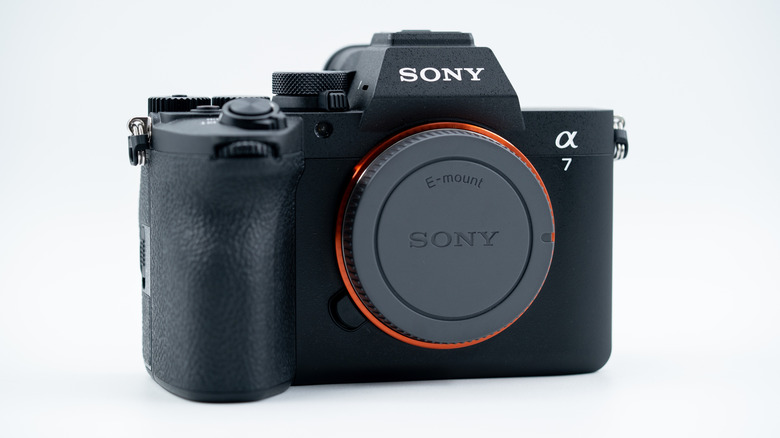
If you can only buy one Sony camera this year, the A7 V is the one most people should get. The fifth generation of Sony's do-everything Alpha line fixes the biggest complaint about the A7 IV: slow sensor readout. The new 33 MP partially stacked sensor enables burst shooting at up to 30 fps, reduced rolling shutter in video, and detailed 4K at 60 fps footage derived from 7K capture. There's also configurable pre-burst capture of up to a second, so the moment you were half a beat late for is no longer lost.
The folks over at DPReview gave the A7 V a 91% score, calling it "a spectacular all-rounder" and "more camera than most of us will ever need." Autofocus was a particular highlight in their testing: it recognizes six subject types and works so well out of the box that most owners will never need to tune it. There are some annoyances, though. The menus are dense enough to feel cluttered, and the grip is uncomfortable over long shoots. That said, for weddings, travel, video work, and everyday photography, this is the most complete camera Sony makes.
Best for photography: Sony A7R VI
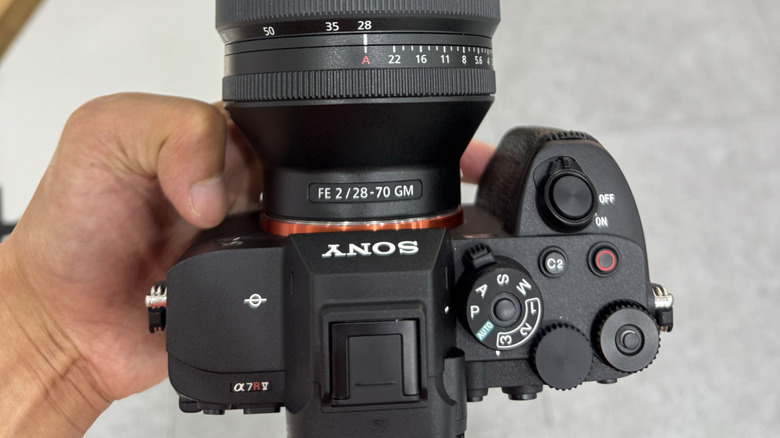
Photographers who print big or crop hard need extra resolution, and nothing else on this list has more of it than the Sony A7R VI. Its 66.8 MP stacked full-frame sensor is the highest-resolution chip in the Alpha line, and unlike the A7R V it replaces, speed hasn't been sacrificed to get there. The verdicts on image quality are proof of this. DPReview gave it a 92% score and wrote that it produces "the best image quality of any current full-frame camera," adding that for landscape and studio work, "there's nothing better this side of medium format." TechRadar's five-star review went further, stating that it's hard to find faults with the A7R VI for most photography needs.
The stacked design also makes the electronic shutter far more usable than on the Mark V, and autofocus tracking holds up even in very low light. The weak spots sit on the video side. The 4K footage is distinctly soft, with more pronounced rolling shutter than its peers.
That said, this camera is specifically designed for photographers. If your primary use case is video, there are several other options on this list that are better. The new high-capacity battery also means your older Sony spares won't fit, which is an annoying extra purchase on top of an already expensive camera. For pure stills, though, this is as good as full-frame gets right now.
Compact full-frame: Sony A7C II
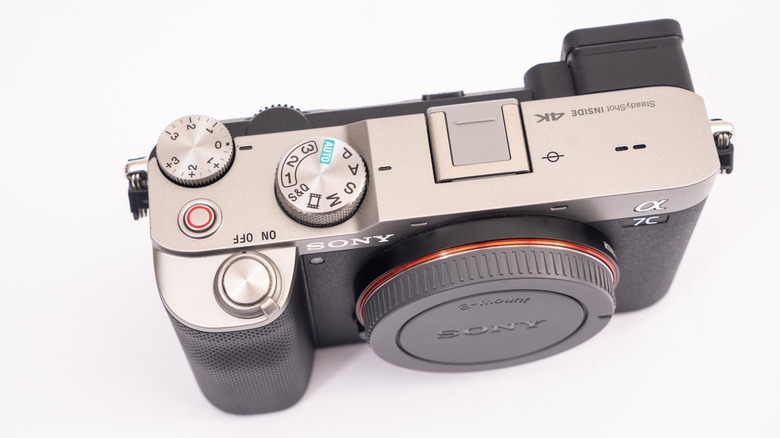
Full-frame cameras have a reputation for being big and heavy, but the Sony A7C II stuffs the same 33 MP sensor as the A7 IV into a body the size of an APS-C camera. If you want full-frame image quality without the full-frame weight, this is the one to get. The Mark II fixes most of what reviewers disliked about the original A7C: there's now a second control dial, a larger viewfinder, and in-body stabilization rated up to 7EV.
In DPReview's testing, the autofocus was excellent, with focus points that "stick to the subject like superglue," whether the subject is a person or a sprinting cat. Video shooters get oversampled 4K with 10-bit 4:2:2 color and S-Log3, which is a lot for a camera this small. The compromises are the familiar compact ones: no AF joystick, a low-resolution viewfinder, and a 1.5x crop when shooting 4K/60p. A rolling shutter is hard to miss if you pan quickly. Compactness is the whole point here, and the A7C II nails the quality in this form factor.
Best for wildlife and sports: Sony A9 III
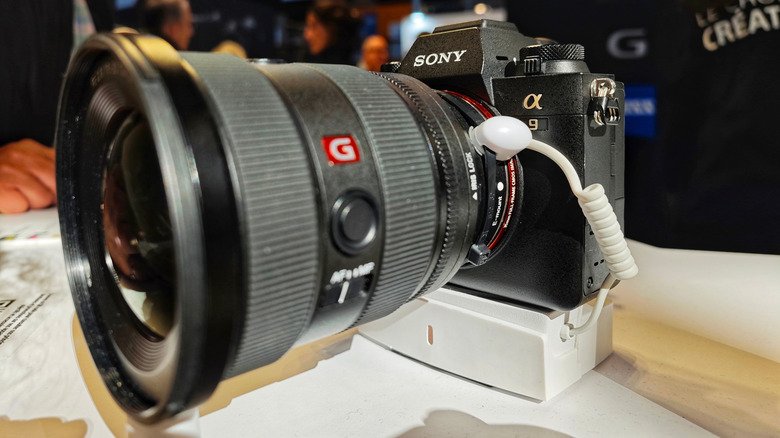
Some moments happen once — a bird launching off a branch, a lion roaring, or Max Verstappen racing past the pit stop. The Sony A9 III exists to make sure you get them all. It's the first full-frame camera with a global shutter, which exposes every pixel simultaneously. That kills rolling shutter entirely, eliminates banding from floodlights and LED boards, and lets you sync flash at effectively any shutter speed. Then there's the headline number: 120 fps bursts with full autofocus tracking and no viewfinder blackout. DPReview's in-depth review called the A9 III "undeniably ground-breaking" and concluded that it "sets a new standard for what we can expect from a pro sports camera."
Its autofocus is fantastic, with hit rates that held up across demanding sports shooting. The trade-off comes at the extremes of image quality. The 24 MP sensor's base ISO of 250 blunts absolute dynamic range, and high-ISO output falls slightly behind rivals. That said, a fractionally noisier frame beats the shot another camera missed entirely. Battery life can also run short on long assignments, so budget for the grip. This is a camera for people who shoot action for a living. For them, there's nothing faster.
Best for content creators: Sony ZV-E10 II
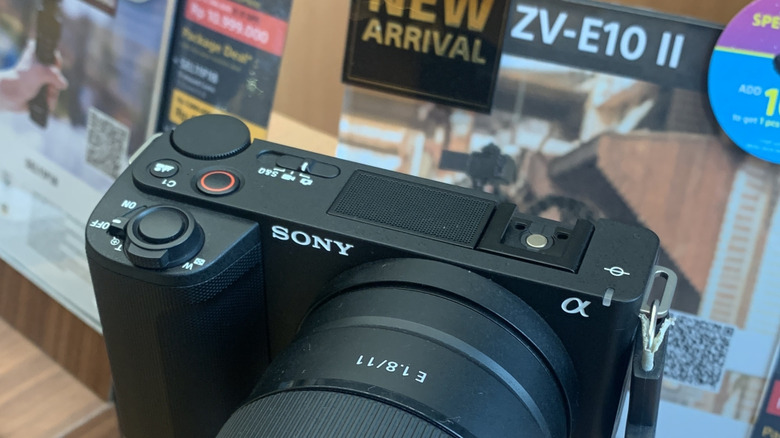
If you spend more time in front of the camera than behind it, this is the best place to start. The Sony ZV-E10 II is Sony's APS-C camera for creators, built around the 26 MP sensor shared with the well-regarded A6700, plus the features that matter when you're filming yourself: a fully articulating touchscreen, a three-capsule microphone with a bundled windsock, and a one-touch background defocus button. DPReview praised its detailed 4K footage, now up to 60 fps, whereas the original had to crop in to achieve 30 fps, as well as good rolling-shutter performance and best-in-class autofocus.
They called it a great step up from a smartphone for anyone filming in a studio or office. Beginner-friendly modes mean you don't need to understand S-Log3 to get good-looking footage. It's also the most affordable interchangeable-lens camera here. Know what you're giving up, though. There's no in-body stabilization, no viewfinder, and no mechanical shutter. Moreover, still photos can feel like a letdown. Handheld walk-and-talk footage needs a steady hand or a gimbal. For a desk, a tripod, and a growing channel, it's a sensible buy.
Best for vlogging: Sony ZV-1F
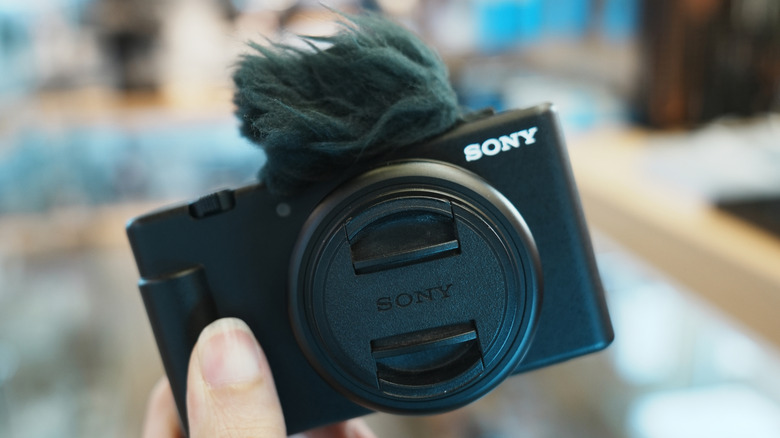
Not every vlogger needs a full-frame rig. If you're filming yourself on a phone and want a dedicated camera that still fits in your trouser pocket, the Sony ZV-1F is the brand's simplest answer. It's a compact camera built entirely around filming yourself: a fixed 20mm-equivalent f/2.0 lens wide enough to keep you and your surroundings in frame at arm's length, a fully articulating touchscreen, and a three-capsule microphone with a detachable windscreen. At 256 g with a battery, it's genuinely pocketable.
The 20.1 MP 1-inch sensor records 4K at up to 30 fps using its full width, and the creator features from pricier ZV models carry over. Product Showcase mode snaps focus to whatever you hold up to the lens, and a one-touch Background Defocus button blurs the background behind you. Digital Camera World called the ZV-1F "an excellent choice" for stepping up from a phone, praising its accurate eye-detect autofocus and freely articulating screen.
The compromises are the honest kind for this category. Stabilization is digital-only, so some walking or running shots may not look good without a tripod or gimbal. There's also no RAW capture for stills, no headphone jack, and the lens doesn't zoom beyond a digital crop. For talking-to-camera vlogs, travel clips, and desk setups, though, the ZV-1F covers the basics well. The ZV-1 Mark II is another solid option at a higher price.
Best for travel: Sony A7CR
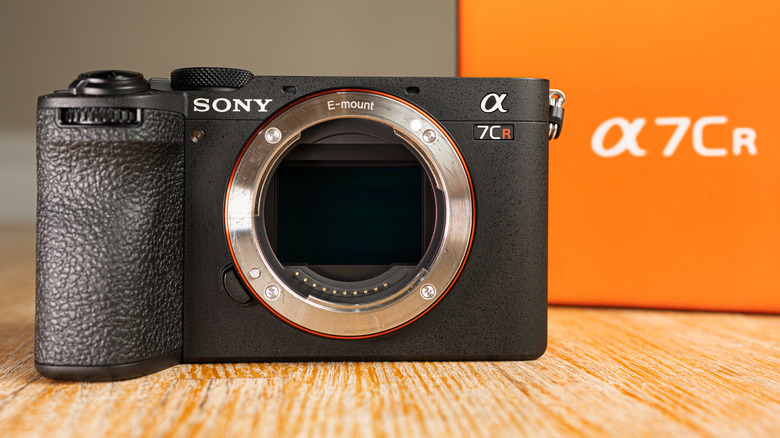
Travel cameras live or die by two things: how good the photos look and how heavy the bag feels at the end of the day. The Sony A7CR wins on both counts, packing the 61 MP sensor from the A7R V into a 515 g body that feels less cumbersome in a daypack. DPReview called it "the ultimate big sensor/little camera model," tailor-made "for landscape and adventure photographers needing the highest-quality full-frame resolution and dynamic range in the least back-breaking package."
Amateur Photographer agreed on the fundamentals: you get the same image quality and autofocus as the A7R V in a smaller, lighter, cheaper body. Stabilization works well for handheld shooting, battery life is solid, and Sony includes a screw-on grip extender in the box for larger lenses. The savings come with some compromises, though. A small, low-resolution viewfinder, a single card slot, and no AF joystick. For a big trip where every print has to hold up, it's the one to pack.
Best point-and-shoot: Sony RX100 VII
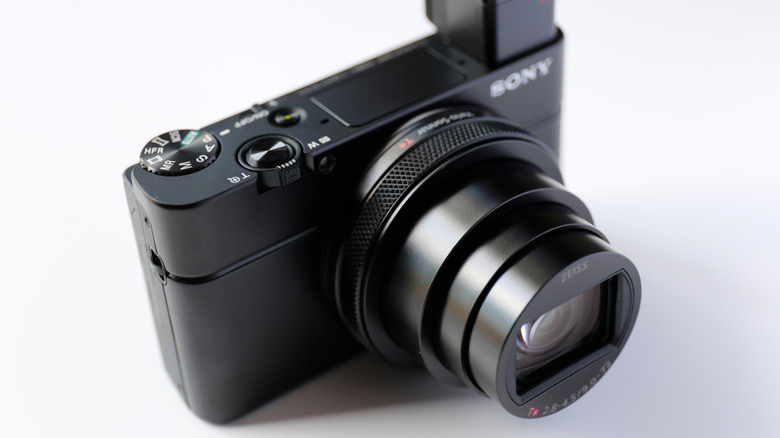
There's a reason the RX100 line has outlived the smartphone's assault on compact cameras: nothing else fits a zoom lens, a pop-up viewfinder, and proper controls into a jacket pocket. The Sony RX100 VII is the newest of the series, and years after launch, it's still the most capable pocket camera you can buy. The 24-200mm equivalent lens covers wide street scenes and distant details alike, and the autofocus comes straight from Sony's pro cameras. TechRadar's review called it class-leading, with fast face detection and Real-time Eye AF that works in video as well as stills.
Burst shooting reaches 20 fps with no viewfinder blackout, and there's a 3.5mm microphone port on the side, which is rare for a camera this size. The trade-offs are familiar. The 1-inch sensor can't match anything else on this list in low light; the lens dims to f/4.5 at the long end, and the camera has gotten more expensive over time, quite reminiscent of any new tech in 2026, unfortunately. Still, if the brief is a genuinely good camera that's always with you, the RX100 VII is still a good bet.
Best for filmmaking beginners: Sony FX2
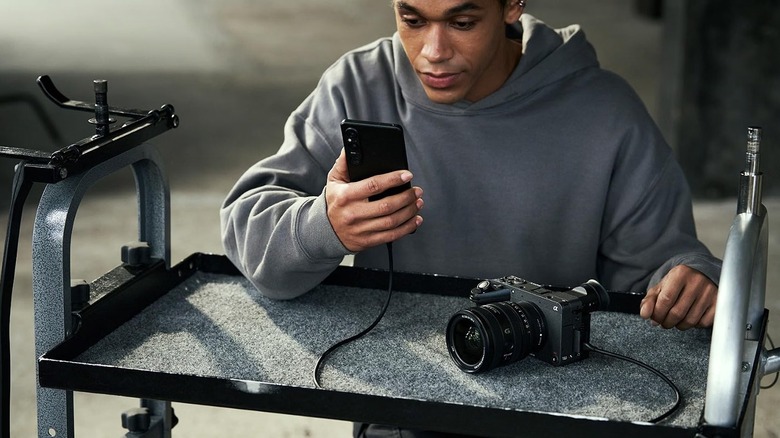
Learning video on a hybrid camera works until you start facing several hurdles. Record limits, no XLR inputs, menus built for photographers, etc. The Sony FX2 is the fix, and it's the most affordable full-frame camera in Sony's Cinema Line. You get a video-first interface, a built-in fan for long recording sessions, and the A7 IV's 33 MP sensor, which delivers sharp, oversampled 4K footage at up to 30 fps. Unusually for the FX series, there's also a tilting electronic viewfinder, which makes filming outdoors far easier.
PetaPixel's review said shooting with the FX2 was their "favorite experience of any camera in the FX line" and argued that if you're weighing it against the A7 IV for video, the autofocus, EVF, and interface make it the better buy. The sensor holds it back for demanding work, though. 4K at 60 fps requires an APS-C crop, and rolling shutter is dramatic on fast pans. However, as a first proper cinema camera, it's the simplest way into Sony's lineup.
Best for run-and-gun video: Sony FX3A
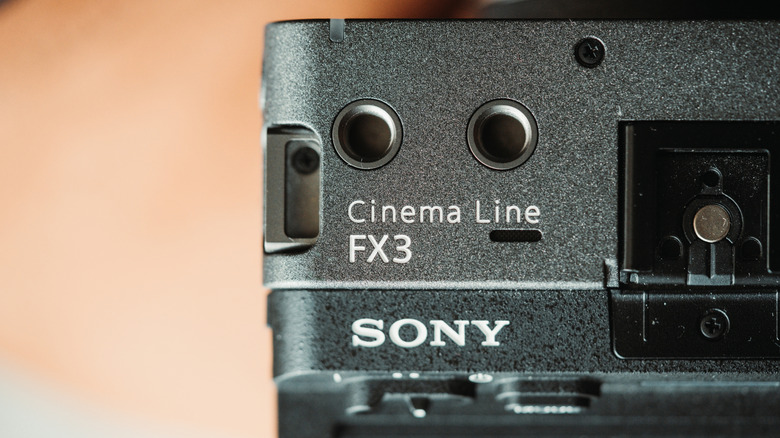
If you've ever done run-and-gun work, you would know that blaming the camera for missing a shot is the last thing you want to do. The Sony FX3A is built around that rule. It's the FX3 with a sharper 2.36-million-dot LCD and a couple of legacy features removed. No Film School jokingly dubbed it "the most minor camera update of all time," but the camera underneath was already the pick of its class for solo operators. The 12 MP full-frame sensor shoots full-width 4K at 60 fps and 4K at 120 fps with a crop, delivers excellent low-light performance, and an internal fan keeps recording going when smaller bodies would overheat.
There's no viewfinder because the body is meant to live on a gimbal or in one hand, and mounting threads are built into the body itself, so you can skip the cage. The included XLR handle provides proper audio input without extra accessories. In CineD's review of the FX3, the active cooling was the standout difference from its near-twin, the A7S III. It isn't cheap, but for wedding filmmakers, documentary shooters, and small crews filming fast, the reliability is the biggest selling point.
Best for short films/documentaries: Sony FX6
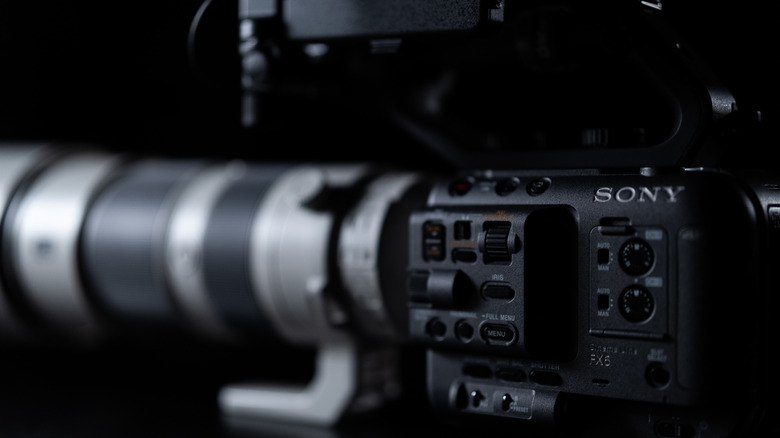
When the work starts paying, the Sony FX6 is where Sony's Cinema Line gets serious. It takes the same 10.2MP full-frame sensor family as the A7S III and wraps it in a body designed for production: built-in electronic variable ND filters, two XLR inputs, DCI 4K recording, and proper mounting points. The variable ND is the feature documentary shooters swear by. Moving from an indoor interview to bright daylight stops meaning a lens change or a screw-on filter; you adjust exposure with a dial, or let the auto ND do it while you hold your aperture.
Videomaker's review said the FX6 "can practically see in the dark," praised its 10-bit 4:2:2 4K/120p capture, and recommended it for narrative filmmaking. Digital Camera World's verdict called it "by far the best value full-frame cinema camera you can buy." It's less friendly for solo shooters: no in-body stabilization, no viewfinder, and pricey CFexpress Type A cards. For short films and documentaries with a small crew, though, it remains the benchmark.
Best for street photography: Sony RX1R III
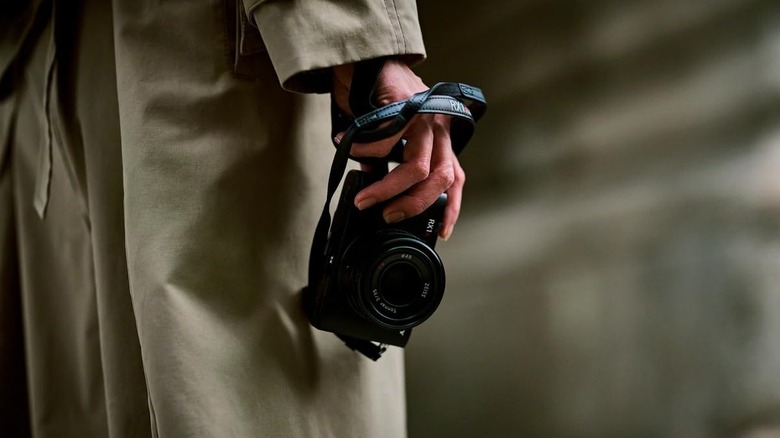
Street photographers have always had a soft spot for small cameras with a fixed 35mm lens — just look at the waiting lists for Fujifilm's X100VI. The Sony RX1R III is that idea taken to its limit: a 61MP full-frame sensor behind a 35mm F2 Zeiss lens, in the smallest full-frame camera ever made. DPReview's review dubbed it "a Super-X100" for anyone tired of waiting for Fujifilm stock, praising autofocus that's vastly improved over the decade-old RX1R II — probably the fastest and most usable camera of its type.
Image quality is excellent, battery life is much better than its predecessor's, and the resolution enables a step-crop feature that mimics 50mm and 70mm framings. Now the hard part: there's no image stabilization and no tilting screen. PetaPixel's review came away underwhelmed by the upgrades, even as it admitted that "all the charm" of the series carries forward. The lens is also a little soft at close range and wide apertures. If street is your daily practice and you want maximum image quality per gram, it's a wonderful, extravagant thing. Everyone else should buy the A7CR.
Best affordable full-frame: Sony A7 III
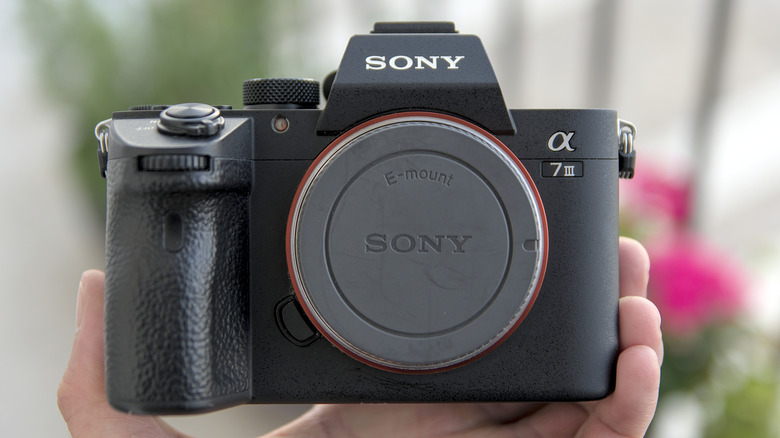
Eight years is forever in camera years, yet the Sony A7 III refuses to retire. Launched in 2018, it's still on sale, and it's the cheapest way into Sony's full-frame ecosystem. The Phoblographer took another look at it in a September 2026 reassessment and answered the "is it still worth buying" question with "a resounding yes." The reasons are the same ones that made it a hit: a 24MP sensor with excellent dynamic range, dependable eye autofocus for portraits and slower subjects, in-body stabilization, and access to the vast E-mount catalog, including affordable third-party lenses from Sigma and Tamron.
For portraits, events, street, and everyday photography, the files still hold up. That said, you do have to accept its age. The autofocus is a couple of generations behind the newer bodies here. 24 MP leaves little room for cropping, and the video specs are well behind 2026 standards. You can only record up to 30 fps at 4K, and there's no 10-bit option. The Phoblographer also notes you'll likely feel the upgrade itch within five years. As a first full-frame camera or a backup body, though, nothing else gives you this much for the money.
How we picked these cameras
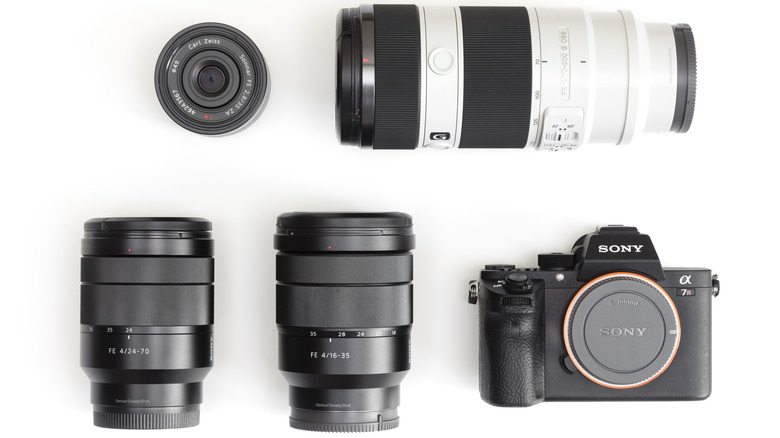
With a bucketload of cameras to choose from, picking the best Sony shooters can get rather tricky. It's possible that some of last year's higher-end models are more affordable than Sony's latest range, making the job even more difficult. To ensure we're recommending the absolute best options, we considered key factors, such as image resolution, sensor, additional features, form factor, and battery life. We've also made it easier to find the best option for specific use cases, like wildlife photography or content creation.