

DJI Osmo Pocket 4 Remains The Creator Cam To Beat Despite Hardware Deja-Vu
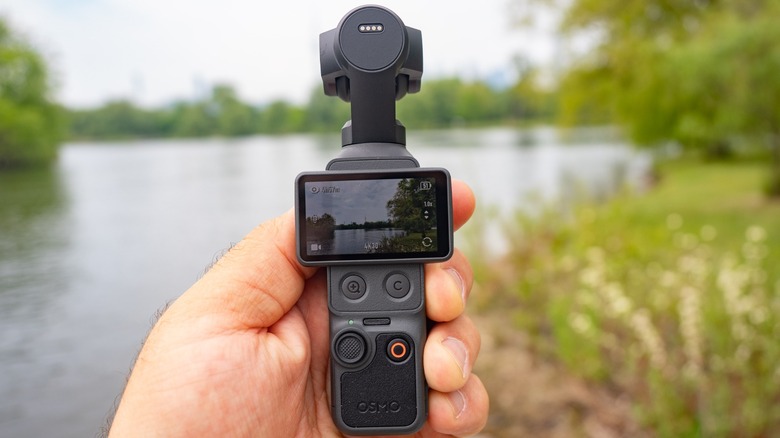
The DJI Osmo Pocket 4 may well be a significant upgrade compared to its predecessor, yet you'd not easily know it by looking at the camera. Outwardly, only minor changes may be seen, and even in use seasoned users of previous pocket cameras are not likely to notice much difference. This is one of those situations where the changes are pretty much all under the hood, but that does not mean these upgrades are not significant and meaningful.
The really big new thing about the pocket 4 is its sensor, which has now hit that desirable 1-inch sweet spot that has become something of a widespread goal in the compact camera market of late. This is because 1-inch is just about the minimum size where you may benefit from the better image quality of a larger sensor, but before the point where physics demands the size of the accompanying lens becomes too large and expensive. The question is, how meaningful is this and the other upgrades in the Pocket 4 compared to the last generation Pocket 3?
DJI provided a very brief testing period with the Pocket 4 for the purposes of this review. They also paid for my transportation and airfare to Toronto to carry out the product testing. This was done because the Pocket 4 is not available in the U.S. due to regulatory disputes, so it was necessary to go to Canada to get my hands on the camera. My extensive experience using the Pocket 3 and other compact cameras from DJI and various other manufacturers allowed me to very quickly get to grips with the Pocket 4 in order to write this review.
Larger sensor = better image quality
The DJI Pocket 3 already produced surprisingly high quality video, and the Pocket 4 builds upon that with its larger sensor. There's a reason why so many cameras, including the GoPro Mission 1 Pro, have opted to push the limits of compact systems to include a 1-inch sensor. It's essentially the point at which images and video start looking like they were captured with a high end camera, and that smartphone-look begins to disappear.
In addition to the larger sensor, that sensor now has much greater resolution (37MP), and takes very nice stills, though this type of camera is certainly more focused on video capture. Slow motion video capture is also significantly upgraded here, as the camera is now able to capture 4K 240fps, compared to just 120fps previously. You also get 10-bit D-Log recording, and in general, the video quality of the Pocket 4 is fantastic, both in daylight, and especially after dark where the improved low light capability of its larger sensor comes into play.
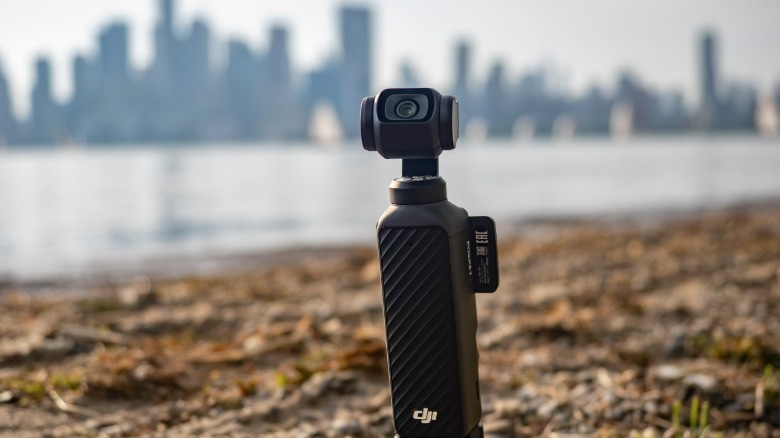
Design is barely changed from the Pocket 3
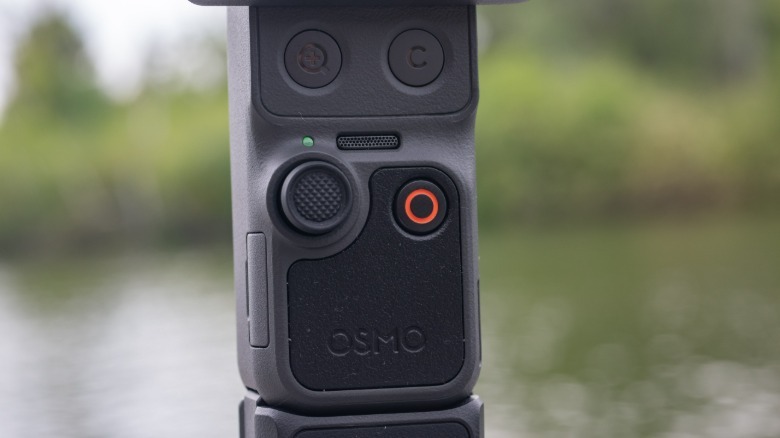
It was honestly difficult at some points to remember that I was using the Pocket 4 instead of my trusty old Pocket 3. The button layout is slightly different, but other than that this is very much familiar territory for anyone who has used a DJI Osmo Pocket camera in the past. That includes having to activate the camera, which is a requirement I still balk at, as there's no good reason to require activation or registration of a device such as this, but it's so ubiquitous these days you can't really get away from it.
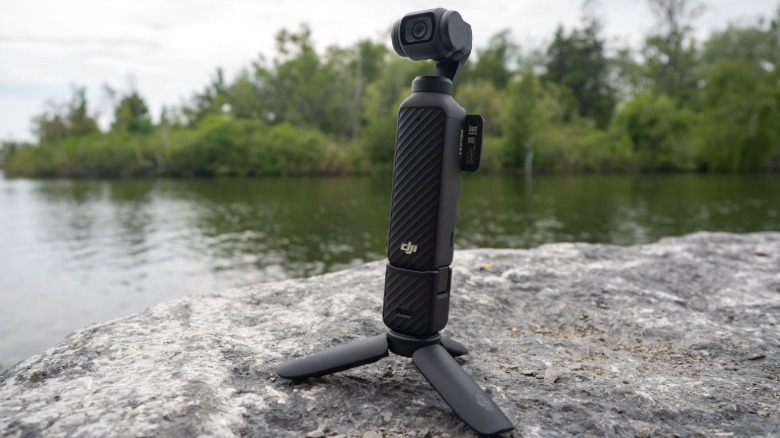
As with all gimbal-cameras, the Pocket 4 isn't waterproof, and it isn't especially rugged. However, it's almost certainly just as tough as the Pocket 3, and over the years I've tossed that around almost as much as an action camera, so I'm fairly confident in the ability of the Pocket 4 to stand up to the rigors of travel, adventure, and frequent use over a long period of time. I very much prefer to use the Pocket 4 with the battery grip and miniature tripod accessories, and the DJI Mic 3 I tested alongside the Pocket 4 was a great way to record audio (though the internal microphone of this is as excellent as that of its predecessor).
 Andy Zahn/SlashGear
 Andy Zahn/SlashGear
 Andy Zahn/SlashGear
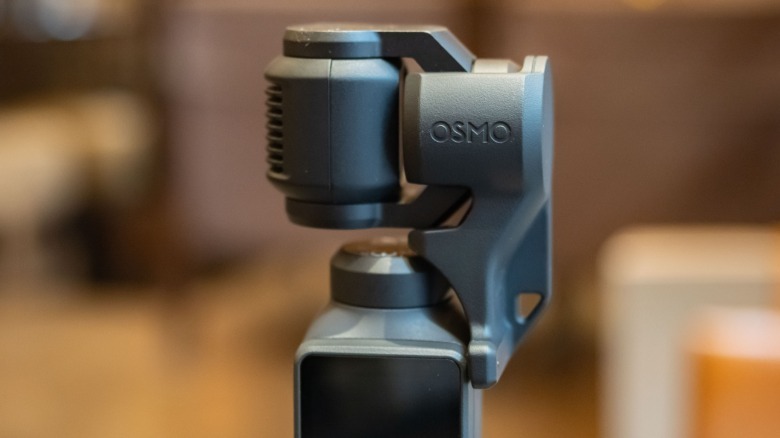
My one complaint is that, instead of a protective case like that which accompanied the Pocket 3, the Pocket 4 now merely includes a clip designed to fortify the gimbal during travel. This is a major downgrade compared to the protective case, which was easier to use, offered more protection, and included magnetic holding slots for optional lens attachments, as well as a clip where other accessories could be stored.
Focus system is as excellent as ever
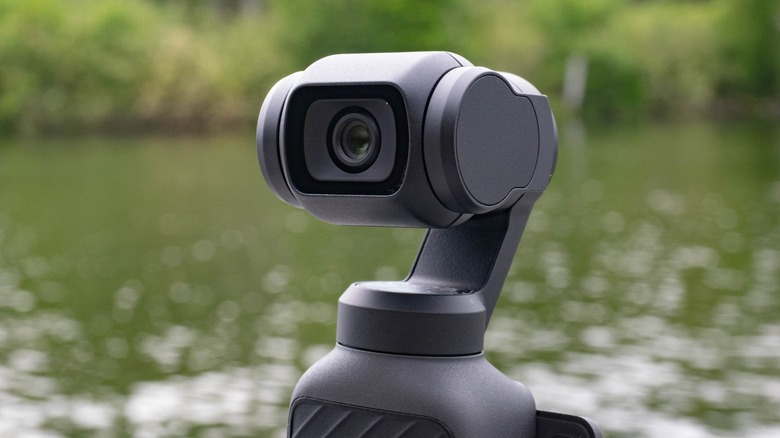
A big reason why the Pocket 3 has been such a regular tool in my kit is the snappy and reliable autofocus system in it, and the Pocket 4 doesn't disappoint in this regard. It just works, and in a camera like this, that's what I need. These are great as B-cameras in a multicam setup, such as I've come to use to film unboxing videos.
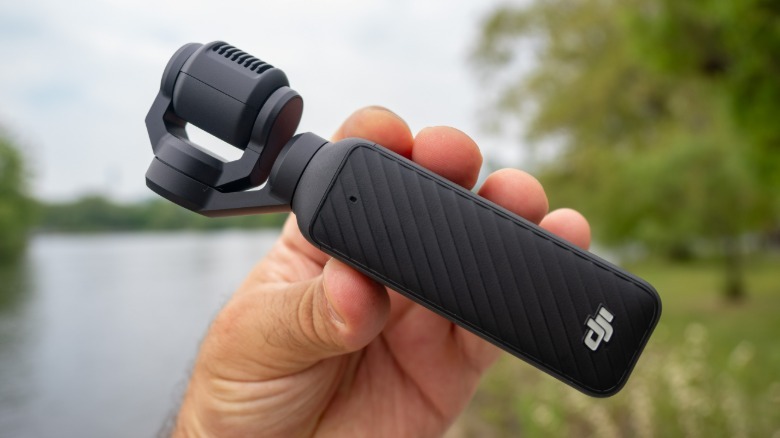 Andy Zahn/SlashGear
The screen here is also very good, and utilizes the same mechanism as the Pocket 3. Flip the screen into horizontal mode to power on, and flip to vertical to power off. You can also long press the record button, but I like the screen-flick function for its tactility. You're much less likely to accidently forget to power the Pocket 4 off with the screen-flick motion than if you power it off/on with a button press.
In-camera software and the Mimo smartphone app are both as well-engineered as ever. Again, if you're familiar with DJI's handheld cameras, then there will be no mysteries here. I very much appreciate the motionlapse function, which allows you to record moving timelapse videos by programming the motion of the gimbal throughout the duration of the shoot.
 Andy Zahn/SlashGear
 Andy Zahn/SlashGear
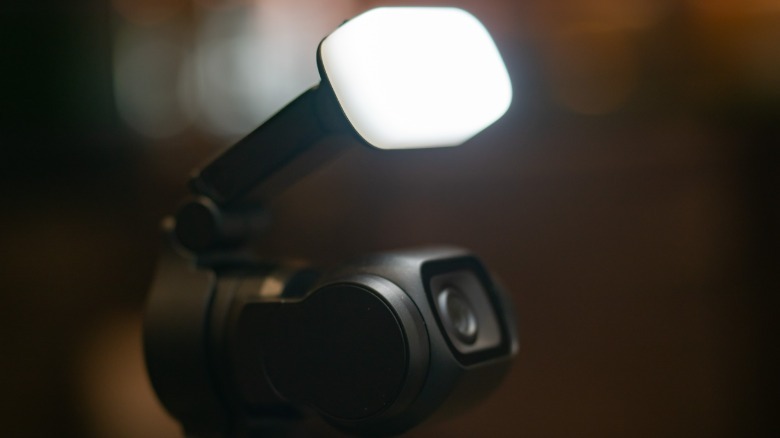
I'm happy that you now get 107GB of internal storage, in addition to microSD card storage. Built-in storage is really handy, as it means that even if you forget to reinsert the microSD, you always have some storage to fall back on. There's also a new adapter on the back of the gimbal to which an adjustable LED video light can be attached. This is very convenient for vlogging in challenging lighting conditions.
Price and availability
Unfortunately, the Pocket 4 is extremely difficult to find in the states. Due to an unfortunate political situation, the U.S. government isn't allowing the Pocket 4 to be imported here, which is just as mind-boggling ridiculous as it sounds. Until that is resolved, U.S. customers are going to have difficulty finding one, and that's a real shame given how popular the Pocket 3 has been.
I did see the DJI Pocket 4 Creator Combo being sold by a Newegg Marketplace seller for $788, and the base model seems to be available to order on AliExpress for $528 at time of writing, but none of the listings I saw filled me with confidence, so U.S. buyers beware.
 Andy Zahn/SlashGear
 Andy Zahn/SlashGear
At MSRP, the Pocket 4 retails for $477, which is fairly reasonable for what you're getting here, though of course additional, more expensive bundle options are available. For those who are able to buy one, it's well worth the price. However, for about $300 more, you could pick up the Insta360 Luna Ultra, which has a dual lens system and is much more ambitious in terms of its design, with a detachable remote control and a remarkably good digital zoom. However, the Pocket 4 does offer better autofocus, so you might very well prefer it to the Luna Ultra. With that said, the Luna Ultra is available to purchase in the U.S., while the Pocket 4 is not.
Conclusion
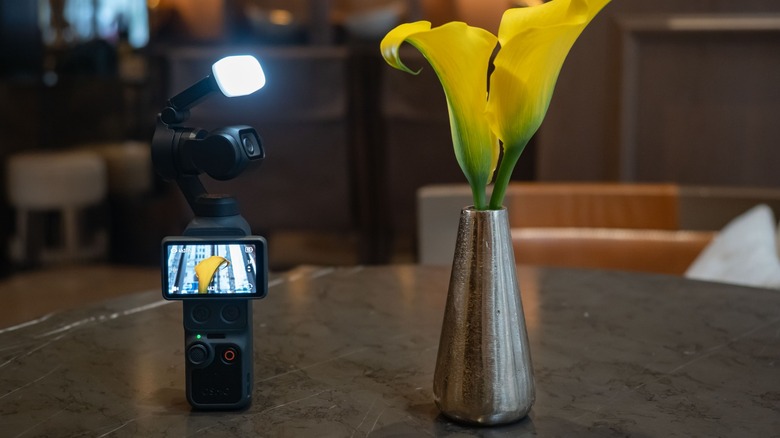
If you liked the DJI Pocket 3 (which many, many creators did), or if you ever wanted to buy a DJI Pocket 3, then you'll love the DJI Osmo Pocket 4. This is essentially the same camera, just with a larger sensor and a number of other important upgrades.
For existing Pocket 3 owners, the urge to upgrade might not be enormous, given that the older camera is still very good. However, if you're currently in the market for a new camera of this type, the Pocket 4 is definitely worth buying, especially considering that the Pocket 3 doesn't seem to have fallen in price as of this writing.
 Andy Zahn/SlashGear
While I only had about 24 hours with the Pocket 4, I'm very confident in my conclusion here, given its similarity to the Pocket 3, and my extensive experience with that previous-generation camera. The DJI Osmo Pocket series remains an indispensable part of my video making kit for their excellent autofocus, crisp video quality, and the quality of their microphone array. If I was able to purchase a Pocket 4 myself here in the states, I would be very tempted to do so, despite my Pocket 3 still going strong. These cameras occupy that much of a valuable role in my daily video creation kit.
 Andy Zahn/SlashGear
The DJI Pocket 4 Creator Combo is available on Newegg Marketplace for $788 in the U.S. as of this writing, while internationally it's available directly from DJI through their online store.