

6 Tools I Didn't Think I'd Need, But I'm Glad I Own Now
It's possible to identify the exact moment in which you become an adult: it's when you receive a tool as a gift and feel the joy in your heart, knowing exactly where it will come in use next. It's a true story, because there's nothing in this world — absolutely nothing — that can prepare someone for the experience of being a homeowner. Whatever you think will be the average amount of maintenance needed in a house, double or triple it. You will learn the real definition of a problem and discover that things break or deteriorate in the most unexpected and frightening manner.
While it sounds scary and uncertain, it's also the most rewarding (and financially freeing) feeling to realize you can do a lot of maintenance on your own. Those two left hands eventually learn how to coordinate and work together with practice and patience. At the same time, you'll come to appreciate tools that you didn't think you would ever need and breathe a sigh of relief when they're there. So, let's look at the six tools that hold a special place in my heart.
A non-contact voltage detector
I'm a firm believer that the most common electrical mistake anybody can make is not contacting an expert. Apart from changing a lightbulb, I never used to tinker with anything else. However, since I live in an area with major thunderstorms, lightning appears to be attracted to my home. As it turns out, lightning does strike the same place more than twice, and my home has had to deal with several dimmer switches being fried by Mother Nature's touch.
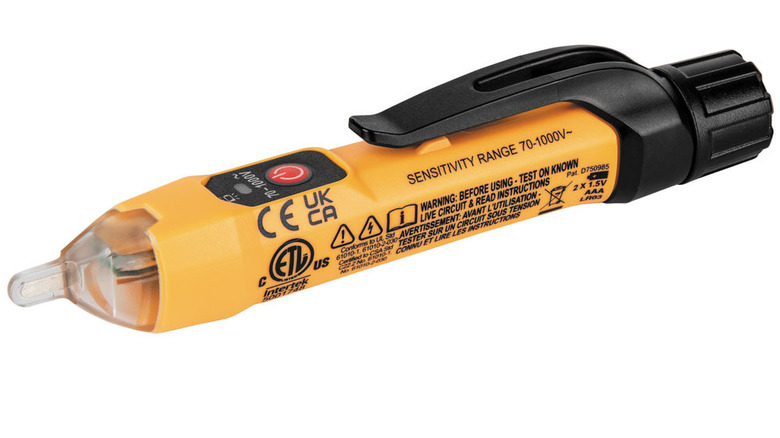
After being hit with the emotional equivalent of a chokeslam from the electrician's first bill, I decided to replace the switches on my own. One of the first items bought for this exercise was a non-contact voltage detector, which is a user-friendly tool anybody can pick up at Home Depot. I already owned a multimeter that provides readings, so the detector serves as the final layer of protection to ensure that there is no live wire before proceeding with the replacement work. Having said this, it must be stressed that these detectors can provide false positives and false negatives. So, if someone is uncertain, they should put safety first and pay the electrician's callout fee.
In terms of the detectors, there are various options available. However, it's recommended that you choose one from a reputable brand and not always settle for the cheapest option on the shelf.
Telescopic ladder
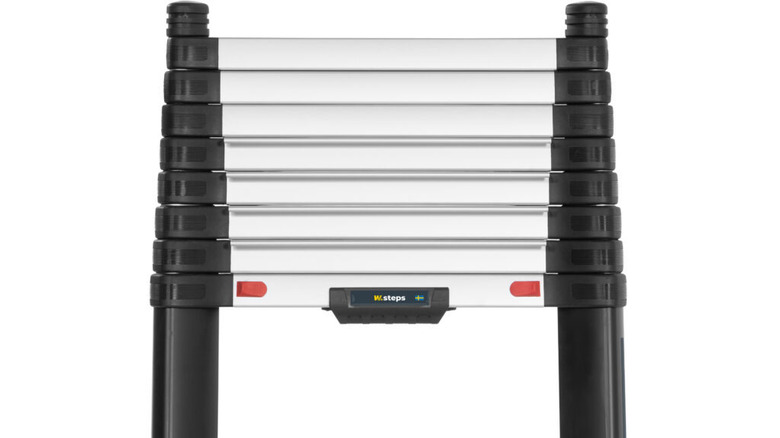
A ladder is an essential tool around the home, especially for DIY roof repairs. There are various options available, but for those who prefer something more compact and easily storable, a telescopic ladder is a good choice. It's relatively light and adjustable, giving you the ability to choose the exact number of rungs you need, then to lock it in for safety. There are also different sizes available, so make sure you select the one with the height option that best suits your needs.
As someone who owns a smaller car with limited space, I find it next to impossible to transport a reasonably sized ladder in it — unless you hang half of it out of the window. However, a telescopic ladder folds up small enough that it fits in the back seat or the boot of the car. Not only was it easy to bring home from the store the day I bought it, but it's also easy to lug around if I'm helping a friend or relative with any DIY at their home. Honestly speaking, the telescopic ladder may well be the tool I'm glad I own and use the most.
Mouse sander
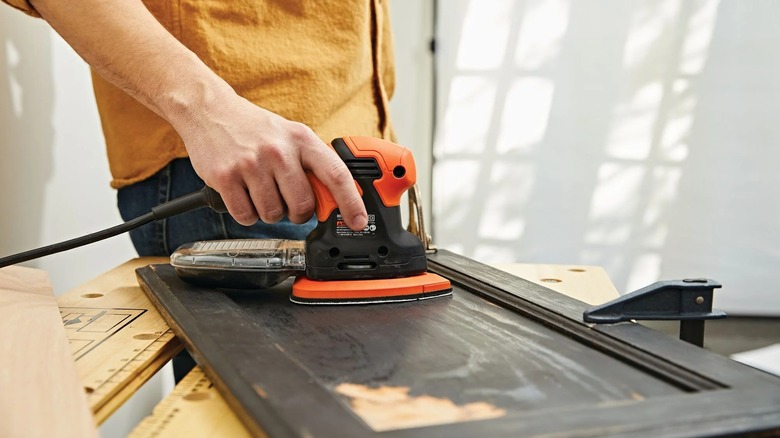
Any homeowner who has wooden windows in a sunny climate understands the battle: the windows need to be treated on an ongoing basis. Whether it's through varnish or liquid wax, maintenance and TLC become a regular occurrence here. An orbital sander and sandpaper are still useful in this scenario to remove the previous coating, but a mouse sander has the edge for smaller woodwork projects such as this one.
See, the compact size of a mouse sander makes it more efficient and easier to use in smaller surface areas, while also aiding the user glide into the tighter or more detailed areas. Instead of struggling with a piece of sandpaper for the corners of the window, for example, the mouse sander reaches into that area and does the job with more precision and speed than sanding by hand.
Having said this, I must emphasize that a mouse sander is mostly ideal for smaller-scale carpentry work — not bigger tasks. For larger, flat surfaces, use a regular orbital sander instead, which is more powerful and covers more area.
Cordless power screwdriver
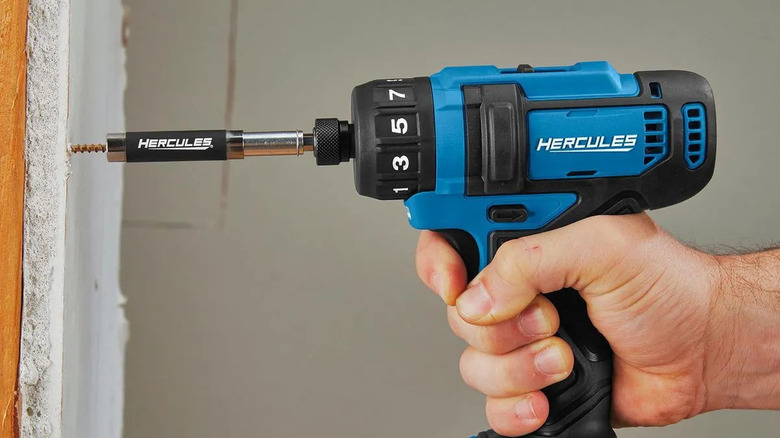
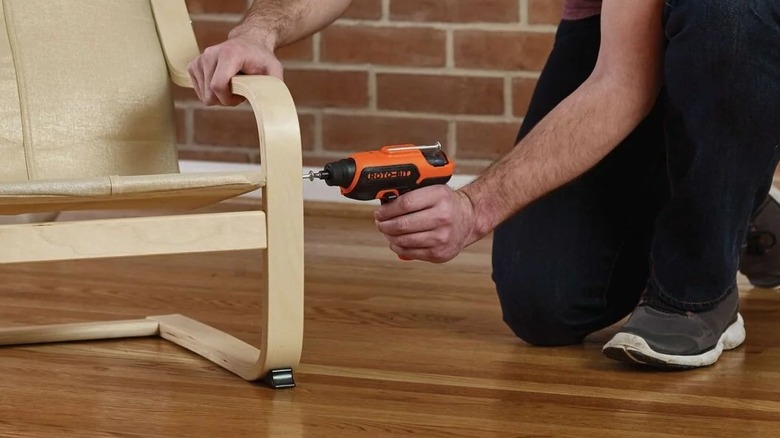
Call me old-fashioned, but I never understood why anybody would spend the extra money on a cordless power screwdriver when the regular non-powered option existed. Essentially, they do the same thing; one just requires a little more patience and sweat. Well, my rude awakening arrived when I needed to install brackets for the shelves of my bedroom cupboard. All of a sudden, it made sense why anybody would need one, since the job went faster and smoother after the purchase of an electric screwdriver.
It wasn't only in this setting that the tool came in handy — it also assisted in the assembly of a brand-new display cabinet with various parts (and a whole lot of screws). If it weren't for an electric screwdriver, I might still be turning the screws while writing this. It's easy to use, and even easier to charge, but it's the undeniable precision and the ability to control the speed that make it a worthwhile companion in any DIY project.
Magnetic parts tray
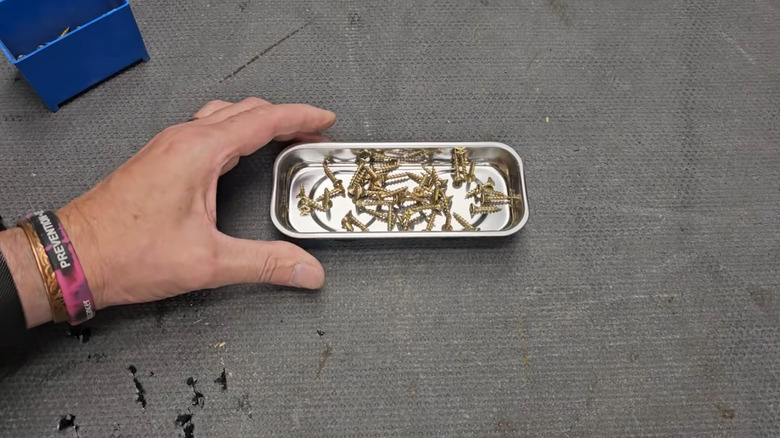
Have you ever opened up your pool's multiport valve to change the wagon wheel gasket, and then realized you can only find five of the six cover screws when it's time to put it back? The worst part is that you don't have any replacement screws in the garage, so you'll need to go out and buy some — all because one darn screw decided to play hide-and-seek at the most inconvenient time.
Anybody who has worked with screws, nuts, and bolts knows this frustrating feeling. Hence the game-changing importance of a magnetic parts tray. It's such a simple tool that uses a magnetic field to keep steel parts locked into the tray; however, it turns into a massive time-saver and efficient holder, especially since it prevents anything from rolling away or disappearing into the ether. The best part? It's relatively cheap to buy. In the end, it may save you hundreds of dollars in spare part replacements and hours of looking around for a single screw.
Pressure washer extension wand
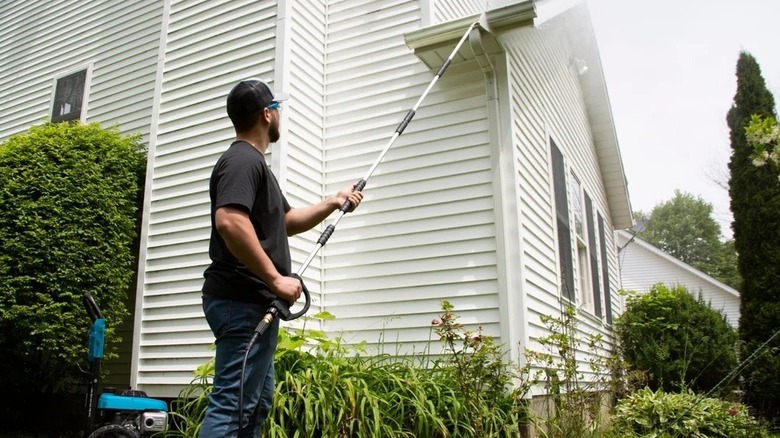
The biggest surprise I received as a homeowner was discovering that the previous owners hadn't cleaned the gutters in years. It was an expensive lesson, but it instilled in me the discipline to clean the gutters at least twice a year.
One of the tools I invested in was a pressure washer extension wand. Some of them come with different accessories, but most of them are highly adjustable, ensuring that you can aim the wand into the gutter and flush out any debris that resides there. Best part? I don't need to climb onto the roof and face my fear of heights anymore.
My neighbors had the same idea I did, and bought their own wand. It came in handy for them in particular since they own a double-story home and struggle with clogged gutters after heavy winds and rains, especially with all the trees surrounding their house. Instead of having to climb onto the roof after every downpour, they're now able to just clear out the gutters with the wand. Having said that, I'd still like to try out a gutter blower for myself to see how it works.